


Retail Technology Guide
Retail Technology: AI, Automation & the Future of In-Store Execution
A practical guide to the tools, platforms, and strategies transforming how brands win on the physical shelf — and why technology alone is never the full answer.
Walmart committed $330 million to a single distribution center automation project. Best Buy quietly restructured its entire field operations model around AI-assisted scheduling and routing. Google and Shopify unveiled a unified AI shopping standard at NRF 2026 that bypasses the traditional search journey entirely. These are not pilot programs. They are the new baseline.
For brands and retailers who still treat retail technology as a line item rather than an operating model, the gap is widening fast. This guide covers where the category stands, what is actually working on store floors in 2026, and how to build a strategy that integrates technology with the human expertise needed to execute it.
1. The State of Retail Technology in 2026
Retail technology is no longer a department. It is the connective tissue that links demand signals to shelf reality. The industry has moved from experimentation to expectation: shoppers, brand managers, and store operators now assume that data flows in real time, that systems communicate, and that field teams arrive with context rather than clipboards.
The 2026 retail trends landscape is defined by two competing pressures: cost compression and experience elevation. Retailers are automating everything that can be automated — replenishment triggers, compliance audits, scheduling, route optimization — while simultaneously investing in the moments that automation cannot replicate: product demonstrations, complex questions, and the kind of trust that closes a considered purchase.
The proof point for both pressures shows up in the same category. Audio technology at CES 2026 illustrated this split perfectly: the demo booth and the AI-assisted product configurator existed side by side, each necessary, neither sufficient alone. That dynamic now plays out across virtually every product category on a physical retail floor.
For a grounded definition of what the category encompasses, see our overview of what retail technology actually means and how it differs from point solutions. The category spans hardware, software, data infrastructure, and people systems — and the brands winning in 2026 are treating all four as a single integrated challenge.
2. AI in Retail: From Hype to Hardware Aisles
Two years ago, AI in retail largely meant recommendation engines and chatbots on e-commerce sites. Today, it means shelf-scanning computer vision, AI-assisted sales conversations at the fixture, demand forecasting that adjusts purchase orders before a trend surfaces in sales data, and dynamic labor scheduling that responds to foot traffic patterns in near real time.
The central argument for physical retail remains intact and data-backed. As our analysis of AI in retail stores and why physical retail still wins shows, the store environment is not a liability to be engineered away — it is a conversion asset. Shoppers who enter a store convert at rates 10x to 20x higher than equivalent online visitors. AI does not change that math. It improves execution within it.
Where AI is generating the clearest ROI in-store right now:
- Compliance verification: Computer vision systems audit planogram compliance, pricing accuracy, and promotional display execution without requiring a human to walk every aisle.
- Associate enablement: AI tools surface product specs, comparison data, and inventory status on a rep’s device during a customer conversation, reducing the need to memorize a 400-SKU catalog.
- Demand sensing: Models trained on POS data, weather, local events, and social signals are shortening the forecast horizon from weeks to days in some categories.
- Loss prevention: Behavioral AI in CCTV systems is reducing shrink without requiring dedicated floor security in every format.
The Google-Shopify AI shopping standard announced at NRF 2026 adds a new upstream dimension: AI agents are now entering the purchase funnel before a shopper ever reaches a store. Brands that do not optimize for AI-mediated discovery risk being filtered out before the consideration phase even begins.
Artificial intelligence is also reshaping how brands deploy and manage brand ambassador programs. AI-driven scheduling, territory optimization, and real-time performance scoring are compressing the time between a field observation and a brand response from days to hours.
3. Agentic AI: Retail’s Next Operating System
Agentic AI is the step beyond predictive AI. Where a predictive model surfaces a recommendation, an agentic system acts on it — placing a replenishment order, rescheduling a field visit, escalating a compliance issue, or modifying a promotional offer — without waiting for a human to approve each step.
Best Buy’s operational strategy is the clearest public signal of where this is heading. Their approach, detailed in our analysis of what Best Buy’s agentic AI strategy signals for the industry, shows a retailer using autonomous AI systems to manage routing, scheduling, and customer follow-up across a complex omnichannel service model. The human role shifts from task executor to exception handler and relationship holder.
The broader trajectory is captured in our coverage of agentic AI in commerce as the next frontier of retail discovery and trust. The key shift: AI agents are becoming the primary interface between a brand’s catalog and a shopper’s intent. Product content that is not structured for agent-readable consumption — clear attributes, accurate inventory signals, verified specifications — will be systematically deprioritized.
For field operations specifically, the transition from agentic AI experimentation to execution is now underway at scale. Early adopters are using agentic systems to auto-generate field visit agendas, prioritize stores by compliance risk score, and trigger corrective action workflows the moment an audit image is uploaded. The field rep still executes the physical work. The AI handles the orchestration.
This is not a distant forecast. CES 2026 retail execution insights showed brands presenting working agentic workflows in booth environments — not prototypes, but production systems managing inventory alerts, customer service escalations, and real-time promotion adjustments simultaneously.
4. Retail Automation Trends Reshaping the Store Floor
Automation is reshaping retail faster than most operators anticipated. The timeline compressed because labor economics, supply chain volatility, and consumer expectations shifted simultaneously — creating a forcing function that made automation a survival decision rather than an optimization one.
The categories where automation is making the fastest inroads:
- Cashierless checkout: The future of cashierless stores involves friction-free, sensor-based checkout that eliminates queue time and provides granular basket data. Format matters — the technology works best in convenience, grab-and-go, and stadiums before scaling to grocery and big-box.
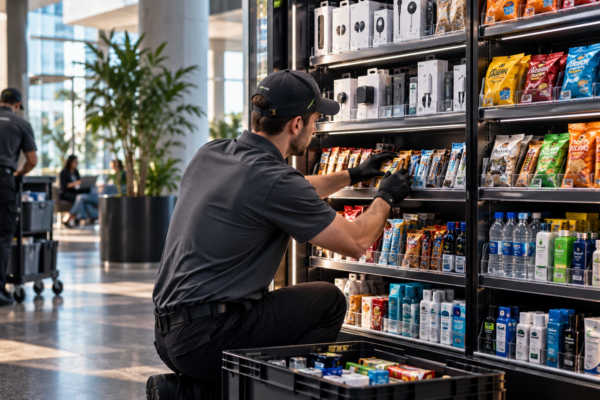
- Smart vending: Smart vending machines have crossed into premium and complex product categories — electronics accessories, cosmetics, prescription pickup — with AI-powered recommendation layers and dynamic pricing.
- Interactive displays: Static fixtures are being replaced by responsive ones. Interactive retail displays have doubled customer engagement in documented deployments, with dwell time and conversion data flowing back into the store’s analytics stack.
- Immersive retail: Immersive retail environments blending spatial computing, AR overlays, and sensory merchandising are moving from flagship concepts to scalable formats.
Our deep-dive into the real automated retail trends shaping 2026 identifies the gap between headline deployments and operational reality. Most retailers automating at scale are doing so in the back half of the store first — receiving, sorting, replenishment — before tackling customer-facing touchpoints. The benefits, barriers, and 2026 trends in automated retail analysis shows that the biggest implementation barrier is not technology readiness — it is change management and workforce transition planning.
High-traffic seasons stress-test every automation claim. Scaling for Black Friday chaos with automation reveals a consistent pattern: the retailers who survive peak periods without service degradation are those who automated the predictable — queue management, stock alerts, order routing — and staffed up the unpredictable, namely judgment-intensive customer moments. The competitive edge in automated retail during the holidays goes to operators who plan their human-machine handoffs before the season begins, not during it.
The future of in-store experience through AI and automated solutions is not a single technology implementation. It is a portfolio of decisions about which friction points to eliminate, which moments to elevate, and which human skills to free up for higher-value interactions.
5. Retail Execution Software: The Field Operations Stack
Retail execution software is the category that closes the loop between brand strategy and shelf reality. It is the platform layer that connects what a brand decides in a conference room to what a field rep does in a store on a Tuesday afternoon.
The complete guide to streamlining operations with retail execution software covers the core modules: territory management, store visit scheduling, audit and compliance forms, photo verification, task management, and analytics dashboards. Modern platforms layer AI on top of these modules to prioritize visits by business impact, auto-score compliance images, and surface anomalies before they become distribution losses.
Retail field rep technology has matured considerably. The gap between enterprise platforms and SMB tools has closed. Field reps are now carrying mobile-first applications that surface visit history, competitor shelf data, promotional compliance checklists, and real-time inventory information from a single screen. The quality of that data — and the speed at which it reaches decision-makers — determines how quickly a brand can respond to a competitive threat or a distribution gap.
Effective field operations software now integrates with ERP systems, POS data feeds, and third-party market intelligence platforms. The standalone audit tool is being replaced by connected systems that treat every store visit as a data collection event feeding a broader analytical model.
Augmented operations — where human field reps are supported by AI-generated recommendations, AR overlays, or real-time coaching — represent the frontier of this category. The rep still owns the store relationship. The software eliminates the cognitive load of figuring out what to do next. Retail business intelligence strategies for boosting sales and optimizing operations are increasingly embedded in execution platforms rather than sitting in separate BI tools.
T-ROC’s own Retail360 platform won the 2025 TWICE VIP Award for Innovation in Retail Technology — recognition of a system that integrates field audit data, brand compliance scoring, and real-time actionability into a single execution layer built specifically for complex retail environments.
6. The Digital Shelf, Omnichannel, and Where Shoppers Decide
The phrase “digital shelf” understates the complexity. Shoppers are now making purchase decisions across TikTok product videos, AI-generated shopping guides, retailer apps, physical store aisles, and curbside pickup notifications — often across multiple channels within a single buying journey. The question for brands is not where to show up. It is how to maintain consistency, accuracy, and engagement across all of them simultaneously.
Hybrid shopping is not a transitional phase — it is the permanent state. The omnichannel engagement platform has become infrastructure, not differentiation. Retailers and brands that do not connect digital and physical customer journeys are not losing on experience. They are losing on data — which means they are making operational decisions with incomplete information.
The question of whether brick-and-mortar can survive the age of online retail has been definitively answered: yes, but only for operators who treat the physical store as an experience and fulfillment asset, not a legacy liability. The stores that are thriving in 2026 are generating data at every touchpoint — traffic patterns, dwell time, conversion by fixture, service interaction quality — and feeding that data back into both digital and physical operations.
Retail marketplace strategy for enterprise growth must now account for AI agents acting as purchase intermediaries. When a shopper asks an AI assistant to find the best wireless earbuds under $150, that agent is making structured comparisons against product data. Brands that invest in rich, accurate, structured content will win that comparison. Brands with incomplete or inconsistent product data across channels will be filtered out.
Store fulfillment strategy and shipping from stores is an increasingly critical piece of this puzzle. Retailers using physical locations as fulfillment nodes — same-day delivery, BOPIS, curbside — are compressing delivery timelines while leveraging existing real estate. The technology required: accurate perpetual inventory, real-time pick-and-pack workflows, and tight integration between e-commerce order management and store systems.
Retail analytics is the enabler across all of this. Understanding what is happening on the digital shelf — click-through rates, search rank, content completeness scores — with the same granularity applied to physical shelves is the next capability gap most brands need to close.
Consumer behavior continues to evolve rapidly. Gen Z co-creation in retail marketing is changing how products are discovered and how brand loyalty forms — with direct implications for how content is created and distributed across both digital and physical channels. Alongside this, the dark side of personalization in retail is becoming a real business risk: consumers are pushing back on data collection practices, and brands building personalization strategies without a corresponding trust architecture are accumulating regulatory and reputational exposure.
7. Technology vs. Human Execution: A False Choice
The debate about whether retail’s future is automated or human-powered is the wrong framing. It was always a false choice, and the operational data from 2026 deployments confirms it.
The Forbes perspective on this is direct: the future of retail is hybrid — empowering humans with technology. Not replacing humans with technology. Not supplementing technology with humans. A genuine integration where each amplifies the other’s strengths and compensates for the other’s limitations.
Technology is excellent at scale, consistency, data processing, and pattern detection. It does not handle ambiguity, empathy, complex objection handling, or the split-second judgment calls that define a premium service interaction. Human associates are excellent at exactly those things — and they are best at them when technology has already done the work of surfacing context, eliminating administrative friction, and routing them to the moments where their skills create the most value.
The tech-enabled ambassador model — where data-driven assisted sales closes the loop — demonstrates this in practice. When a brand ambassador arrives at a store with complete visibility into that store’s sales performance, recent compliance issues, product mix, and competitive context, their visit is qualitatively different from a traditional call. They are not gathering information. They are acting on it.
The build-vs.-outsource decision matters here too. The pros and cons of building technology internally versus outsourcing it come down to speed, maintainability, and core competency. Most brands are not technology companies. Treating retail technology as a core build function drains resources from the product, sales, and service capabilities that actually differentiate a brand in market.
Unexpected sectors are also informing this conversation. Baby tech is nurturing the next generation of retail technology — an emerging category where highly considered purchase decisions, complex product comparisons, and strong emotional stakes make the human-technology integration imperative rather than optional. The same dynamic applies to outdoor sports: US outdoor sports industry trends show consumers demanding both deep product knowledge from associates and seamless digital purchase experiences — not one or the other.
8. How T-ROC Combines Technology and People
T-ROC Global was built on a specific premise: the brands that win in physical retail are the ones who can deploy the right technology and the right people simultaneously, with each informing the other. That premise has not changed. The technology stack has.
The VIBA platform — Virtual Interactive Brand Ambassador — represents T-ROC’s answer to the retail staffing and engagement challenge. VIBA addresses retail staffing challenges by deploying AI-powered virtual ambassadors at fixtures, providing expert product guidance 24/7 without requiring a dedicated associate at every display. The benefits of virtual brand ambassador platforms extend beyond coverage: they capture interaction data, surface product questions that feed content and training improvements, and maintain consistent messaging at scale.
The category is evolving rapidly. Five emerging trends in virtual brand ambassadors include multilingual capability, emotion-aware response systems, and integration with live human escalation for high-consideration purchase decisions. Virtual brand ambassadors are already transforming the fashion industry with AI-assisted styling recommendations, creating personalized experiences at scale that were previously only possible with dedicated personal shopping staff.
Building an effective virtual ambassador program requires strategic clarity before technology selection. Creating a virtual brand ambassador strategy starts with identifying the specific customer moments that technology can serve better than a human — and the moments it cannot. Improving customer service with virtual brand ambassadors delivers ROI when the deployment is matched to the purchase journey stage, not applied uniformly across all touchpoints. And measuring virtual brand ambassador success requires metrics that go beyond interaction count — conversion lift, attach rate, NPS differential, and reduction in escalation-to-human rate are the KPIs that reflect genuine business impact.
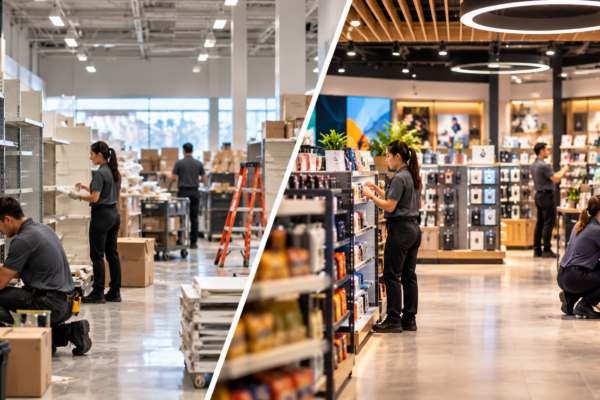
T-ROC’s approach to display maintenance reinforces the same logic. Break-fix services for retail displays address a problem that technology creates: as display environments become more sophisticated — interactive screens, IoT-connected fixtures, embedded sensors — the cost and frequency of hardware failures increases. A broken display in a high-traffic location is not a maintenance inconvenience. It is an active conversion loss. Rapid, reliable break-fix response is a retail technology service in its own right.
CES 2026 retail trends and store execution insights reinforced T-ROC’s core positioning: the brands walking away with the strongest in-store results are not the ones with the most advanced technology. They are the ones with the tightest integration between their technology and their field teams — where data flows from the store to the brand and action flows from the brand back to the store, with minimal latency in both directions.
9. Inventory, Fulfillment, and the Back-of-House Tech Stack
The customer-facing retail technology stack gets the headlines. The back-of-house stack is where operational leverage actually lives.
Inventory accuracy is the foundation of every retail technology investment. An AI-powered demand forecast is useless if the perpetual inventory count is wrong. A BOPIS order creates a negative customer experience if the item a shopper reserved online is not actually on the shelf. The entire digital-physical integration falls apart without a reliable inventory layer beneath it.
Effective inventory management solutions in 2026 combine RFID-based cycle counting, computer vision shelf scanning, and integration with supplier systems to maintain inventory accuracy above 97% — the threshold at which digital-physical parity becomes operationally viable. Inventory management best practices have evolved from periodic audits to continuous monitoring, with exception-based alerting replacing manual review cycles. And the inventory management system itself has become a platform rather than a tool — connecting POS, WMS, e-commerce, and field operations into a unified view of stock position at every location.
Walmart’s approach to distribution center automation is the most visible signal of how seriously large operators are taking this. Walmart’s $330M distribution center investment in automated sorting, robotic picking, and AI-optimized routing is not about replacing warehouse workers — it is about achieving a replenishment speed and accuracy that supports both e-commerce fulfillment and store replenishment from the same physical infrastructure. That investment signals where the competitive baseline is heading for the entire industry.
10. What Comes Next: Preparing for a Tech-First Retail Future
The most important retail technology decisions in 2026 are not technology decisions. They are strategic decisions that happen to be expressed through technology choices.
The question is not “should we implement AI?” It is “which customer moments will we optimize with AI, and which will we protect as distinctly human experiences?” The question is not “should we automate?” It is “which processes, when automated, free our best people to do the work that machines cannot?” The question is not “should we invest in retail execution software?” It is “what data do we need from the field to make better decisions faster, and what platform architecture captures it?”
The execution lessons from CES 2026 point toward a specific operating model: brands that are winning in-store in 2026 have done four things. They have connected their field operations data to their digital analytics. They have deployed AI tools that surface insights at the moment and location where they are actionable. They have trained and retained field teams who know how to use those tools. And they have built feedback loops that turn field observations into product, content, and strategy improvements in days rather than quarters.
The gap between brands that have built this operating model and those that have not is widening. Technology is the enabler. Execution is the differentiator. The brands at the top of the category are treating both as equally non-negotiable.
Definition Pages
Ready to Align Your Technology and Field Execution?
T-ROC Global helps brands and retailers design retail technology strategies that work on the actual store floor — not just in the demo. Talk to our team about field execution, virtual brand ambassadors, display technology, and the Retail360 platform.
Talk to a Retail Technology Expert
No commitment. No sales pitch. Just a real conversation about your execution challenges.