



Shelf talkers are the cheapest thing in a merchandising budget and the most reliably wasted. A brand prints 40,000 cards for 2,000 stores, ships them, and books the campaign as live. Nobody can say afterwards how many actually went onto a rail, because nothing in the process was ever built to check.
This guide covers what a shelf talker is, how it differs from the shelf labels and strips it gets confused with, what belongs on one, and the two reasons they fail: design that cannot be read, and a box that was never opened.
What is a shelf talker?
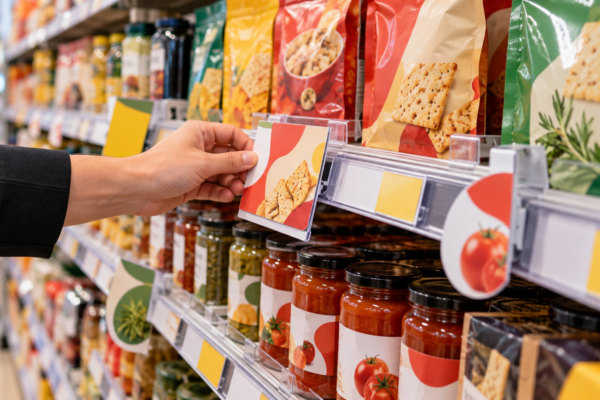
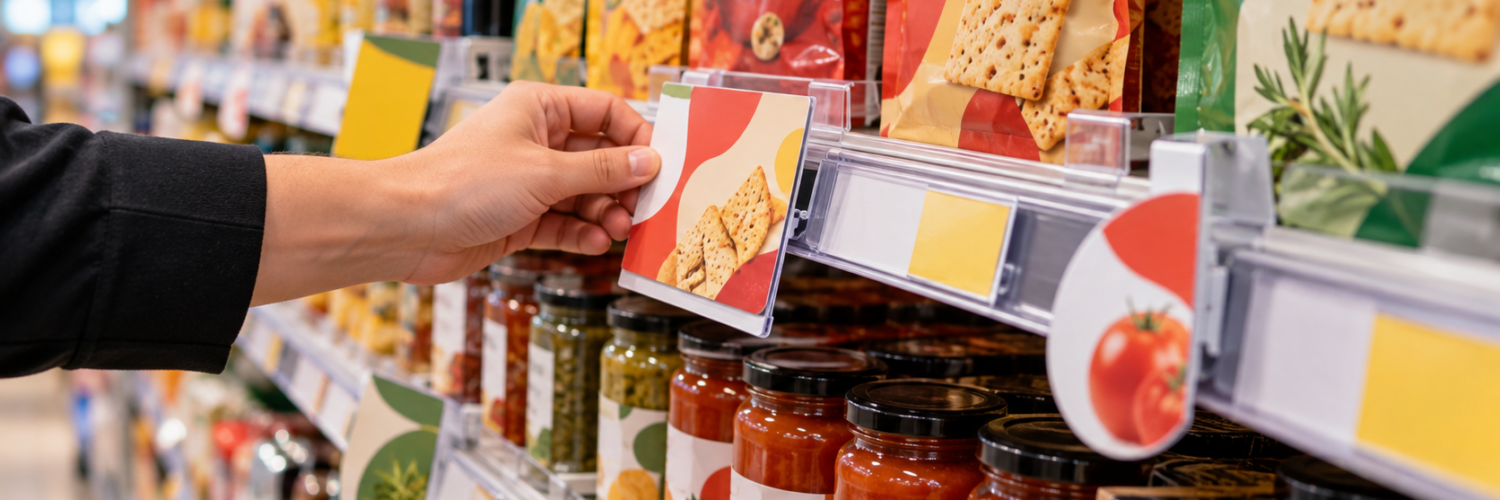
A shelf talker is a small printed sign attached at shelf edge, next to a product already in its planogrammed position, carrying a short message intended to influence a shopper at the moment of choice. It typically calls out a price promotion, an award, a product claim or a new formulation. It adds a message to existing stock rather than creating a new display.
That distinction matters commercially. A point of purchase display brings product somewhere new, costs a lot, and needs space negotiated with the retailer. A shelf talker leaves the planogram alone and simply argues for the facing you already hold. It is the lowest-cost intervention available at shelf, which is exactly why it gets so little attention and so little follow-through.
Shelf talker vs shelf label vs shelf strip
These four terms get used interchangeably and mean different things. Getting them wrong in a brief produces artwork that physically will not fit the fixture.
| Item | Who owns it | What it carries | Can it be removed? |
|---|---|---|---|
| Shelf talker | The brand | A promotional or persuasive message | Yes — it is optional, so it goes first |
| Shelf label | The retailer | Price, barcode, product code | No — it is required for trading |
| Shelf strip | Usually the retailer | A continuous printed band along the rail, often branding or category signposting | Sometimes, by agreement |
| Price tag holder | The retailer | Nothing — it is the plastic channel that holds labels and talkers | No — it is part of the fixture |
The practical consequence: your talker has to work with the holder the store already has. A card designed without the channel dimensions in hand will either not seat properly or will cover the retailer’s price label, and covering the price label is the fastest way to have your campaign taken down.
Common shelf talker formats
- Rail insert. A flat card that slides into the existing price channel. Cheapest, least likely to be rejected, least visible.
- Flag or wobbler. Projects out from the shelf edge into the aisle on a flexible stem. Far more visible, and the format retailers restrict most often because it obstructs the aisle.
- Die-cut shape. A card cut to a product silhouette or logo shape. Draws the eye; costs more; needs the holder to grip an irregular edge.
- Clip-on frame. A reusable plastic holder clipped to the rail, into which cards are swapped. Higher upfront cost, much cheaper per campaign afterwards.
- Digital shelf edge. An electronic strip showing changeable content. Removes the installation problem entirely, but only exists where the retailer has already fitted the hardware.
Shelf talker design: what actually gets read
A shopper scanning a category gives any single facing roughly a second. The design brief follows from that constraint, not from what looks good on a screen at full size.
One message per card. A talker carrying a price claim, an award and a sustainability message communicates nothing. Pick the single reason most likely to move this shopper and drop the rest.
Legible from a metre. Design at actual size and check it from standing distance, not zoomed in on a monitor. If the key word is not readable at a glance, the card is decoration.
Contrast over brand palette. The talker has to separate from the packaging directly behind it. A card in your own brand colours disappears into your own shelf block, which is the most common self-inflicted design failure.
Never cover the price label. It gets the card pulled, and it annoys the store team whose cooperation you need next time.
Put the claim in plain words. “Voted best in test” beats a reference to an award nobody recognises. If a claim needs qualifying text to be legal, the qualifier has to fit too — which usually means choosing a simpler claim.
Why shelf talkers fail
Two reasons, and only one of them is about design.
They are never installed
This is the big one. Cards are printed centrally, boxed, and shipped to stores. At the store they arrive as an unexplained box addressed to nobody in particular, during a week when the team has its own priorities. Nobody is tasked with opening it, nobody is measured on whether the cards go up, and the brand finds out nothing because no one goes to look.
The economics are brutal and rarely calculated. Printing is cheap, so a low install rate feels tolerable. But the campaign’s entire value sits in the installation, not the print run. Forty thousand cards in back rooms cost the same as forty thousand on rails, and return nothing.
They are installed and then removed
Retailers govern shelf edge. Size limits, permitted fixing methods, aisle projection rules and claim wording are set by the banner, and vary between banners. A talker that breaks a rule gets pulled by a store manager or a regional merchandiser, usually without anyone informing the brand. The campaign then shows as delivered and performs as though it never ran.
Both failures share a cause with every other execution problem at shelf: the material is bought by people at head office and executed by people in stores, and nothing connects the two. It is the same gap that makes planogram compliance decay after a reset.
How to verify a shelf talker campaign
- Confirm the retailer’s rules before artwork. Maximum dimensions, permitted projection, fixing method and claim restrictions, per banner. This is a one-off conversation that prevents a whole print run being wasted.
- Get the channel dimensions. Design to the holder that exists in store, not to a generic template.
- Name a recipient. A box addressed to the store gets ignored. A box expected by a named person, or installed by a visiting team, does not.
- Measure install rate, not cards shipped. Of the stores that received cards, what percentage have them on the rail? This is the only number that describes the campaign.
- Photograph the shelf edge. A photo proves installation, shows whether the card seated correctly, and settles a dispute without a second visit.
- Re-check mid-campaign. Installation on day one does not mean presence in week four. Cards fall out, get swapped during restocking, or get removed.
- Report per store. An install rate of 80% nationally hides the region at 25%.
What a realistic install rate looks like
There is no published benchmark worth citing, because the figure depends entirely on how it is measured and on who was asked to do the installing. A campaign relying on store teams to open a box will land somewhere very different from one where a field team fits the cards and photographs each bay.
So the useful target is internal. Fix what counts as installed, establish a baseline on one campaign, and measure the next against it. The gap between a shipped-cards number and a verified install rate is usually the single most uncomfortable figure in a merchandising review, and the most useful.
Where a field team fits
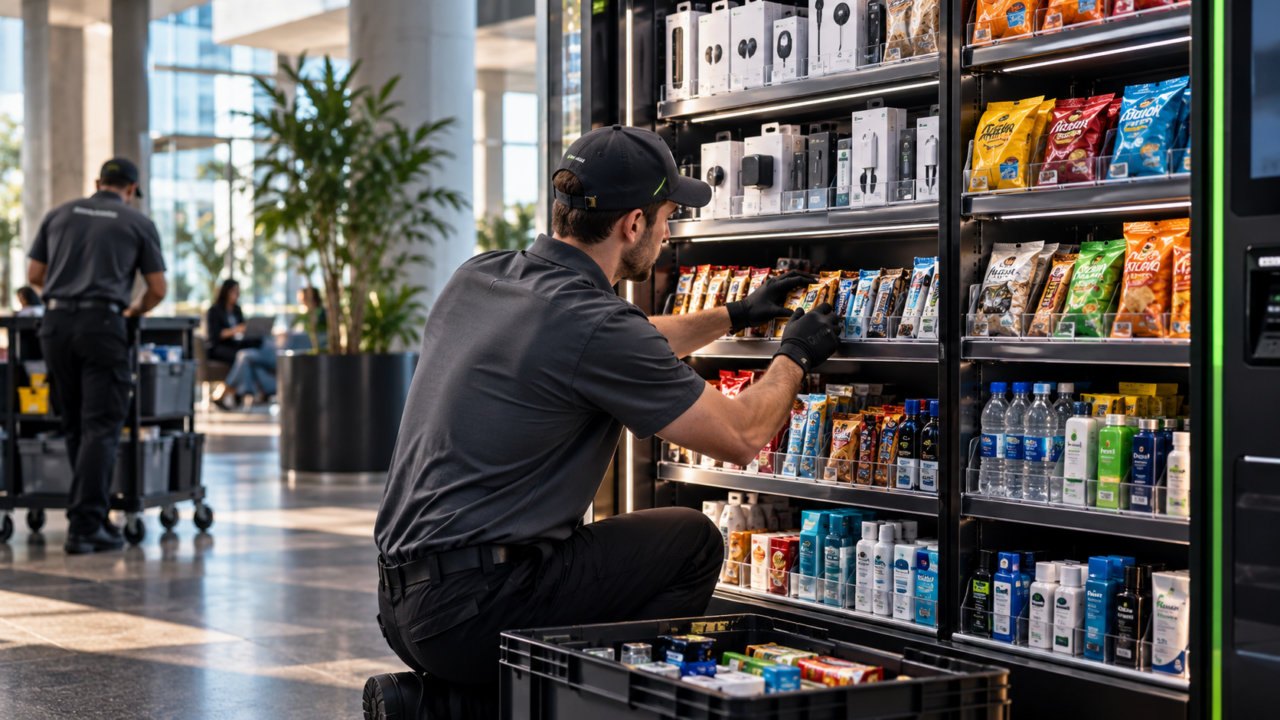
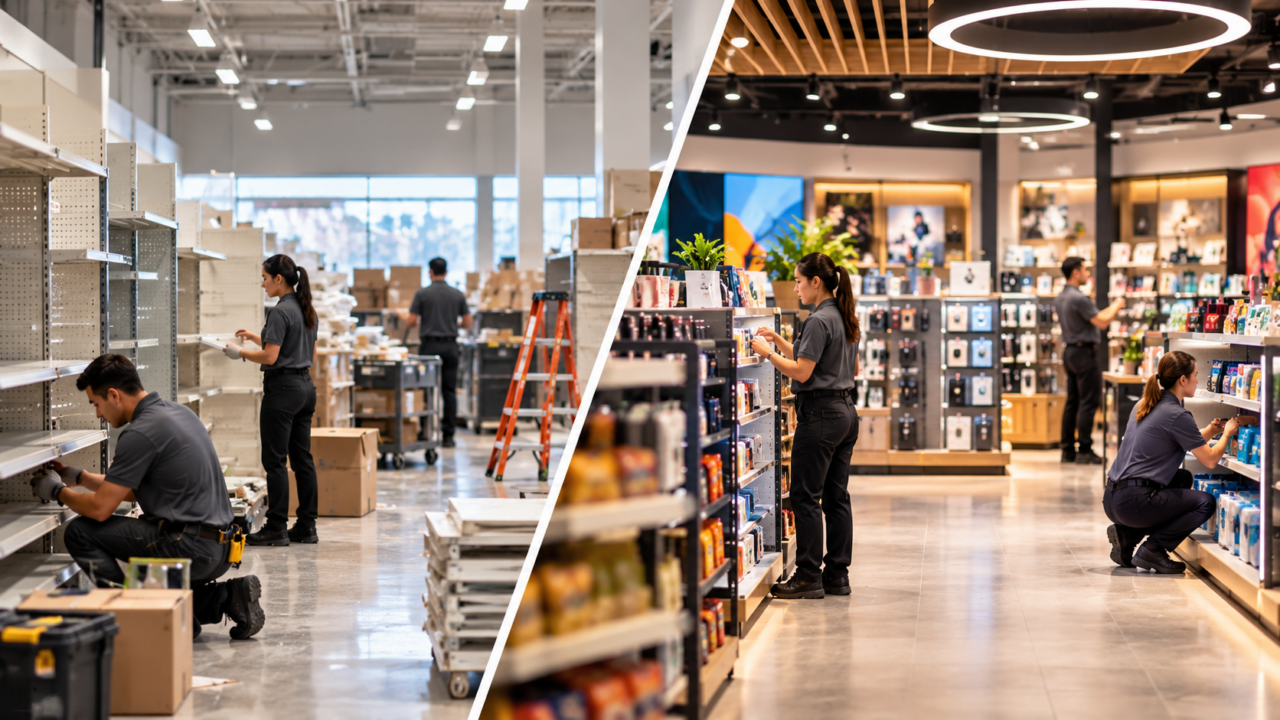
Shelf talker installation is small, repetitive, geographically spread work that spikes with each campaign — the profile that suits visiting coverage rather than store labour. It is also work where the person installing should not be the person reporting on it unless there is photographic evidence attached.
Practically, talkers are rarely worth a dedicated visit on their own. They get fitted during a visit already happening for merchandising, a reset or an audit, which is what makes them cheap to execute properly and expensive to execute by post.
T-ROC fits and audits shelf edge material as part of wider merchandising coverage, with field teams reporting per store, photo evidence on every visit and a fix-on-visit standard. Talk to our team about what a shelf-edge audit would show across your doors.
Frequently Asked Questions
What is a shelf talker?
A shelf talker is a small printed sign attached at shelf edge beside a product already in its planogrammed position, carrying a short message meant to influence a shopper at the point of choice. It usually calls out a price promotion, an award, a product claim or a new formulation. Unlike a display, it adds a message to stock that is already on the shelf rather than creating a new selling location.
What is the difference between a shelf talker and a shelf label?
The shelf label belongs to the retailer and carries price, barcode and product code. It is required for trading and cannot be removed. The shelf talker belongs to the brand and carries a promotional message. It is optional, which is why it is the first thing taken down when shelf edge gets crowded or when it breaks a retailer rule. A talker that covers the price label will be removed quickly.
What is a shelf strip?
A shelf strip is a continuous printed band running along the length of a shelf rail, usually carrying branding or category signposting rather than a single product message. It is normally controlled by the retailer and agreed as part of a wider space or category deal. A shelf talker, by contrast, is a discrete card for one product and is supplied by the brand.
What should go on a shelf talker?
One message. A shopper scanning a category gives a single facing about a second, so a card carrying a price claim, an award and a sustainability message communicates nothing at all. Choose the single strongest reason to pick your product, write it in plain words, and make it legible from roughly a metre away at actual print size. Any legally required qualifying text has to fit on the card too.
What size should a shelf talker be?
Whatever the retailer permits and the price channel physically accepts, which varies by banner and by fixture generation. There is no universal size. Confirm the maximum dimensions, permitted aisle projection and fixing method with each retailer before artwork is signed off, and design to the dimensions of the holder that exists in the store rather than a generic template.
Why do shelf talkers not get installed?
Because they arrive as an unexplained box addressed to nobody in particular, at a store whose team has its own priorities and no accountability for putting them up. Printing is cheap enough that a low install rate feels tolerable, but the whole value of the campaign sits in the installation. Cards sitting in a back room cost the same as cards on a rail and return nothing.
How do you measure whether a shelf talker campaign worked?
By install rate with photographic evidence, recorded per store, not by cards shipped. Shipment is a print and logistics number that says nothing about what a shopper can see. Check again mid-campaign, because cards fall out, get swapped during restocking or get removed for breaching a retailer rule. A national average conceals the region where nothing went up at all.