

Definition & Guide
What Is Retail Technology? Definition, Types & Trends
Retail Technology Definition
Retail technology refers to the hardware, software, platforms, and digital systems used to manage, optimize, and enhance retail operations — including point-of-sale systems, inventory management, e-commerce platforms, customer analytics, automated checkout, and AI-driven personalization tools that power the modern retail experience.
What Is Retail Technology?
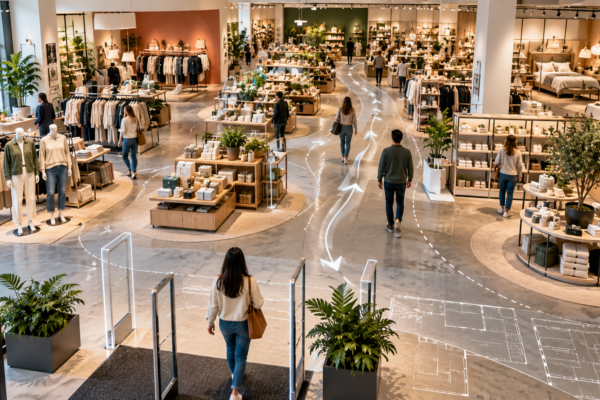
Retail technology — often abbreviated as “retail tech” — encompasses every digital tool, platform, and system that retailers use to operate their businesses, serve customers, and compete in an increasingly data-driven marketplace. From the barcode scanner at checkout to the AI engine recommending products on a mobile app, retail technology touches every part of the customer journey and the operational backbone that supports it.
The retail technology landscape has transformed dramatically over the past decade. What was once limited to point-of-sale terminals and basic inventory systems now spans cloud-based commerce platforms, computer vision, autonomous robots, conversational AI, and sensor networks that generate real-time operational intelligence.
For brands and retailers, technology adoption is no longer optional. Consumers expect seamless digital-physical experiences — online ordering with in-store pickup, personalized recommendations across channels, and instant access to product information. Retailers that fail to invest in the right technology stack fall behind in customer experience, operational efficiency, and competitive positioning.
T-ROC’s retail technology guide provides a comprehensive framework for evaluating and implementing the technologies that drive measurable retail performance improvement.
Types of Retail Technology
The retail technology ecosystem spans multiple categories, each serving distinct operational and customer-facing functions:
- Point-of-Sale (POS) Systems: The transactional backbone of retail — processing payments, tracking sales, and capturing customer data. Modern cloud-based POS platforms integrate with inventory, CRM, and loyalty systems to provide a unified operational view.
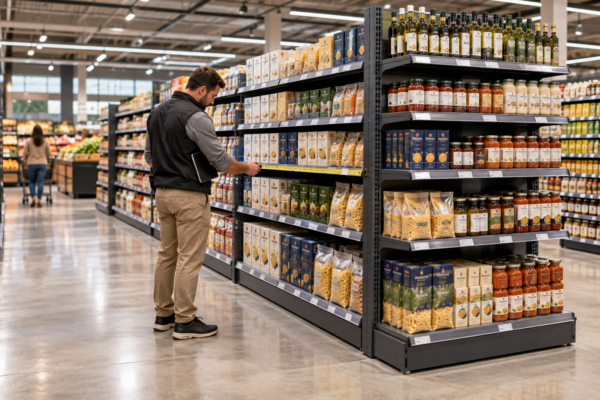
- Inventory Management Systems: Software that tracks stock levels in real time across warehouses, distribution centers, and store locations. Advanced platforms use demand forecasting and automated replenishment to optimize stock levels and reduce carrying costs.
- E-Commerce Platforms: Digital storefronts that enable online sales, product catalog management, order fulfillment, and customer account management. Leading platforms support headless commerce architectures that decouple the front-end experience from back-end operations.
- Customer Relationship Management (CRM): Platforms that consolidate customer data from all touchpoints — transactions, website visits, loyalty interactions, service inquiries — into unified profiles that power personalized marketing and service.
- AI & Machine Learning: Applied across demand forecasting, dynamic pricing, product recommendations, visual search, fraud detection, and customer service automation. AI is the fastest-growing category in retail tech investment.
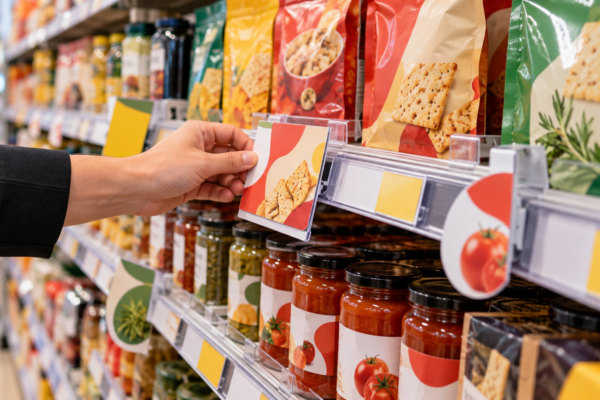
- IoT & Sensor Networks: Connected devices including foot traffic counters, shelf sensors, RFID tags, smart shelves, and environmental monitors that generate real-time operational data from the physical store environment.
- Autonomous Checkout: Self-checkout kiosks, mobile scan-and-go apps, and fully automated checkout-free stores that use computer vision and sensor fusion to eliminate traditional checkout lines.
- Automated Retail & Vending: Intelligent vending machines, robotic kiosks, and unattended retail units that deliver products and experiences without traditional staffing. T-ROC’s automated retail solutions help brands deploy and manage these technologies at scale.
The most effective retail technology strategies do not adopt tools in isolation. They build integrated ecosystems where data flows seamlessly between systems, creating a unified operational intelligence layer.
Benefits of Retail Technology
Strategic technology investment delivers compounding returns across the retail business:
- Operational Efficiency: Automation reduces manual tasks, minimizes errors, and frees staff to focus on customer-facing activities. Retailers that automate inventory management, scheduling, and reporting see 20-40% reductions in operational labor costs for those functions.
- Enhanced Customer Experience: Technology enables personalized recommendations, frictionless checkout, real-time product availability, and seamless cross-channel experiences that meet modern consumer expectations.
- Data-Driven Decision Making: Integrated technology stacks generate comprehensive data across every touchpoint, enabling evidence-based decisions on assortment, pricing, promotion, staffing, and store design.
- Revenue Growth: Personalization engines, dynamic pricing, and intelligent product recommendations drive measurable increases in conversion rate, average order value, and customer lifetime value.
- Supply Chain Visibility: Real-time tracking from manufacturer to shelf reduces lead times, prevents stockouts, and enables proactive response to disruptions.
- Competitive Differentiation: In an industry where product assortments increasingly overlap, the quality of the technology-enabled experience becomes a primary differentiator. Retailers with superior technology infrastructure attract and retain more customers.
The ROI of retail technology is not theoretical. Retailers that invest strategically and measure outcomes consistently report 2-5x returns on their technology investments within 18-36 months.
How Retail Technology Implementation Works
Successful retail technology adoption follows a structured approach that balances speed with reliability:
- Needs Assessment & Strategy: Identify the specific business problems technology should solve. Map current pain points, prioritize by impact, and define measurable success criteria. Avoid the common trap of adopting technology for its own sake.
- Vendor Evaluation & Selection: Assess technology vendors on capability, integration compatibility, scalability, total cost of ownership, implementation timeline, and support quality. Prioritize platforms that integrate with your existing ecosystem over best-of-breed point solutions that create data silos.
- Pilot Program: Deploy new technology in a controlled subset of locations to validate performance, identify integration issues, and measure impact before enterprise rollout. Pilot duration should be long enough to capture meaningful data — typically 60-90 days.
- Training & Change Management: Technology only delivers value when people use it effectively. Invest in comprehensive training for store associates, managers, and corporate teams. Address resistance proactively by demonstrating how the technology makes their jobs easier.
- Enterprise Rollout: Scale from pilot to full deployment in phased waves, incorporating lessons learned from each phase. Maintain dedicated support resources during rollout to resolve issues quickly.
- Optimization & Iteration: Monitor performance against success criteria, gather user feedback, and continuously refine configuration, workflows, and training. Technology implementation is never “done” — it requires ongoing optimization.
The most common technology implementation failures stem from poor planning, inadequate training, and lack of integration — not from the technology itself. Investing in the process is as important as investing in the platform.
Retail Technology Trends Shaping 2026
Several technology trends are reshaping retail operations and customer experience in 2026:
- Generative AI in Customer Interaction: AI assistants powered by large language models are handling product discovery, customer service inquiries, and personalized shopping guidance across chat, voice, and in-store kiosk interfaces.
- Computer Vision at Scale: Cameras and vision algorithms are monitoring shelf conditions, tracking foot traffic patterns, detecting shrinkage in real time, and powering checkout-free store formats.
- Unified Commerce Platforms: Retailers are replacing fragmented omnichannel architectures with single-platform solutions that manage all channels — store, web, mobile, marketplace — from one centralized system with one shared dataset.
- Retail Media Networks: Retailers are monetizing their first-party customer data by offering targeted advertising platforms to brands, creating significant new revenue streams through in-store digital displays and e-commerce ad placements.
- Edge Computing for Real-Time Operations: Processing data at the store level rather than in the cloud enables real-time inventory updates, instant pricing adjustments, and latency-free customer interactions even during network disruptions.
The retailers that thrive in 2026 and beyond will be those who view technology not as a cost center but as the operational backbone that enables every other strategic initiative.
Frequently Asked Questions About Retail Technology
What are the most important retail technologies in 2026?
The most impactful retail technologies in 2026 include AI-powered demand forecasting and personalization engines, unified commerce platforms that merge online and in-store data, computer vision for inventory tracking and loss prevention, autonomous checkout systems, and IoT sensor networks for real-time supply chain visibility. Generative AI for customer service and content creation is also gaining rapid adoption.
How much should retailers invest in technology?
Retail technology spending typically ranges from 1.5% to 4% of revenue, with top-performing retailers investing at the higher end. The right investment level depends on current infrastructure maturity, competitive pressure, and growth strategy. The most important consideration is ROI — every technology investment should have a measurable impact on revenue, cost reduction, or customer experience improvement.
What is the difference between retail technology and retail tech?
There is no meaningful difference. “Retail tech” and “retail technology” are used interchangeably. “Retail tech” is simply the abbreviated, informal version. Both refer to the same category of hardware, software, and digital systems used to operate and optimize retail businesses.
How does AI improve retail operations?
AI improves retail operations by automating demand forecasting with higher accuracy, optimizing pricing dynamically based on market signals, personalizing product recommendations and marketing messages, detecting shrinkage and fraud through pattern analysis, optimizing workforce scheduling based on predicted traffic, and enabling natural language customer service through chatbots and virtual assistants.
What is unified commerce and how does it differ from omnichannel?
Unified commerce is the evolution of omnichannel retail. While omnichannel connects separate channel systems to create a consistent customer experience, unified commerce runs all channels — stores, e-commerce, mobile, marketplace — on a single, centralized platform with one shared dataset. This eliminates data silos, synchronization delays, and the integration complexity that omnichannel architectures require.
Ready to Modernize Your Retail Technology?
T-ROC helps brands evaluate, implement, and optimize the retail technologies that drive measurable performance improvements — from automated retail to AI-powered customer engagement.