




The narrative around artificial intelligence in retail has been dominated by e-commerce — recommendation engines, dynamic pricing algorithms, and chatbots handling customer service tickets. But the most consequential AI transformation in retail is happening inside physical stores. AI brick-and-mortar retail is no longer a speculative concept or a conference buzzword. It is an operational reality that is reshaping how stores are staffed, how shelves are stocked, how customers are served, and how brands measure the return on every dollar spent in the field.
The stakes are significant. Physical stores still account for approximately 80% of total retail sales in the United States, and that share has proven remarkably durable even as e-commerce continues to grow. The retailers and brands that are winning in 2026 are not choosing between digital and physical — they are using AI to make every square foot of store space more productive, every associate interaction more valuable, and every merchandising decision more precise. For a comprehensive look at the technology landscape driving this shift, T-ROC’s retail technology guide provides a thorough foundation.
Where AI Is Making the Biggest Impact in Physical Retail
AI’s influence on brick-and-mortar retail extends across nearly every operational domain. The common thread is the same: AI takes raw data from the store environment — sales transactions, foot traffic patterns, shelf images, workforce schedules, customer interactions — and converts it into actionable intelligence that humans can execute against in real time.
Inventory Intelligence and Demand Forecasting
Out-of-stock events remain one of the most expensive problems in physical retail. Industry estimates place the annual cost of stockouts in the hundreds of billions globally, and every empty shelf represents a sale that either shifts to a competitor or simply never happens. AI-powered demand forecasting models ingest historical sales data, local event calendars, weather patterns, promotional schedules, and even social media sentiment to predict what each store location will need, at the SKU level, days or weeks in advance.
The difference between traditional replenishment and AI-driven inventory intelligence is precision. Traditional models rely on rolling averages and safety stock buffers — a blunt instrument that leads to either overstocking (tying up capital and increasing markdowns) or understocking (losing sales). AI models identify demand signals that human planners cannot process at scale, adjusting forecasts dynamically as conditions change.
Computer Vision and Shelf Analytics
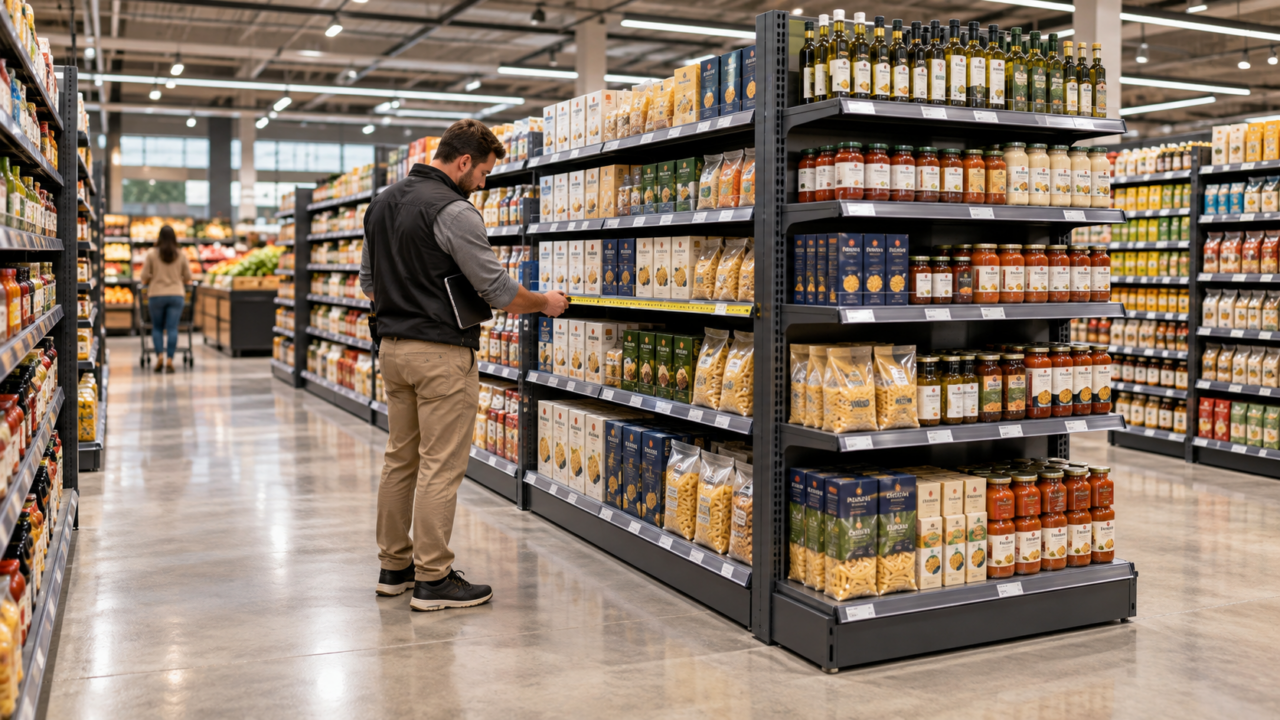
One of the most rapidly maturing applications of AI in brick-and-mortar retail is computer vision for shelf monitoring. Cameras and mobile devices capture images of retail shelves, and AI models analyze those images to detect out-of-stocks, planogram compliance violations, pricing errors, and competitive activity — all in near real time.
The operational value is enormous. Instead of relying on periodic manual audits that capture a snapshot of store conditions once a week or once a month, AI-powered shelf analytics provide continuous visibility into what is actually happening on the sales floor. Field teams receive prioritized task lists based on AI analysis, focusing their time on the highest-impact corrections rather than walking every aisle looking for problems.
Customer Traffic Analysis and Store Layout Optimization
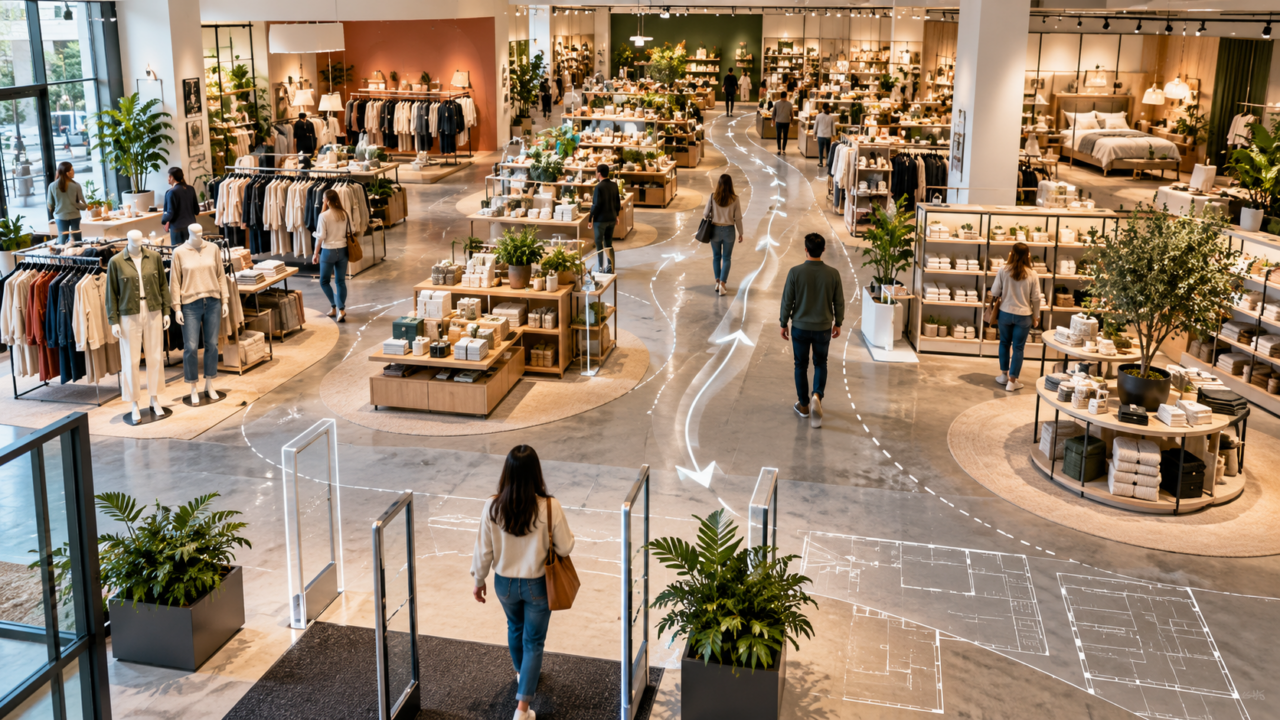
AI-driven traffic analytics use sensor data to map how customers move through a store — where they linger, which displays capture attention, which aisles are underperforming, and where bottlenecks form. This data enables retailers to optimize store layouts, endcap placements, and staffing levels based on actual customer behavior rather than assumptions.
When combined with POS data, traffic analytics reveal conversion rates at a granular level. A display that attracts high traffic but low conversion signals a merchandising or pricing problem. A high-converting zone with low traffic suggests an opportunity to redirect customer flow. These are the kinds of insights that were previously invisible to store operators and are now surfaced automatically by AI models.
AI-Powered Retail Execution Platforms: How Retail360 Changes the Game
The real challenge with AI in physical retail has never been generating insights — it has been translating those insights into consistent, on-the-ground execution across hundreds or thousands of store locations. This is the problem that AI-powered retail execution platforms are built to solve, and it is where solutions like T-ROC’s Retail360 are redefining what is possible.
Retail360 functions as an in-store intelligence engine that connects field data collection, AI-driven analysis, and actionable task management into a single closed-loop system. Rather than generating reports that sit in a dashboard waiting for someone to notice a problem, Retail360 actively surfaces execution gaps, prioritizes corrective actions, and routes those actions to the right people in the field — in real time.
From Reactive to Predictive Execution
Traditional retail execution operates on a reactive cycle: a field rep visits a store, identifies issues during an audit, logs those issues, and someone addresses them — eventually. By the time the correction happens, the sales impact has already occurred. AI-powered platforms like Retail360 compress this cycle dramatically.
By analyzing patterns across thousands of store visits, Retail360’s AI models can predict which locations are most likely to experience compliance failures, stockouts, or display execution problems before they happen. Field teams can be routed proactively to at-risk stores rather than discovering problems after the fact. The shift from reactive auditing to predictive execution is one of the most significant operational advantages that AI delivers in brick-and-mortar retail.
Real-Time Visibility for Every Stakeholder
Retail360 provides configurable dashboards that give every level of the organization the information they need. Store-level teams see their daily task queues and compliance scores. District managers see performance trends and outlier locations. Brand leaders see aggregated program ROI, competitive positioning data, and execution quality metrics across their entire retail footprint. This visibility eliminates the information gaps that historically allowed execution problems to persist undetected for weeks.
For organizations evaluating retail technology investments, T-ROC’s automated retail guide covers how intelligent platforms integrate with existing store systems and field workflows.
The Human + AI Equation: Why Brand Ambassadors Matter More, Not Less
There is a persistent misconception that AI will eventually replace human workers on the retail floor. The evidence from the highest-performing retail programs in 2026 tells the opposite story. AI is not replacing brand ambassadors — it is making them dramatically more effective.
The logic is straightforward. AI excels at processing data at scale: identifying which stores need attention, which products are underperforming, which displays are out of compliance, and which customer segments are underserved. What AI cannot do is walk up to a confused customer, read their body language, understand their unspoken concerns, and guide them to a purchase decision with genuine empathy and expertise. That requires a human being — and specifically, a well-trained brand ambassador who understands both the product and the customer.
AI as a Force Multiplier for Field Teams
When brand ambassadors are equipped with AI-driven insights from platforms like Retail360, their impact per store visit increases substantially. Instead of spending 30 minutes walking an aisle to identify problems, an ambassador arrives at a location already knowing which SKUs are underperforming, which displays need correction, and which customer engagement opportunities have the highest revenue potential. The AI handles the diagnostic work. The human handles the execution and the relationship.
This division of labor is what T-ROC calls the “Phygital” model — physical execution powered by digital intelligence. The State of Retail Execution 2026 report documents how leading retailers are combining predictive AI models with trained field teams to close the gap between algorithmic insight and physical shelf reality.
The Consultative Advantage That AI Cannot Replicate
In categories with high consideration — consumer electronics, appliances, premium beauty, specialty food — the in-store experience often determines whether a customer converts or walks out empty-handed. AI can personalize a digital ad. It can recommend a product on a screen. But it cannot demonstrate how a product feels in your hand, answer the follow-up question that the customer was too hesitant to type into a search engine, or build the kind of trust that turns a first-time buyer into a loyal repeat customer.
Brand ambassadors operating within an AI-augmented environment represent the highest-value deployment model in physical retail. They combine the scale and precision of data-driven decision-making with the irreplaceable warmth, adaptability, and persuasive power of human interaction. The brands investing in both AI platforms and skilled brand ambassadors are consistently outperforming those that invest in one without the other.
Practical Steps for Adopting AI in Brick-and-Mortar Retail
For retailers and brands considering AI adoption for their physical store operations, the path forward does not require a massive, multi-year transformation initiative. The most successful implementations follow a pragmatic, phased approach:
- Start with your highest-cost execution gap. Identify whether your biggest margin leak is out-of-stocks, planogram non-compliance, promotional execution failures, or staffing inefficiency. Deploy AI to address that specific problem first, and measure the ROI before expanding scope.
- Invest in data capture infrastructure. AI is only as good as the data feeding it. Ensure your field teams are equipped with mobile tools that capture structured, consistent data at every store visit — photos, compliance scores, competitive observations, and customer interaction logs.
- Choose platforms that close the loop. The value of AI in retail execution comes from connecting insight to action. Prioritize platforms like Retail360 that don’t just generate dashboards but actively route tasks, track completion, and measure impact.
- Pair technology with trained human capital. AI without field execution capability produces insights that no one acts on. Technology investments should be matched with investments in recruiting, training, and deploying skilled field teams who can turn AI-generated priorities into physical store improvements.
- Measure relentlessly. Track the KPIs that connect AI-driven execution to business outcomes: compliance rate lift, out-of-stock reduction, sales per visit, and incremental revenue attributable to AI-informed field actions.
Frequently Asked Questions About AI in Brick-and-Mortar Retail
How is AI used in brick-and-mortar retail stores?
AI is used across multiple operational domains in physical retail, including demand forecasting and inventory optimization, computer vision for shelf monitoring and planogram compliance, customer traffic analysis for store layout optimization, workforce scheduling, and retail execution platforms that route prioritized tasks to field teams in real time. The common thread is converting store-level data into actionable intelligence that improves execution quality and reduces revenue leakage.
Will AI replace human workers in retail stores?
No. The evidence from the highest-performing retail programs consistently shows that AI augments human capability rather than replacing it. AI excels at data processing, pattern recognition, and prediction at scale. Humans excel at customer interaction, consultative selling, problem-solving in unstructured situations, and physical execution tasks like restocking and display building. The most effective model combines AI-driven insights with skilled human execution — what T-ROC calls the “Phygital” approach.
What is Retail360 and how does it use AI?
Retail360 is T-ROC’s AI-powered retail execution platform that combines field data collection, predictive analytics, and real-time task management into a closed-loop system. It uses AI to analyze data from thousands of store visits to predict execution risks, prioritize field team actions, and deliver real-time visibility into store-level performance for every stakeholder — from field reps to brand executives. The platform shifts retail execution from reactive auditing to proactive, data-driven intervention.
What ROI can retailers expect from AI investments in physical stores?
ROI varies by implementation, but retailers deploying AI-powered execution platforms typically see measurable improvements in planogram compliance rates (often 15-25% improvement), out-of-stock reductions (10-20% improvement), and incremental sales lifts attributable to better field execution. The key to realizing ROI is pairing the technology with trained field teams who can act on AI-generated insights consistently across the store network. Retailers that deploy AI without corresponding investments in human execution capability typically see limited returns.
How should a retailer get started with AI for in-store operations?
Start by identifying your single largest execution gap — whether that is out-of-stocks, compliance failures, staffing inefficiency, or promotional execution breakdowns. Deploy AI to address that specific problem first, measure the impact, and expand from there. Invest in mobile data capture tools for your field teams, choose platforms that connect insights directly to field actions, and ensure you have the human capital to execute on AI-generated priorities. T-ROC’s retail technology guide provides a step-by-step framework for evaluating and implementing AI solutions in physical retail environments.