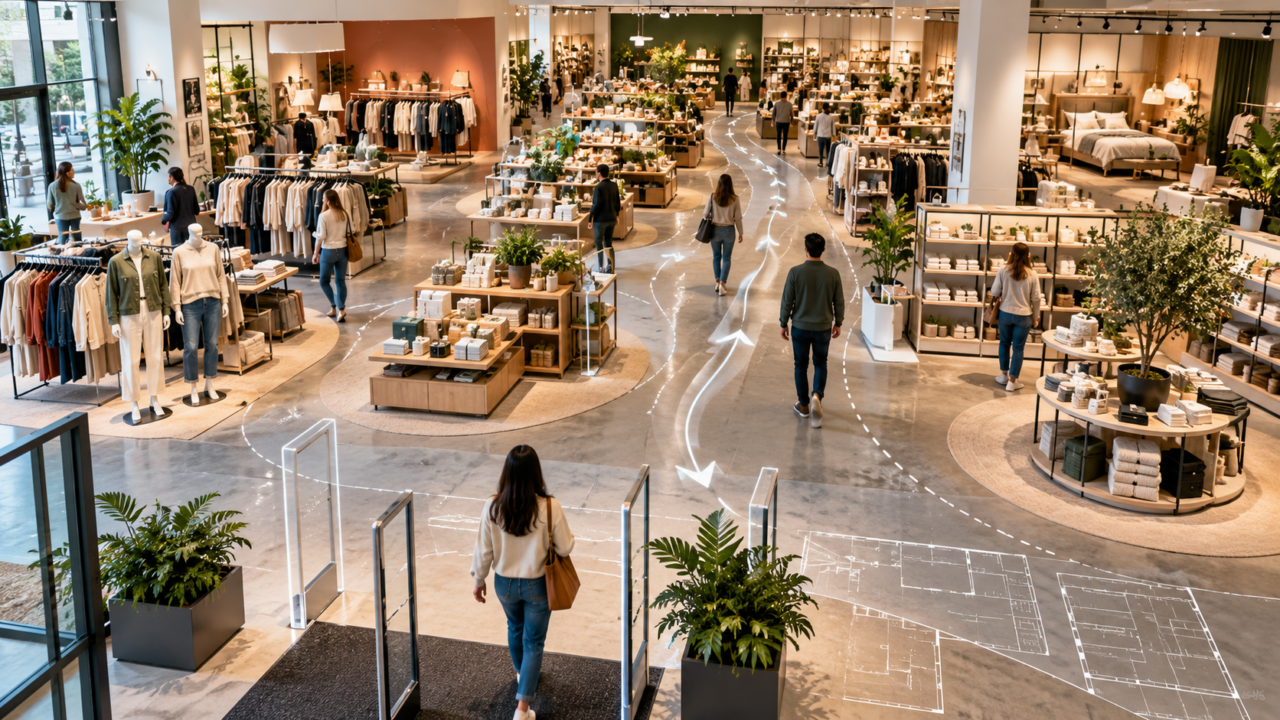




AI is everywhere in retail right now. From chatbots to product recommendations, the conversation has shifted quickly. Many assume that as AI improves, physical stores will become less important. That’s not what’s happening. If anything, stores are becoming more valuable.
The real shift isn’t about replacing stores. It’s about redefining how they work within a broader customer experience.
Why AI in Retail Stores Is Changing the Experience
AI is solving a real problem for retailers and customers.
Shopping can be overwhelming. Too many options. Too much information. Not enough clarity.
AI helps simplify that.
Tools can answer questions, summarize reviews, and guide customers toward the right product. Instead of searching through pages of information, shoppers get direct, useful answers.
This is especially valuable for complex purchases, where confidence matters.
But AI doesn’t replace the experience.
It supports it.
The Store Is Still the Center of Retail
For years, retail leaders questioned whether stores would lose relevance.
That hasn’t happened.
Instead, stores have evolved into something more important.
They are where decisions happen.
Customers may research online. They may use AI tools. But when it comes time to buy, many still want to see the product, ask questions, or confirm their choice.
That physical interaction builds confidence in a way digital tools alone cannot.
AI + Human Interaction: Not Either/Or
One of the biggest mistakes retailers make is thinking in extremes.
AI versus humans. Digital versus physical.
Customers don’t think that way.
They want help. The right kind of help, at the right moment.
Sometimes that’s AI. A quick answer. A recommendation. A shortcut.
Other times, it’s a person.
Someone who can explain, reassure, and guide the decision.
Retailers that succeed are the ones that combine both.
AI handles speed and information.
People handle context and trust.
Creating a Frictionless Retail Journey
The real opportunity with AI in retail stores is reducing friction.
Customers move between channels constantly.
They browse online. Check reviews. Visit stores. Compare options.
If those experiences don’t connect, frustration builds.
AI helps bridge that gap.
It allows retailers to:
- provide consistent information across channels
- personalize recommendations
- reduce time spent searching
- improve decision-making
But none of that works without strong execution in-store.
If the experience breaks at the store level, everything else falls apart.
Retail execution visibility tools help ensure that what customers expect is actually delivered in-store, closing the gap between digital promise and physical reality.
Why Store Execution Matters More Than Ever
As AI improves the front end of the experience, expectations rise.
Customers expect:
- accurate product availability
- consistent pricing
- knowledgeable assistance
- smooth transitions between online and in-store
If any of those fail, trust drops.
That’s why execution is becoming a competitive advantage.
Retailers need to ensure that strategy shows up correctly across every location.
The Role of Store Associates in an AI-Driven World
AI can provide answers.
But it can’t replace human judgment.
Store associates still play a critical role, especially in complex or high-consideration purchases.
They help:
- clarify options
- build confidence
- create a better experience
Assisted sales programs show how trained associates can improve conversion and customer satisfaction, even as digital tools expand.
The Future: Connected, Not Replaced
AI will continue to grow in retail.
But it won’t replace stores.
It will make them better.
The future of retail is connected.
Digital tools support the journey.
Stores complete it.
Retailers that understand this balance will be in a stronger position to compete.
Final Thoughts
AI in retail stores is not about replacing the physical experience.
It’s about improving it.
Customers don’t choose between channels. They move between them.
The goal is simple.
Be helpful in the moment.
Whether that moment happens online, through AI, or in a store.
Read the complete guide: Retail Technology & Innovation →
T-ROC Editorial Team
The T-ROC editorial team brings 20+ years of retail industry expertise across brand ambassador programs, mystery shopping, retail merchandising, and managed technology solutions. Learn more about T-ROC.
Frequently Asked Questions
Does AI replace physical retail stores?
Artificial intelligence strengthens physical retail rather than replacing it. Shoppers frequently use AI and online research before buying, then still go to a store to see, touch, and confirm the product, which makes in-store execution more important rather than less.
How does AI help with complex or high-consideration purchases?
AI simplifies complex shopping by answering questions, summarizing reviews, and guiding customers toward suitable products. It reduces time spent searching and helps improve decision-making. Yet confidence often forms in person, especially for high‑consideration items, where knowledgeable associates clarify options, provide judgment and reassurance, and help finalize choices inside the store.
How does AI connect online research with in-store decisions?
The journey now runs online and offline together: customers browse online, check reviews, visit stores, and compare options. Disconnected information across those steps creates frustration and erodes trust. AI can bridge the channels by keeping information consistent, personalising recommendations, and reducing search time so shoppers arrive better prepared. The store experience still has to deliver reliably for that journey to feel seamless.
What in-store expectations rise as shoppers use AI?
Rising expectations from AI make store execution critical. Retailers need accurate product availability, consistent pricing, knowledgeable assistance, and smooth online-to-store transitions. If stores fall short, the broader experience suffers and trust declines. Meeting these basics ensures that the speed and information advantages of AI translate into confidence, clarity, and a satisfying in-person decision when customers arrive.
How do retailers close the gap between digital expectations and store performance?
Retail execution visibility tools and assisted sales programs as practical ways to close gaps between digital expectations and store delivery. These approaches help ensure in‑store accuracy and knowledgeable human support. Ultimately, digital tools support the journey while stores complete it, so retailers should be ready to assist precisely when customers need help.