



The retail industry is entering one of the most transformative periods in its history. As artificial intelligence reshapes supply chains, customer engagement, and store operations, the brands that thrive will be those that pair technological innovation with authentic human connection. Understanding 2026 retail trends AI disruption is no longer optional for retail leaders — it is the baseline requirement for staying competitive in a market that rewards speed, personalization, and adaptability above all else.
The numbers paint a compelling picture. Global retail AI spending is projected to exceed $31 billion in 2026, up from $7.3 billion just four years ago. Yet spending alone does not guarantee results. The retailers seeing measurable ROI are those that deploy AI strategically — targeting specific operational bottlenecks, augmenting human decision-making rather than replacing it, and measuring outcomes with the same rigor they apply to any capital investment. For a comprehensive overview of the forces shaping physical retail this year, see T-ROC’s report on retail trends 2026.
What makes 2026 different from previous years of AI hype is maturity. The technology has moved beyond pilot programs and proof-of-concept demos. Retailers are deploying AI at scale — across hundreds or thousands of locations — and generating the kind of longitudinal data that separates genuine transformation from expensive experimentation. The question is no longer whether AI will change retail. The question is which retailers will harness it effectively and which will fall behind.
How AI Is Reshaping In-Store Retail Execution
The most visible impact of 2026 retail trends AI disruption is unfolding inside physical stores, where artificial intelligence is fundamentally changing how products reach shelves, how associates spend their time, and how retailers respond to shifting demand in real time. The era of static planograms and weekly inventory counts is giving way to dynamic, AI-driven execution models that adapt continuously.
Intelligent Shelf Monitoring and Compliance
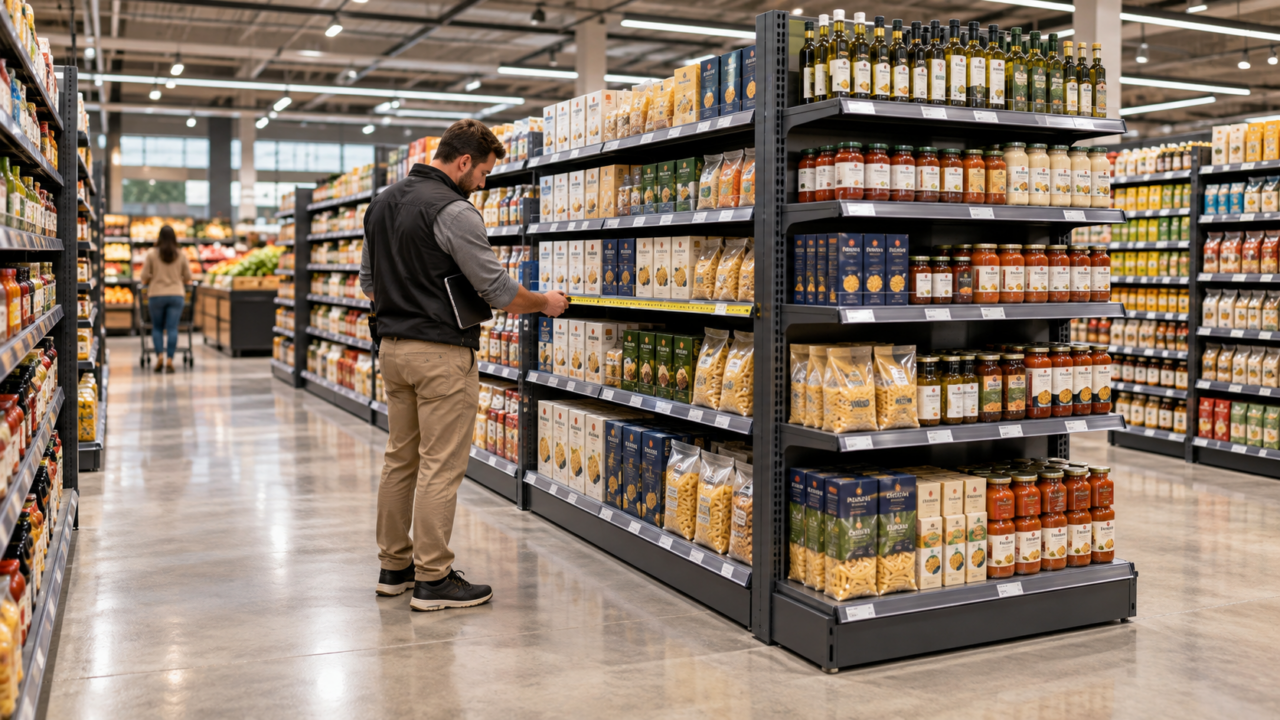
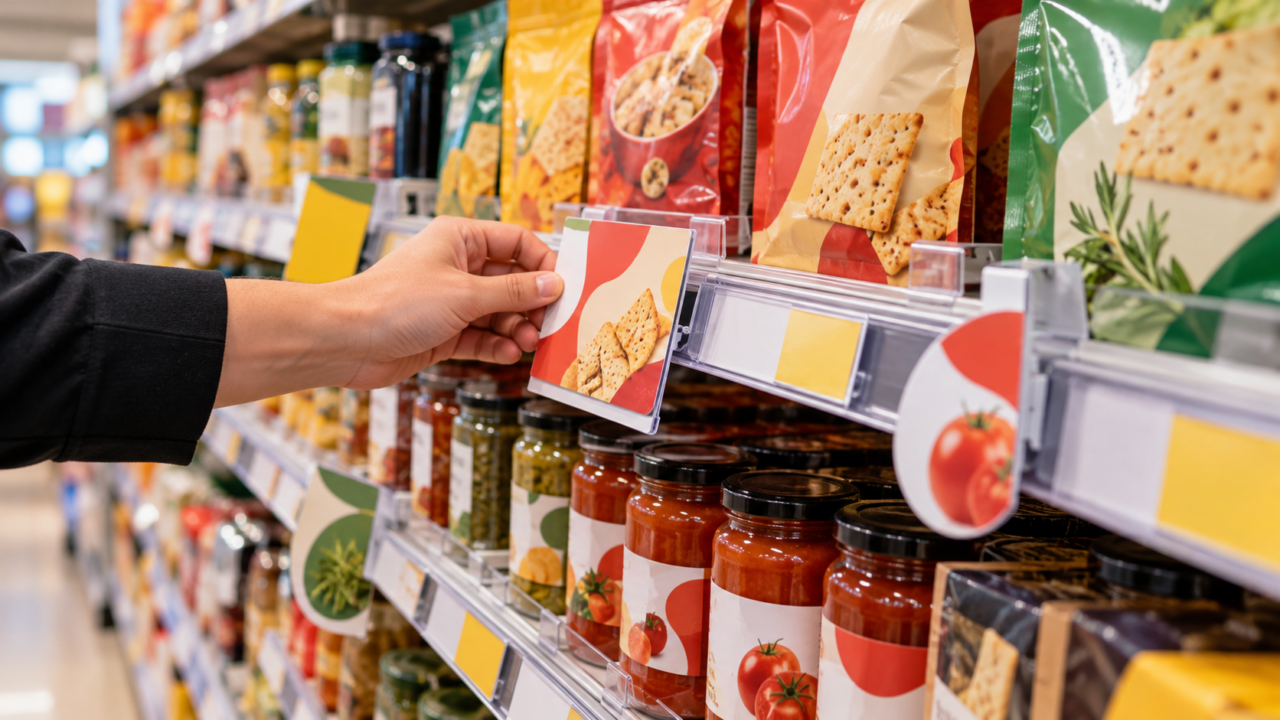
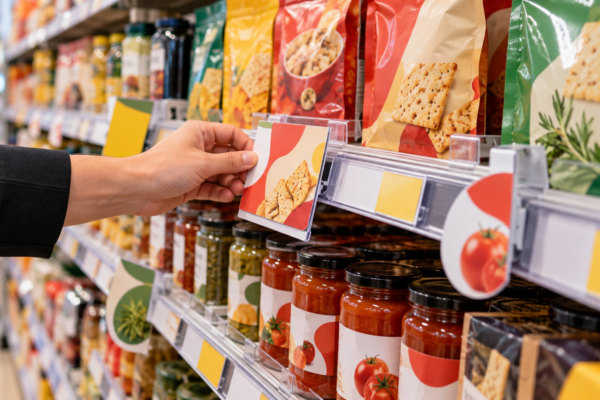
Computer vision systems mounted on shelf edges and ceiling tracks now scan retail environments continuously, detecting out-of-stock conditions, planogram deviations, and pricing errors within minutes rather than hours or days. When a product sells through faster than forecasted, the system triggers an automated replenishment alert to the backroom team and simultaneously updates the demand forecast that feeds upstream ordering. The result is a measurable reduction in out-of-stock rates — the single largest source of lost revenue in brick-and-mortar retail.
Early adopters report out-of-stock reductions of 25–40% in categories monitored by computer vision, translating directly to revenue recovery. For a retailer generating $10 million annually in a given category, a 30% reduction in stockouts can represent $200,000 to $400,000 in recovered sales — per store. Scaled across a national footprint, the numbers become transformative.
Dynamic Labor Allocation
AI-powered workforce management platforms are moving beyond simple schedule optimization. In 2026, the leading systems ingest real-time foot traffic data, point-of-sale velocity, weather forecasts, and local event calendars to predict staffing needs at the hour level — then automatically adjust break schedules, task assignments, and floor coverage to match demand. Associates spend less time on low-value tasks during slow periods and more time on high-impact customer interactions during peak windows.
This shift matters because labor is typically a retailer’s second-largest expense after cost of goods sold. Even modest improvements in labor allocation efficiency — shifting two to three hours per store per week from low-value to high-value activities — compound into significant margin improvement across a large store network. The technology does not reduce headcount. It makes every labor hour more productive.
Predictive Merchandising
Machine learning models trained on years of transaction data, combined with external signals like social media trends, weather patterns, and competitor pricing, are enabling retailers to anticipate demand shifts before they appear in sales reports. A retailer can now identify that a specific product category is trending upward in a geographic cluster and pre-position inventory before the demand wave hits — rather than reacting after the shelves are empty and the opportunity is lost.
The State of Retail Execution 2026 report documents how leading retailers are combining predictive merchandising models with field execution teams to close the gap between algorithmic insight and physical shelf reality. The algorithm identifies the opportunity. The field team makes it happen in the store.
The Human Element — Why Brand Ambassadors Matter More in the AI Era
Here is the paradox that defines 2026 retail trends AI disruption: as technology becomes more sophisticated, the value of skilled human interaction increases rather than decreases. AI can optimize inventory placement, predict demand, and personalize digital communications — but it cannot replicate the trust, empathy, and persuasion that a knowledgeable brand ambassador delivers during a face-to-face interaction with a shopper who is undecided.
The Trust Gap in Automated Experiences
Consumer research consistently shows that while shoppers appreciate the convenience of AI-powered recommendations and self-checkout, they also report declining trust in purely automated retail experiences. A 2025 global consumer survey found that 67% of shoppers say they are more likely to purchase a high-consideration product — electronics, appliances, premium beauty — when a knowledgeable human helps them evaluate their options. For complex purchases, the human touchpoint is not a cost center. It is a conversion driver.
This is especially true in categories where the purchase decision involves trade-offs that are difficult to evaluate through a screen. A shopper comparing two wireless headphone models at different price points benefits from a brand ambassador who can explain the technical differences in accessible language, relate those differences to the shopper’s stated use case, and build confidence that the chosen product will deliver on its promise. No chatbot or digital signage display replicates that interaction with the same effectiveness.
Brand Ambassadors as Data Collection Assets
Forward-thinking retailers and brands are recognizing that trained field teams generate qualitative intelligence that no sensor or algorithm can capture. A brand ambassador working the floor notices when shoppers consistently pick up a competitor product first, when a display is positioned in a low-traffic zone, or when a promotional message is confusing rather than compelling. This ground-level insight — reported through structured feedback systems — feeds back into the AI models and merchandising strategies, creating a continuous improvement loop.
The most effective brand ambassador programs in 2026 equip field teams with mobile tools that capture these observations in structured formats — tagged by store, product, and observation type — so the data can be aggregated and analyzed alongside quantitative performance metrics. The human becomes a sensor in the system, capturing signals that technology alone misses. T-ROC’s brand ambassador guide outlines how to build programs that integrate human insight with data-driven execution.
Elevating the Associate Role
AI is not replacing retail associates — it is elevating their role. When routine tasks like inventory counting, price verification, and basic customer queries are handled by automated systems, the human associate is freed to focus on high-value activities: consultative selling, relationship building, complex problem resolution, and experiential engagement. The associate role shifts from task executor to brand storyteller and customer advocate.
Retailers that invest in upskilling their field teams to thrive in this elevated role — training them on consultative selling techniques, product expertise, and data literacy — are seeing measurable lifts in conversion rate, average transaction value, and customer satisfaction scores compared to locations that rely primarily on technology-driven interactions.
Retail Technology Investments That Deliver ROI
Not every technology investment pays for itself. The retail landscape is littered with expensive pilots that never scaled and platforms that promised transformation but delivered marginal improvement. The 2026 retail trends AI disruption cycle is no different — there are clear winners and clear traps. Understanding which technology categories are delivering measurable returns helps retail leaders allocate capital effectively.
Unified Commerce Platforms
The technology investment with the most consistent ROI in 2026 is the migration from siloed channel-specific systems to unified commerce platforms that provide a single view of inventory, customer, and order data across every touchpoint. Retailers operating on unified platforms report 15–20% improvements in inventory accuracy, 10–15% reductions in order fulfillment cost, and measurable increases in customer lifetime value driven by consistent cross-channel experiences.
The business case is straightforward. When a customer can see accurate real-time inventory at their local store from a mobile app, buy online and pick up in store within two hours, or return an online purchase at any physical location without friction, the retailer captures sales that would otherwise be lost to a competitor with better omnichannel execution. The platform investment pays for itself through captured demand.
AI-Powered Demand Forecasting
Traditional demand forecasting models — built on historical sales data and seasonal patterns — are being replaced by machine learning models that incorporate dozens of external variables: weather, social sentiment, competitor promotions, local events, economic indicators, and even search trend data. The newer models are demonstrably more accurate, particularly for new product introductions and promotional periods where historical data is sparse or misleading.
Retailers deploying AI-powered forecasting report forecast accuracy improvements of 20–35% compared to their legacy systems, which translates directly into reduced overstock (and the associated markdowns) and reduced stockouts (and the associated lost sales). For a mid-size retailer, a 25% improvement in forecast accuracy can represent $5 million to $15 million in annual margin improvement. T-ROC’s retail technology guide provides a framework for evaluating and prioritizing these investments.
Edge Computing for Real-Time Store Intelligence
One of the less discussed but high-impact technology trends in 2026 is the shift from cloud-dependent analytics to edge computing architectures that process data locally within the store. Edge computing enables real-time decision-making — adjusting digital signage content based on who is in the aisle right now, triggering associate alerts when a high-value customer enters the store, or adjusting checkout staffing based on current queue length — without the latency of round-tripping data to a central cloud.
The ROI case for edge computing is built on speed. In retail, the difference between a real-time response and a five-minute delay can be the difference between capturing a sale and losing a customer. Stores equipped with edge intelligence are reporting measurable improvements in queue abandonment rates, promotional conversion, and associate response times — all of which contribute to same-store sales growth.
Robotics and Automation in Fulfillment
Micro-fulfillment centers embedded within or adjacent to retail stores are emerging as a decisive competitive advantage for retailers offering same-day delivery and rapid pickup. Automated picking and packing systems — powered by robotic arms and AI-driven routing algorithms — reduce fulfillment cost per order by 40–60% compared to manual store picking while improving accuracy and speed. Retailers that invested early in micro-fulfillment infrastructure are now scaling it aggressively as consumer expectations for delivery speed continue to tighten.
Navigating Market Shifts Beyond Technology
While AI dominates the conversation around 2026 retail trends AI disruption, several non-technology market shifts are equally important for retail leaders to understand and act upon.
The Resurgence of Value-Oriented Shopping
Persistent inflation and elevated interest rates have shifted consumer spending patterns decisively toward value. Discount retailers, warehouse clubs, and private-label brands are gaining share across nearly every category. Retailers that cannot articulate a clear value proposition — whether through price leadership, quality differentiation, or experiential added value — are losing traffic to competitors that can.
Sustainability as a Purchase Driver
Consumer demand for sustainable products and transparent supply chains continues to intensify in 2026, particularly among shoppers under 40. Retailers are responding by investing in supply chain traceability platforms, sustainable packaging, and circular commerce programs (resale, rental, refurbishment). The brands that treat sustainability as a genuine operational commitment — rather than a marketing message — are building durable competitive advantage.
Workforce Transformation
The retail labor market in 2026 is defined by two competing forces: persistent difficulty attracting and retaining frontline talent, and a growing need for associates with higher-level skills (data literacy, consultative selling, technology fluency). Retailers that invest in associate development — offering career pathways, competitive compensation, and meaningful work enabled by AI tools that eliminate drudgery — are outperforming peers in both retention and customer experience metrics.
Building a Resilient Retail Strategy for 2026 and Beyond
The retailers that will emerge strongest from the current wave of 2026 retail trends AI disruption share a common strategic framework. They invest in technology that solves specific, measurable operational problems. They pair that technology with skilled human teams who bring judgment, empathy, and adaptability that algorithms cannot replicate. They measure relentlessly, scaling what works and cutting what does not. And they maintain strategic flexibility, recognizing that the pace of change demands continuous adaptation rather than rigid multi-year plans.
The opportunity is significant. Retailers that get the balance right — leveraging AI to optimize operations while investing in human talent to differentiate the customer experience — are positioned to capture share from competitors who over-index on either technology or tradition alone. The future of retail belongs to organizations that embrace both.
FAQ
What are the biggest 2026 retail trends related to AI disruption?
The most impactful 2026 retail trends AI disruption developments include AI-powered demand forecasting that improves accuracy by 20–35%, computer vision systems that reduce out-of-stock rates by 25–40%, dynamic labor allocation platforms that optimize staffing in real time, and unified commerce platforms that provide a single view of inventory and customer data across all channels. Edge computing is also emerging as a high-impact investment, enabling real-time in-store decision-making without cloud latency.
Will AI replace retail workers in 2026?
AI is not replacing retail workers — it is transforming their roles. Routine tasks like inventory counting, price verification, and basic customer queries are increasingly automated, freeing associates to focus on high-value activities such as consultative selling, relationship building, and complex problem resolution. Retailers that invest in upskilling their teams are seeing higher conversion rates, increased average transaction values, and improved customer satisfaction compared to locations that rely primarily on technology.
How can retailers measure the ROI of AI investments?
Effective AI ROI measurement requires establishing clear baselines before deployment and tracking specific operational metrics. For demand forecasting, measure forecast accuracy improvement and its impact on overstock markdowns and stockout losses. For computer vision shelf monitoring, track out-of-stock reduction and recovered revenue. For workforce optimization, measure labor cost as a percentage of revenue and customer-facing time per associate. The key is tying every AI deployment to a quantifiable business outcome rather than treating it as a general modernization expense.
Why do brand ambassadors matter more during AI disruption?
As automated retail experiences become the norm, consumers increasingly value authentic human interaction — particularly for high-consideration purchases where trust and expertise influence the buying decision. Brand ambassadors serve as both conversion drivers and qualitative data collection assets, capturing ground-level insights about shopper behavior, competitor activity, and merchandising effectiveness that no sensor or algorithm can replicate. The most effective programs integrate human intelligence with AI-powered analytics to create a continuous improvement loop. Learn more in T-ROC’s brand ambassador guide.
What retail technology investments deliver the best ROI in 2026?
The technology investments with the most consistent returns in 2026 are unified commerce platforms (15–20% inventory accuracy improvement), AI-powered demand forecasting (20–35% accuracy gains), edge computing for real-time store intelligence, and micro-fulfillment automation (40–60% reduction in per-order fulfillment cost). The common thread is that each investment targets a specific, measurable operational bottleneck rather than pursuing technology for its own sake. T-ROC’s retail technology guide provides a detailed framework for evaluating and prioritizing these investments.
See also: Retail Technology Trends 2026: What’s Actually Working