


Why Black Friday Breaks Traditional Retail Operations
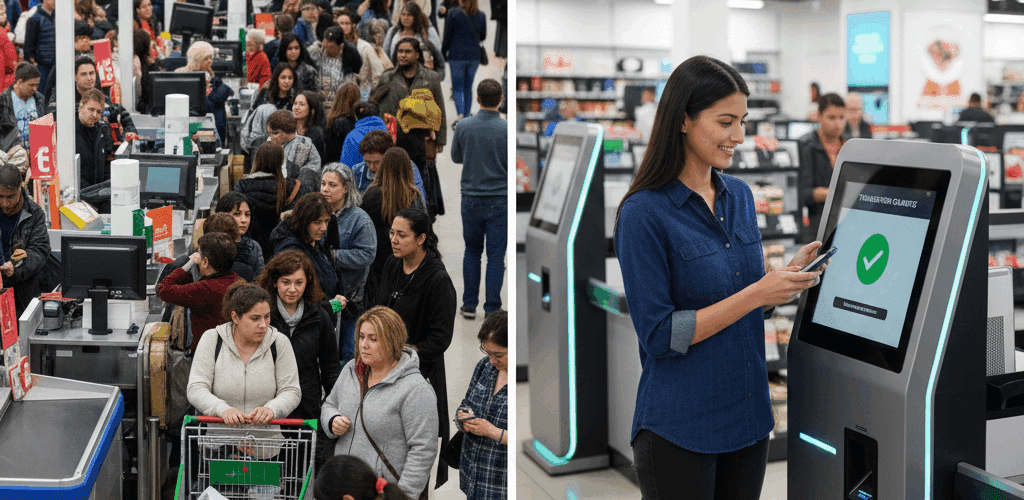
Black Friday is the ultimate stress test for retail. Foot traffic surges, supply chains strain, and store teams scramble to keep shelves stocked and customers happy. Every year, the same pattern repeats: long checkout lines, stockouts on high-demand items, overwhelmed associates, and lost revenue from shoppers who walk away frustrated. Traditional retail operations were not built for this kind of spike demand, and incremental staffing alone cannot close the gap.
The numbers tell the story. The National Retail Federation reports that holiday weekend foot traffic routinely exceeds normal volumes by 300 to 500 percent at high-traffic locations. That kind of surge overwhelms manual processes. Price tag errors multiply. Shelf compliance deteriorates within hours of opening. Customer service wait times balloon. Every breakdown represents lost revenue and damaged brand perception at the most visible moment of the retail calendar.
This is where Black Friday automated retail changes the equation. Automation does not replace the human elements that make great retail experiences. It removes the bottlenecks that prevent those experiences from happening at scale. When routine transactions, inventory checks, and compliance monitoring run on automated systems, store teams are free to focus on high-value customer interactions — the conversations that drive conversion and loyalty.
What Automated Retail Actually Means for Peak Season
Automated retail is not a single technology. It is an integrated approach that combines self-service kiosks, smart inventory systems, real-time analytics, and automated compliance monitoring to keep retail operations running smoothly when volume spikes. During Black Friday and the broader holiday season, these systems handle the operational load that would otherwise require temporary staff who lack training and familiarity with the brand.
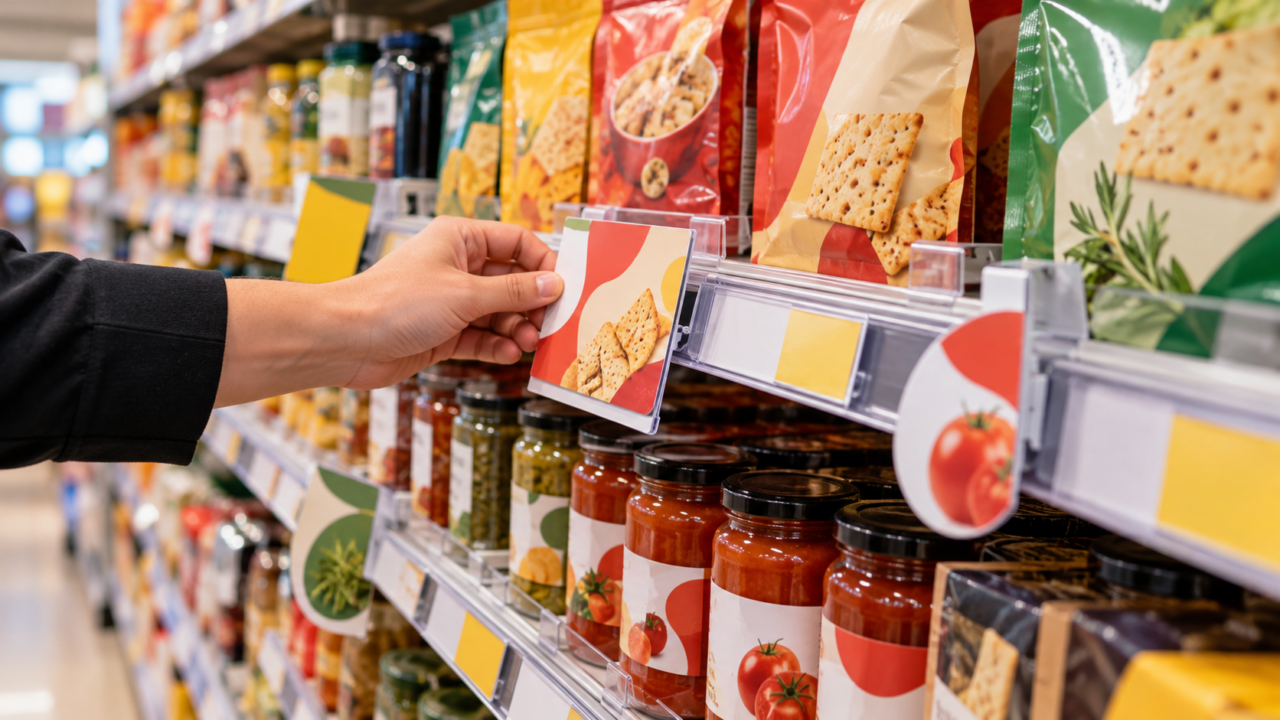
Self-service kiosks allow shoppers to browse product catalogs, check availability across nearby locations, complete transactions, and even arrange delivery — all without waiting for an associate. Smart shelving and RFID-enabled inventory systems provide real-time stock visibility so replenishment happens before a shelf goes empty, not after a customer complains. Automated planogram compliance tools use camera-based monitoring to flag display issues the moment they occur, rather than relying on periodic manual audits that miss problems during peak hours.
For brands and retailers preparing for the holiday rush, our automated retail guide covers the full spectrum of technologies and deployment strategies that power modern peak-season operations.
Scaling Without Chaos: How Automation Absorbs Demand Spikes
The core advantage of Black Friday automated retail is elastic capacity. Human teams have a fixed throughput ceiling. When that ceiling is reached, service quality degrades. Automated systems scale differently. A self-service kiosk handles its hundredth transaction of the day with the same speed and accuracy as its first. An inventory monitoring system does not get tired, distracted, or overwhelmed by competing priorities.
This elastic capacity is especially critical during the compressed shopping windows that define modern Black Friday. Doorbusters that launch at specific times create concentrated traffic surges that last 30 to 90 minutes. Without automated checkout options, those surges create lines that drive abandonment. Retailers who deploy self-service kiosks alongside staffed registers consistently report higher transaction throughput and lower walkaway rates during these peak windows.
Automation also stabilizes the back-of-house operations that shoppers never see but always feel. Automated receiving and sorting systems reduce the time between truck arrival and shelf availability. Digital pick lists and guided restocking workflows ensure that the right products reach the right locations quickly, even when temporary seasonal staff are executing the physical work. The combination of automated guidance and human hands creates a system that is faster and more accurate than either approach alone.
The Role of Kiosk Solutions in Holiday Retail
Retail kiosks have evolved far beyond simple price-check stations. Modern kiosk solutions serve as full-service retail touchpoints that can handle product discovery, comparison, ordering, payment processing, loyalty program enrollment, and post-purchase support. During Black Friday, they function as force multipliers — each kiosk effectively adds the equivalent of one to two additional associates to the floor without the recruiting, training, and scheduling overhead.
The most effective kiosk deployments during peak season share several characteristics. They are positioned at high-traffic entry points and department transitions where shoppers naturally pause. They feature intuitive interfaces that require no instruction. They integrate with the retailer’s inventory system so availability information is always current. And they offer a clear path to human assistance when the shopper needs it, ensuring that automation supports rather than replaces the personal touch.
Kiosks also capture valuable data during peak periods. Every interaction generates insights about what shoppers are searching for, which products they compare, where they abandon the process, and what ultimately converts. This data, aggregated across locations and analyzed post-season, informs merchandising decisions, assortment planning, and promotional strategy for the following year. For a broader perspective on how technology integrates with retail execution, see the retail technology guide.
Pre-Holiday Automated Retail Deployment Checklist (90 Days Out)
Successful Black Friday automated retail execution starts months before the first doorbusters launch. Retailers who wait until November to deploy automation are already behind. The following checklist outlines the critical milestones for a 90-day deployment timeline.
90 to 60 Days Out: Infrastructure and Planning
- Audit existing technology: Inventory every kiosk, sensor, camera, and connected device across all locations. Identify units that need repair, software updates, or replacement. Dead hardware on Black Friday is worse than no hardware at all.
- Confirm network capacity: Automated systems depend on reliable connectivity. Load-test Wi-Fi and wired networks at peak simulated traffic to identify bottlenecks before they matter.
- Finalize kiosk content and promotions: Load Black Friday product catalogs, pricing, and promotional content into kiosk management systems. QA every screen, every flow, and every payment path.
- Align with merchandising plans: Ensure kiosk placement maps match updated store planograms and holiday floor sets. Coordinate with visual merchandising teams to avoid conflicts.
- Order replacement parts and supplies: Receipt paper, cleaning kits, protective screens, and spare components should be on-site well before the rush. Supply chain delays in Q4 make last-minute orders unreliable.
60 to 30 Days Out: Integration and Testing
- Integrate real-time inventory feeds: Connect kiosk systems to live inventory data so shoppers see accurate availability. Test failover behavior when inventory APIs experience latency or downtime.
- Train store teams on escalation workflows: Associates need to know how to assist a shopper who encounters a kiosk issue, how to process a kiosk-initiated transaction manually if needed, and who to call for technical support.
- Run end-to-end transaction tests: Complete full purchase cycles on every kiosk at every location. Verify that payment processing, receipt generation, loyalty point accrual, and inventory deduction all function correctly.
- Establish monitoring dashboards: Set up real-time dashboards that show kiosk uptime, transaction volume, error rates, and queue times across the fleet. Assign staff to monitor these dashboards during peak hours.
30 Days to Launch: Rehearsal and Optimization
- Conduct dry runs: Simulate Black Friday traffic patterns during off-peak hours. Have team members stress-test kiosks, identify friction points, and document issues for resolution.
- Position field support teams: Schedule on-site technical support for the highest-volume locations on Black Friday and the surrounding weekend. Remote support alone is not sufficient for critical retail days.
- Finalize contingency plans: Document backup procedures for every automated system. If a kiosk fleet goes offline, what is the manual fallback? If inventory feeds lag, how do associates communicate availability?
- Activate compliance monitoring: Turn on automated shelf and display monitoring systems and verify that alerts route to the right people with clear response protocols.
Planning at this level of detail is what separates retailers who thrive during the holidays from those who merely survive. Our holiday retail strategy guide provides a comprehensive framework for peak-season preparation across all operational dimensions.
Real-Time Inventory and Compliance Monitoring During Peak Season
The speed at which conditions change during Black Friday makes manual monitoring functionally impossible. A display that was fully stocked at 6:00 AM can be stripped bare by 6:45 AM. A promotional endcap that was perfectly set on Wednesday night can be dismantled by eager shoppers within the first hour of a doorbuster event. Without real-time monitoring, these issues persist for hours — costing sales every minute they go unaddressed.
Real-time inventory monitoring uses a combination of RFID tags, weight sensors, computer vision, and point-of-sale data to maintain a continuous picture of stock levels across every shelf, endcap, and display in the store. When stock drops below a defined threshold, the system automatically generates a replenishment alert — often before the shelf is visually empty. This proactive approach to restocking is the difference between a brief low-stock moment and a prolonged out-of-stock event that sends shoppers to competitors.
Compliance monitoring adds another layer. Automated systems verify that promotional signage is in place, that products are in the correct locations, that pricing matches advertised deals, and that display standards are maintained throughout the day. During Black Friday, when store conditions change rapidly, these systems provide the continuous oversight that would require an impractical number of human auditors to replicate manually.
The operational data generated during peak season is also enormously valuable for future planning. Retailers can analyze which products sold through fastest, which displays maintained compliance longest, where replenishment bottlenecks occurred, and how different store layouts performed under stress. This intelligence feeds directly into next year’s holiday strategy, creating a continuous improvement cycle that compounds over time. For guidance on building resilient retail operations that perform under pressure, the retail operations guide covers foundational principles and advanced strategies.
Why the Brands That Automate Early Win the Holiday Season
The retailers and brands that invest in Black Friday automated retail infrastructure before the holiday rush gain advantages that compound over time. First-mover advantages in automation are significant because systems improve with data. A kiosk network that has processed thousands of transactions during back-to-school season arrives at Black Friday already optimized — its product recommendation algorithms are tuned, its interface friction points have been resolved, and its support teams have established troubleshooting playbooks.
Brands that wait until Q4 to explore automation are deploying untested systems during the highest-stakes period of the year. The risk of technical failures, poor user experiences, and operational disruptions is dramatically higher when systems have not been battle-tested during lower-volume periods. The smart approach is to deploy automated retail solutions in Q2 or Q3, iterate through the back-to-school season, and arrive at Black Friday with proven, reliable systems.
There is also a competitive dimension. Shoppers who have a seamless, efficient experience at one retailer during Black Friday develop expectations that carry forward. If automated checkout, real-time availability, and self-service options are available at Store A but not Store B, Store B loses traffic not just on Black Friday but throughout the following year. Automation is becoming a baseline expectation, not a differentiator — and the retailers who recognize this earliest will capture the most value.
Building a Resilient Holiday Retail Operation
Automation is one pillar of holiday retail resilience, but it works best when integrated with strong human teams, clear processes, and a culture of preparation. The most successful retailers pair automated systems with well-trained associates who understand how to leverage technology rather than compete with it. An associate who can guide a shopper to a kiosk for a quick inventory check, then step in to close the sale with a personal recommendation, delivers a better experience than either the associate or the kiosk could provide alone.
This hybrid model — automation handling volume and routine tasks, humans handling complexity and relationship-building — is the future of peak-season retail. It reduces labor costs without sacrificing service quality. It scales gracefully under pressure. And it generates the data needed to continuously improve, season after season.
Retailers ready to build this kind of operation do not need to start from scratch. Proven playbooks, tested technology stacks, and experienced deployment partners exist to accelerate the journey from traditional operations to automated resilience. The key is starting early enough to get it right.
Frequently Asked Questions About Black Friday Automated Retail
What is Black Friday automated retail?
Black Friday automated retail refers to the use of self-service kiosks, real-time inventory monitoring systems, automated compliance tools, and data-driven analytics to manage the extreme operational demands of Black Friday and the broader holiday shopping season. These technologies handle high-volume, repetitive tasks so store teams can focus on customer engagement and complex problem-solving during peak traffic periods.
How far in advance should retailers deploy automated systems before Black Friday?
Retailers should begin deployment and testing at least 90 days before Black Friday. This timeline allows for infrastructure audits, network capacity testing, content loading, staff training, integration testing, and dry runs. Systems deployed during Q2 or Q3 and refined through back-to-school season arrive at Black Friday already optimized and reliable.
Can automated retail kiosks handle the transaction volume of Black Friday?
Yes. Modern retail kiosks are designed for high-throughput environments and can process transactions continuously without performance degradation. A single kiosk can handle the equivalent workload of one to two associates for routine transactions, and unlike human staff, kiosks maintain the same speed and accuracy from the first transaction to the last. Deploying kiosks alongside staffed registers increases total transaction capacity and reduces wait times during peak surges.
Does automated retail eliminate the need for seasonal staff during the holidays?
Automated retail reduces dependence on seasonal staff but does not eliminate the need for human team members. Automation handles routine transactions, inventory monitoring, and compliance checks, which reduces the total number of temporary hires required. The seasonal staff who are hired can then be focused on higher-value activities like customer engagement, product demonstrations, and complex problem resolution — roles where human skills make the biggest difference.
How does real-time inventory monitoring prevent stockouts on Black Friday?
Real-time inventory monitoring uses RFID sensors, weight-based shelf tracking, computer vision, and POS data integration to maintain a continuous view of stock levels across every location in the store. When inventory drops below a preset threshold, the system generates an automatic replenishment alert before the shelf is visually empty. This proactive approach eliminates the delay between a stockout occurring and a team member noticing it, which during Black Friday can mean the difference between a brief low-stock moment and hours of lost sales.