


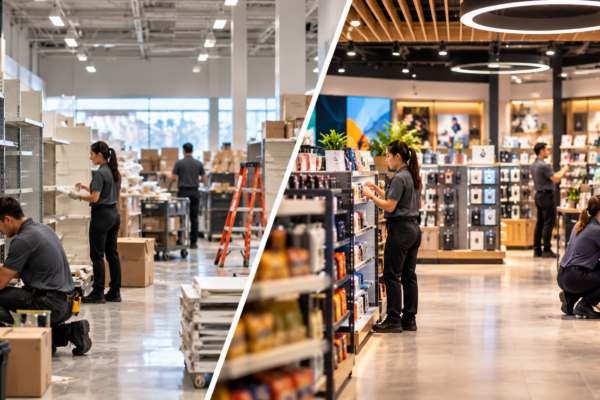


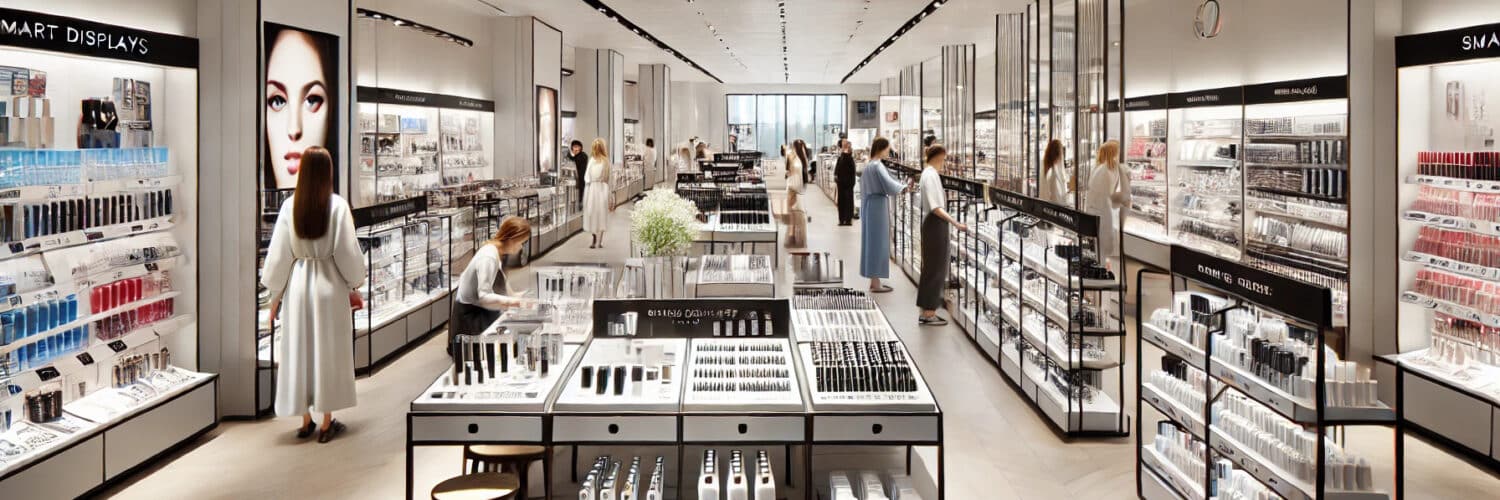
Try on apparel in a physical store and return rates plummet to single digits. Shop online and watch them soar to 70% due to fit issues. These numbers tell a powerful story about why retail merchandising matters more than ever in our digital-first world.
The proof extends beyond apparel. According to POPAI, 76% of all purchase decisions are made at the point of purchase. Your products don’t just need to be in stores — they need to be merchandised correctly to win. Whether you’re managing a handful of locations or a national retail network, understanding the principles behind top-performing stores can transform your results. This retail merchandising guide breaks down every layer of that strategy.
The Hidden Architecture of Retail Success
Every high-performing store shares a secret: their success isn’t accidental. Behind every compelling product display is a deliberate strategy combining psychology, data, and operational precision. Most shoppers walk through a store believing their purchase decisions are spontaneous. In reality, those decisions are the product of months of planning, consumer research, and in-store testing by merchandising teams who understand exactly how human attention and emotion interact with physical space.
The stores that consistently outperform their peers aren’t relying on luck or a single clever idea. They have repeatable systems — documented processes for product placement, display refreshes, staff training, and compliance checks — that compound over time into a durable competitive advantage. Understanding that architecture is the first step toward replicating it.
The Power of Product Placement
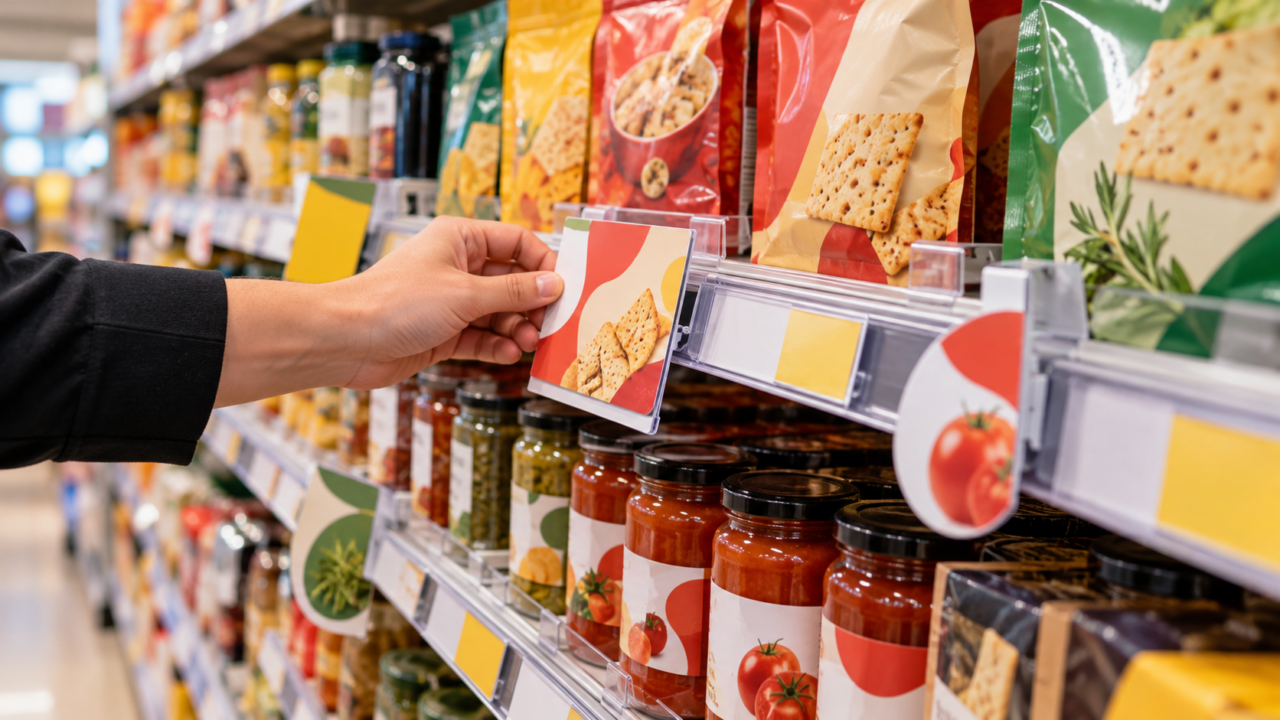
Product placement in retail goes far beyond simply putting items on shelves. It’s about creating a visual journey that guides customers toward purchase decisions. Top retailers understand that eye-level placement can increase sales by up to 35%, while strategic grouping of complementary products boosts the average transaction value significantly.
Effective placement also accounts for traffic flow. High-impulse and high-margin items are positioned along the natural paths customers travel, not in corners or dead zones. End caps — the display faces at the end of each aisle — command a premium precisely because they intercept every shopper moving through the store, regardless of their intended destination. Savvy merchandisers rotate end cap features regularly to maintain novelty and prevent “banner blindness,” where shoppers stop registering displays they’ve seen too many times.
Cross-merchandising is another underutilized lever. Placing a complementary item next to a hero SKU — a phone case next to a flagship device, a marinade next to the protein display — can lift both units per transaction and overall basket size. When combined with strategic signage that communicates value or urgency, placement becomes a silent sales team working around the clock.
Visual Merchandising: The Art and Science
Successful retailers treat visual merchandising as both an art and a science. They use color psychology to create emotional responses, implement strategic lighting to highlight key products, and design traffic flow patterns that maximize exposure to high-margin items. The result? Customers spend more time in-store and engage more deeply with products.
Color blocking — grouping products by color family rather than brand or SKU — creates a visually organized presentation that feels intentional and premium, regardless of price point. Lighting temperature matters too: warm light encourages lingering and is widely used in food, apparel, and home goods, while cooler, brighter light signals clarity and value in electronics and pharmacy departments.
Fixture height and density play a critical role in controlling perceived store congestion. A crowded fixture communicates value and volume; sparse, widely spaced displays communicate luxury and exclusivity. Understanding which signal aligns with your brand positioning — and executing it consistently — is what separates professionally executed visual merchandising from amateur arrangements.
Data-Driven Decisions
The most successful retailers don’t guess — they measure. Through sophisticated analytics, they track foot traffic patterns, dwell time in different sections, and conversion rates by product placement. This data enables them to make precise adjustments that drive measurable improvements in sales performance.
Heat mapping technology, available through both dedicated hardware and increasingly through existing security camera infrastructure, shows exactly where customers spend their time and where they don’t. When cross-referenced with POS data, this creates a clear picture of which placements are converting and which are wasting premium shelf real estate. Retailers who act on this data systematically — reviewing it on a weekly or monthly cadence rather than quarterly — consistently outperform those who rely on intuition alone.
The Truth About Planogram Compliance
While planograms are crucial tools for retail success, many retailers miss the mark when it comes to compliance. Studies show that planogram compliance directly correlates with a 15–20% increase in sales. Yet compliance rates in most retail environments hover around 50–70%, leaving significant revenue on the table.
The gap between a well-designed planogram and what actually appears on shelf is often not intentional — it’s the result of out-of-stocks, rushed resets, untrained staff, and vendor interference. Each deviation from the approved plan creates a cascading effect: the carefully engineered adjacency breaks down, the visual flow is disrupted, and the customer experience degrades in ways that are hard to attribute to any single decision. Closing the compliance gap is one of the highest-ROI activities available to a retail merchandising team.
Strategic Space Management
Space is your most expensive resource in retail. High-performing retailers understand that every square foot must work harder. They implement sophisticated space management strategies, including category management, slotting optimization, and regular store resets to ensure their retail space generates maximum revenue per square foot.
Category management involves treating each department as its own profit center — analyzing which SKUs earn their space based on velocity, margin, and strategic importance, and ruthlessly cutting those that don’t. Slotting optimization takes this further by determining the precise number of facings each SKU should receive to minimize out-of-stocks without over-allocating shelf space to slow movers. When these disciplines are applied rigorously, retailers routinely see 8–12% improvements in revenue per square foot within the first year.
The Vendor Partnership Advantage
Successful retailers leverage strong vendor partnerships to their advantage. These partnerships go beyond simple transactions to include collaborative planning, shared data insights, and joint marketing initiatives. When vendors and retailers align their strategies, the result is better product placement, optimized inventory levels, and ultimately, higher sales performance.
The best vendor relationships include regular joint business planning sessions where both parties share sell-through data, discuss upcoming promotional calendars, and agree on reset timing. Vendors who see themselves as true partners — rather than just suppliers fighting for shelf space — invest in training retail staff, providing point-of-sale materials, and funding field merchandising support that benefits both sides. Formalizing these expectations in a collaborative framework turns transactional vendor relationships into genuine growth engines.
The Secret Weapon: Well-Trained Staff
Your products and displays can only do so much if your staff isn’t equipped to complete the sale. Top retailers invest heavily in ongoing staff training, focusing not just on product knowledge but on sales techniques and customer engagement strategies. Well-trained staff can increase conversion rates by up to 40% compared to stores with minimal training investment.
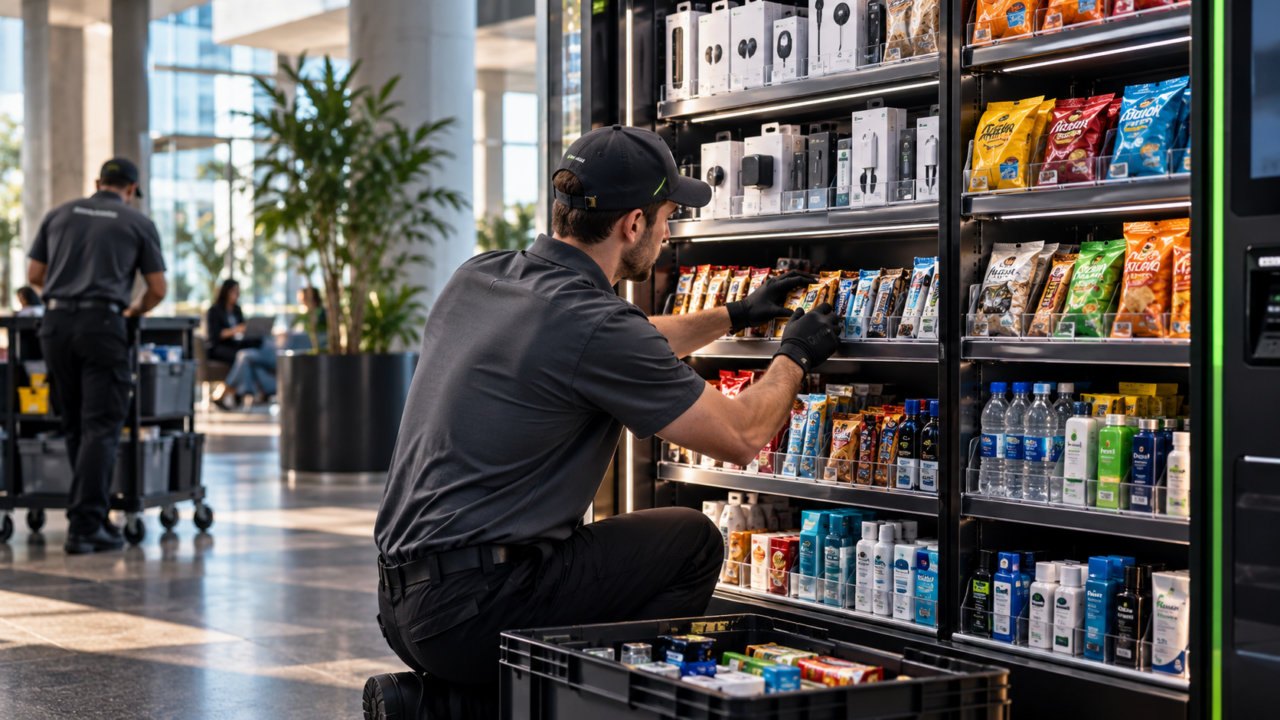
Training must be continuous, not a one-time onboarding event. Product lines change, promotions rotate, and customer expectations evolve. Retailers who implement regular micro-training sessions — brief, focused skill refreshers that can be delivered in under 15 minutes — maintain a knowledgeable floor staff without pulling team members away from their duties for extended periods. When staff understand both what a product does and how to connect it to a specific customer need, they become the most powerful merchandising tool in the store.
Technology as a Competitive Edge
Leading retailers are leveraging technology to gain competitive advantages in merchandising. From AI-powered planogram optimization to real-time inventory tracking and digital price tags, technology is transforming how products are displayed, managed, and sold. These technological investments typically deliver ROI within 12–18 months while providing ongoing competitive advantages.
Computer vision tools can now audit shelf compliance automatically, flagging deviations from approved planograms in near real time without requiring a human to walk every aisle. Mobile-enabled field teams equipped with compliance photography apps can document conditions, log issues, and trigger corrective workflows from the floor. These capabilities compress the feedback loop between corporate strategy and store-level execution from weeks to hours — a difference that translates directly into sustained sales performance.
How to Audit Your Current Merchandising Execution
Before you can improve your merchandising, you need an honest baseline. A structured store walk audit is the most direct way to identify where execution is falling short of strategy. Begin with a compliance photography sweep: document every section against its approved planogram, noting missing facings, incorrect product placement, out-of-stocks, and signage gaps. Use a standardized scoring rubric so results are comparable across locations and over time.
A practical store walk checklist should cover: planogram adherence by section, price tag accuracy, promotional display setup and timing, shelf cleanliness and facing alignment, end cap execution, and stockroom-to-shelf replenishment speed. Score each category on a consistent scale — 1 to 5 works well — and calculate a composite compliance score per visit.
Mystery shop scoring adds a customer-perspective layer that internal audits miss. A trained mystery shopper evaluates the experience from entry to checkout, assessing staff engagement, product findability, display coherence, and checkout friction. Combining self-audit scores with mystery shop results gives you both the operational picture and the experiential picture, identifying disconnects that neither method captures alone. For brands executing across dozens or hundreds of locations, professional retail merchandising services can deliver this audit infrastructure at scale without adding internal headcount.
The Seasonal Reset Calendar: Aligning Merchandising to Q1–Q4 Promotional Windows
Retail merchandising does not operate in a vacuum — it must move in lock-step with the promotional calendar. Top retailers plan their resets 8 to 12 weeks in advance, working backward from key selling dates to ensure fixtures, inventory, signage, and staff training are all in place before the promotional window opens.
A well-constructed seasonal calendar typically follows this rhythm: Q1 focuses on post-holiday clearance, new year product launches, and Valentine’s Day and Super Bowl promotions. Q2 brings spring resets, Easter and Mother’s Day builds, and early summer category expansions. Q3 is back-to-school — one of the highest-traffic periods for many categories — followed by early holiday planning that begins in late September. Q4 is the execution quarter: Halloween, Thanksgiving, and the peak holiday season demand flawless planogram compliance and near-zero out-of-stock tolerance.
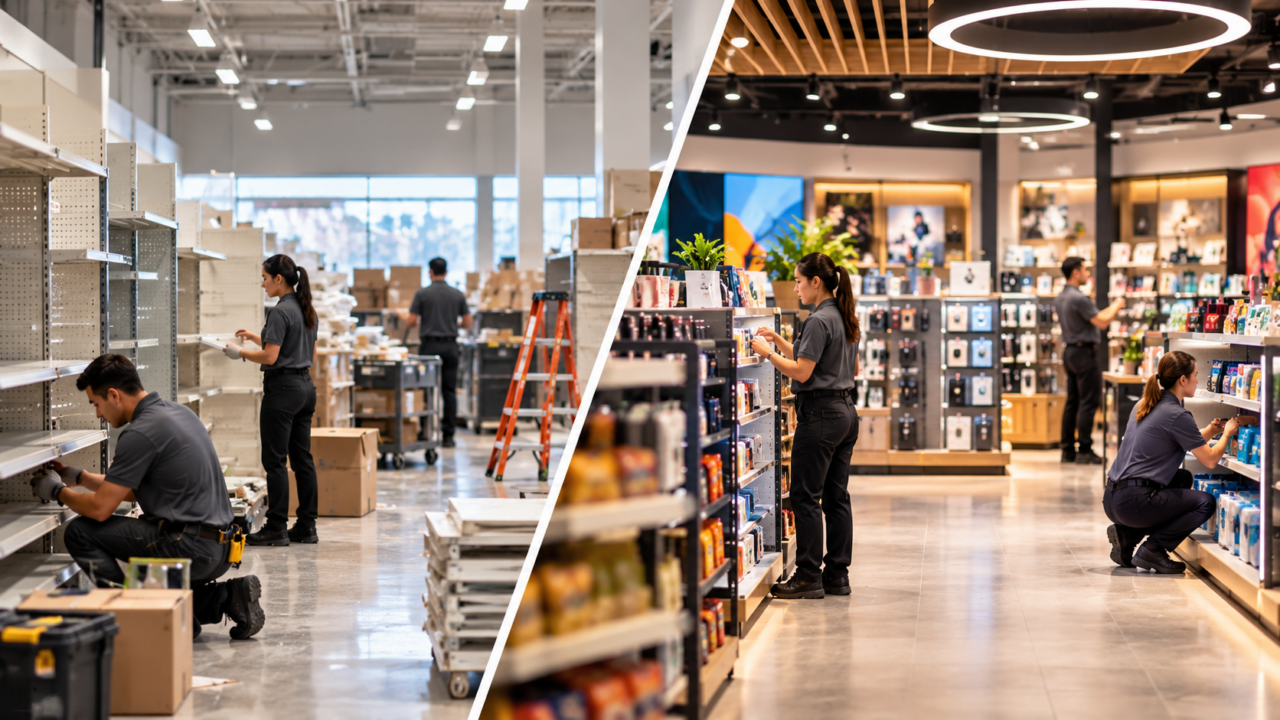
Each reset should be treated as a project, with a defined scope, an installation timeline, a compliance verification step, and a post-reset audit. Retailers who formalize this process find that their sell-through rates during promotional windows improve markedly, because displays are ready on day one rather than days or weeks into the campaign. Aligning reset timing with vendor co-op funding cycles also maximizes the return on those investments. For a detailed look at how resets drive revenue, the retail operations guide covers the full planning framework.
The Implementation Challenge
While understanding these retail merchandising secrets is valuable, implementation presents challenges for many organizations. Consistency across multiple locations, staff turnover, and the complexity of managing multiple vendors and products can derail even the best merchandising strategies.
The gap between knowing what good looks like and consistently delivering it at scale is where most retail operations lose ground. A single location can be managed through direct oversight, but a 50- or 500-location network requires systems, documentation, and accountability structures that go well beyond individual manager effort. Without them, compliance drifts, resets slip, and the carefully engineered in-store experience degrades unevenly across the network.
Winning with Professional Retail Merchandising
This is where professional retail merchandising services become invaluable. Expert merchandising partners bring systematic approaches to implementing and maintaining these strategies across your entire retail network. From planogram compliance programs and seasonal reset execution to field audit teams and vendor coordination, a dedicated partner provides the infrastructure to close the gap between strategy and store-level reality — consistently, at scale, and with measurable accountability.
Frequently Asked Questions About Retail Merchandising Best Practices
- What is the most important factor in retail merchandising success?
- Consistency of execution across all locations is the single most important factor. A perfect planogram that is only implemented correctly in 60% of stores delivers 60% of its potential. Retailers who invest in compliance infrastructure — field audits, compliance photography, structured reset processes — consistently outperform those who focus solely on planogram design without verifying store-level execution.
- How often should planograms be reset or updated?
- Most categories benefit from a full reset aligned to the seasonal calendar — typically four times per year at minimum, corresponding to major promotional windows. High-velocity categories like snacks, beverages, and consumer electronics may warrant more frequent updates, particularly around product launches or promotional events. The reset schedule should be driven by sales data and promotional calendars, not arbitrary timelines.
- What metrics should I track to measure merchandising performance?
- The core metrics are: planogram compliance rate (target 90%+), revenue per square foot, sell-through rate by display type, out-of-stock frequency, and average dwell time in key sections. When combined, these metrics give a comprehensive picture of whether your merchandising investment is translating into sales performance. Mystery shop scores add a qualitative layer that quantitative data alone cannot capture.
- How can small or mid-size brands compete with larger retailers on merchandising?
- Focus and precision beat scale every time. Smaller brands should concentrate their merchandising investment on the stores and regions where they have the highest velocity, rather than spreading resources thin across all accounts. Partnering with a professional field merchandising team allows smaller brands to access the same execution infrastructure as larger competitors without carrying the fixed cost of an internal field force.
- What role does technology play in modern retail merchandising?
- Technology has shifted from a nice-to-have to a baseline requirement for competitive merchandising. Mobile audit apps, compliance photography platforms, AI-driven planogram optimization, and real-time inventory visibility tools allow merchandising teams to identify and correct execution gaps in hours rather than weeks. Retailers who have not yet integrated these tools into their field operations are operating with a significant information disadvantage relative to those who have.
T-ROC Editorial Team
The T-ROC editorial team brings 20+ years of retail industry expertise across brand ambassador programs, mystery shopping, retail merchandising, and managed technology solutions. Learn more about T-ROC.