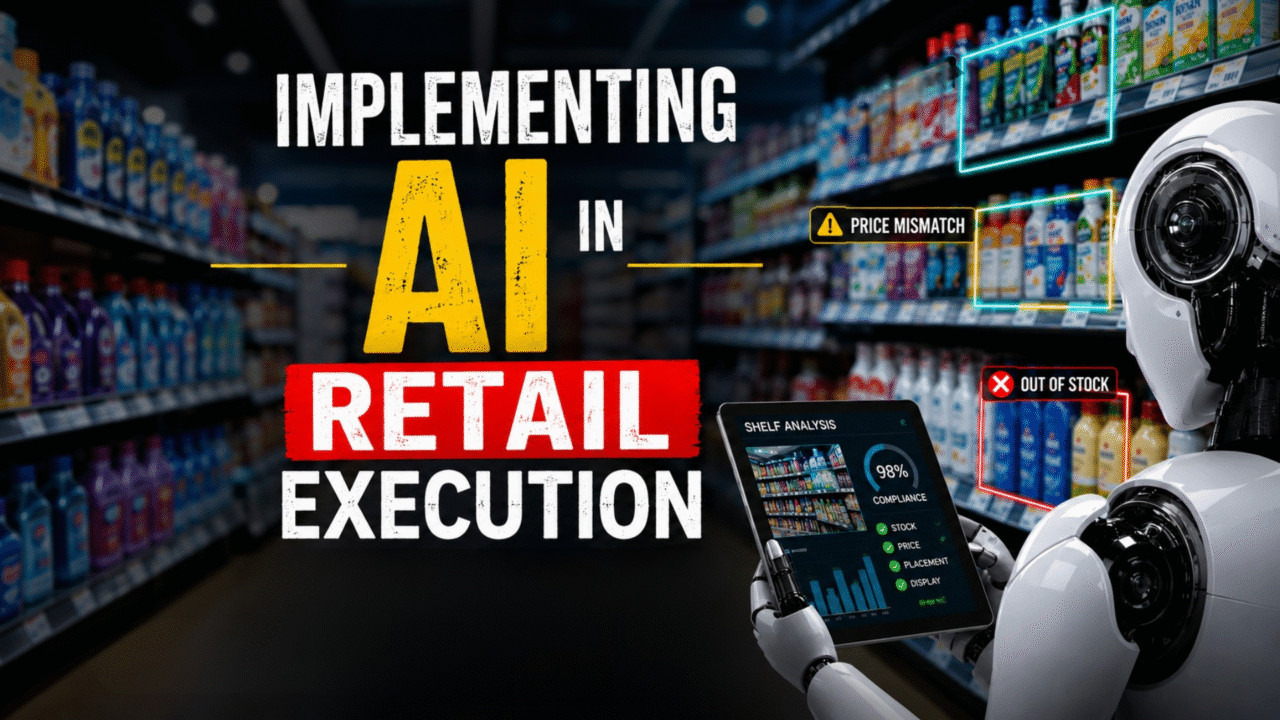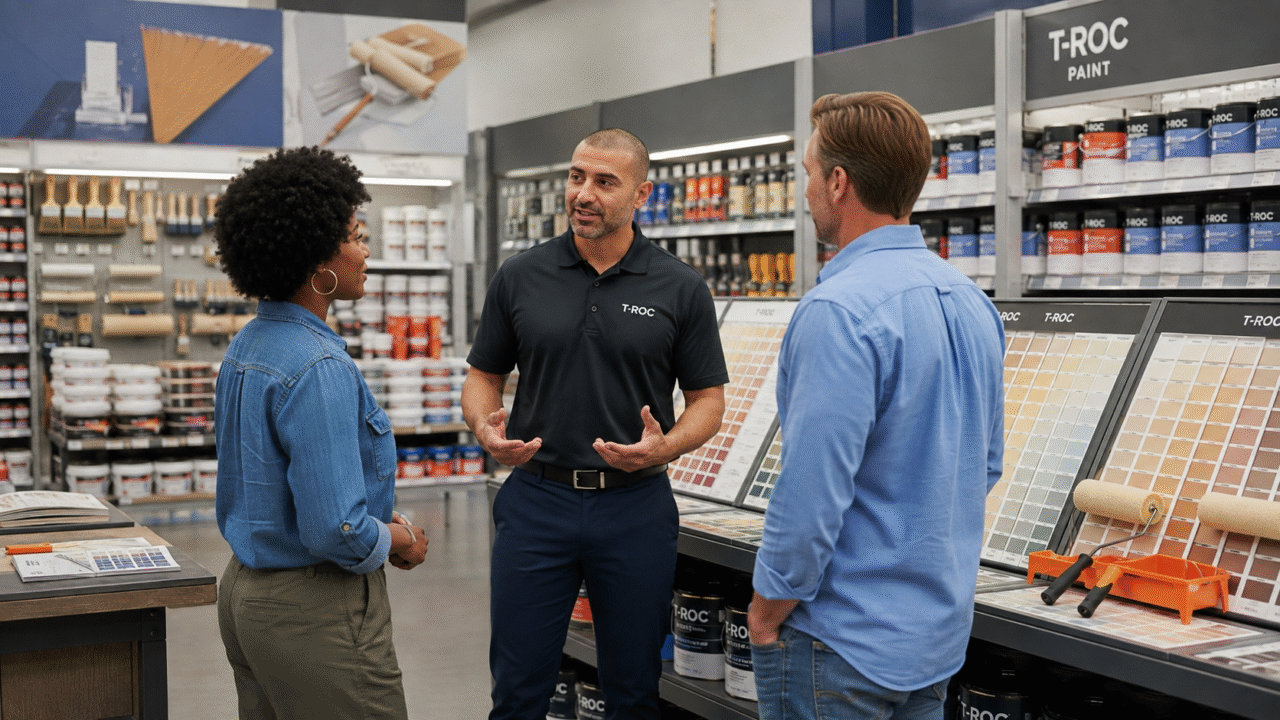





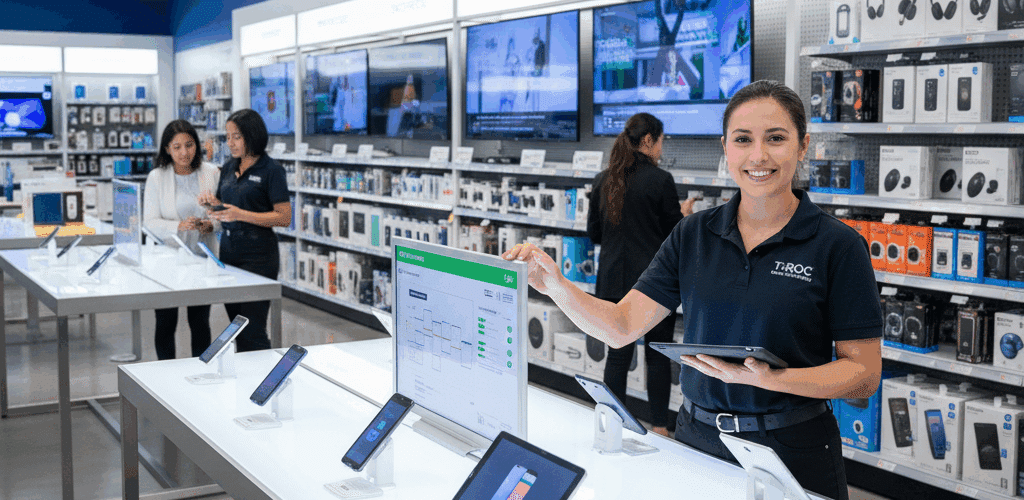
For decades, retail merchandising was a simple instruction: “Follow the planogram.” Brands created a static map, and stores were expected to execute it. But in today’s hyper-competitive market, that’s not enough. Your product might be “on the planogram” but hidden below eye level, blocked by a competing display, or surrounded by out-of-stock neighbors that kill the category’s momentum.
Strategic retail merchandising services don’t just execute the plan. They diagnose execution gaps, respond to in-store realities, and turn compliance data into competitive advantage. For brand managers and field sales leaders who want a deeper foundation on the discipline, our retail merchandising guide covers the full landscape from fundamentals to advanced execution strategy.
What Strategic Merchandising Actually Means
Strategic merchandising is the difference between being in the store and winning in the store. A brand can have a great product, strong packaging, and a national advertising campaign—and still lose at shelf because execution failed. Strategic merchandising ensures that every touchpoint between your product and the shopper is optimized for conversion.
This goes well beyond stocking shelves or filling a slot on a plan-o-gram printout. It means understanding how shoppers move through a category, how shelf position affects purchase probability, and how promotional activity translates—or fails to translate—into incremental units sold. The brands that consistently outperform their competitors in-store are rarely those with the largest budgets. They’re the ones with the most disciplined execution systems behind them.
Strategic merchandising also bridges the gap between the brand’s intent and the store’s reality. A product team may design a winning in-store concept, but if the field team executing it lacks training, accountability, or real-time feedback, the concept never reaches the shopper intact. That connection between strategy and execution is exactly what professional retail merchandising services are built to deliver.
The Four Pillars of Retail Merchandising Execution
Shelf compliance: Is your product in the right location, at the right height, with the proper number of facings? Studies show that moving a product from the bottom shelf to eye level can increase sales by up to 35%. Compliance is not binary—there are degrees of placement quality, and field teams trained to recognize and correct marginal placements consistently outperform those working to a simple checklist.
In-store displays: Off-shelf displays—end caps, floor stands, clip strips—consistently outperform primary shelf placement. But only when they’re correctly set up, fully stocked, and visually compelling. A poorly assembled end cap communicates brand neglect to shoppers. A well-executed one drives impulse lift and reinforces brand equity at the moment of purchase decision. Visual merchandising discipline is what separates display programs that deliver ROI from those that become a sunk cost.
Signage and pricing accuracy: Price discrepancies and missing signage are among the most common reasons shoppers abandon a purchase. In-store teams that catch and correct these issues in real time protect revenue that would otherwise walk out the door. As retailers move toward dynamic pricing and digital shelf labels, the need for accurate, timely signage management only grows.
Reset and new item execution: New planograms and new product introductions are high-stakes moments. Poor execution during a reset can set a product’s in-store performance back by weeks. Professional merchandising teams execute resets quickly, accurately, and with photo documentation that provides brand teams with verifiable proof of placement. For a deeper look at maximizing these windows, see our guide on store resets and planogram compliance.
Why Brands Lose at the Shelf Even with a Good Planogram
Planogram compliance in most retail environments hovers between 50–70%. That means roughly one in three of your planned placements isn’t happening as intended. This gap is the single biggest driver of in-store sales underperformance for brands that have otherwise done everything right.
The root causes are predictable: store staff turnover, competing reset priorities, vendor crowding in high-traffic categories, and inadequate follow-through on new product introductions. Professional retail merchandising services exist specifically to close this gap. But beyond closing the gap, elite merchandising programs create a structured accountability loop—documenting compliance rates, flagging chronic underperformers by store, and giving brand teams the visibility they need to have productive conversations with retail buyers.
The financial impact of this gap is significant. For a brand generating $50M in retail sales, a 10-percentage-point improvement in shelf compliance can translate to millions in incremental revenue without a single additional marketing dollar spent. That’s not a theoretical figure—it reflects what systematic merchandising programs deliver when they’re designed around measurable compliance outcomes rather than just store visit frequency.
The Data Layer: Turning Field Visits Into Insights
Modern merchandising isn’t just about showing up and fixing what’s broken. It’s about creating a feedback loop between field execution and marketing strategy. Every store visit should generate data: compliance rates by store tier, out-of-stock patterns by region, display utilization rates, and photos that document both problems and wins.
This data doesn’t just inform the next store visit. It informs promotional planning, inventory forecasting, and category management conversations with retail buyers. When a brand can walk into a line review with compliance photography, shelf trend data, and regional execution benchmarks, they negotiate from a fundamentally stronger position than competitors presenting only scan data.
Technology platforms have made this data capture faster and more standardized. Field teams using mobile reporting apps can log compliance issues, capture geo-tagged photos, and flag exceptions in real time—giving regional managers and brand teams a live view of execution health across their entire retail footprint. The brands that invest in this data infrastructure treat merchandising as a strategic intelligence function, not just a labor cost. Strong retail operations frameworks integrate this field data directly into planning and category review cycles.
Retail Resets: The Highest-Stakes Merchandising Moment
New planogram resets represent a window of opportunity that most brands underutilize. A reset is the one moment when you can legitimately reposition your product, expand your shelf presence, and reset the competitive dynamic in your favor. Brands that execute resets precisely and quickly capture the full value of the change. Brands that execute poorly often lose ground they take quarters to recover.
Reset execution quality also affects retailer relationships. Buyers notice which brands execute cleanly and which create problems at the store level. Consistent, professional reset performance builds the kind of credibility that earns incremental shelf space and favorable placement in future planogram negotiations. For brands managing resets across hundreds of doors, the gap between organized and disorganized execution is measurable in both sales velocity and buyer perception.
Scaling Merchandising Across a National Footprint
For brands operating across hundreds or thousands of retail doors, the challenge isn’t strategy—it’s consistent execution at scale. A field team that covers 200 stores flawlessly in the Northeast means nothing if the Southwest coverage is inconsistent. Professional retail merchandising partners bring the infrastructure to deliver consistent execution across geographies: trained field teams, standardized reporting, route optimization, and real-time exception management.
National coverage also enables comparative analytics that single-region programs can’t produce. When execution data flows from every market into a unified reporting system, brand teams can identify which retail banners over-index on compliance, which geographic markets need more intensive support, and which promotional activations are delivering the strongest in-store results. That level of visibility transforms merchandising from a reactive field function into a proactive growth lever.
Category Management and Shelf Optimization Strategy
Effective retail merchandising services don’t operate in isolation from category strategy. The placement decisions that drive the most revenue growth are those informed by a thorough understanding of gondola flow, shopper decision sequences, and space-to-sales alignment.
Gondola flow refers to how shoppers move through a category—which end of the aisle gets the most traffic, where purchase decisions are most likely to be made, and how vertical shelf zones (eye level, hand level, floor level) map to shopper psychology. Strategic merchandising teams understand these dynamics and use them to argue for placement positions that drive disproportionate sales velocity relative to the space occupied.
Adjacencies—the products positioned next to yours—matter more than most brands acknowledge. Being adjacent to a category leader can drive halo traffic to your product. Being adjacent to a weak or failing SKU can suppress category momentum and reduce dwell time in your section. Professional merchandising partners track adjacency patterns and surface insights that help brand teams make sharper arguments during planogram negotiations.
Space-to-sales analysis is the quantitative backbone of shelf optimization. It compares the percentage of shelf space a product occupies to the percentage of category sales it generates. Products that generate more sales than their space allocation would predict are candidates for expansion. Those that underperform their space are vulnerable to rationalization. Brands that bring this analysis to retailer meetings demonstrate category management sophistication that generic planogram presentations simply cannot match.
Choosing the Right Retail Merchandising Partner
Not all retail merchandising providers are equal, and the wrong partner can cost a brand more in execution gaps and missed opportunities than the service saves in labor costs. Evaluating a potential merchandising partner requires looking beyond headcount and geography to assess the quality of their systems, training, and accountability infrastructure.
Experience and vertical expertise: A partner with deep experience in your specific retail channel—mass, grocery, specialty, convenience—brings category-specific knowledge that generalist field labor firms cannot replicate. Ask for case studies and references from brands in comparable categories and retail environments.
Technology and reporting: Modern merchandising partners should offer mobile-first reporting platforms, real-time compliance dashboards, and photo verification at the store level. If a potential partner cannot show you what a compliance report looks like before you sign a contract, that’s a significant red flag.
Geographic coverage and density: Evaluate coverage not just by market but by store-level density within markets. A partner that covers your top 500 stores but has thin coverage in secondary markets may deliver great results in priority accounts while leaving significant revenue on the table everywhere else.
Training and quality standards: Ask how field reps are trained, how performance is measured, and what happens when execution falls below standard. Partners with structured onboarding, ongoing skill development, and clear performance accountability consistently outperform those that treat field labor as interchangeable.
Choosing the right partner is a strategic decision. The ROI of great merchandising execution—captured in sales velocity, buyer relationships, and compliance data—far exceeds the cost of the service when the partner is genuinely best in class.
Frequently Asked Questions About Retail Merchandising Services
- What do retail merchandising services include?
- Retail merchandising services typically include shelf compliance audits, display setup and maintenance, planogram reset execution, new item cut-in, signage and pricing verification, out-of-stock reporting, and photo documentation. Advanced providers also offer compliance analytics, category management support, and retailer relationship management.
- How often should a brand use retail merchandising field visits?
- Visit frequency depends on the category velocity, the number of retail doors, and the complexity of the promotional calendar. High-velocity categories with frequent resets may require weekly visits in priority stores. Slower-moving categories with stable planograms may perform well with biweekly or monthly coverage. The key is matching visit frequency to execution risk—stores with chronic compliance issues typically warrant higher-frequency coverage.
- What is the difference between retail merchandising and visual merchandising?
- Retail merchandising focuses on physical placement, compliance, and availability—ensuring the right product is in the right place at the right time with the right number of facings. Visual merchandising focuses on the aesthetic and experiential presentation of products—how they look, how displays are styled, and how the overall shopping environment supports brand perception. Both disciplines are complementary and often managed by the same field team.
- How do I measure the ROI of retail merchandising services?
- The most direct ROI measure is the sales lift attributable to compliance improvement. By comparing scan data before and after a merchandising program launch—controlling for promotional activity and seasonality—brands can isolate the revenue impact of execution gains. Compliance rate improvements, out-of-stock reduction, and display utilization rates are the key operational metrics that predict sales outcomes.
- Can small or mid-size brands afford professional retail merchandising services?
- Yes. Many retail merchandising providers offer flexible coverage models that allow brands to prioritize high-volume accounts and expand coverage as the program proves its ROI. Shared field team models—where a merchandiser covers multiple non-competing brands in the same call—can reduce per-visit costs significantly while still delivering the compliance improvements that drive sales growth.
See also: Retail Merchandising Services: Complete Guide + Pricing
T-ROC Editorial Team
The T-ROC editorial team brings 20+ years of retail industry expertise across brand ambassador programs, mystery shopping, retail merchandising, and managed technology solutions. Learn more about T-ROC.