



Complete Guide
Brand Ambassador Services: The Complete Guide
What brand ambassador services are, how programs work, which KPIs to track, and how to choose the right provider — everything a retail brand manager needs in one place.
Digital ads reach consumers before they enter a store. A trained brand ambassador reaches them at the moment they are standing in front of your product, ready to decide. That three-foot gap between shelf and sale is where brand ambassador services earn their ROI — and it is a gap that no retargeting campaign, display banner, or product page can close as reliably as a skilled human being.
This guide covers the complete landscape of brand ambassador services: what they are, how programs are structured, which industries use them most effectively, how to measure results, and what separates a provider worth hiring from one that burns your budget. Whether you are evaluating your first in-store program or auditing an existing one, this is the reference you need.
1. What Are Brand Ambassador Services?
Brand ambassador services are managed programs through which a specialist provider recruits, trains, deploys, and manages individuals who represent a brand at retail locations, events, or digital touchpoints. The defining characteristic is management infrastructure: a true service includes hiring criteria aligned to the brand’s buyer profile, a structured training curriculum, performance tracking, and a reporting system that connects ambassador activity to sales outcomes.
To understand what this looks like on the ground, it helps to start with a clear definition. What does a brand ambassador actually do? In short, they educate shoppers on product features, demonstrate value, overcome purchase objections, and drive conversion — all on behalf of a specific brand, not the retailer. Unlike a general floor associate who handles 30 brands simultaneously, a brand ambassador’s sole mandate is to represent yours.
The scope of the role has expanded significantly. What a brand ambassador does today spans product demonstrations, competitive comparison conversations, accessory attachment, loyalty program enrollment, and real-time feedback capture — all within a single shopper interaction. The best ambassadors are not pitching; they are consulting.
It is also worth distinguishing from adjacent roles. The difference between a product demonstrator and a brand ambassador comes down to depth and continuity: demonstrators show a product at a single event; ambassadors build expertise and retailer relationships over time. Similarly, understanding influencer vs brand ambassador marketing matters when allocating budget — influencers create digital reach, ambassadors drive in-person conversion.
For a deeper conceptual grounding, T-ROC’s definition resource on what a brand ambassador program is covers the full structural scope, including how programs differ from general staffing engagements.
2. Types of Brand Ambassadors
Not all brand ambassadors operate the same way. The right type depends on your product category, retail channel, budget model, and strategic objectives. A comprehensive breakdown of the eight different types of brand ambassadors shows just how varied these roles can be in practice.
In-Store Brand Ambassadors
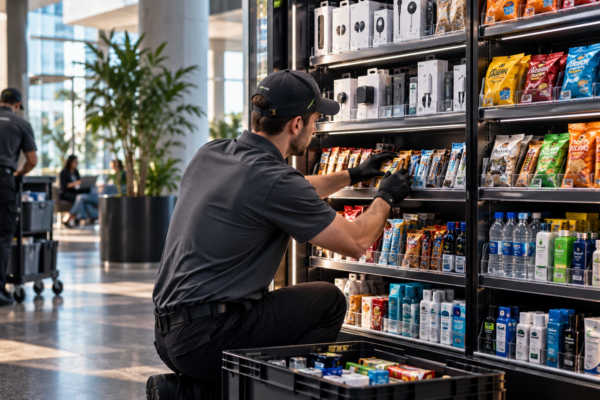
The highest-impact model for consumer electronics, telecom, and premium consumer goods. In-store brand ambassadors drive store results by positioning your brand at the moment of maximum purchase intent — when a shopper is physically evaluating your product against competitors. Coverage models range from dedicated full-time placement at flagship locations to part-time weekly rotations across a territory.
Field Brand Ambassadors
Field ambassadors rotate across multiple store locations within a defined territory, typically covering stores that do not justify dedicated placement but still warrant regular brand presence. Every business with a retail footprint needs a field brand ambassador strategy — the economics of field coverage allow brands to maintain presence across dozens of locations while controlling costs. Field ambassadors also serve a compliance function, ensuring that merchandising standards and brand materials are executed correctly at every location they visit.
Event and Experiential Ambassadors
Deployed at trade shows, pop-up activations, product launch events, and experiential marketing programs. Event ambassadors are typically trained for short-burst high-intensity engagement rather than ongoing retailer relationship management. They are the front line of brand impression at events where a single interaction needs to represent the entire brand.
Employee Brand Ambassadors
Internal employees trained and activated as brand advocates. An employee brand ambassador program turns your workforce into a distributed advocacy network — particularly valuable for B2B brands and companies where employee credibility carries weight with target buyers. The challenge is maintaining message consistency across a large, dispersed employee base without dedicated program management.
Virtual Brand Ambassadors
A rapidly growing category that extends ambassador capabilities to digital channels. Virtual brand ambassador platforms allow brands to deploy trained representatives through live chat, video consultation, and AI-assisted messaging. The future of virtual brand ambassadors is increasingly intertwined with AI, enabling scalable personalization that was previously impossible. For brands with significant e-commerce or DTC channels, improving customer service with virtual brand ambassadors is one of the highest-ROI applications available today.
3. The Core Benefits of Brand Ambassador Services
The key benefits of brand ambassadors span the full purchase funnel — from initial awareness at shelf to post-purchase loyalty. For brand managers building a business case, the following six are the ones that move budget approval decisions.
Conversion Rate Lift
Trained ambassadors present during high-traffic hours consistently produce 20–40% higher conversion rates versus unstaffed periods in the same locations.
Higher Transaction Value
Ambassadors trained in accessory attachment and plan upsell regularly drive 15–25% revenue-per-transaction increases in telecom and electronics categories.
Reduced Return Rates
Ambassadors who qualify customers before the sale eliminate expectation mismatches. T-ROC programs have documented return rate reductions of 10–18% at ambassador-staffed locations.
Competitive Intelligence
Ambassadors on the floor observe competitor activity, capture shopper objections, and surface real-time feedback that no survey or analytics platform can replicate.
Brand Story Consistency
Retailer floor staff carry dozens of brands simultaneously. Your ambassador ensures your narrative is delivered accurately in Miami, Minneapolis, and everywhere between.
Scalable Peak Coverage
A structured program surges capacity for Black Friday and holiday season without rebuilding from scratch — training, scheduling, and reporting infrastructure is already in place.
Beyond individual transactions, a professional brand ambassador service builds in-store loyalty over time — repeat buyers who associate your brand with expert guidance, not just product features. That loyalty has compounding value that no single-campaign metric captures. And for brands still skeptical of the business case, five well-documented reasons explain why retail businesses adopt brand ambassadors as a permanent strategic investment rather than a one-time tactic.
The relationship between ambassador presence and retailer partnership strength is also worth noting. Store managers who see your ambassador team driving conversion and making their floor run better will reward your brand with better placement, priority endcap consideration, and collaborative seasonal planning. This is one of the most underappreciated benefits of choosing a brand ambassador program over purely digital alternatives.
4. How Brand Ambassador Programs Work
A brand ambassador program is not a staffing placement — it is an operational system. How a brand ambassador program works in practice involves five interconnected layers that, when built correctly, function as a self-improving performance engine.
- Define the mission and metrics before hiring anyone. What does success look like in 90 days? Every structural decision — coverage model, compensation, reporting cadence — flows from clear, measurable objectives. The most impactful brand ambassador strategies begin with this clarity, not with headcount.
- Build the ideal ambassador profile and recruit to it. Not every outgoing person makes a great ambassador for your product. Define the profile rigorously: technical knowledge requirements, soft skills relevant to your buyer demographic, and background signals that predict performance. Finding the right brand ambassador is the single most important upstream decision in program design — because no amount of training rescues a poor hire.
- Design a scalable training system. Training is not a one-time event. Build a curriculum covering product knowledge, competitive positioning, objection handling, retailer protocols, and compliance requirements. Layer in refresher modules when products update. Successful brand ambassador programs treat training as a continuous operation, not an onboarding checkbox.
- Execute the coverage model with retailer alignment. Deploy ambassadors based on store-level sales data — highest-volume, highest-margin locations first. Build retailer buy-in before launch; store managers who see your team as additive to their performance will give you better access and positioning. A well-constructed brand ambassador contract formalizes the scope, expectations, and compliance requirements before anyone walks through the door.
- Close the data feedback loop. Without reporting, you are operating on faith. Daily or weekly data on units sold, demos conducted, competitive observations, and schedule adherence must flow upstream to the brand team and downstream to ambassadors as performance feedback. Programs without this loop degrade within 60 days. Getting the most ROI from a brand ambassador program depends almost entirely on whether this feedback loop exists and is acted upon.
Technology plays an increasingly central role in each of these layers. Artificial intelligence in retail is transforming brand ambassador programs — from AI-personalized training paths that adapt to individual knowledge gaps, to predictive scheduling tools that optimize coverage against revenue opportunity, to real-time dashboards that give brand managers visibility across every location simultaneously. The tech-enabled ambassador model pioneered by T-ROC treats data as a first-class program output, not an afterthought.
For a full tactical breakdown, T-ROC’s guide on how to build a brand ambassador program walks through each phase with operational specifics.
5. Industries That Use Brand Ambassador Services
Brand ambassador programs perform best in categories where purchase decisions are complex, high-value, or require trust. Here is how the model plays out across the verticals T-ROC serves.
Consumer Electronics and Telecom
The highest-complexity and highest-ROI category for brand ambassador services. Products evolve rapidly, competitive intensity is extreme, and shoppers arrive overwhelmed by choice. Ambassadors must have genuine technical fluency — explaining processors, camera systems, display technologies, and plan structures in plain language. How brand ambassadors drive retail success in this category is well-documented: conversion rates with trained ambassadors consistently outperform unassisted floor staff by 25–35% on device upgrades. T-ROC’s strategic edge in this category comes from two decades of operating carrier retail locations — ambassadors trained in live retail environments, not classroom simulations.
Pet Products and Specialty Retail
Pet owners are deeply emotionally invested in their purchase decisions and respond strongly to peer-level expertise. Unlocking growth in pet tech and wellness with brand ambassadors requires ambassadors who are genuine category enthusiasts — product knowledge alone is insufficient. Programs in this vertical also benefit from connecting in-store expertise with influencer strategies for a consistent omnichannel signal.
CPG and Grocery
CPG ambassador programs in grocery and mass retail are typically event-driven — product demonstrations, sampling programs, and seasonal activations. The primary metric is trial conversion: the percentage of samplers who purchase. A demonstration program that runs for two weekends is a tactic; one running every weekend for six months builds purchasing habits. Consistency of coverage is what separates brand-building programs from one-off promotions.
Home Goods and Premium Appliances
High-ticket home goods — smart appliances, premium cookware, mattress systems — require ambassadors who operate as consultative advisors rather than product pitchers. Purchase cycles are longer, household decision-making involves multiple stakeholders, and the consideration set often spans several store visits. Ambassador programs in this category are built around qualified pipeline generation as much as immediate transaction conversion.
Holiday and Seasonal Retail
Peak season is when the ROI case for brand ambassador services is most compelling and most time-sensitive. In-store brand ambassadors are essential for peak holiday retail success because they solve a problem digital advertising cannot: capturing high-intent shoppers who are physically in the store, evaluating your category, with a compressed decision window. The brands that use brand ambassadors as part of their holiday retail strategy consistently outperform those relying on digital spend alone. See T-ROC’s analysis of how to win Q4 with brand ambassadors for a detailed playbook.
6. KPIs to Measure Brand Ambassador Program Success
Programs that cannot prove ROI get cut at the next budget review. Programs that measure the right things consistently earn increases. For a comprehensive framework, T-ROC’s guide on measuring brand ambassador program success is the definitive reference — but here is the core structure.
Tier 1: Revenue KPIs (Primary)
- Conversion rate lift: The percentage increase in purchase conversion during ambassador-staffed hours versus unstaffed hours at the same location. Track weekly. This is the cleanest single measure of ambassador impact.
- Units per ambassador hour (UPAH): Total units sold attributable to ambassador activity divided by total hours deployed. Normalizes performance across locations with different traffic levels.
- Revenue per ambassador hour (RPAH): The revenue-focused equivalent — critical in categories where upsell and attachment drive significant value above unit count alone.
- Attach rate: The percentage of transactions including a complementary product, service plan, or warranty. In consumer electronics and telecom, this is often where the real margin lives.
Tier 2: Activity KPIs (Leading Indicators)
- Demonstrations per hour: Low demo rates signal floor positioning problems, low traffic periods, or ambassador engagement issues — all fixable before they become revenue problems.
- Demo-to-purchase conversion: Separates great storytellers from great closers. High demo count with low demo-to-purchase conversion indicates objection handling gaps.
- Schedule adherence: Coverage gaps directly suppress sales. This basic metric is a leading indicator of program health that sophisticated operators track daily.
Tier 3: Quality KPIs (Brand and Relationship Health)
- Retailer satisfaction score: Quarterly structured feedback from store managers. Programs that score high earn better placement and priority treatment during seasonal planning cycles.
- Return rate on ambassador-influenced sales: Ambassadors who qualify customers properly produce lower return rates — a direct, measurable cost savings to the brand that sits outside the standard marketing ROI calculation.
- Mystery shop compliance scores: Third-party mystery shopping of your own ambassador team provides an unbiased quality view that internal metrics can miss.
Virtual programs require their own measurement framework. Measuring the success of virtual brand ambassadors introduces metrics like chat-to-conversion rate, session duration, and customer satisfaction scores that differ from in-store equivalents but follow the same ROI logic.
7. How to Choose a Brand Ambassador Service Provider
For most Fortune 500 brands, building and managing a program in-house is not practical. The operational complexity — recruiting, onboarding, payroll, compliance, performance management, and reporting — requires dedicated infrastructure. Before you sign a contract, these are the questions that separate a high-performing vendor from one that looks good in a pitch deck and underdelivers in the field.
First, verify the provider is legitimate. Knowing whether a brand ambassador provider is legitimate requires checking for operational track record, verifiable client references in your retail channel, and evidence of real compliance and insurance infrastructure — not just a polished website.
Then work through these six questions during the evaluation:
- Do you operate your own retail locations? Providers who run real retail stores train ambassadors in live environments with real customers, real objections, and real sales pressure. That difference in training quality shows up immediately in performance data.
- What are your trailing 12-month ambassador turnover rates? High turnover is the silent killer of program ROI — brand knowledge, retailer relationships, and performance walk out the door with every departure. Ask for this number directly; good providers will give it without hesitation.
- What technology platform powers your reporting, and can we see it? Ask to access the dashboard live. Can you filter by location, by ambassador, by time period? Is data available in near-real-time? The answer reveals whether their reporting is a genuine management tool or a PDF summary produced once a month.
- How do you handle compliance and retailer relations at the specific chains where we need coverage? Ask for references from store managers — not just brand clients — at the retail chains where you need coverage.
- Can you surge for peak periods, and what is the lead time? Many providers run steady-state programs well. Far fewer can reliably surge across hundreds of locations for Black Friday without quality degradation. The retail brand ambassador service advantage during peak periods only materializes if the infrastructure can scale.
- Show me case studies with hard numbers from programs in my category. Any provider who cannot produce specific conversion lift percentages, attach rate improvements, or units-per-hour benchmarks from real programs should be eliminated from consideration.
Practical guidance on the hiring process is available in T-ROC’s resources on how to hire a brand ambassador step by step, seven tips for hiring brand ambassadors, and how to get a brand ambassador for your brand. For those still in the early evaluation phase, how to choose a brand ambassador for your business offers a framework for narrowing the candidate or provider field before committing resources.
Once you have selected a provider, the program management challenge shifts to growth and optimization. Growing your brand ambassador program requires systematic expansion — adding locations, refining coverage models, and evolving training content as your product line and competitive landscape change. A virtual brand ambassador strategy can complement in-store coverage, extending your program’s reach into digital-native shoppers who may first engage online before visiting a store.
8. Brand Ambassador Services vs. Digital Advertising: A Clear-Eyed Comparison
This is not a binary choice — the brands winning in retail integrate both. But there are specific scenarios where brand ambassadors versus digital ads is a genuine strategic question, and human presence wins decisively.
U.S. digital advertising spend crossed $300 billion in 2024, yet average click-through rates continue falling year over year. Meta’s average CTR across industries sits below 1%. Google CPCs in competitive retail categories regularly exceed $10–$15 per click. Brands are paying more to reach consumers who are actively filtering out commercial messages.
A trained in-store brand ambassador, by contrast, engages a shopper who is already in the store, already in a buying mindset, and already evaluating your product category. That is the highest-intent moment in the purchase funnel — and it costs a fraction of what brands spend manufacturing that intent digitally.
Brand ambassador marketing excels in three specific scenarios: high-consideration product categories where explanation is required, cluttered retail environments where your brand needs a human voice to cut through shelf noise, and new product launches where shoppers have zero prior experience and rely heavily on expert guidance. How retail brand ambassadors are revolutionizing shopping and boosting sales is not a marketing story — it is an operations story about closing the gap between digital intent and physical purchase.
The smart integration model: use digital advertising to build awareness and drive store traffic, then deploy brand ambassadors to convert that traffic at the point of decision. Each channel makes the other more effective. Brand ambassadors in retail are not a replacement for digital spend — they are the closing mechanism that digital spend alone cannot provide.
It is also worth reading T-ROC’s deeper look at rethinking brand ambassadorship entirely — the conventional model has evolved significantly, and brands still operating on a 2015 playbook are leaving conversion on the table.
9. T-ROC’s Approach to Brand Ambassador Services
The T-ROC difference: We operate our own retail locations. Our brand ambassadors are trained and tested in live retail environments with real customers, real objections, and real sales pressure — before they ever represent your brand on the floor.
T-ROC Global has spent more than two decades building and managing brand ambassador programs for Fortune 100 consumer electronics, telecom, and retail brands. The T-ROC model rests on four structural pillars that distinguish it from traditional managed-services providers.
Retail Operator DNA
T-ROC operates branded retail locations, which means our understanding of the floor environment is not theoretical. Our training programs reflect actual retail conditions — high-traffic floor dynamics, retailer policy compliance, loss prevention protocols, and competitive product handling. T-ROC’s brand ambassador capability is built on this operational foundation, not layered on top of a generic staffing model.
Technology-Enabled Performance Management
T-ROC’s Retail360 platform aggregates performance data from every ambassador interaction in near-real-time: demos completed, units sold, attach rates, shopper objections, competitive observations, and schedule adherence. Brand managers can view performance by location, by ambassador, by time period, and identify optimization opportunities within days rather than quarters. The data-driven assisted sales model transforms program management from reactive reporting to proactive optimization.
Peak Season Capability at Scale
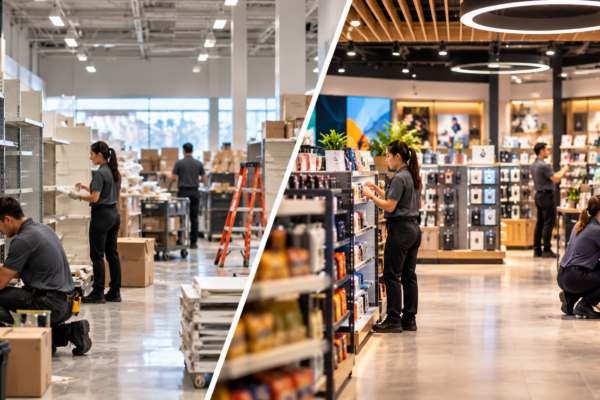
T-ROC has the infrastructure to surge brand ambassador coverage across hundreds of retail locations simultaneously for Black Friday, holiday season, and major product launches. The recruitment pipeline, training systems, scheduling technology, and retailer relationships needed to scale without quality degradation are already built and tested. For brands evaluating a holiday brand ambassador service, T-ROC’s seasonal track record is the most credible reference point available.
Integrated Service Architecture
Brand ambassador services at T-ROC do not operate in isolation. They integrate with T-ROC’s broader retail services — mystery shopping, retail merchandising, field team management, and retail technology — allowing brands to manage their entire retail execution strategy through a single partner with unified data and reporting. This integration is what makes solving the five most common retail pain points a coordinated operation rather than a series of disconnected vendor engagements.
Whether you are evaluating your first brand ambassador program or looking to upgrade an underperforming one, T-ROC can match the right brand ambassador profile to your brand — and back that placement with the training, technology, and management infrastructure to deliver measurable results from day one. The best brand ambassador for your product is not simply the most enthusiastic person in the room — it is a carefully selected, trained, and managed professional whose performance is tracked against your specific business objectives. That is the standard T-ROC holds every program to.
Ready to Build a Brand Ambassador Program That Performs?
Tell us your product category, your retail footprint, and your conversion goals. T-ROC will show you exactly what a high-performing program looks like for your brand — and back it with two decades of in-store proof.
Related Resources
Guide
Your Guide to Building a Brand Ambassador Program
Guide
Measuring Brand Ambassador Program Success
Article
The Key Benefits of Brand Ambassadors
Guide
Brand Ambassador Contract: What to Look For
Article
8 Ways to Get the Most ROI From Your Brand Ambassador Program
Article
Successful Brand Ambassador Programs: Maximizing Impact