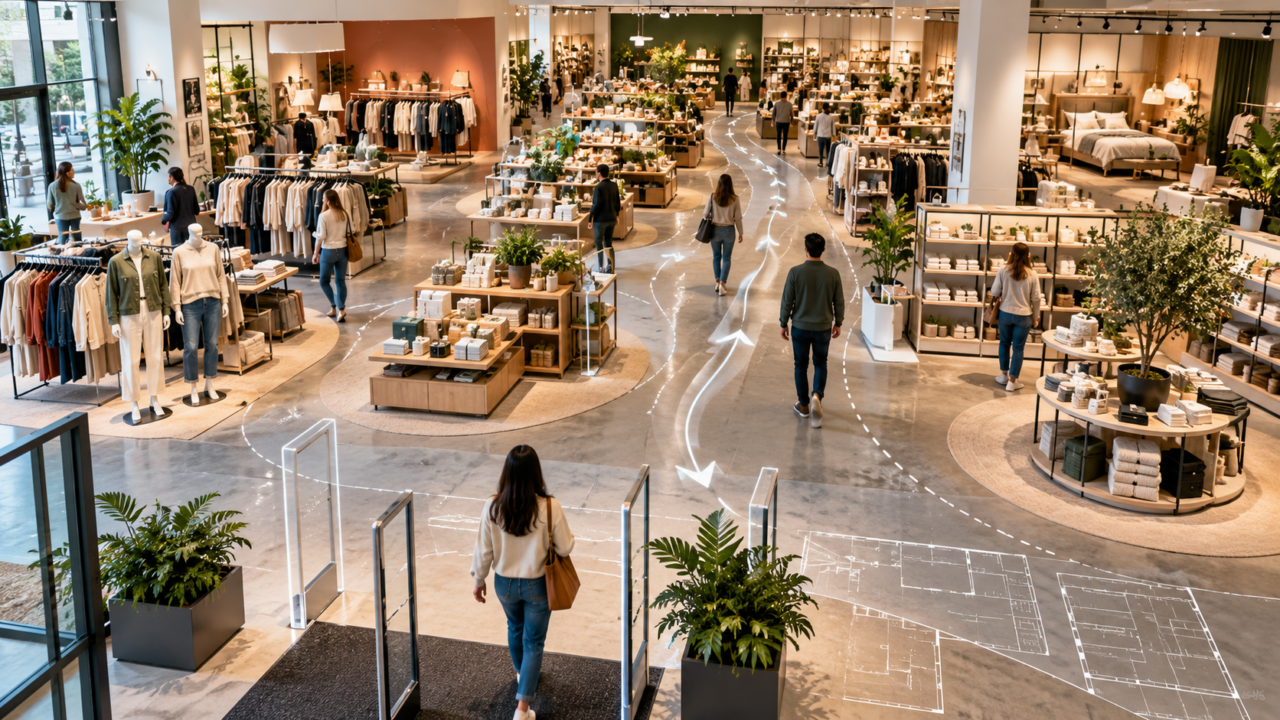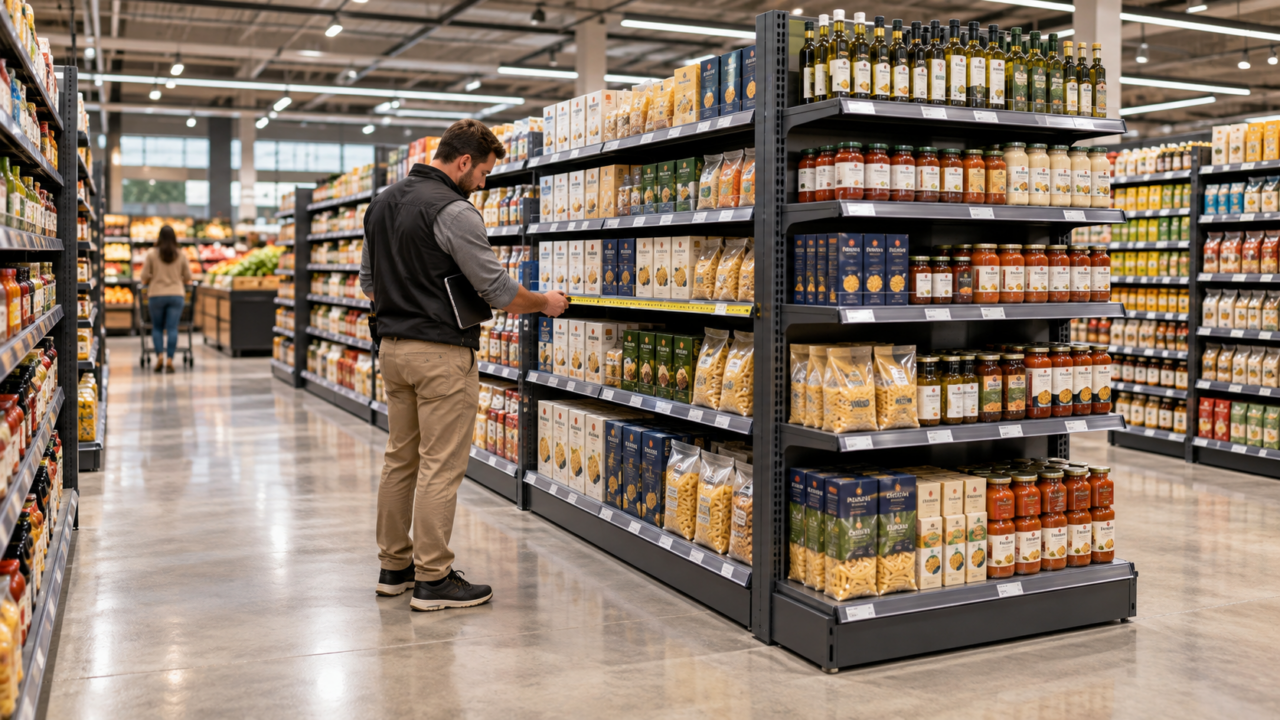




A micro market solves a problem that neither a shop nor a vending machine solves well: several hundred people in one building who want real food and drink at hours nobody wants to staff.
The format has quietly become one of the most common forms of unattended retail, and it is also one of the easiest to get wrong. This guide covers what a micro market actually is, how it differs from vending, where it works, what it costs to run, and the operational failures that close them.
What is a micro market?
A micro market is a small, unattended retail space with open shelving, refrigerated cases and a self-checkout kiosk, placed inside a building for the people who are already there. Shoppers pick up products, inspect them, and pay at the kiosk by card, app or payroll deduction. There is no attendant and no counter.
The defining difference from a vending machine is open access. Product sits on a shelf rather than behind glass, which means a shopper can read a label, check a date and change their mind. That single change cascades through the whole model.
Micro market vs vending vs a staffed shop
| Vending machine | Micro market | Staffed shop | |
|---|---|---|---|
| Product access | Behind glass, dispensed | Open shelves and coolers | Open, with assistance |
| Typical range | 30–60 items | 150–400 items | Hundreds to thousands |
| Fresh and chilled | Limited, dispensing constrains packaging | Strong — sandwiches, salads, dairy | Full |
| Staffing | None on site | None on site | Continuous |
| Hours | Always | Always, within building access | Fixed |
| Shrink exposure | Very low | Real and must be managed | Managed by presence |
| Population needed | Low | Moderate, usually 150+ on site | High |
The table explains why micro markets sit where they do. They need more people than a vending machine to justify the fixture and the service route, but far fewer than a shop, because nobody is being paid to stand in them.
Where micro markets actually work
The pattern is consistent: a known population, captive for known hours, with nothing else within easy reach.
- Corporate campuses and office buildings. The core case. Predictable weekday demand, a measurable headcount, and a catering gap outside lunch service.
- Distribution centres and manufacturing sites. Often the strongest performers, because shift patterns put real demand at 2 a.m. when nothing nearby is open.
- Hospitals. Staff and visitors around the clock, and canteen hours that cover a fraction of it.
- Universities and student accommodation. Heavy demand, concentrated in bursts, with long quiet periods that the model tolerates better than a staffed outlet.
- Hotels and residential buildings. Replace a tired lobby cabinet with something people will actually buy from after the kitchen closes.
Where they struggle is equally consistent: buildings with high turnover of unfamiliar visitors, sites with fewer than roughly 150 people, and locations a service route cannot reach economically.
What a micro market really costs to run
The fixture and kiosk are a one-off. Everything that determines whether the site earns is recurring, and it is routinely underestimated.
- Service visits. The largest ongoing line. Frequency is set by chilled product and sales velocity, not by preference, and a site that needs three visits a week will never be run profitably on one.
- Product waste. Fresh and chilled ranges carry dated stock. Waste is a normal cost of offering them, and the lever is assortment and ordering accuracy, not hope.
- Shrink. Open shelves mean some loss. It is manageable and should be budgeted rather than treated as a surprise.
- Kiosk uptime. A payment terminal that is down is a closed shop. Response time to a fault is a revenue number.
- Planogram and range changes. Demand in a building is specific and it moves. A range set at install and never revisited slowly stops matching the people buying from it.
This is the same operating profile as any other automated retail format: low cost per location, but only if many locations are run as one network rather than as individual sites.
Why micro markets fail
Very few failures are caused by the technology. The recurring causes are mundane.
The shelves run empty. The fastest way to kill a micro market is to let regulars find gaps. People stop checking after two or three wasted trips, and winning them back costs far more than the restock would have.
The range never changed. An assortment chosen from a national template rather than from what that building actually buys will underperform from day one and keep underperforming.
Dated product stayed on the shelf. One out-of-date sandwich does more damage to trust than a week of empty shelves, because it makes the whole fixture feel unmanaged.
Nobody owned the kiosk. A card reader that fails on a Friday and is fixed on Tuesday has closed the shop for the busiest part of the week.
Shrink was measured but not acted on. Loss data is only useful if something changes: the layout, the range, the camera position, or the conversation with the site.
How to tell whether a site will work
- Count the population and the hours they are present. Headcount alone is misleading; a 400-person site on three shifts behaves very differently from 400 people on one.
- Measure what is already within five minutes. A canteen, a high street or a petrol station nearby changes the maths completely.
- Check the access rules. Security, loading access and permitted service hours decide whether a route can realistically serve the site.
- Agree the service frequency before the install, not after. This is the number that determines profitability, and it is much harder to increase later.
- Define what failure looks like. An out-of-stock rate, a kiosk uptime target and a waste percentage, agreed up front, so performance is a measurement rather than an argument.
A note on benchmarks
Published figures for micro market sales per head, shrink and waste circulate widely and transfer badly. They come from specific operators in specific building types with specific ranges. A distribution centre on three shifts and a professional services office do not behave alike. Establish your own baseline across your own sites, then change one variable and measure against it.
Where a field team fits
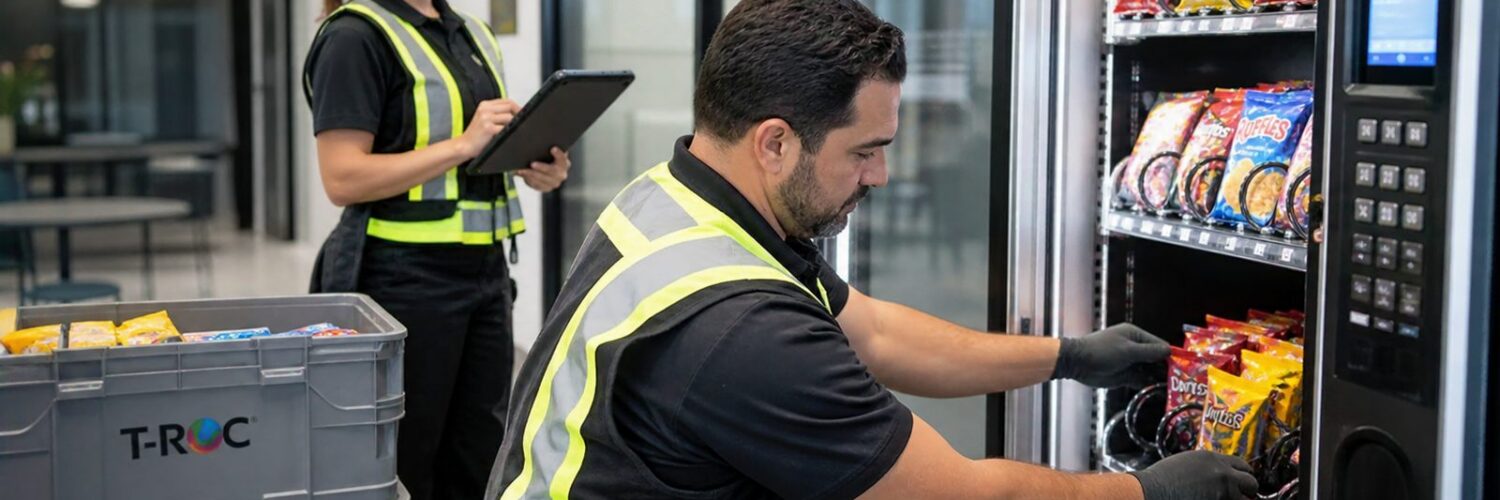
A micro market is a retail location that nobody works in. Everything a shop would handle through presence — restocking, facing, date rotation, fault reporting, range feedback — has to happen on a visit instead, and be recorded well enough that someone can compare one site against another.
That is a field execution problem. It is also why the economics work at all: one visiting team can hold standards across dozens of locations that could never each justify an employee. We have written separately on why unattended retail still needs people.
T-ROC runs automated retail programmes with per-site service, photo evidence on every visit and reporting by location rather than by region. Talk to our team about what your buildings would support.
Frequently Asked Questions
What is a micro market?
A micro market is a small unattended retail space with open shelving, refrigerated cases and a self-checkout kiosk, placed inside a building for the people already there. Shoppers handle products before paying by card, app or payroll deduction. There is no attendant, no counter and no fixed opening hours.
How is a micro market different from a vending machine?
Open access is the defining difference. Vending dispenses from behind glass; a micro market lets shoppers pick up a product, read the label and check the date. That supports a far wider range, including fresh and chilled items, but it also introduces shrink that vending never had to manage.
How many people does a micro market need to work?
Usually around 150 people on site as a starting point, though the number matters less than the pattern. A site running three shifts generates demand across the whole day, while the same headcount on one shift concentrates it into a few hours. Nearby alternatives such as a canteen change the calculation further.
Where do micro markets work best?
Corporate campuses, distribution centres, manufacturing sites, hospitals, universities and hotels. The common factor is a known population that is captive for known hours with nothing else within easy reach. Distribution centres often perform strongest because shift patterns create real demand at hours when nothing nearby is open.
What does it cost to run a micro market?
The fixture and kiosk are a one-off purchase. The recurring costs decide profitability: service visits, product waste on fresh and chilled lines, shrink, kiosk uptime and periodic range changes. Service frequency is the largest line, and it is set by chilled product and sales velocity rather than by preference.
Why do micro markets fail?
Almost always for operational reasons rather than technical ones. Shelves run empty and regulars stop checking, the range is set from a template instead of from what the building buys, dated product stays out, or a failed card reader closes the shop for days. Shrink is usually a smaller problem than any of these.
How is shrink handled without staff on site?
It is budgeted rather than eliminated. Open shelves mean some loss, and the realistic goal is to keep it within a known range. Loss data is only useful when something changes as a result: the layout, the assortment, camera placement or the agreement with the site. Measuring it and doing nothing is the common mistake.