


We are in Orlando this week for IAAPA Expo 2026, and the question we get asked most at a show like this is a fair one: what is a retail services company doing at an attractions event?
The short answer is that we are not visiting someone else’s industry. A theme park, a water park or a family entertainment center is a retail business with an extraordinary front end. It carries inventory, runs points of sale, staffs a floor, merchandises a shelf and lives or dies on conversion — under conditions that no shopping centre has to deal with.
What is IAAPA Expo 2026?
IAAPA Expo is the attractions industry’s largest annual trade event, held this year from 16 to 20 November 2026 at the Orange County Convention Center in Orlando, Florida. The education conference runs 16–19 November and the show floor is open 17–20 November, bringing together operators of theme parks, water parks, family entertainment centers, museums, zoos and aquariums.
IAAPA reports this as the largest Expo in the event’s history, with more than 1,350 exhibitors across roughly 630,000 square feet, expanding into the Orange County Convention Center’s West Building alongside the North and South halls. The programme includes over 170 education events.
Why a retail services company is at an attractions show
Walk a major park and count the transactions. Admission is one of them. Everything after the gate — the souvenir, the churro, the photo, the plush toy at the ride exit, the bottle of water at two in the afternoon — is retail, and in many operations it carries a meaningful share of the per-guest spend.
That revenue behaves differently from the gate. Admissions are forecastable weeks out. In-park spend is decided in the moment, by whether the right product was in the right place with someone to sell it, at the precise twenty minutes when a few thousand people walked past at once.
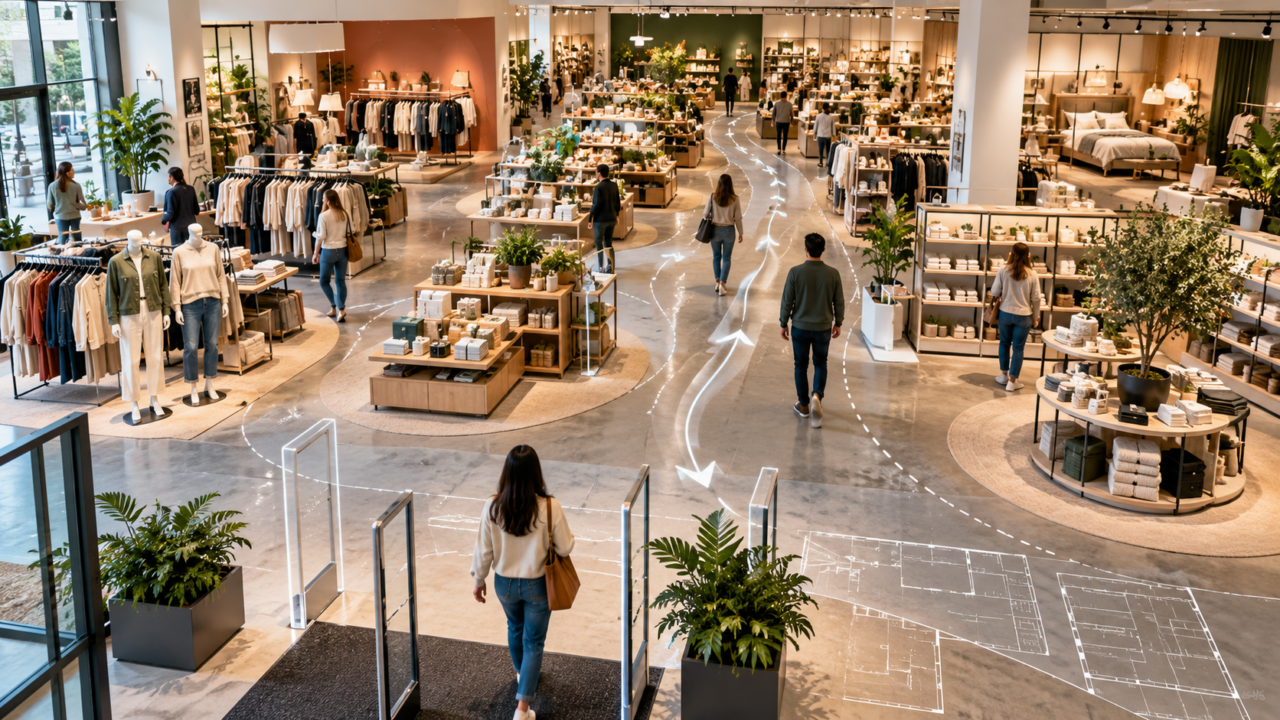
This is the same problem we work on in stores every day, just compressed. It is retail execution: did the plan that was agreed in an office actually happen on the floor, on the day, at the hour that mattered?
The four retail surfaces inside an attraction
Most operators think of in-park retail as “the gift shop”. In practice there are four distinct surfaces, each with its own failure mode.
| Surface | What it sells | Where it breaks | What fixes it |
|---|---|---|---|
| Flagship gift shop | Higher-value souvenirs, apparel, licensed merchandise | Sizes and hero lines gone by mid-afternoon; queue at closing | Replenishment timed to the day’s peaks, not to opening |
| Food and beverage outlets | Meals, snacks, drinks | Throughput collapses in the lunch and parade windows | Labour planned against the spike, mobile ordering that is actually staffed |
| Carts and seasonal kiosks | Impulse lines, ride-exit merchandise, event product | Placed once, then never moved as footfall shifts | Treating placement as a variable to be tested, not a fixture |
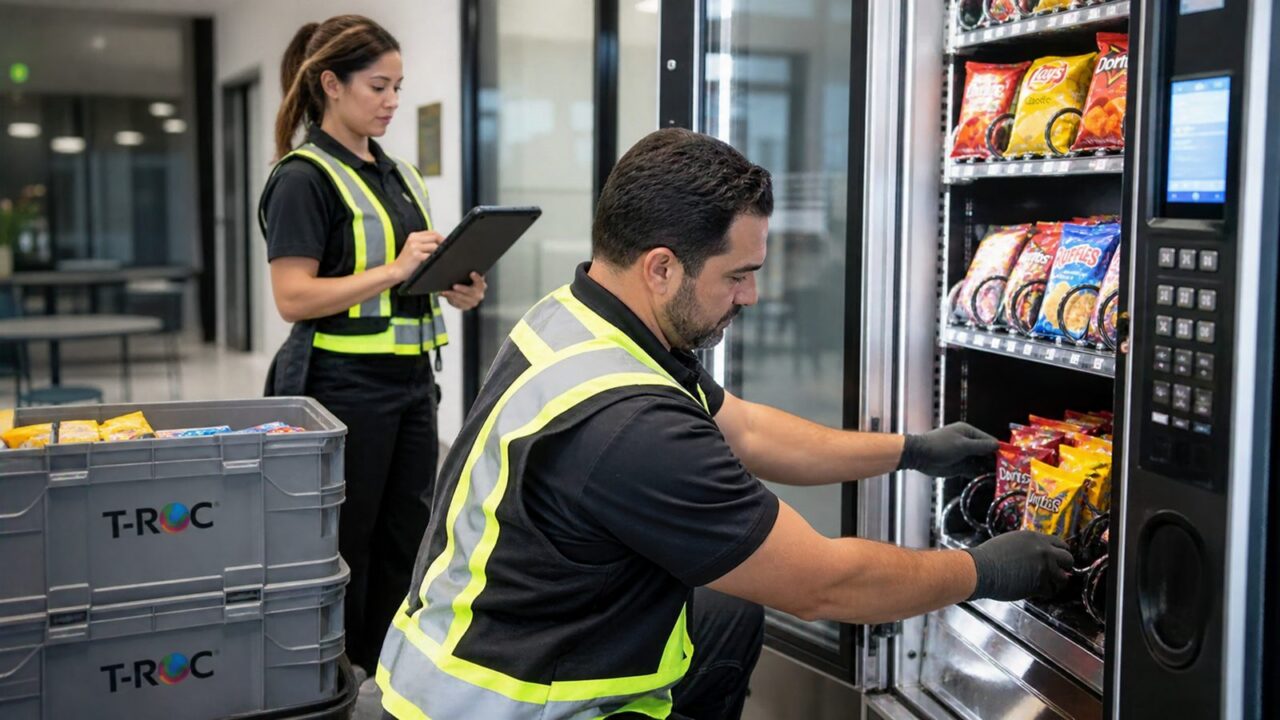
| Unattended retail | Drinks, essentials, convenience lines, after-hours demand | Empty units and dead card readers nobody reports | A service route and an uptime target, same as any store network |
The fourth row is growing fastest. Unattended formats fill the hours and the corners that staffed outlets cannot justify — the queue line, the hotel corridor at midnight, the far side of the water park. We have written about that shift in The Dead Zone Economy, and the operating profile is identical to a micro market in a corporate building: cheap per location, profitable only if the whole network is run as one.
Attraction retail is not mall retail
Four differences change almost every decision.
- The audience is captive but temporary. There is no next visit to recover a lost sale. A guest who could not find their size has not deferred the purchase; the purchase is gone.
- Demand is spiked, not distributed. Shops do not fill steadily through the day. They fill when a show lets out. Staffing to an average guarantees understaffing at the only moments that count.
- Emotion is doing the selling. Merchandise is bought as a souvenir of a feeling, within minutes of having it. Proximity to the moment matters more than price or assortment depth.
- The labour model is seasonal by design. A large share of the floor team is new each season, which puts a permanent floor under training and supervision cost that a year-round store never faces.
What the 2026 show floor says about where the money is
The pavilion list is a useful signal. This year’s West Building carries Food & Beverage, Haunt, Operational Services and First-Time Exhibitor. The South Building carries Games & Arcade, Inflatables, Family Entertainment and Show Production & Design.
Only a minority of that floor is rides. The majority is the business of running an attraction once the rides exist: feeding people, selling to them, staffing the operation and keeping it standing through a season. That is the conversation we came for.
Three problems guests actually notice
None of these are strategy problems. All three are execution problems, and all three are visible to a paying guest within an hour of arriving.
The queue at the register at closing. The last hour is when a park’s retail converts, because guests buy the souvenir on the way out. If the registers are staffed to the same level as 11 a.m., the park is choosing to lose the sales it worked all day to earn.
The size that is gone by two o’clock. A stockout in a park is not a deferred sale. Replenishment windows set for operational convenience rather than for sales velocity quietly cap the day.
The outlet nobody is on. A cart with no operator, a kiosk with a failed reader, a counter closed because two people called in — each one is a closed shop in the middle of peak footfall, and it usually goes unrecorded.
Every one of these is measurable, and measuring them is what turns in-park retail from an anecdote into a managed line. That is exactly what field teams, merchandising services and execution reporting exist to do.
Where to find T‑ROC at IAAPA Expo 2026
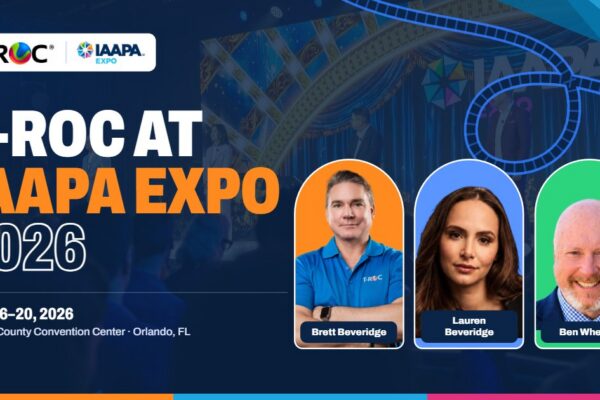
We are on the ground in Orlando through the close of the show. Brett Beveridge, T‑ROC’s Founder and CEO, is attending alongside Lauren Beveridge and Ben Wheeler.
If you operate attraction retail — or you supply the brands that sit on its shelves — we would rather talk about the specifics of your peak hours than hand you a brochure. Get in touch and we will find time this week.
Frequently Asked Questions
When and where is IAAPA Expo 2026?
IAAPA Expo 2026 takes place from 16 to 20 November 2026 at the Orange County Convention Center in Orlando, Florida. The education conference runs 16 to 19 November and the show floor is open 17 to 20 November, across the North, South and West Buildings of the convention center.
How big is IAAPA Expo 2026?
IAAPA reports it as the largest Expo in the event’s history, with more than 1,350 exhibitors occupying roughly 630,000 square feet of show floor. The programme also includes over 170 education events, held alongside the exhibition across the convention center.
Who attends IAAPA Expo?
Operators and suppliers from across the attractions industry: theme parks, water parks, family entertainment centers, museums, zoos, aquariums and haunted attractions. The show floor is organised into pavilions including Food & Beverage, Games & Arcade, Family Entertainment, Operational Services and Show Production & Design.
Why would a retail services company exhibit interest in attractions?
Because an attraction is a retail operation. Gift shops, food outlets, merchandise carts and unattended units carry inventory, run points of sale and depend on staffing and replenishment. The disciplines are the same as any store network, compressed into a shorter season and much sharper demand peaks.
What makes in-park retail different from a normal store?
Four things. The audience is captive but will not return, so a lost sale is lost permanently. Demand arrives in spikes around show times and closing. Purchases are emotional and made close to the moment. And a large share of the floor team is seasonal, which keeps training cost permanently high.
Where does attraction retail lose the most revenue?
At the peaks. Registers staffed to an average rather than to the closing rush, stock replenished on an operational schedule rather than a sales one, and outlets left unstaffed or with a failed payment terminal during heavy footfall. Each is an execution failure rather than a merchandising one.
How does unattended retail fit into an attraction?
It covers the hours and locations a staffed outlet cannot justify: queue lines, hotel corridors late at night, the far side of a park. The economics match any unattended network, so performance depends on service route frequency, device uptime and an assortment matched to that specific location.
Related Resources
Related Articles: