

T-ROC GLOBAL
Holiday Retail Strategy: The Complete Guide to Q4 Planning, Black Friday & Peak Season Execution
Everything retail brands and operators need to prepare for the highest-stakes selling season of the year — from July planning timelines to post-holiday debrief.
Q4 is not just the busiest time of year in retail — it is the defining period that separates high-performing brands from those that merely survive. For most retailers, the stretch from October through December accounts for 30–40% of annual revenue. For some categories — consumer electronics, toys, apparel, and home goods — the figure climbs even higher. A well-executed holiday retail strategy does not happen by accident. It is built over months of deliberate planning, cross-functional coordination, and relentless execution across every store and channel.
This guide is designed for retail operations leaders, brand managers, and field teams who need a systematic, battle-tested framework for Q4 retail planning, Black Friday retail preparation, holiday retail staffing, and peak season retail execution. It draws on T-ROC Global’s decades of experience deploying field teams, brand ambassadors, and technology solutions for the world’s largest retailers during the most demanding weeks of the calendar year.
Why Q4 Makes or Breaks the Retail Year
The numbers tell the story plainly. The National Retail Federation has consistently reported that November and December alone represent the largest single block of consumer spending in the United States. Brick-and-mortar traffic spikes sharply in the weeks surrounding Black Friday and Cyber Monday, and then again during the final push before Christmas. Even as e-commerce has grown, in-store shopping remains a dominant force in Q4 — consumers want to touch, demo, and take home products immediately, particularly in high-consideration categories like consumer electronics.
What makes this period so unforgiving is its concentration. A brand that loses its share of shelf space, experiences out-of-stocks, or fields undertrained associates during a single weekend of peak traffic may not be able to recover that lost revenue. The margin for error collapses to near zero. As T-ROC’s founder Brett Beveridge has noted, even a shorter consumer purchasing window can drive an increase in sales — but only for brands that show up fully prepared. The window for capturing demand is narrow and unforgiving.
The stakes are equally high for manufacturers and CPG brands competing at retail. As T-ROC’s research has shown, there is a meaningful gap between what retailers prioritize and what manufacturers expect when it comes to must-win products for the holiday season. Bridging that gap through proactive planning and joint execution is where the real competitive advantage is built.
The Holiday Preparation Timeline: July Through January
Effective Q4 retail planning does not begin in October. By the time Halloween passes, brands that are truly ready have already completed months of groundwork. Here is a realistic working timeline for holiday retail preparation:
July – August: Strategy & Vendor Alignment
Finalize holiday product assortment and promotional calendar. Negotiate co-op and MDF budgets with retail partners. Begin staffing model planning based on prior year traffic data. Identify technology infrastructure needs — kiosks, POS, workforce management systems.
September: Recruitment & Training Kickoff
Launch seasonal associate and brand ambassador recruiting. Develop training content for new hires. Conduct pre-holiday audits of display compliance, planogram accuracy, and fixture readiness across the store network.
October: Field Readiness & Technology Deployment
Complete seasonal hiring and onboarding. Deploy or audit in-store technology. Confirm logistics and replenishment processes. Run tabletop simulations for Black Friday surge scenarios. Review your Q4 countdown checklist with every stakeholder group.
November: Peak Execution Begins
Activate full field team deployment. Monitor compliance and KPIs daily. Execute Black Friday and Cyber Monday playbooks. Restock aggressively and adjust staffing based on real-time traffic data.
December – January: Final Sprint & Post-Mortem
Sustain intensity through Christmas Eve. Manage returns surge and clearance resets in late December. Conduct a comprehensive debrief in January: what worked, what failed, and what changes should be embedded into next year’s plan from day one.
T-ROC’s detailed step-by-step guide to preparing for Black Friday breaks this timeline down further into actionable weekly milestones, giving operations teams a concrete workplan rather than a high-level framework.
Holiday Retail Staffing: Managing the Labor Surge
No element of holiday execution is more operationally demanding than holiday retail staffing. U.S. retailers hire hundreds of thousands of seasonal workers every year to handle the Q4 surge — and the quality of that labor directly determines the quality of the customer experience. Poorly trained or inadequately managed seasonal staff lead to longer wait times, missed upsell opportunities, empty shelves, and frustrated shoppers who abandon purchases entirely.
A winning holiday staffing strategy requires thinking through several dimensions simultaneously:
- Volume forecasting: How many additional hours are needed, and in which locations? Traffic modeling based on prior-year data and promotional calendar inputs should drive this, not gut instinct.
- Sourcing speed: Start recruiting no later than September. The best seasonal candidates — returning associates, students with retail experience, brand enthusiasts — are claimed early.
- Training depth vs. speed: Seasonal associates need enough training to deliver a consistent, on-brand experience without weeks of classroom instruction. Digital onboarding platforms and microlearning modules make this balance achievable.
- Scheduling flexibility: Build schedules that can absorb surge moments — early Black Friday openings, last-minute Christmas rushes — without burning out your core team or violating predictive scheduling regulations.
- Retention incentives: The associates you hire in October need to stay through December 26. Completion bonuses, flexible scheduling, and positive supervision culture are the primary levers.
T-ROC manages large-scale field team deployments across national retail networks, giving brands access to a pre-trained, managed workforce that can scale up and down with demand without the administrative burden of direct employment. This model is particularly effective for brands that need a presence in hundreds of doors simultaneously during peak weeks. Learn more in T-ROC’s Retail Operations Guide.
Compliance and In-Store Readiness: The Foundation of Peak Performance
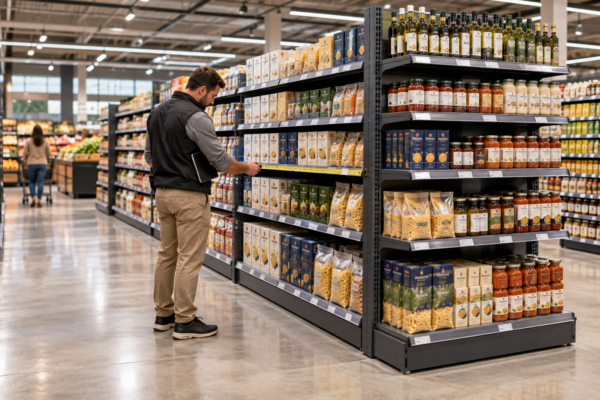
Even the best-planned holiday strategy fails at the store level if execution compliance breaks down. Display placement, planogram adherence, promotional signage, and product availability are the building blocks of in-store revenue generation. During peak season, when traffic is highest and every store visit has elevated conversion potential, the cost of compliance failure is at its most severe.
Pre-holiday retail compliance audits — conducted in September and October — are non-negotiable for high-performing operators. These audits should cover:
- Fixture and display installation accuracy against the holiday planogram
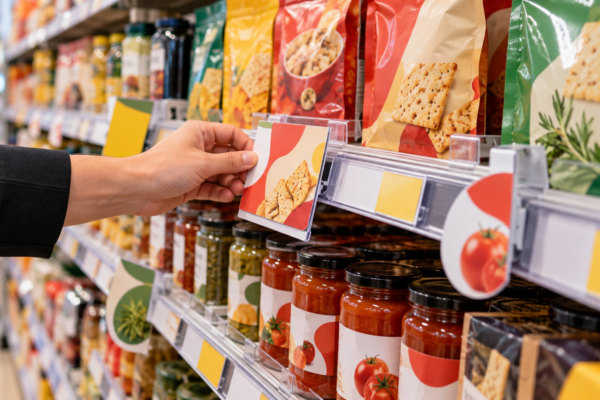
- Promotional signage placement and legibility
- Product availability and shadow stock positioning
- Technology functionality — kiosks, interactive displays, POS terminals
- Safety and crowd management protocols for high-traffic events
- Associate knowledge readiness on key gift-giving SKUs
Compliance does not end at launch. Maintaining standards throughout November and December requires ongoing field verification. Mystery shopping is one of the most effective tools for this: anonymous shoppers evaluate real in-store experiences against defined standards, identifying gaps that internal field visits often miss. T-ROC’s guide to mastering holiday retail with mystery shopping outlines how to structure an effective holiday program that drives accountability and continuous improvement across the entire store network.
For a comprehensive framework covering all dimensions of in-store holiday readiness, T-ROC’s dedicated resource on holiday retail readiness and compliance provides a structured checklist and execution guide that operations teams can deploy across any store network.
Technology and Automation for Peak Periods
The scale and speed of peak season demand has made technology an essential component of any serious holiday retail strategy. Manual processes that work adequately during regular traffic periods break under Q4 pressure. The brands that execute best during holiday are increasingly those that have invested in automation, data integration, and self-service technology to handle volume without linear headcount increases.
Workforce management platforms are foundational. Modern systems can integrate traffic forecasting, scheduling, and time-and-attendance data to ensure the right number of associates are on the floor at every hour of peak shopping days. These platforms eliminate the guesswork that has historically caused overstaffing during quiet periods and understaffing during surge events.
Automated retail kiosks represent one of the most significant technology investments a brand can make for the holidays. Kiosks handle high-frequency, low-complexity transactions — device activations, accessories purchases, product demos — without consuming associate time. During Black Friday when store traffic can spike 5–10x normal levels, kiosks function as force multipliers that keep revenue flowing even when human resources are stretched thin. T-ROC’s analysis of how automated retail kiosk solutions power Black Friday survival demonstrates concretely how this technology absorbs demand chaos while maintaining the customer experience.
Beyond Black Friday, automated retail delivers sustained advantages throughout the entire holiday season. Self-service product discovery tools, interactive demo stations, and unattended retail formats allow brands to maintain presence and capture revenue during off-peak hours when full associate staffing is not economically viable. T-ROC’s examination of automated retail’s competitive edge during the holidays explores how brands use these tools to outperform competitors who rely exclusively on traditional staffed retail formats.
Real-time analytics dashboards complete the technology stack. Operations leaders need visibility into compliance rates, sales performance, traffic conversion, and inventory levels across all locations simultaneously. When a display is down in store 247 or a key SKU hits zero in a top-20 door, the response time needs to be measured in hours, not days. Integrated field reporting platforms close this gap and give leadership the situational awareness to make rapid decisions during the peak weeks when every hour matters.
Brand Ambassador Deployment During Holiday Season
The holiday season is the single highest-leverage deployment window for brand ambassadors. When gift-seekers are actively researching, comparing, and purchasing products — often in categories where they have limited prior knowledge — a knowledgeable, well-trained brand ambassador can be the difference between winning and losing a sale. In consumer electronics especially, the conversion lift from ambassador-supported demonstrations consistently exceeds 20–30% compared to unassisted retail.
Effective holiday ambassador deployment requires precision on several dimensions:
- Door selection: Not every store requires ambassador coverage. Deploy where traffic volume, revenue potential, and competitive intensity are highest. Tier your store network by revenue opportunity and concentrate ambassador hours accordingly.
- Schedule alignment with peak traffic: Ambassadors should be deployed during the hours when conversion-ready shoppers are present — weekend afternoons, the week of Black Friday, and the final two weekends before Christmas. Spreading coverage too thin across all days dilutes impact.
- Holiday-specific training: Ambassadors need training updates before every holiday season — new products, updated competitive talking points, gift-giving context, and awareness of promotional pricing. Generic product training is insufficient for the nuanced conversations that drive holiday purchases.
- Performance measurement: Every ambassador deployment should track conversion rates, units per engagement, and customer satisfaction scores. Holiday deployments that are not measured are investments that cannot be optimized.
T-ROC’s comprehensive Brand Ambassador Services Guide covers the full architecture of effective ambassador programs, from recruiting and training through field management and performance reporting — all of which apply with amplified importance during the Q4 peak.
Measuring Holiday Retail Performance: KPIs That Actually Matter
A holiday retail strategy is only as good as the feedback loops that allow teams to course-correct in real time. The metrics that matter most during Q4 are not necessarily the same ones that drive quarterly business reviews. Holiday performance requires a faster cadence and a tighter focus on the indicators that predict revenue outcomes at the store level.
Core KPIs for holiday retail operations:
Compliance Rate
Percentage of stores meeting planogram, signage, and fixture standards. Target: 95%+ across the network during peak weeks.
In-Stock Rate
Availability of hero SKUs and gift-season bundles at time of shopping. Out-of-stocks during holiday are among the costliest operational failures.
Conversion Lift
Change in conversion rate in ambassador-covered doors vs. control stores. Quantifies the direct revenue impact of field investment.
Mystery Shop Score
Objective assessment of in-store experience quality across service, product knowledge, and display standards during peak traffic periods.
Revenue Per Door
Total sell-through at the store level relative to traffic volume. Identifies underperforming locations that need rapid intervention.
Associate Readiness Score
Training completion rates and knowledge assessment scores across seasonal and permanent staff. Predicts service quality outcomes before peak traffic arrives.
The holiday season does not reward passive monitoring. Daily dashboards, rapid escalation protocols for compliance failures, and weekly cross-functional stand-ups with operations, field, and supply chain stakeholders are the operating rhythm that allows high-performing organizations to stay ahead of problems rather than reacting to them.
T-ROC’s analysis of the tactics that win the retail aisle during holiday reinforces that execution consistency — not brilliance in isolated moments — is what separates peak season winners. The brands that win are those whose systems and processes hold under pressure, store after store, week after week.
An honest reckoning with prior-year performance is also essential. As T-ROC’s analysis of unpredictable holiday seasons and the opportunities they create demonstrates, even difficult or disrupted seasons generate learnings that can sharpen future execution — but only for organizations that build honest debriefs into their process. And looking back further, T-ROC’s documentation of where the holiday retail magic was happening in 2019 offers a useful long-view perspective on how consumer behavior and channel dynamics have evolved — and what enduring truths still apply.
How T-ROC Executes Peak Season Programs
T-ROC Global has spent decades building the infrastructure and expertise required to execute holiday retail programs at national scale. Our integrated model combines four capabilities that most brands and retailers cannot build independently:
Managed Workforce Solutions
T-ROC recruits, trains, manages, and deploys brand ambassadors and field teams across national retail networks. Our workforce is pre-trained on client products, compliance standards, and customer engagement protocols before the first day of peak season — eliminating the ramp-up delays that cost brands revenue during the critical early weeks of Q4.
Retail Technology & Automation
T-ROC designs, deploys, and services automated retail kiosks and self-service solutions that extend brand reach beyond the limitations of staffed retail hours. Our technology solutions are engineered to handle holiday-level transaction volumes reliably and securely.
Mystery Shopping & Compliance Verification
T-ROC’s mystery shopping programs provide continuous, objective verification of in-store execution throughout the holiday period. Real-time reporting surfaces compliance gaps and service failures before they cascade into revenue losses.
Integrated Analytics & Reporting
T-ROC’s technology platforms aggregate field data, compliance scores, sales performance, and mystery shop results into unified dashboards that give leadership teams the visibility they need to manage peak season performance in real time — not in retrospect.
The result is a holiday execution capability that scales with client needs — from a targeted ambassador deployment in a single region to a full national program spanning thousands of store locations across multiple retail chains. T-ROC clients consistently outperform their unmanaged peers during Q4 because the infrastructure, people, and processes that drive holiday results are in place and operating weeks before the peak begins.
Start Your Holiday Retail Strategy Now
The single biggest mistake retail brands make in Q4 planning is starting too late. The window to build a competitive advantage for the holiday season opens in summer and begins closing in October. Organizations that treat November as the beginning of their preparation are, by definition, already behind.
A comprehensive holiday retail strategy requires alignment across workforce planning, technology deployment, field compliance, and performance measurement — all working in concert across every store in the network. The complexity is real, but it is entirely manageable with the right partner, the right systems, and the discipline to start early.
Whether you are building your first structured Q4 program or looking to sharpen an existing approach, T-ROC Global has the expertise, infrastructure, and field execution capability to help your brand capture its full share of the most valuable selling season of the year.
Ready to Win This Holiday Season?
Talk to a T-ROC peak season specialist today. We’ll assess your current holiday readiness and design a program that drives measurable results from Black Friday through the end of Q4.
Related Resources
Brand Ambassador Services Guide
The complete resource for building, managing, and measuring brand ambassador programs at retail scale.
Retail Operations Guide
Comprehensive coverage of retail operations management, field team deployment, and performance optimization.
Holiday Retail Readiness & Compliance
Ensure your stores meet every compliance and readiness standard before peak traffic arrives.