

What is Private Label?
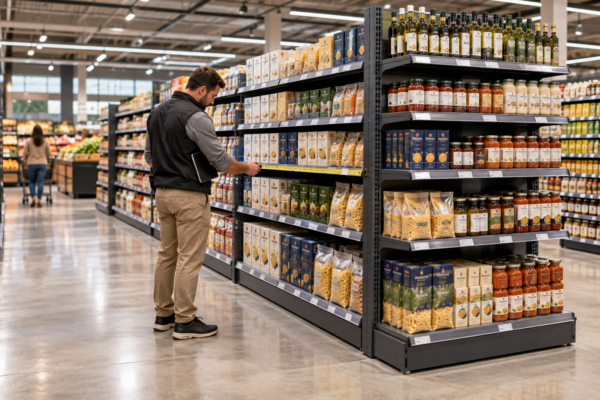
Private label products are manufactured by a third party and sold exclusively under a retailer’s own brand name. Once considered a bargain-bin alternative to national brands, private label has evolved into a strategic growth engine for modern retailers — and a powerful category management lever that demands disciplined in-store execution.
Private Label Definition
Definition
Private label (also called store brand, own brand, or house brand) refers to consumer products manufactured by a contract manufacturer or third-party supplier and marketed exclusively under a retailer’s proprietary brand name. The retailer controls product specifications, pricing, packaging, and shelf placement, while the manufacturer handles production. In white label retail arrangements, the same manufactured product may be rebranded across multiple retailers, whereas true private label typically involves exclusive specifications developed by and for a single retailer.
Private label is not a single product category — it is a business model. Retailers from grocery chains and mass merchandisers to specialty electronics and pet supply stores use private label strategies to differentiate their assortment, improve margin structures, and build shopper loyalty that a national brand simply cannot deliver.
The terms private label and white label retail are frequently used interchangeably in industry discussions, though a meaningful distinction exists. White label products are generic formulations rebranded with minimal customization. True private label products involve the retailer co-developing specifications, packaging, and positioning with the manufacturer — giving the retailer far greater control over quality perception and competitive differentiation.
Private Label Market Share: A Snapshot of Growth
Private label is no longer a niche tactic. Consumer acceptance has accelerated dramatically over the past decade, driven by inflationary pressure, evolving shopper values, and retailers’ investments in private label quality and packaging.
European retailers have long outpaced their U.S. counterparts in private label penetration — in some markets exceeding 50% of total grocery volume — and U.S. retailers are actively closing that gap. Walmart’s Great Value and Bettergoods lines, Kroger’s Simple Truth, Target’s Good & Gather, and Costco’s Kirkland Signature are examples of private label programs that have become destinations in their own right, not simply economical alternatives.
Private Label vs. National Brands
Understanding the strategic relationship between private label and national brands is essential for effective category management. These two segments are not simply competitors on a shelf — they serve different roles in a retailer’s overall category architecture.
| Dimension | Private Label / Store Brand | National Brand |
|---|---|---|
| Margin | Typically 25–45% gross margin | Typically 15–25% gross margin |
| Retailer control | Full control over specs, price, packaging | Limited; brand sets pricing floor and packaging |
| Shopper loyalty | Drives loyalty to the retailer’s banner | Drives loyalty to the manufacturer’s brand |
| Exclusivity | Available only at one retailer | Distributed across multiple retail channels |
| Marketing spend | Retailer funds all marketing | Manufacturer funds national advertising |
| Quality perception | Increasingly on par with national brands | Strong brand equity; familiar to consumers |
Best-in-class retailers understand that private label and national brands can coexist in a well-managed category architecture. National brands often bring foot traffic and category credibility; private label products convert that traffic into higher-margin sales and exclusive shopper relationships. The optimal shelf ratio depends on category maturity, competitive dynamics, and the retailer’s overall brand positioning strategy.
Benefits of Private Label for Retailers
The economics of private label are compelling, but the strategic benefits extend well beyond margin improvement. Retailers that operate mature private label programs report advantages across multiple dimensions of their business.
1. Margin Expansion
Private label products typically generate 20–40 percentage points of additional gross margin compared to equivalent national brand items. Because the retailer controls both the cost of goods and the retail price, margin management becomes a direct operational lever rather than a negotiated outcome with brand manufacturers.
2. Retailer Differentiation and Exclusivity
A private label product is, by definition, exclusive. Shoppers cannot find Kirkland Signature olive oil at Target or Walmart’s Bettergoods granola at Kroger. This exclusivity reduces direct price comparison and builds a form of competitive moat that national brands — distributed across hundreds of retail banners — simply cannot replicate.
3. Shopper Loyalty and Banner Equity
When shoppers associate quality and value with a retailer’s own brand, they have a behavioral incentive to return to that banner. Private label loyalty is, effectively, retailer loyalty. This dynamic explains why Amazon has aggressively built its own private label portfolio across categories from batteries to bedding.
4. Assortment Flexibility and Speed to Market
Retailers working directly with contract manufacturers can respond to emerging consumer trends — clean-label formulations, sustainable packaging, dietary preferences — faster than a national brand typically can, because the decision-making chain is shorter and brand equity constraints are fewer.
5. Negotiating Leverage with National Brand Suppliers
A credible, well-executed private label program gives retailers negotiating leverage with national brand manufacturers. The implicit message is clear: the retailer has an alternative, and that alternative is performing. This dynamic often results in improved national brand terms, promotional support, and slotting arrangements.
Private Label Growth Trends Shaping Retail in 2025 and Beyond
Several macro and structural trends are converging to accelerate private label adoption across retail channels.
- Sustained inflationary pressure: Even as headline inflation moderates, shoppers who traded down to private label during inflationary periods have not universally traded back. Behavioral inertia is working in private label’s favor.
- Premium private label expansion: Leading retailers are no longer limiting private label to entry-level price tiers. Premium and super-premium private label tiers are capturing incremental spend from shoppers who want quality parity with national brands at a 15–20% price advantage.
- Health, wellness, and sustainability: Retailers are using private label as the primary vehicle to offer clean-label, organic, free-from, and sustainably sourced products, often at accessible price points that national brands have been slow to reach.
- Private label in non-grocery channels: Category penetration is accelerating in pet, home goods, personal care, apparel, and consumer electronics accessories — categories where retailers have historically relied almost entirely on branded merchandise.
- Digital-native private label: Direct-to-consumer brands, subscription boxes, and e-commerce platforms are launching proprietary product lines as a first-order business strategy, not an afterthought — blurring the line between retailer and manufacturer.
Category Management and Private Label Strategy
Private label products do not succeed by default. They require the same rigorous strategic discipline as any national brand — and often more, because they lack the built-in consumer awareness that marketing investment creates. This is where category management becomes the critical enabler.
Effective category management for private label involves a deliberate process of assortment architecture, shelf positioning, pricing strategy, and promotional planning. The goal is to place private label items at optimal points in the decision hierarchy — typically adjacent to, or directly alongside, the national brand equivalent — where price-conscious shoppers can make a clear value comparison.
Planogram design for private label categories requires particular care. Research consistently shows that eye-level shelf placement, right-of-national-brand positioning, and high-facings allocations significantly improve private label unit velocity. These are not accidental outcomes — they are the product of deliberate category review processes and negotiated shelf agreements between retailers and their category management teams.
The Private Label Shelf Positioning Principle
Category management best practice positions private label products at eye level, directly to the right of the category-leading national brand. This “shadow the leader” strategy leverages the national brand’s marketing investment while directing value-seeking shoppers to the higher-margin store brand.
- Eye-level private label placement can increase unit velocity by 15–25% vs. lower-shelf alternatives
- Consistent package design language across private label tiers improves shopper navigation and brand recognition
- Secondary placements — endcaps, checkout zones, clip strips — extend private label visibility beyond the primary shelf run
In-Store Execution: Where Private Label Programs Win or Lose
Even the best-designed private label product can underperform if in-store execution is inconsistent. The gap between a planogram as designed and a shelf as executed is where private label programs most often lose sales. This challenge is compounded at scale: a retailer with 500 stores and a newly launched private label SKU needs that product correctly positioned, fully stocked, and properly signed across every location — every week.
Disciplined retail merchandising is the operational backbone of a successful private label program. It encompasses shelf resets, new item cut-ins, planogram compliance auditing, out-of-stock resolution, and POS material installation. For private label specifically, where there is no manufacturer-funded rep visiting the store, the retailer must either develop its own field merchandising capability or partner with a specialist field services organization.
Execution failures in private label carry a compounding cost: a shopper who reaches for the store brand and finds it out of stock does not wait — they buy the national brand, the competitor’s product, or abandon the purchase entirely. Each lapsed occasion represents both a lost margin opportunity and a micro-erosion of store brand trial and trust.
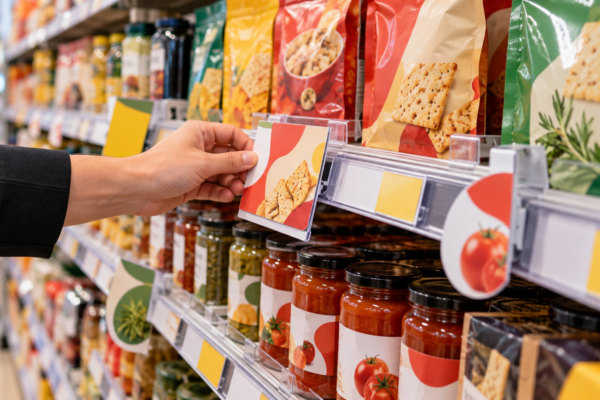
Visual merchandising plays an equally important role. Private label packaging must communicate quality and value clearly at the point of decision. In-aisle signage, shelf talkers, and promotional displays are tools that experienced merchandising field teams can deploy consistently across retail networks to amplify private label visibility at the moments that matter most.
How T-ROC Global Supports Private Label Retail Execution
T-ROC Global — The Revenue Optimization Companies — brings specialized field services, category management support, and merchandising execution capabilities to retailers and brands navigating the complexities of private label programs at scale.
Our retail merchandising teams execute the critical last mile of private label strategy: ensuring that store brand products are correctly placed, fully stocked, and compliantly merchandised according to planogram specifications across hundreds or thousands of retail locations. This includes new item resets, on-shelf auditing, out-of-stock recovery, and display builds that are coordinated nationally but executed with local precision.
Beyond execution, T-ROC’s field teams serve as intelligence assets for retailers. Our associates are embedded in stores, capturing real-time shelf data — compliance rates, stock gaps, competitive activity — that feeds back into category management decisions. This closed loop between in-store reality and planning ensures that private label programs evolve based on what is actually happening on the floor, not just what the planogram assumes.
For retailers building or scaling private label programs, the operational partnership between category strategy and field execution is decisive. T-ROC bridges that gap — combining the analytical rigor of category management with the operational discipline of nationwide field merchandising teams.
Related Retail Definitions and Resources
Private label strategy intersects with several core disciplines in retail operations. Explore these related resources from the T-ROC knowledge base:
Ready to Strengthen Your Private Label Execution?
T-ROC’s field merchandising and category management teams help retailers close the gap between private label strategy and in-store reality. Let’s talk about your program.