


Retail Glossary
What Is Retail Merchandising?
Definition, Types & Best Practices
Last updated: April 2026
Definition
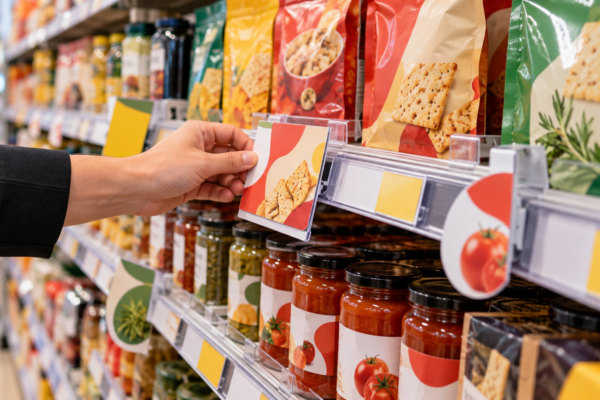
Retail merchandising is the strategy and in-store execution of placing, presenting, pricing, and promoting products so shoppers can easily find and buy them. It encompasses planogram compliance, visual displays, inventory accuracy, signage, and store resets — all designed to maximize brand sell-through at the shelf.
The Core Elements of Retail Merchandising
Effective retail merchandising is built on several interconnected disciplines that collectively determine how a product performs at the shelf. Understanding each element is essential for brands and retailers aiming to improve sell-through and shopper satisfaction.
- Product Placement: Positioning products at eye level, in high-traffic zones, and at the point of purchase to maximize visibility and conversion.
- Visual Merchandising: Creating compelling shelf presentations, displays, and end-caps that communicate brand identity and attract shoppers.
- Planogram Compliance: Ensuring products are stocked in the exact shelf locations, facings, and sequences defined by the approved planogram.
- Pricing Accuracy: Verifying that shelf tags, digital price displays, and POS systems reflect correct pricing to avoid shopper friction and regulatory issues.
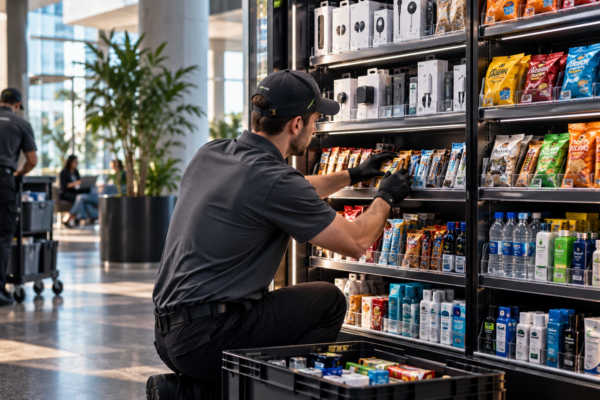
- Inventory Management: Monitoring on-shelf availability, identifying out-of-stocks, and coordinating with backroom replenishment to prevent lost sales.
- Signage & POP Materials: Installing and maintaining point-of-purchase displays, shelf talkers, and promotional signage that reinforce brand messaging.
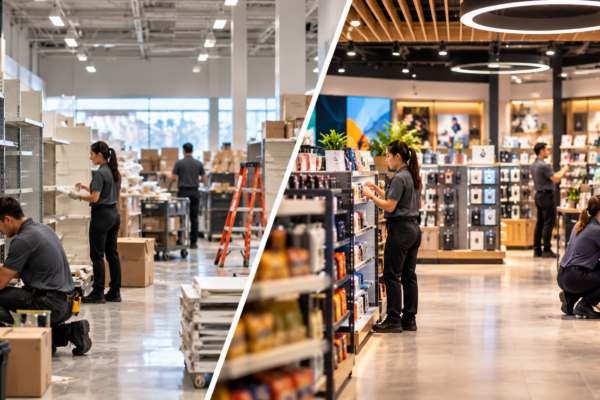
- Store Resets: Executing large-scale shelf reconfiguration when categories change, new products launch, or retailers update floor layouts.
Together, these elements form the operational backbone of retail success. Brands that treat merchandising as a strategic function — not just a logistical one — consistently outperform competitors on sell-through metrics and shopper engagement. Learn more in T-ROC’s retail merchandising guide.
Types of Retail Merchandising
Retail merchandising is not a single tactic — it spans several distinct disciplines, each addressing a different aspect of the shopper journey and brand presence.
1. Visual Merchandising
The art of presenting products through strategic use of space, lighting, color, and display design to create an appealing in-store environment that encourages purchase. See visual merchandising for a deep dive.
2. Product Merchandising
The operational discipline of ensuring the right products are in the right place, in the right quantity, at the right price — covering shelf replenishment, planogram execution, and new item setup across retail locations.
3. Digital Merchandising
The online equivalent of physical shelf management — optimizing product listings, imagery, copy, pricing, and placement on e-commerce platforms and retailer websites to drive digital conversion.
4. Omnichannel Merchandising
An integrated approach that aligns product presentation, pricing, promotions, and inventory management across both physical stores and digital channels to deliver a seamless shopper experience regardless of how or where customers engage.
5. Promotional Merchandising
The execution of time-limited campaigns at the shelf and in-store — including seasonal displays, end-cap promotions, BOGO setups, and temporary price reductions — designed to accelerate volume during defined windows.
Retail Merchandising vs. Visual Merchandising
These two terms are often used interchangeably, but they describe different scopes of work. Understanding the distinction helps brands assign the right resources to the right activities.
| Dimension | Retail Merchandising | Visual Merchandising |
|---|---|---|
| Scope | Entire product-to-shelf lifecycle — placement, pricing, inventory, compliance, resets | Aesthetic presentation — displays, lighting, color, store layout design |
| Primary Goal | Maximize sell-through, compliance, and on-shelf availability | Attract shoppers and reinforce brand identity visually |
| Execution | Field teams, planogram compliance audits, store resets, photo documentation | Display building, fixture arrangement, signage, window dressing |
| Roles Involved | Retail merchandisers, field team leads, category managers, brand reps | Visual merchandisers, store designers, brand stylists |
| Relationship | Broader discipline; includes visual merchandising as one component | A subset of retail merchandising focused on the visual layer |
Why Retail Merchandising Matters
The stakes at the shelf are higher than most brands realize. The majority of purchase decisions are made inside the store — meaning that execution quality directly determines revenue outcomes.
76%
of purchase decisions are made at the point of sale
35%
average sales lift from eye-level product placement
Significant
revenue loss from planogram non-compliance gaps
When planogram compliance gaps exist — products in the wrong location, facing the wrong direction, or missing entirely — brands lose sales without knowing why. Shoppers who cannot find a product in the expected location frequently buy a competitor’s product instead or abandon the purchase.
Beyond sell-through, retail merchandising directly affects margin. Proper shelf execution reduces markdowns, prevents overstocks, and improves inventory turn. And it shapes brand perception: a well-executed shelf presentation signals quality and trustworthiness, while a messy or non-compliant display erodes consumer confidence.
For brands scaling across hundreds or thousands of retail doors, consistent execution requires a structured approach — either a dedicated internal field team or an experienced retail merchandising services partner. For broader context, see T-ROC’s retail operations guide.
How Professional Retail Merchandising Works
For brands that partner with a professional merchandising provider like T-ROC, the execution workflow is structured, measurable, and scalable across any retail footprint nationwide.
Field Team Deployment
Trained merchandising representatives are assigned to specific retail territories, covering designated store lists on defined call cycles — from weekly replenishment visits to one-time reset events.
Planogram Execution
Field reps use digital planogram tools to build, verify, and maintain shelf sets according to brand and retailer specifications, ensuring facing counts, adjacencies, and SKU placement are all correct.
Photo Documentation & Compliance Reporting
Every store visit includes photo capture of shelf conditions before and after execution. Images are geo-tagged and timestamped, then uploaded to brand-facing reporting dashboards for real-time compliance visibility.
Store Reset Management
When categories are reset, products are relaunched, or retailers reconfigure floor layouts, T-ROC coordinates large-scale store resets — deploying surge teams across hundreds of doors within tight retailer timelines.
Exception Handling & Issue Escalation
When field reps identify out-of-stocks, damaged fixtures, pricing discrepancies, or unauthorized product substitutions, issues are flagged immediately for escalation — preventing isolated problems from becoming systemic compliance failures.
Frequently Asked Questions
What is the difference between retail merchandising and visual merchandising?
+
Retail merchandising is a broad discipline that covers product placement, planogram compliance, pricing accuracy, inventory management, signage, and store resets across all retail operations. Visual merchandising is a narrower subset focused specifically on the aesthetic presentation of products — display design, lighting, and the visual experience that draws shoppers in. Every visual merchandising decision is part of retail merchandising, but retail merchandising extends far beyond visuals alone.
What does a retail merchandiser do?
+
A retail merchandiser executes in-store product strategies on behalf of brands or retailers. Day-to-day responsibilities include building and maintaining planograms, restocking shelves, setting up new product displays, verifying pricing accuracy, installing POP materials, conducting compliance audits, and documenting shelf conditions through photo reporting. Field merchandisers may cover dozens of retail doors weekly across a defined territory.
Why is planogram compliance important?
+
Planogram compliance ensures products are placed in the locations, facings, and sequence that retailers and brands have agreed upon based on sales data and category management research. Non-compliance leads to out-of-stocks, lost sales, shopper confusion, and potential deduction penalties from the retailer. Studies show that even small improvements in planogram compliance can drive meaningful increases in sell-through and reduce on-shelf availability gaps.
How do brands measure retail merchandising effectiveness?
+
Brands measure merchandising effectiveness through a combination of compliance rate (percentage of stores meeting planogram standards), on-shelf availability (OSA), share of shelf, sell-through velocity, and photo audit scores. Leading merchandising partners provide dashboards with real-time field data, exception reporting, and trend analysis across retail doors to give brands full visibility into execution quality.
When should a brand outsource retail merchandising?
+
A brand should consider outsourcing retail merchandising when it lacks the internal headcount or geographic coverage to execute consistently across its retail footprint, when compliance scores are declining, when a major store reset or new product launch demands rapid surge capacity, or when the cost of building an in-house team exceeds the cost of a specialized partner. Outsourcing to an experienced provider like T-ROC delivers nationwide scale, trained field teams, and built-in reporting infrastructure without the overhead of direct employment.
T-ROC Global
Need Retail Merchandising That Actually Executes?
T-ROC deploys trained field teams nationwide to execute planograms, manage store resets, and deliver real-time compliance reporting — so your brand shows up right at the shelf, every time.
Talk to a Merchandising Specialist
Or explore our retail merchandising services to learn what a T-ROC partnership looks like.