

What is Visual Merchandising? (Definition, Examples & Best Practices)
Walk into any high-performing retail store — a flagship electronics showroom, a well-run grocery aisle, or a polished apparel boutique — and you are experiencing visual merchandising at work. Every display fixture, shelf arrangement, lighting angle, and promotional sign has been deliberately engineered to guide your attention and move you closer to a purchase. For brand managers and category managers responsible for retail performance, understanding visual merchandising is not optional: it is one of the highest-leverage tools available for driving sell-through, protecting brand equity, and differentiating at the point of sale.
This guide covers the core visual merchandising definition, how it differs from retail merchandising, the key elements that make programs succeed, real-world examples across retail verticals, and the best practices that T-ROC’s field teams apply for clients every day.
Visual Merchandising Definition
Visual merchandising is the practice of designing and arranging a retail environment — including store layout, product displays, signage, lighting, and color — to maximize shopper engagement, reinforce brand identity, and drive purchase decisions at the point of sale.
The discipline sits at the intersection of retail psychology, brand strategy, and store operations. Unlike broader merchandising functions that focus on assortment planning and inventory management, visual merchandising is specifically concerned with how products and spaces are presented to the shopper in the physical or digital store environment.
Visual merchandising traces its roots to department store window dressing in the late 19th century, but today it spans everything from planogram compliance and display fixture design to digital screen content in connected stores. For category managers overseeing multi-door retail programs, visual merchandising is the execution layer that translates category strategy into shelf-level results.
Visual Merchandising vs. Retail Merchandising
The two terms are frequently used interchangeably, but they describe distinct — and complementary — functions. Understanding the difference matters when scoping field team responsibilities, vendor agreements, and performance metrics.
| Dimension | Visual Merchandising | Retail Merchandising |
|---|---|---|
| Primary focus | Shopper perception and in-store presentation | Product selection, pricing, placement, and inventory |
| Core outputs | Display builds, planogram visuals, signage, lighting schemes | Planograms, assortment plans, promotional calendars, replenishment |
| Key question | Does this display make shoppers stop, engage, and buy? | Are the right products available, priced correctly, and in stock? |
| Measured by | Conversion rate, dwell time, attachment rate, display compliance | Sales velocity, out-of-stock rate, sell-through, margin |
| Executed by | Visual merchandisers, brand ambassadors, field specialists | Category managers, buyers, field sales, replenishment teams |
In practice, the strongest retail programs integrate both functions. A perfectly planned assortment still underperforms if the display is poorly executed — and a stunning visual presentation cannot compensate for empty shelves or incorrect pricing. For a deeper look at how the two disciplines connect, see T-ROC’s Retail Merchandising Guide.
Key Elements of Visual Merchandising
Effective visual merchandising programs are built from five foundational elements. Each one influences how shoppers perceive, navigate, and interact with a retail environment.
Store Layout
The physical arrangement of aisles, departments, fixtures, and traffic flow paths. Layout determines where shoppers go, how long they stay, and which products receive natural dwell time. Common layouts include grid, racetrack, free-flow, and boutique formats, each suited to different retail categories and shopper behaviors.
Signage & Communication
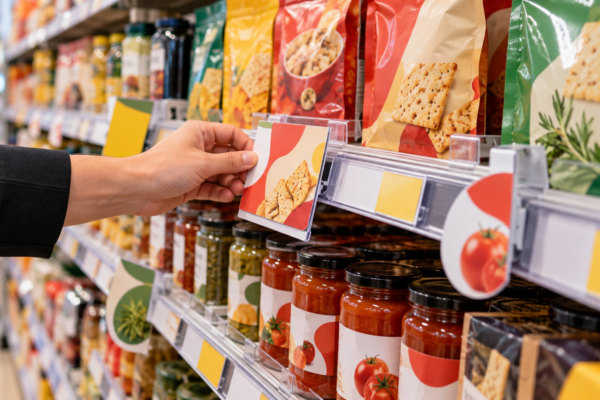
In-store signage — price cards, category headers, directional signs, promotional graphics, and digital displays — guides shoppers through the store and communicates value propositions at the moment of decision. Well-executed signage reduces friction, reinforces promotions, and extends brand storytelling beyond the package.
Lighting
Lighting controls mood, draws attention to hero products, and communicates brand tier. Accent lighting on end caps and feature displays increases perceived product quality and dwell time. Ambient lighting sets the overall store atmosphere, while task lighting aids legibility of signage and pricing.
Product Grouping & Display
Grouping products by use case, lifestyle, or occasion — rather than purely by SKU or category — encourages multi-unit and cross-category purchases. Techniques include cross-merchandising, solution sets, lifestyle vignettes, and brand blocks. Display fixtures (gondolas, tables, risers, wall systems) shape how product groupings read at a distance.
Color & Visual Hierarchy
Color is one of the fastest-processed visual signals in a store environment. Consistent use of brand color palettes on displays, fixtures, and signage creates coherence and recognition. Visual hierarchy — the deliberate use of size, contrast, and positioning — directs the shopper’s eye to priority items and promotional messages first.
Visual Merchandising Examples
The following examples illustrate how visual merchandising principles are applied across different retail categories. Each example reflects real-world execution approaches that T-ROC field teams deploy on behalf of national and global brands.
Consumer Electronics: Interactive Demo Stations
In consumer electronics retail, visual merchandising centers on demo-ready product displays that invite hands-on interaction. A brand merchandising a wireless headphone line might use risers to elevate hero SKUs at eye level, incorporate charging stations so products are always powered on, use branded foam backdrops that reinforce color story, and place comparative spec cards at shelf edge. The result: shoppers engage longer, associate the product with a premium brand experience, and are more likely to complete a purchase without associate assistance.
Apparel: Outfitting and Lifestyle Vignettes
Specialty apparel retailers use mannequin outfitting and styled vignettes to communicate how individual items work together as complete looks. Rather than merchandising tops, bottoms, and accessories in separate zones, the visual merchandising team composes seasonal lifestyle vignettes — a weekend travel look or a workwear capsule — that bundle complementary items. This approach drives attachment sales and communicates brand identity far more effectively than rack-hanging alone.
Grocery and CPG: End Cap and Feature Display Programs
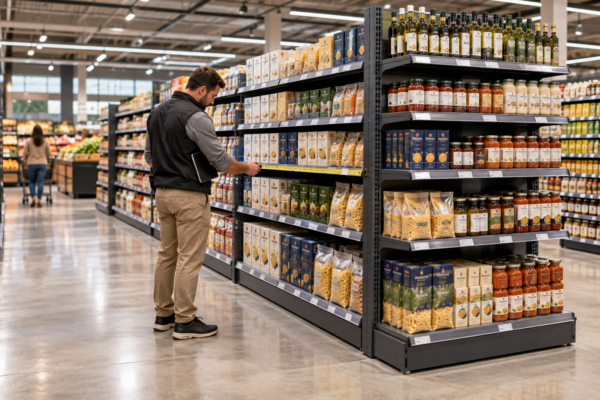
In food, beverage, and household goods retail, visual merchandising is often executed through temporary promotional displays and end cap programs coordinated with trade promotion calendars. A CPG brand manager might deploy floor-standing shippers at category entry points, use header cards with bold price messaging, and incorporate cross-merchandising (pairing chips with salsa, or coffee with filters) to increase basket size. Compliance audits by field teams ensure displays are built correctly and remain in-store for the duration of the promotional window.
Home Improvement: Solution-Set Merchandising
Home improvement retailers frequently merchandise by project type rather than product category. A “deck building” solution set might co-locate lumber, hardware, stain, brushes, and safety equipment with a single signage system and project guide. This approach reduces shopper effort, increases confidence, and substantially raises average transaction value — all outcomes driven by visual merchandising strategy rather than individual product decisions.
Benefits of Effective Visual Merchandising
When executed consistently across a multi-door retail program, visual merchandising delivers measurable commercial and brand outcomes:
- Increased conversion rate: Shoppers who engage with well-designed displays convert at higher rates than those who encounter unorganized or out-of-stock presentations.
- Higher average transaction value: Cross-merchandising and solution-set displays drive multi-unit and cross-category purchases that would not occur without intentional visual cues.
- Stronger brand recognition: Consistent use of brand color, typography, and fixture systems builds visual identity at shelf, reducing reliance on associate-led selling.
- Reduced time-to-purchase: Clear visual hierarchy and intuitive product grouping lower cognitive load, enabling faster purchase decisions — particularly important in high-traffic, time-pressured shopping environments.
- Improved planogram compliance: Structured visual merchandising programs with field team support yield higher sustained compliance rates across distributed retail networks.
- Differentiation from private label: In categories where private label competes aggressively on price, national brands that invest in visual merchandising create experiential differentiation that price alone cannot achieve.
- Actionable performance data: Display compliance audits and photo capture from field teams generate the data brand managers need to identify underperforming doors and prioritize remediation resources.
Visual Merchandising Best Practices
The following best practices reflect lessons from T-ROC’s retail field operations across thousands of store locations and dozens of national retail programs.
- Start with the shopper journey, not the planogram. Map the path shoppers take from store entry to category, identify natural pause points and sight lines, and design displays to intercept attention at those moments. The planogram should document the decision, not drive it.
- Prioritize the first three seconds. Shoppers make a subconscious engagement decision within three seconds of encountering a display. Ensure hero products, brand marks, and price or promotional messages are readable and compelling from a distance of six to ten feet.
- Use vertical blocking for brand legibility. Vertically blocking brand SKUs on shelf — stacking facing rows from top to bottom — creates a visible brand column that reads clearly in a busy aisle and supports associate restocking efficiency.
- Align display resets with retail calendar windows. Coordinate display builds, resets, and refreshes with retailer promotional windows, seasonal transitions, and new product launches. Displays that are stale relative to the promotional calendar erode retailer relationships and shopper perception.
- Train field teams to photo-document compliance. Display execution is only as strong as its field compliance. Equip retail field teams with structured audit processes and photo capture protocols so that brand managers have real-time visibility into display conditions across their retail network.
- Test before scaling. Pilot new display concepts in a controlled set of stores before rolling out across a full retail network. Measure conversion, attachment rate, and sell-through velocity during the pilot window and use that data to refine the program before committing to large-scale fixture investment.
- Integrate brand ambassadors for high-engagement categories. In categories where product complexity or premium pricing requires assisted selling — consumer electronics, beauty, outdoor sports — pair strong visual merchandising with trained brand ambassador programs to convert display dwell time into completed sales.
Visual Merchandising FAQ
What is the difference between visual merchandising and retail merchandising?
Visual merchandising focuses on the presentation and aesthetics of the in-store environment — how products are displayed, how space is designed, and how shoppers are guided through the store visually. Retail merchandising is a broader discipline that encompasses product assortment, pricing, inventory management, and planogram strategy. In a well-run retail program, the two functions are closely aligned: retail merchandising sets the strategic framework, and visual merchandising executes the presentation that brings that strategy to life at shelf.
How do you measure visual merchandising effectiveness?
The most common metrics include display compliance rate (percentage of doors where the display is built correctly and in-stock), conversion rate uplift at featured locations, average transaction value for cross-merchandised sets, and dwell time at display. For distributed retail programs, field team audit data — including photo documentation — is the primary mechanism for tracking compliance and identifying performance gaps across the network. Retailers with advanced analytics capabilities can also correlate display placement and planogram compliance data with POS sell-through at the store and SKU level.
Who is responsible for visual merchandising in a retail program?
Responsibility varies by organization and program structure. At the brand level, visual merchandising strategy typically sits with the trade marketing, brand marketing, or category management team. Execution is most commonly handled by dedicated field merchandisers, brand ambassador teams, or third-party retail services providers who manage multi-door programs at scale. For brands distributing through major national retailers, ongoing compliance maintenance is often contracted to a field services partner with established retailer relationships and real-time reporting capabilities.
Ready to Elevate Your In-Store Execution?
T-ROC deploys retail field teams and brand ambassador programs across thousands of locations nationwide. Whether you need display compliance management, planogram resets, or a full visual merchandising program, our teams are in-store every day.