



What is Category Management in Retail?
A complete guide to the strategy that turns product groupings into profit engines — from the 8-step process to in-store execution.
Definition
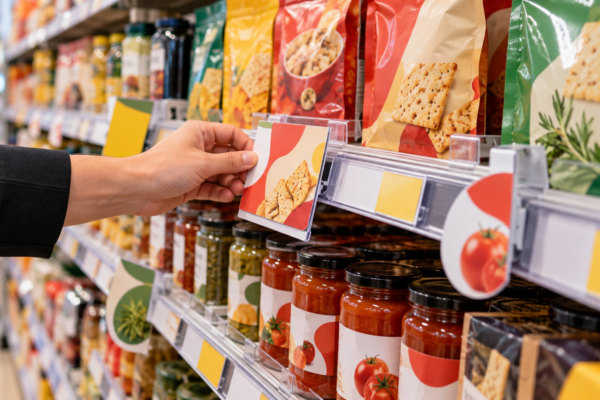
Category management is a retail and supply chain strategy in which a distinct group of related products — called a category — is planned, procured, priced, promoted, and shelved as a single strategic business unit. Rather than managing individual SKUs in isolation, retailers and their supplier partners treat an entire category (such as personal care, snack foods, or consumer electronics accessories) as a mini-business with its own performance targets, consumer insights, and shelf allocation.
The concept originated in the early 1990s when Procter & Gamble and Walmart pioneered a more collaborative model of retailer–supplier planning. Today it is the dominant framework used by grocery chains, big-box retailers, drug stores, and specialty retailers worldwide to improve assortment decisions, reduce out-of-stocks, and increase return per linear foot of shelf space.
For B2B retail services organizations like T-ROC Global, category management is not a back-office exercise. It is a living, field-executed discipline that depends on accurate data, disciplined planogram compliance, and skilled in-store teams — all areas where T-ROC’s capabilities are directly applied.
The 8-Step Category Management Process
The industry standard framework — established by the Joint Industry Project on Efficient Consumer Response (ECR) and refined over three decades — breaks category management into eight sequential steps. Each step feeds the next, creating a continuous improvement loop.
- Define the Category: Establish the precise scope and composition of the category, including which SKUs are in scope, how sub-categories are structured, and how the category serves the target consumer’s needs. A well-defined category boundary is the foundation for every subsequent decision.
- Assess the Category’s Role: Determine the strategic importance of the category to the retailer — whether it is a destination category (drives store traffic), a routine category (builds basket size), a seasonal category, or a convenience category. Role assignment dictates resource allocation and financial targets.
- Assess the Category’s Performance: Analyze current sales, margin, inventory turns, out-of-stock frequency, and market share using point-of-sale (POS) data, loyalty card data, and third-party syndicated data such as NielsenIQ or Circana. Gaps versus benchmarks become the improvement agenda.
- Set Category Objectives and Targets: Translate the performance assessment into specific, measurable goals — for example, grow category dollar sales by 8% in 12 months, reduce shrink by 1.5%, or improve gross margin by 150 basis points. Targets must be jointly agreed between the retailer and key supplier partners.
- Develop the Category Strategy: Select the high-level approach for achieving the objectives. Common strategies include traffic building, transaction building, profit generating, excitement creating, and cash generating. The strategy shapes every downstream tactic.
- Develop Category Tactics: Define specific actions across the four levers of retail execution — assortment (which SKUs to carry and delist), pricing (everyday price and promotional depth), promotion (feature frequency, display location), and shelving (planogram design, adjacencies, shelf height allocation).
- Implement the Category Plan: Execute the approved planogram resets, price changes, and promotional calendars across all stores. This is the most operationally intensive step and the most common point of failure when field execution is inconsistent.
- Review Category Performance: Measure results against the targets set in Step 4. Conduct formal reviews (typically quarterly) to determine whether tactics are working, whether market conditions have shifted, and what adjustments are needed before the next planning cycle begins.
The 8-step process is cyclical, not linear. After Step 8, the insights gathered feed back into Step 1 for the next planning horizon, ensuring the category strategy evolves in response to changing shopper behavior, competitive moves, and new product introductions.
The Category Captain Role
In most major retail categories, one supplier is designated the category captain — a trusted advisor who provides the retailer with deep consumer data, market intelligence, and planogram recommendations that serve the entire category, not just their own brand. The category captain role emerged because most retailers lack the internal analyst bandwidth to run rigorous category reviews across hundreds of product groups simultaneously.
A category captain typically provides:
- Syndicated market share and trend data from NielsenIQ or Circana
- Consumer segmentation and shopper decision tree analysis
- Recommended assortment optimization (including competitors’ SKUs)
- Planogram designs that maximize category productivity per linear foot
- Promotional event calendars and expected lift projections
The arrangement carries ethical obligations. A credible category captain must protect the retailer’s interests above its own brand’s interests in every recommendation. Retailers increasingly audit category captain recommendations against independent data to guard against self-serving bias — a practice that has become standard governance in the grocery and drug channels.
How Analytics Informs Category Decisions
Modern category management is inseparable from retail analytics. The shift from gut-feel assortment decisions to data-driven category planning accelerated with the proliferation of loyalty programs, RFID inventory tracking, and cloud-based POS reporting. Today, category managers draw on multiple data streams simultaneously to make shelving, pricing, and assortment decisions with far greater precision than was possible even a decade ago.
The most impactful data inputs in a mature category management practice include:
Point-of-sale velocity data reveals which SKUs are driving unit volume and dollar contribution. Combined with days-of-supply calculations, velocity data identifies which products are chronically out of stock — a hidden drag on category performance that often goes undetected in aggregate revenue reports.
Shopper loyalty data illuminates who is buying within the category, how frequently, and what else appears in their basket. This makes it possible to identify whether a category is winning with the retailer’s core shopper segments or relying on irregular purchasers.
Space-to-sales analysis compares the percentage of shelf space allocated to a brand or sub-segment against that segment’s percentage of category sales. Facings that exceed their fair share of sales are candidates for reduction; under-shelved items with high velocity are candidates for expansion.
Market basket and cross-category data inform adjacency decisions — which categories should be shelved near one another to capture complementary purchase occasions and increase units per transaction.
For a deeper look at how retailers are applying these techniques at scale, see T-ROC’s Retail Analytics Guide, which covers dashboarding, KPI benchmarking, and predictive analytics in the retail environment.
The Planogram Connection
A planogram (sometimes abbreviated POG or schematic) is the visual blueprint that translates category strategy into shelf reality. Every decision made in Steps 5 and 6 of the category management process — which SKUs to stock, how many facings each receives, at what height, in what adjacency — is codified in the planogram before it reaches the store floor.
Planogram compliance is one of the most consequential and most frequently underperformed aspects of category management. Research by the Food Marketing Institute consistently finds that in-store planogram compliance rates average 60–70% across major retail chains — meaning that 30–40% of shelves do not match the intended layout at any given time. The causes include incorrect product placement during resets, unauthorized substitutions by store associates, stockouts left unfilled, and new product introductions not yet reflected in store-level POGs.
Low planogram compliance directly suppresses category performance. When a high-velocity SKU is out of position or missing entirely, the shopper either purchases a lower-margin substitute or leaves without buying — both outcomes undermine the financial targets set in the category plan.
Achieving and sustaining planogram compliance requires consistent, skilled in-store field execution — which is where dedicated retail merchandising teams make a measurable difference. Learn how the discipline connects to broader shelf strategy in T-ROC’s Retail Merchandising Guide.
How T-ROC Field Teams Support Category Execution
T-ROC Global’s retail field teams serve as the operational bridge between the category manager’s plan and the physical shelf. While category management strategy is developed in the boardroom, it is won or lost in the aisle — and that is precisely where T-ROC’s expertise is deployed.
Planogram Resets and New Sets
When a category review results in a new planogram, T-ROC’s certified reset teams execute the physical transition across every store in the chain, simultaneously or in prioritized waves. Teams are trained to work from the approved POG documentation, validate facing counts, and photograph each completed section to provide the retailer and category captain with visual compliance confirmation.
Ongoing Merchandising Audits
Between formal category resets, T-ROC field representatives conduct recurring in-store audits to verify that the approved planogram remains intact. When deviations are found — out-of-stocks, misplaced items, unauthorized substitutions — they are corrected in the moment and flagged in the reporting system so the category team can identify systemic patterns by store, district, or region.
New Product Introduction (NPI) Support
New SKU launches are among the highest-risk moments in category management. If a new product authorized by the category plan does not appear on shelf within the first two to four weeks of its launch window, the sales velocity data used in the next category review will misrepresent the item’s true demand potential. T-ROC’s NPI teams ensure that new items are cut in accurately, positioned per planogram, and stickered correctly across all launch doors.
Field Intelligence and Reporting
T-ROC field teams are equipped with mobile audit technology that captures in-store conditions — share of shelf, out-of-stocks, competitive placement, display compliance — and transmits that data in near real time to the category management team. This field intelligence layer closes the gap between what the planogram specifies and what shoppers actually encounter, enabling faster corrective action and more accurate performance reviews.
To understand the full scope of how T-ROC structures its retail field operations to support programs like category management, visit the Retail Field Teams Guide.
Why Category Management Matters More Than Ever
The rise of e-commerce has not diminished the importance of category management in physical retail — it has intensified it. With more than two-thirds of consumer purchasing decisions still made at the point of sale, and with shrinking store associate coverage in most major chains, the shelf itself must work harder than ever to guide the shopper, communicate value, and close the sale without human intervention.
Retailers and brand manufacturers that invest in rigorous category management — backed by quality analytics, disciplined planogram execution, and skilled field teams — consistently outperform peers on same-store sales growth, category gross margin, and inventory efficiency. It is not a strategic luxury. For competitive retail environments in 2026, it is table stakes.
Put Category Strategy Into Practice
T-ROC’s retail merchandising and field team services are built to execute the plans that category managers design. Let’s talk about how we can support your next category reset or ongoing compliance program.