
The Future of Retail and Brand Advocacy
Retail Brand Advocacy Is Reshaping How Brands Win at Shelf
The retail landscape is shifting faster than most brands can keep up with. Digital advertising costs are climbing, consumer trust in traditional marketing is falling, and the brands that are pulling ahead aren’t the ones spending the most—they’re the ones building the strongest human connections. That’s the core promise of retail brand advocacy: turning real people into your most powerful marketing channel, right where purchase decisions happen.
For years, brands treated in-store presence as an afterthought—something handled by store associates who had a dozen other brands to worry about. But that model is breaking down. Shoppers are more informed, more skeptical, and more demanding than ever. They want authenticity. They want expertise. And they want it from someone who genuinely believes in what they’re recommending. That’s exactly what a well-built retail brand advocacy program delivers.
If you’re still wondering whether advocacy is worth the investment, consider the trajectory. The brands dominating retail in 2026 aren’t just running ads—they’re deploying advocates who build trust at the point of purchase, capture real-time feedback, and create experiences that no digital campaign can replicate. Understanding what is a brand ambassador and how the role has evolved is the first step toward building a program that actually moves the needle.
Why the Future of Retail Depends on Brand Advocacy
Retail isn’t dying—it’s transforming. Physical stores still account for more than 80% of total retail sales in the United States, but what happens inside those stores looks nothing like it did a decade ago. Consumers arrive armed with product research, price comparisons, and review summaries pulled from their phones. The last mile of influence—the moment someone decides to buy, switch brands, or walk away—is now the most valuable real estate in marketing.
Retail brand advocacy fills that gap. It places trained, passionate individuals at the exact point where decisions are made. Unlike traditional advertising, which broadcasts a message and hopes it sticks, advocacy creates a two-way conversation. The advocate listens, educates, and recommends—building the kind of trust that turns a one-time buyer into a repeat customer.
The data backs this up. Nielsen research consistently shows that consumers trust recommendations from real people over any other form of marketing. A study by the Boston Consulting Group found that brands with strong advocacy programs saw up to 25% higher customer lifetime value compared to brands relying solely on paid media. That gap is only widening as ad fatigue increases and privacy regulations make digital targeting harder and more expensive.
Several macro trends are accelerating the shift toward retail brand advocacy:
- Ad fatigue and banner blindness — Consumers are exposed to thousands of ads daily and have learned to tune them out. A human conversation cuts through in ways a display ad never will.
- The experience economy — Shoppers increasingly value experiences over transactions. An advocate who demonstrates a product, answers questions, and makes a genuine recommendation creates a memorable moment.
- Omnichannel complexity — As the line between online and offline blurs, brands need people on the ground who can bridge the gap—helping shoppers navigate options and feel confident in their purchase.
- Rising acquisition costs — Customer acquisition through digital channels has become significantly more expensive. Advocacy programs often deliver lower cost-per-acquisition because they convert high-intent shoppers who are already in the store.
For a broader look at where the industry is heading, our analysis of retail trends 2026 breaks down the forces reshaping how brands compete at shelf.
How Brand Advocacy Differs from Traditional Marketing
Brand advocacy and traditional marketing share a common goal—driving sales and building brand preference—but the way they achieve that goal could not be more different. Understanding the distinction is critical for any retail leader evaluating where to invest their next marketing dollar.
Push vs. Pull
Traditional marketing is fundamentally a push model. You create a message, buy media placement, and broadcast it to as many people as possible. The assumption is that if enough people see the message, a percentage will act. It works, but it’s blunt. You pay for impressions whether they convert or not, and you have limited control over the context in which your message is received.
Retail brand advocacy operates on a pull model. Instead of pushing messages outward, advocates pull shoppers in through genuine engagement. They approach consumers who are already browsing, ask questions to understand their needs, and offer tailored recommendations. The interaction feels helpful, not salesy—and that’s precisely why it works.
One-Way vs. Two-Way Communication
A television commercial, a social media ad, or a billboard delivers a one-way message. The brand talks; the consumer listens (or doesn’t). There’s no feedback loop, no ability to adjust the pitch based on what the shopper actually cares about.
An advocate on the retail floor creates a real-time dialogue. They can read body language, respond to objections, pivot their approach based on the shopper’s questions, and capture insights that feed back into the brand’s strategy. This two-way communication is not just more effective at closing sales—it generates intelligence that makes every future interaction smarter.
Awareness vs. Conversion
Most traditional marketing excels at building awareness. It puts your brand name in front of millions of people and creates familiarity. But awareness alone doesn’t close a sale. The gap between “I’ve heard of this brand” and “I’m putting this in my cart” is where most marketing dollars get lost.
Retail brand advocacy operates at the bottom of the funnel—right at the point of conversion. The shopper is already in the store, already considering a purchase. An advocate’s job is to remove the last barriers: uncertainty, confusion, lack of confidence. That’s why advocacy programs consistently deliver higher conversion rates per interaction than awareness-focused campaigns.
Cost Structure and Scalability
Traditional marketing scales through media spend. You pay more, you reach more people. Advocacy scales through people—hiring, training, and deploying more advocates across more locations. The unit economics are different: advocacy has a higher per-interaction cost but a significantly higher per-interaction return. For brands selling in physical retail, the ROI math often favors advocacy, especially for high-consideration categories where a single conversation can influence a $200, $500, or $1,000 purchase.
Building a Brand Advocacy Program at Retail
A retail brand advocacy program doesn’t happen by accident. The brands that see real results treat advocacy as a strategic capability—not a staffing exercise. Here’s how the best programs are built, from the ground up.
Ambassador Selection: Hiring for Passion, Not Just Availability
The single biggest factor in program success is the quality of the people you put on the floor. The best brand advocates share a few non-negotiable traits:
- Genuine enthusiasm for the product category — You can teach product specs, but you can’t teach passion. The best advocates are people who would naturally talk about your product even if you weren’t paying them.
- Strong interpersonal skills — Advocacy is a conversation, not a script. Look for people who are naturally curious, good listeners, and comfortable approaching strangers.
- Reliability and professionalism — Retail is unforgiving. If your advocate doesn’t show up, doesn’t show up on time, or doesn’t represent the brand well, the damage is immediate and visible.
- Adaptability — Every store is different. Every shopper is different. Top advocates read the room and adjust their approach accordingly.
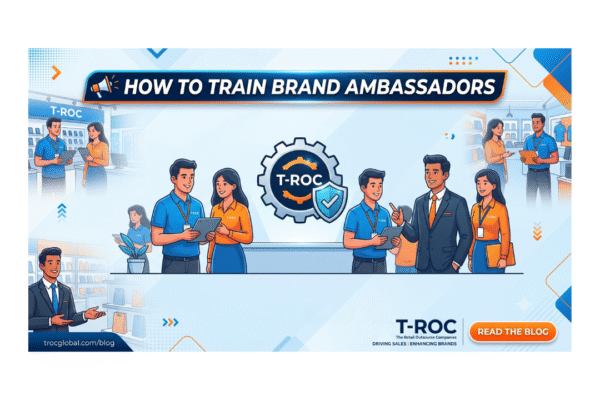
For a detailed breakdown of what to look for and how to source the right talent, our brand ambassador guide covers selection criteria, sourcing channels, and vetting best practices.
Training: Turning Product Knowledge into Persuasion
Hiring the right people is only step one. Without rigorous training, even the most charismatic advocate will underperform. Effective training programs cover three domains:
- Product mastery — Advocates need to know your product inside and out. Not just features and specs, but the “why” behind them. Why does this feature matter to a parent? Why would a small business owner care about this capability? The goal is to arm advocates with stories and use cases, not just data sheets.
- Competitive positioning — Shoppers will ask how your product compares to the competition. Advocates need to answer confidently and honestly, highlighting genuine differentiators without disparaging competitors. This builds trust and credibility.
- Engagement techniques — How to approach a shopper without being intrusive. How to ask open-ended questions that uncover needs. How to handle objections without pressure. How to close with a recommendation that feels natural. These are skills that can be taught, practiced, and refined over time.
The best programs also include ongoing training—not just a one-time onboarding session. Markets shift, products update, and competitors launch new offerings. Continuous learning keeps advocates sharp and relevant.
Deployment: Putting the Right People in the Right Stores at the Right Time
Strategic deployment is what separates a good advocacy program from a great one. Key deployment decisions include:
- Store prioritization — Not every location needs the same level of coverage. Analyze foot traffic, sales velocity, competitive presence, and retailer relationships to determine where advocates will have the greatest impact.
- Timing and scheduling — Deploy advocates during peak shopping hours, key promotional windows, and product launch periods. Wasting advocate hours during slow periods drains budget without generating return.
- Retailer alignment — The most effective programs work with retailers, not around them. That means coordinating with store management, respecting store policies, and integrating advocates into the store environment so they feel like a natural extension of the shopping experience.
- Geographic coverage — National brands need programs that scale across markets while maintaining quality. This requires strong field management, regional coordination, and technology platforms that provide visibility into performance across hundreds or thousands of locations.
T-ROC’s brand ambassador services are built around this deployment philosophy—matching the right advocates to the right stores with data-driven scheduling and real-time field management.
Measuring Brand Advocacy ROI
One of the biggest objections to retail brand advocacy is the perception that it’s difficult to measure. That was true a decade ago. It’s not true today. Modern advocacy programs generate rich, granular data that makes ROI calculation straightforward—if you know what to track.
Direct Sales Metrics
The most immediate measure of advocacy ROI is sales lift. Compare sales performance during advocate-staffed hours versus unstaffed hours at the same locations, or compare staffed locations against control stores with no advocate presence. The difference is your incremental revenue attributable to the program. Leading brands typically see sales lifts of 20% to 40% during staffed periods, with some high-consideration categories seeing even larger gains.
Conversion Rate
Track how many shopper interactions result in a purchase. This metric helps you evaluate individual advocate effectiveness and identify top performers whose techniques can be replicated across the team. Conversion rate also helps optimize deployment—if certain store types or time slots consistently convert at higher rates, you can reallocate resources accordingly.
Customer Engagement Quality
Not every interaction results in an immediate sale, and that’s fine. Track the quality and depth of engagement through metrics like:
- Average interaction duration
- Number of product demonstrations completed
- Customer questions asked and answered
- Leads captured for follow-up or loyalty programs
- Net Promoter Score or satisfaction ratings from post-interaction surveys
Brand Health Indicators
Retail brand advocacy influences metrics that take longer to materialize but compound powerfully over time. Track brand awareness, brand preference, and purchase intent in markets with active advocacy programs versus markets without them. Over time, you should see measurable improvements in how consumers perceive and choose your brand.
Cost Efficiency
Calculate your cost per interaction, cost per conversion, and cost per incremental unit sold. Compare these figures against your digital acquisition costs and traditional marketing spend. For most brands operating in physical retail, advocacy programs deliver a lower cost per acquired customer than paid digital channels—especially in high-consideration categories where the average order value justifies the investment in human interaction.
Feedback and Market Intelligence
Don’t overlook the intelligence value of an advocacy program. Every advocate interaction generates qualitative data: what shoppers are asking about, what competitors are doing, what’s working on shelf and what isn’t. This information is difficult to obtain through any other channel and can inform product development, merchandising strategy, and marketing messaging far beyond the direct sales impact of the program itself.
Retail Brand Advocacy Best Practices for 2026 and Beyond
The brands that will lead in retail brand advocacy over the next several years are already adopting practices that set them apart:
- Technology-enabled field management — Real-time dashboards, GPS-verified check-ins, and mobile reporting tools give brand managers visibility into what’s happening across every location, every shift. This eliminates guesswork and enables rapid optimization.
- Data-driven advocate matching — Using performance data and demographic insights to match specific advocates with specific store environments. A tech-savvy advocate in an electronics department; a fitness enthusiast in a sporting goods store. The more natural the fit, the more authentic the interaction.
- Integration with digital campaigns — The best programs don’t treat in-store advocacy and digital marketing as separate channels. They coordinate messaging, timing, and targeting so that a shopper who sees a social ad encounters the same story from an advocate on the floor. This consistency amplifies both channels.
- Advocate career development — Treating advocates as disposable labor is a recipe for high turnover and low quality. Brands investing in career pathways, performance bonuses, and skill development retain their best people longer—and those experienced advocates generate dramatically better results than new hires.
FAQ: Retail Brand Advocacy
What is retail brand advocacy?
Retail brand advocacy is a marketing strategy that places trained brand representatives—often called brand ambassadors—in retail environments to engage directly with shoppers. These advocates educate consumers about products, answer questions, demonstrate features, and provide personalized recommendations at the point of purchase. Unlike traditional advertising, advocacy relies on authentic human interaction to build trust and drive sales. Learn more about the role in our guide to what is a brand ambassador.
How does brand advocacy differ from influencer marketing?
While both strategies use people to promote products, they operate in very different contexts. Influencer marketing happens online—through social media posts, videos, and sponsored content—and reaches a broad audience. Brand advocacy happens in physical retail stores, targeting shoppers who are already in a buying mindset. Influencer marketing builds awareness; retail brand advocacy drives conversion. The most effective brands use both, with influencers generating demand and advocates closing the sale at shelf.
How long does it take to see results from a brand advocacy program?
Most brands see measurable sales lift within the first 30 to 60 days of deploying trained advocates. However, the full impact of a retail brand advocacy program compounds over time. As advocates build relationships with store staff, develop deeper product expertise, and refine their engagement techniques, conversion rates and customer satisfaction scores typically improve through the first six to twelve months. Long-term brand health metrics like preference and loyalty often take six to eighteen months to show statistically significant gains.
What types of retail brands benefit most from advocacy programs?
Retail brand advocacy delivers the strongest ROI for brands selling products that involve some level of consideration—meaning the shopper benefits from education, demonstration, or comparison before making a decision. This includes consumer electronics, wireless and telecom, appliances, premium CPG products, sporting goods, pet products, and beauty. That said, even lower-consideration categories like packaged food and beverages benefit from advocacy during product launches, seasonal promotions, and competitive defense campaigns.
How much does a retail brand advocacy program cost?
Program costs vary based on scope, geographic coverage, hours deployed, and the complexity of training required. A targeted program covering a single market with weekend-only staffing will cost significantly less than a national program with full-week coverage across hundreds of stores. The key metric isn’t total cost—it’s return on investment. Well-managed advocacy programs typically return three to five dollars in incremental revenue for every dollar invested. For a detailed look at program structures and pricing models, explore our brand ambassador guide.