Brand Ambassador Services for Retail, Events & Product Launches
A brand ambassador puts a real, trained human face on your brand — at retail shelves, trade shows, pop-up activations, and digital channels. T-ROC Global has built and operated brand ambassador programs for Fortune 500 brands for over 20 years, deploying ambassadors across all 50 states with proprietary technology that gives you real-time visibility into every shift, every interaction, and every sale.
Whether you need 5 ambassadors for a product launch or 500 for a national retail rollout, we own the full stack: recruiting, training, scheduling, technology, payroll, and on-the-ground management.
What Is a Brand Ambassador?
A brand ambassador is a professional representative — trained, paid, and accountable — who promotes a brand to consumers in-person or digitally. Unlike influencers (who are typically independent and paid per post) or seasonal merchandisers (who execute resets but rarely engage shoppers), brand ambassadors are deployed specifically to drive direct consumer engagement that converts to sales, sign-ups, demos, or brand recall.
A brand ambassador program is the operational structure that runs them: recruitment funnel, training curriculum, scheduling system, reporting dashboards, and management hierarchy. The best programs feel like an extension of the brand's own field marketing team — because that's exactly what they are.
Brand Ambassador Services We Offer
T-ROC operates five distinct brand ambassador service lines, each built around a different consumer touchpoint.
Retail Brand Ambassadors
Trained reps deployed to specific retail stores or store sections — wireless carrier kiosks, consumer electronics endcaps, beauty counters, automotive showrooms. They sell, demonstrate, and answer questions while feeding live performance data back to brand HQ. Common use case: a wireless carrier needs a brand ambassador at every flagship store in 12 markets every Friday-Sunday for 90 days.
Event & Experiential Brand Ambassadors
Ambassadors staffed for trade shows, sponsored sports events, festivals, and pop-up activations. They handle product demos, lead capture, sampling, branded photo experiences, and crowd engagement. Volume can flex from a 4-person CES booth team to a 200-person Super Bowl activation.
Product Launch Brand Ambassadors
A dedicated ambassador team built around a single launch window — typically 4-12 weeks of intensive in-store presence, supported by training built specifically around the new product. Most often used for consumer electronics, OTC pharma, beauty, food and beverage, and automotive.
Digital & Virtual Brand Ambassadors (VIBA)
T-ROC's proprietary Virtual Interactive Brand Ambassador (VIBA) technology lets a single ambassador serve customers across multiple physical locations via live video. Stores get expert support without the cost of staffing every site full-time. We're the only retail services company offering this at scale.
Long-Term Brand Loyalty Programs
Multi-year programs that build a consistent ambassador roster around a brand — same faces, same stores, deep product expertise, deep customer relationships. Best for premium brands where the ambassador becomes a recognized part of the local store experience.
How a T-ROC Brand Ambassador Program Works
Every successful program runs the same five-phase playbook.
1. Discovery & Brand Immersion
We embed with your marketing and sales teams to understand the brand voice, the products, the buyer personas, and the success metrics. This phase usually takes 1-3 weeks and produces a brand bible that every ambassador studies before training.
2. Recruiting & Vetting
We tap into T-ROC's national pool of 50,000+ pre-vetted retail talent. Candidates are screened against your specific requirements — bilingual ability, technical product expertise, geographic availability, brand fit. Background checks, drug screens, and references are standard.
3. Training & Certification
Two-to-five days of paid training per ambassador. We build the curriculum: product knowledge, brand voice, objection handling, demo scripts, KPI capture, app usage. Every ambassador passes a certification quiz before stepping onto a sales floor.
4. Deployment & Daily Operations
Ambassadors clock in via T-ROC's proprietary field management software. Schedules, photo-verified store visits, daily sales reporting, and incident escalation all run through the same dashboard. Brand stakeholders get a live read on every shift, every store, every day.
5. Reporting & Optimization
Weekly performance reviews. Monthly executive summaries with KPI trending, geographic heatmaps, and ambassador-level performance grades. The bottom 10% of ambassadors get coached or replaced quarterly.
Industries We Staff Brand Ambassadors For
- Wireless & telecom — T-Mobile, Cricket Wireless, and others. Ambassadors run carrier kiosks, sell devices and plans, train sales associates.
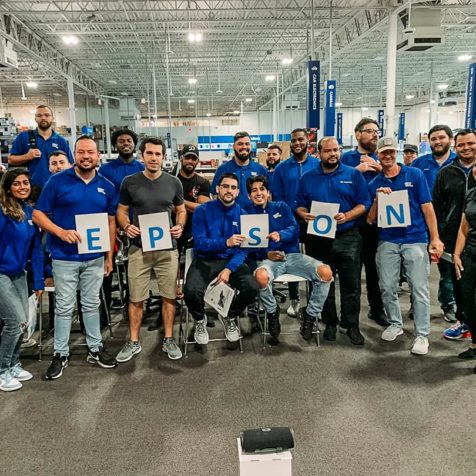
- Consumer electronics — Best Buy endcap teams, big-box launch teams for TVs, laptops, gaming peripherals.
- Beauty & cosmetics — Department store and mass-market beauty counter ambassadors.
- Food & beverage — Sampling teams in grocery, event-based sampling at festivals and stadiums.
- Automotive — Dealership floor ambassadors, auto show staffing, ride-and-drive event teams.
- Health & wellness — OTC pharma launch teams, supplement brand activations.
- CPG (consumer packaged goods) — Mass-market retail ambassadors, in-store sampling, demo days.
- Spirits & beverage alcohol — On-premise ambassadors at bars, restaurants, and account-level activations.
Why Choose T-ROC as Your Brand Ambassador Agency?
Three things separate T-ROC from typical staffing agencies:
1. We own the technology stack. Our proprietary field management software, T-ROC Connect, captures every shift, every photo, every transaction. You're not assembling reports from three vendors — you're reading one dashboard.
2. We staff at Fortune 500 scale. T-ROC has run national brand ambassador programs for some of the largest retailers and CPG brands in North America. We have hiring, training, and management infrastructure tested at hundreds of locations at once.
3. We're not just a staffing firm. T-ROC offers the complete suite of retail services — merchandising, mystery shopping, store resets, field teams, and retail technology. A brand ambassador program can plug into other T-ROC services without adding vendor seams.
Brand Ambassador Program Costs & ROI
Brand ambassador program costs are typically structured one of three ways:
- Hourly rates per ambassador — $18-$45/hour fully-loaded (wages, taxes, T-ROC management overhead, technology). Lower end for sampling-only roles; higher end for technical sales roles requiring product certification.
- Project-based pricing — Fixed fee for a defined launch or event activation. Best for time-boxed programs with clear scope.
- Performance-based pricing — Base rate plus a per-unit-sold or per-lead bonus. Most often used in wireless and consumer electronics.
Expected ROI for a well-run program: 4-8x return on program spend within 6 months, measured against incremental same-store sales or directly attributable revenue. The variability depends on the category, the product, and how well the program is integrated with the brand's broader retail and marketing operations.
We don't quote a "typical" cost without scoping — talk to us about your specific category, geographic footprint, and ambassador count, and we'll come back with three pricing options inside a week.
Case Studies: Brand Ambassador Programs That Worked
- T-Mobile MSO Program — Multi-year ambassador program ranked #1 T-Mobile Premiere Dealer Nation.
- Walmart WSP Brand Ambassador Program — Revamped national ambassador deployment driving measurable in-store conversion lift.
- Cricket Wireless Brand Ambassadors — Long-running ambassador program for one of the most recognized U.S. prepaid wireless brands.
See all case studies →
Frequently Asked Questions About Brand Ambassador Services
What does a brand ambassador do?
A brand ambassador represents a brand to consumers in person or online. Day-to-day responsibilities include product demos, customer questions, sampling, lead capture, sales conversion, and reporting back to the brand on consumer feedback. The best brand ambassadors are not just promoters — they're trained sales agents who understand the product deeply enough to handle technical objections.
How much does it cost to hire a brand ambassador?
Fully-loaded rates typically range from $18 to $45 per hour, depending on the complexity of the role, the product category, and the training required. Sampling roles fall toward the lower end; certified wireless or consumer electronics sales ambassadors sit at the higher end. Program-based pricing and performance-based pricing are also available.
How is a brand ambassador different from an influencer?
A brand ambassador is a paid, trained employee or contractor of an agency like T-ROC, deployed to physical locations or digital channels on a defined schedule. An influencer is typically an independent content creator paid per post or campaign, with the ambassador-influencer line blurring as more programs go hybrid. The key practical difference: brand ambassadors give the brand control over messaging, scheduling, and reporting that influencers do not.
How long does it take to launch a brand ambassador program?
A typical T-ROC program takes 4-8 weeks from contract signature to first ambassador on the floor. Discovery and brand training take 2-3 weeks; recruiting and certification take 2-4 weeks; deployment ramps from there. Emergency launches (1-2 weeks) are possible for smaller programs in T-ROC's existing talent pools.
What's included in T-ROC's brand ambassador service?
Recruiting, background checks, training (paid, branded curriculum), scheduling, payroll, taxes, workers' comp insurance, real-time field management software, daily reporting, weekly KPI reviews, monthly executive summaries, and ongoing ambassador coaching. You get a turnkey program with one invoice and one point of contact.
Can a brand ambassador be a full-time employee of my company?
T-ROC provides ambassadors as 1099 contractors or W-2 employees of T-ROC — your company doesn't carry the HR liability. If you want to transition top-performing ambassadors to your own payroll, T-ROC's contracts include reasonable terms for that.
What industries hire the most brand ambassadors?
Wireless and telecom, consumer electronics, beauty, automotive, CPG, food and beverage, spirits, and health and wellness are the largest categories. Any product that benefits from in-person demonstration or expert consumer-facing sales is a candidate.
What's the difference between a brand ambassador and a sales rep?
A sales rep typically handles B2B selling — calling on store managers, buyers, or distributors. A brand ambassador handles B2C selling — engaging shoppers directly on the retail floor. Some programs blend both, but the distinction matters for hiring criteria and training.
Can brand ambassadors work bilingual programs?
Yes — T-ROC actively recruits Spanish-English bilingual ambassadors for programs in markets where that's a hiring priority (Texas, California, Florida, New York, Illinois). French-Canadian bilingual is available for cross-border programs.
How do you measure the ROI of a brand ambassador program?
T-ROC tracks four core KPIs by default: incremental sales lift vs. control stores, lead capture rate, demo-to-purchase conversion, and shopper feedback NPS. Custom KPIs (product-specific demos completed, in-store training sessions delivered, etc.) are configured during discovery. Reports run weekly with monthly executive roll-ups.
Ready to Launch a Brand Ambassador Program?
Tell us about your category, geographic footprint, and target ambassador count. Within a week we'll come back with three program options, three pricing structures, and a proposed launch timeline.
Schedule a call →