

Definition and Overview
Click and collect is a retail fulfillment method in which a customer completes
a purchase online — via desktop, mobile app, or kiosk — and then travels to a designated
physical location to collect the order, bypassing home delivery entirely. The model is most
commonly implemented as in-store pickup at checkout counters or dedicated service desks, but
it has expanded to include locker banks, curbside handoffs, and third-party partner locations
such as grocery stores or convenience retailers.
The term “click and collect” originated in the United Kingdom and Europe, while North American
retailers tend to use the acronym BOPIS (buy online, pick up in store).
Curbside pickup — where associates bring orders to a customer’s vehicle — emerged as a distinct
variant during the 2020 pandemic period and has since become a permanent feature for many
major chains.
Key distinction: Click and collect is not the same as same-day delivery.
The customer bears the travel burden in exchange for speed, certainty of availability, and
the elimination of shipping fees — a trade-off a significant share of shoppers actively prefer.
How Click and Collect Works
Despite appearing simple from the customer’s perspective, a successful click and collect
transaction touches every layer of retail operations — inventory management, order
orchestration, store fulfillment, and customer communication. Understanding each step helps
retailers identify where friction arises and where staffing or technology investments will
produce the greatest return.
-
Online Order Placement
The customer selects “pick up in store” or “curbside” at checkout, chooses a preferred
location, and receives an order confirmation with an estimated ready time. -
Inventory Check & Reservation
The order management system (OMS) confirms real-time stock at the selected store and
reserves the units, preventing double-selling through other channels. -
Store-Level Picking & Staging
A store associate receives a pick task via handheld device or back-office screen, locates
the item on the sales floor or in stockroom, and stages it in a secure holding area labeled
for the customer. -
Customer Notification
Once the order is ready, an automated text or email alert directs the shopper to the
pickup desk, designated locker, or curbside bay — including any vehicle check-in instructions. -
Handoff & Verification
The associate verifies customer identity (typically via a barcode or confirmation code),
transfers the order, and closes the fulfillment loop in the POS or OMS. -
Post-Transaction & Returns
If items need to be returned or exchanged, the in-store associate handles the transaction
— often the moment that drives the most incremental revenue and loyalty.
Benefits for Retailers and Shoppers
Click and collect creates a dual value exchange: shoppers gain convenience and cost savings
while retailers gain foot traffic, reduced last-mile shipping expense, and upsell opportunity.
Understanding both perspectives is essential for building a program that sustains itself
commercially.
For Retailers
- Eliminates last-mile delivery costs per order
- Drives incremental in-store foot traffic
- Generates add-on purchase opportunities at pickup
- Reduces cart abandonment due to shipping fees
- Strengthens local inventory utilization
- Provides a competitive omnichannel differentiator
For Shoppers
- No shipping fees or delivery wait windows
- Same-day or next-hour availability in many cases
- Certainty of receiving the correct item
- Easy in-person returns and exchanges
- Option to inspect items before leaving the store
- Flexibility to pick up on the customer’s own schedule
The halo effect on in-store revenue is particularly compelling for retail operators.
Research from Forrester indicates that roughly 50 percent of BOPIS customers make
an unplanned purchase during the same store visit. That figure makes click and
collect one of the most efficient tools for bridging digital demand with physical store
revenue — provided the pickup experience is fast, frictionless, and staffed correctly.
Implementation Challenges
Retailers that rush click and collect deployments without addressing underlying operational
gaps often see the program generate customer frustration rather than loyalty. The most
common failure points are predictable and largely preventable.
Inventory Accuracy
Click and collect lives or dies on real-time inventory visibility. When a customer arrives
to find their item unavailable — despite an online confirmation — the brand relationship
sustains serious damage. Retailers must invest in shrink reduction, cycle counting disciplines,
and integrated inventory management systems before activating BOPIS at scale.
Store Labor and Pick Productivity
Order picking competes directly with floor sales duties. Without dedicated staffing models
or clear task prioritization protocols, associates experience role conflict — and customers
waiting at the pickup counter experience the result. High-volume BOPIS locations typically
require a distinct fulfillment role rather than an add-on responsibility assigned to floor staff.
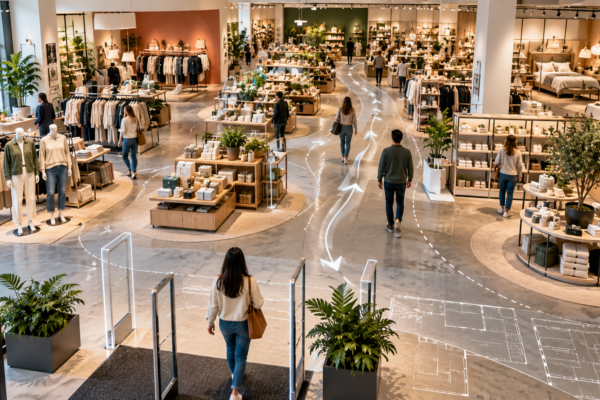
Pickup Area Design and Signage
Customers who cannot find the pickup desk in under 90 seconds are already having a poor
experience. Physical store layout, wayfinding signage, and dedicated curbside bay marking
are infrastructure investments that directly determine customer satisfaction scores.
System Integration Complexity
Connecting the e-commerce platform, OMS, warehouse management system, and POS into a
coherent data flow is the most common technical barrier for mid-market retailers. Without
clean integration, order status visibility — for both associates and customers — becomes
unreliable.
Best Practices for Successful Click and Collect Programs
The retailers that consistently rank highest on BOPIS customer satisfaction share a set
of operational disciplines that translate directly into execution standards.
-
Set realistic ready-time expectations at checkout. Communicating an accurate
window — rather than optimistic estimates — reduces complaints and repeat inquiry contacts
to the store. -
Establish a dedicated pickup zone. Whether a service counter, locker bank,
or curbside bay, the designated space should be visible immediately upon store entry and
exclusively reserved for BOPIS transactions. -
Staff the fulfillment function deliberately. Define picking roles, establish
SLA targets for order-ready time (typically 2–4 hours for same-day), and track associate
performance against those metrics. -
Train associates on the upsell moment. Pickup is a structured customer
interaction. Associates who are trained to acknowledge the purchase, confirm satisfaction,
and introduce a relevant product or promotion consistently outperform those handling it
transactionally. -
Audit inventory accuracy before launch. A minimum 97 percent perpetual
inventory accuracy rate is widely cited as the threshold for a BOPIS program that reliably
fulfills from store stock. -
Build a returns workflow into the program design. Customers who return items
in-store present a high-intent second purchase opportunity. Ensure associates have clear
authorization and POS support to complete exchanges or credits on the spot.
Role of In-Store Staff and Technology
Technology platforms enable click and collect; people execute it. This distinction matters
enormously when diagnosing why a program underperforms. Retailers that attribute poor BOPIS
scores exclusively to software often discover the root cause is undertrained associates,
understaffed fulfillment shifts, or misaligned incentive structures.
On the technology side, the critical enablers are a unified OMS with real-time inventory
feeds, mobile-enabled task management for associates, and customer-facing communication
automation (SMS/email readiness alerts). Locker systems and geofencing-triggered curbside
workflows add further automation for high-volume environments. To understand how these
systems connect within a broader strategy, see our definition of
what is retail technology.
On the human side, successful click and collect programs require associates who understand
the end-to-end customer journey — not just their individual task. Brand ambassadors and
dedicated fulfillment specialists who receive structured onboarding, ongoing coaching, and
clear performance goals produce measurably better pickup experiences than general floor
staff handed a new responsibility without support. This connects directly to broader
questions of
what retail operations management
entails at scale.
The omnichannel reality: Click and collect is not a standalone initiative.
It is one component of a fully integrated
omnichannel retail strategy
that spans digital discovery, physical experience, and seamless fulfillment. Retailers
that treat it as a siloed project typically see lower adoption and higher operational cost
than those who design it as part of a unified customer experience architecture.
How T-ROC Supports Omnichannel Retail Execution
T-ROC Global — The Revenue Optimization Companies — partners with retailers and consumer
brands to build the human and technological infrastructure that makes click and collect
programs perform. Our approach addresses both dimensions of execution: the people who
fulfill and hand off orders, and the systems that orchestrate the process.
Retail Staffing and Brand Ambassadors
T-ROC deploys trained retail associates, brand ambassadors, and field specialists who are
embedded directly in partner retail locations. For BOPIS programs, this means dedicated
fulfillment staff who are onboarded to your specific OMS workflow, coached on customer
interaction standards at the pickup moment, and managed to SLA compliance metrics. Our
field teams have supported click and collect deployments across mass merchant, specialty,
consumer electronics, and grocery verticals.
Retail Technology Advisory and Integration
T-ROC’s technology practice helps retailers evaluate, select, and implement the platforms
that underpin reliable click and collect execution — including OMS vendors, inventory
management solutions, and customer communication tools. We bridge the gap between technology
vendor promises and operational reality, ensuring that associate-facing tools are practical,
trainable, and adopted at the store level.
Mystery Shopping and Experience Auditing
Retailers can only improve what they measure. T-ROC’s mystery shopping and retail auditing
services evaluate the BOPIS experience from the customer’s vantage point — covering order
readiness time, associate interaction quality, signage visibility, and pickup area condition.
Structured audit data identifies the specific locations and behaviors that require coaching
or operational redesign.
Merchandise and Store Readiness
A click and collect transaction that ends with an associate walking a customer through an
underfaced, disorganized staging area is a brand experience failure regardless of how
well the digital path performed. T-ROC’s retail merchandising teams ensure that BOPIS
staging zones, in-store signage, and product adjacencies surrounding pickup areas reflect
the brand standards that drive confidence and additional purchase intent.
Whether you are launching a new BOPIS capability, scaling an existing program across
hundreds of locations, or auditing why your current click and collect scores are not
meeting targets, T-ROC brings the people, process, and technology expertise to move
the program forward.