



What is Retail Operations?
Retail operations refers to the complete set of activities, processes, and systems that a retail organization uses to run its stores and channels effectively. It spans every function that converts a shopper’s intention into a completed transaction and a satisfied customer—from the moment product arrives at a distribution center to the moment a brand ambassador hands over a receipt.
Defining Retail Operations
At its core, retail operations is the operational backbone of any consumer-facing business. It includes every repeatable process—staffing a store, replenishing shelves, training associates, preventing shrink, deploying technology—that determines whether a customer has a consistent, positive experience at every location and every visit.
Retail operations is distinct from retail strategy (which sets direction) and retail marketing (which drives traffic). Operations is what happens after a customer walks through the door. Get it right and you convert browsers into buyers and buyers into loyal advocates. Get it wrong and even the best brand strategy collapses at the point of sale.
For multi-location retailers and brand manufacturers managing field teams, retail operations complexity grows exponentially. A single-store owner can supervise everything personally. A 500-location chain cannot. That scale gap is precisely why enterprise retailers invest heavily in operational systems, field management technology, and—increasingly—retail outsourcing services to maintain consistency without proportionally scaling headcount.
The 7 Core Components of Retail Operations
While every retail format has nuances, seven functional areas define the operational model for most brick-and-mortar and omnichannel retailers.
1. Store Management
Store management encompasses the day-to-day leadership of a retail location: opening and closing procedures, scheduling, cash handling, compliance checks, vendor coordination, and facility maintenance. At the enterprise level, it includes district and regional management layers responsible for consistency across locations. Effective store management creates the conditions under which every other operational function can succeed.
2. Inventory Management
Inventory management controls the flow of product from supplier to shelf to customer. It includes purchase order management, receiving, cycle counts, perpetual inventory systems, safety stock calculations, and markdown management. Poor inventory management is one of the leading causes of lost sales (out-of-stocks) and margin erosion (overstock markdowns). Modern retailers rely on real-time inventory visibility systems to minimize both problems simultaneously.
3. Workforce Staffing & Training
People are the most visible component of retail operations. Staffing decisions—headcount, scheduling, role structure, compensation—directly affect service quality, conversion rates, and operating costs. Training programs determine how consistently brand standards are executed. High-performing retailers treat training as a continuous investment, not a one-time onboarding event. This includes product knowledge certification, soft skills coaching, compliance training, and technology adoption programs.
4. Visual Merchandising
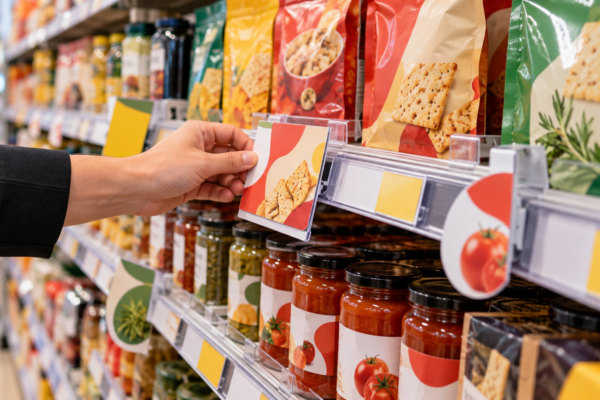
Visual merchandising transforms a store’s physical space into a sales tool. Planogram compliance, fixture placement, signage execution, endcap management, and seasonal reset coordination all fall under this function. In managed retail environments—where a brand’s products live inside a third-party retailer—merchandising execution directly determines share of shelf and share of visibility. Non-compliance with a planogram often means reduced facings, lost placement, or delisted SKUs.
5. Loss Prevention
Retail shrink—the gap between recorded inventory and actual inventory—costs U.S. retailers over $100 billion annually according to National Retail Federation data. Loss prevention addresses both external theft and internal shrink through physical security systems (cameras, EAS tags, access controls), associate training, exception reporting, and audit procedures. Effective loss prevention is not simply a security function; it is an operational discipline that requires cross-functional coordination with inventory, HR, and store management teams.
6. Customer Service Delivery
Customer service is where retail operations meets the brand promise. It includes service standards definition, complaint resolution protocols, loyalty program execution, and associate interaction guidelines. In high-consideration categories—consumer electronics, wireless, appliances, luxury goods—customer service quality is often the primary purchase driver. Brand ambassadors and trained product specialists embedded at the point of sale represent the highest-touch expression of the customer service function.
7. Technology & Systems Infrastructure
Technology underpins every other operational component. Point-of-sale systems, workforce management platforms, inventory management software, mobile task management tools, customer data platforms, and IoT-enabled fixtures all generate data and automate workflows. Retailers that leverage integrated technology stacks gain real-time visibility into performance, reduce manual labor, and can identify operational gaps faster than competitors still relying on manual reporting cycles.
Front-End vs. Back-End Retail Operations
Retail operations can be usefully divided into two domains: front-end operations that customers experience directly, and back-end operations that support front-end delivery without customer visibility. Both are equally critical; breakdowns in either domain ultimately degrade the customer experience.
| Dimension | Front-End Operations | Back-End Operations |
|---|---|---|
| Definition | Customer-facing processes and touchpoints | Behind-the-scenes support functions |
| Examples | Sales floor staffing, POS checkout, product demos, visual merchandising displays, service desk | Receiving, stock room management, payroll processing, compliance reporting, IT infrastructure |
| Primary Owner | Store managers, brand ambassadors, department leads | Operations directors, logistics teams, IT, HR |
| Customer Visibility | High — directly shapes brand perception | Low — invisible when working, disruptive when failing |
| Key Metrics | Conversion rate, CSAT, attach rate, dwell time | Shrink rate, on-shelf availability, labor cost %, cycle count accuracy |
| Outsourcing Suitability | High — brand ambassador programs, demo staffing | High — merchandising resets, mystery shopping, IT managed services |
Retail Operations Maturity Model
Retail operations capability is not binary. Organizations sit at different levels of operational maturity, and understanding where a business falls on this spectrum determines what investments will move the needle fastest. The following four-level model maps the progression from reactive to predictive operations.
Level 1
Reactive
Operations are managed by exception. Problems are addressed after they surface—out-of-stocks discovered by customers, shrink identified during annual inventory, staffing gaps filled reactively. There is no systemic measurement, and process standards vary by location and manager. This level is common in early-stage or single-location businesses.
Level 2
Standardized
Core processes are documented and consistently applied across locations. SOPs exist for inventory, scheduling, and customer service. KPIs are tracked, though reporting may lag by days or weeks. At this level, a retailer can scale to dozens of locations while maintaining baseline consistency—but optimization opportunities are routinely missed due to delayed visibility.
Level 3
Data-Driven
Real-time data informs operational decisions. Integrated technology platforms connect POS, WFM, inventory, and loss prevention systems. District managers receive exception alerts rather than waiting for weekly reports. Labor is optimized against traffic patterns. Merchandising compliance is tracked via field audit tools. This is where enterprise retailers differentiate on execution—and where outsourced specialist teams (for audits, demos, and resets) add the most immediate value.
Level 4
Predictive & Adaptive
Machine learning and AI-driven forecasting allow the organization to anticipate demand, flag shrink risk before it materializes, schedule associates based on predictive traffic models, and auto-reorder inventory based on sell-through velocity. Operations continuously self-improve via feedback loops between field data and corporate planning systems. This level represents the frontier for retail operations—achievable today for well-resourced retailers who have mastered Levels 1–3.
Key Metrics & KPIs for Retail Operations
Measuring retail operations performance requires a balanced scorecard that spans financial, operational, and customer experience dimensions. The following metrics are standard across enterprise retail and field operations programs.
- On-Shelf Availability (OSA): The percentage of time a SKU is physically present and shoppable when a customer looks for it. The industry benchmark is 95%+; most retailers operate at 92–94%, meaning meaningful lost sales from out-of-stocks.
- Conversion Rate: The percentage of store visitors who complete a purchase. Conversion is the ultimate measure of front-end operational effectiveness—store layout, staffing level, product presentation, and associate engagement all drive this number.
- Units Per Transaction (UPT) / Attach Rate: Measures how effectively associates recommend complementary products. A primary output of sales training and brand ambassador programs in high-consideration categories.
- Shrink Rate: Total inventory loss (theft, administrative error, vendor fraud) as a percentage of net sales. U.S. retail average is approximately 1.5%; top-quartile operators maintain below 0.75%.
- Labor Cost as % of Revenue: Balances service quality against cost efficiency. Rising too high signals over-scheduling; falling too low signals under-service and lost conversion.
- Planogram Compliance Score: The percentage of SKUs correctly positioned per the approved planogram during field audits. Low compliance directly correlates with reduced category sales and brand penalties from retailers.
- Customer Satisfaction Score (CSAT) / NPS: Quantifies the customer’s perception of the service experience. The most direct measure of whether front-end operations are meeting brand standards.
- Inventory Accuracy: The percentage alignment between system-recorded inventory and physical count. Accuracy below 95% undermines replenishment models and leads to phantom out-of-stocks.
- Time to Productivity (New Hires): How quickly new associates reach proficiency standards. A critical efficiency metric for retailers with high turnover or seasonal hiring spikes.
How Outsourcing Improves Retail Operations
For many retailers and brand manufacturers, building every operational capability in-house is neither efficient nor strategically necessary. Outsourcing specific functions to specialist providers delivers measurable advantages across three dimensions: speed, quality, and cost structure.
Speed to execution. Deploying a trained field team for a product launch, seasonal reset, or market expansion typically takes a specialized outsourcing partner weeks—not the months required to recruit, hire, onboard, and train an equivalent in-house team. This matters most in competitive categories where time-to-shelf is a genuine revenue driver.
Specialist expertise. Outsourced retail operations providers bring domain expertise that generalist in-house teams often lack: planogram compliance methodology, mystery shopping program design, loss prevention audit frameworks, and brand ambassador training curricula developed across hundreds of programs. This expertise is immediately deployable rather than built from scratch.
Variable cost structure. Outsourced field teams convert fixed labor costs into variable costs that scale with program scope. This is particularly valuable for seasonal peaks, limited-market pilots, or product categories with uncertain long-term volume. The fixed cost of a permanent regional field team disappears when the outsourcing relationship scales down.
Technology leverage. Leading retail operations partners provide technology platforms—mobile audit tools, scheduling systems, real-time dashboards—as part of the engagement, eliminating the capital expenditure required to build or license equivalent tools independently.
Companies like T-ROC Global operate as end-to-end retail operations partners: providing brand ambassadors, mystery shopping programs, merchandising teams, and managed retail technology under a single accountable relationship. For brand manufacturers managing execution inside third-party retailers, this integrated model produces stronger planogram compliance, higher conversion rates, and better brand representation at the point of sale than fragmented point solutions. Learn more about T-ROC’s retail outsourcing services.
Summary: What Makes Retail Operations Excellent?
Excellent retail operations share five characteristics regardless of format, channel, or category:
- Consistency at scale. The same brand standards, service quality, and execution precision across every location, every shift, every week—not just at headquarters-proximate stores during corporate visits.
- Visibility in real time. Operational leaders who can see what is happening across their footprint today, not last week. Exception-based management replaces calendar-based auditing.
- Accountability at every level. Clear ownership of operational KPIs from store associate to district manager to VP of Operations, with the data infrastructure to hold each layer accountable objectively.
- Continuous improvement culture. A systematic cadence for reviewing performance data, identifying root causes, testing interventions, and deploying proven improvements across the network.
- Right-sized resourcing. Deploying the right people with the right skills at the right time—neither over-staffed to the point of cost inefficiency nor under-staffed to the point of service failure. For many organizations, strategic outsourcing is what makes right-sizing possible.
Ready to Strengthen Your Retail Operations?
T-ROC Global partners with leading brands and retailers to deliver consistent, measurable operational performance—at scale. From brand ambassador programs to managed retail technology, we provide the people, processes, and platforms that turn operational complexity into competitive advantage.