



Retail pricing has always been a balancing act between margin protection and competitive positioning. In 2026, that balancing act has become significantly more complex. A shifting tariff landscape, volatile supply chain costs, AI-powered price optimization tools, and increasingly price-sensitive consumers are converging to force retailers and brands to rethink every assumption about how they set, communicate, and enforce prices across their store networks. Understanding the right retail pricing strategy 2026 is no longer a quarterly planning exercise — it is a continuous operational discipline that touches every part of the business from procurement to the shelf edge.
The stakes are higher than they have been in a generation. With new tariffs reshaping the cost basis for thousands of imported products and inflation-fatigued consumers scrutinizing every purchase, the margin for pricing error has narrowed dramatically. A price that is too high drives customers to competitors or private-label alternatives. A price that is too low destroys margin without building lasting loyalty. The retailers that win in this environment are those that combine data-driven pricing intelligence with disciplined in-store execution — ensuring that the right price reaches the right shelf at the right time, every time. For a broader view of what is driving retail performance this year, see T-ROC’s analysis of retail trends 2026.
The Tariff Landscape: What Retailers Must Understand in 2026
No conversation about retail pricing strategy 2026 is complete without addressing the tariff environment. The U.S. trade policy shifts of late 2025 and early 2026 have introduced new duties on a broad range of imported consumer goods — from electronics and apparel to home furnishings and seasonal merchandise. For retailers with significant import exposure, these tariffs represent a direct increase in cost of goods sold that must be managed through some combination of supplier negotiation, assortment adjustment, and consumer-facing price changes.
The challenge is not simply absorbing or passing through the cost increase. It is deciding how to allocate that cost across the product portfolio in a way that preserves competitiveness on the items that drive traffic while protecting margin on the items that drive profit. A blanket price increase applied uniformly across every tariff-affected SKU is the easiest approach to implement and the worst approach strategically. It treats every product as equally price-sensitive, which they are not.
Sophisticated retailers are taking a segmented approach. Traffic-driving essentials — the products that shoppers use to judge a retailer’s value proposition — absorb a larger share of the tariff impact, with price increases held to a minimum or offset entirely through supplier cost-sharing. Margin-rich categories where consumers are less price-sensitive, such as premium brands, accessories, and impulse items, carry a proportionally larger share of the pass-through. This approach preserves the retailer’s value perception where it matters most while recovering margin where consumer sensitivity is lowest.
For brands selling through retail partners, the tariff environment creates an additional layer of complexity. Wholesale pricing negotiations are intensifying as retailers push back on cost increases, and brands must decide whether to protect retail partner margins at the expense of their own or risk losing shelf space to competitors willing to absorb more of the tariff burden. The brands navigating this most effectively are those with the strongest data on sell-through velocity, price elasticity, and competitive positioning at the store level — data that strengthens their negotiating position and supports fact-based pricing conversations.
Dynamic Pricing and AI-Powered Price Optimization
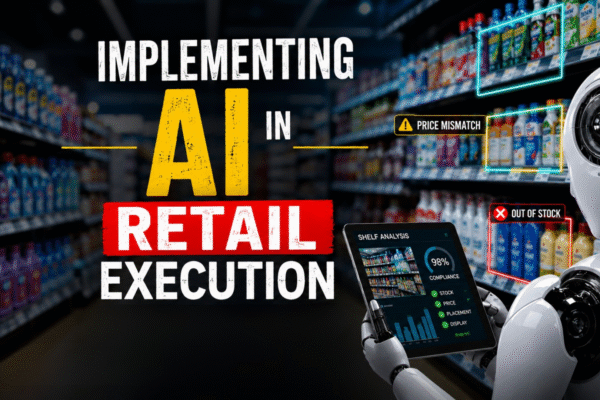
The emergence of AI-powered pricing tools is fundamentally changing how retailers approach retail pricing strategy 2026. Where pricing decisions were once made quarterly or seasonally by category managers working from spreadsheets and historical sales data, leading retailers are now deploying machine learning models that recommend optimal price points in near real time — factoring in competitor pricing, demand elasticity, inventory levels, weather patterns, local events, and dozens of other variables that influence purchase behavior.
Dynamic pricing is not new in e-commerce, where algorithms have adjusted prices continuously for over a decade. What is new in 2026 is the extension of these capabilities into physical retail. Electronic shelf labels (ESLs), now deployed in over 40,000 U.S. store locations, enable retailers to update prices on the shelf as frequently as they update them online — multiple times per day if conditions warrant. This creates the technical infrastructure for dynamic in-store pricing at a scale that was impossible with paper labels and manual price changes.
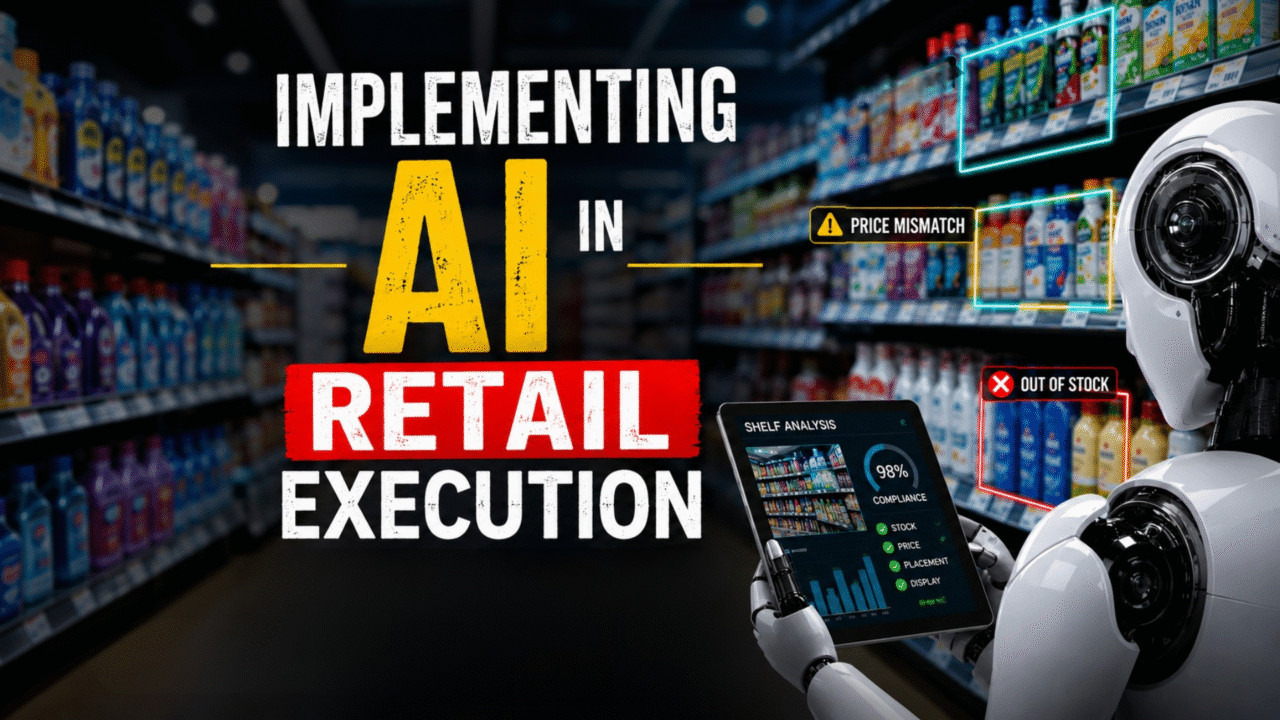
The AI models powering these systems are becoming increasingly sophisticated. Rather than simple rule-based pricing (match competitor X, markdown after Y days), modern price optimization engines evaluate thousands of potential price points simultaneously and select the one most likely to maximize the retailer’s chosen objective — whether that is gross margin dollars, unit velocity, market share in a specific category, or some weighted combination. The models learn continuously from transaction data, refining their predictions with each pricing cycle.
However, dynamic pricing in physical retail carries risks that do not exist in the digital channel. A customer who sees a price change between visits — or worse, between the shelf and the register — loses trust in the retailer’s pricing integrity. The most effective implementations in 2026 set guardrails around AI pricing recommendations: maximum price change frequency per SKU, price consistency requirements within a geographic market, and escalation protocols for changes above a defined threshold. The algorithm optimizes within the guardrails. A human approves exceptions. The result is pricing agility without the perception of price gouging.
For retailers still early in their AI pricing journey, the starting point does not need to be full dynamic pricing. Competitive price monitoring — using AI to track competitor prices across thousands of SKUs and flag misalignment — delivers immediate value with minimal operational disruption. Markdown optimization — using machine learning to determine the optimal timing and depth of clearance markdowns — is another high-ROI entry point that most retailers can implement within a single planning cycle. T-ROC’s retail merchandising guide provides practical frameworks for aligning pricing strategy with in-store execution.
The Impact of Tariffs on Retail Pricing in 2026
The 2026 tariff environment is not a temporary disruption — it is a structural shift that requires a strategic response embedded in every aspect of retail pricing strategy 2026. The cumulative effect of duties imposed across multiple product categories is reshaping cost structures in ways that demand more than simple price adjustments. Retailers and brands that treat tariffs as a one-time cost event rather than an ongoing pricing variable are leaving margin on the table and exposing themselves to competitive vulnerability.
The most immediate impact is on landed cost — the total cost of bringing a product from factory to shelf, inclusive of manufacturing, freight, duties, and distribution. For products sourced from countries subject to new or increased tariffs, landed cost increases of 8% to 25% are common in 2026, depending on the product category and the specific tariff schedule. In categories with thin margins — grocery, consumables, basic apparel — even an 8% increase in landed cost can eliminate profitability entirely if passed through at the wrong rate or absorbed without offsets elsewhere in the P&L.
Forward-looking retailers are responding with multi-pronged strategies. Source diversification is accelerating, with procurement teams actively qualifying suppliers in countries with more favorable trade terms — Vietnam, India, Mexico, and several Central American nations are all seeing increased sourcing activity as alternatives to tariff-affected origins. However, source diversification is a medium-term strategy. Qualifying new suppliers, validating quality, and establishing reliable logistics takes 6 to 18 months, meaning retailers must manage the tariff impact on their existing supply base in parallel.
Private-label strategy is another critical lever. Retailers with strong private-label programs have more pricing flexibility because they control the entire cost structure from sourcing through shelf price. Where a national brand must negotiate price increases with its retail partners, a retailer’s own brand can adjust sourcing, specifications, and pricing in a coordinated manner. This is one reason private-label penetration is projected to reach 28% of U.S. grocery sales in 2026, up from 24% in 2024 — consumers are trading down to store brands in response to price increases on national brands, and retailers are encouraging that trade-down because it improves their margin mix.
The tariff environment also elevates the importance of promotional strategy. Retailers that historically relied on deep promotional discounts to drive traffic are reconsidering that approach when the baseline cost of goods has increased. Promotion depth is decreasing in tariff-affected categories, with retailers shifting toward everyday-low-price (EDLP) positioning or smaller, more frequent promotions rather than deep periodic cuts that compress already-stressed margins.
How In-Store Execution Supports Pricing Strategy
A retail pricing strategy 2026 is only as effective as its execution at the store level. The most sophisticated pricing algorithm in the world delivers zero value if the price it calculates does not appear correctly on the shelf, in the promotional display, and at the point of sale. In-store execution — the discipline of ensuring that every pricing decision is accurately and consistently reflected in the physical store environment — is the operational foundation that makes pricing strategy real.
Signage Accuracy and Price Integrity
Price signage errors are among the most expensive and underappreciated operational failures in retail. Industry research indicates that 5% to 10% of shelf price labels in a typical store contain errors at any given time — wrong price, missing label, label on the wrong product, or outdated promotional pricing that should have been removed. Each of these errors carries a direct cost: either the customer is overcharged and files a complaint (damaging trust and triggering potential regulatory liability), or the customer is undercharged and the retailer absorbs the margin loss silently.
At scale, price signage errors are not a minor nuisance. A retailer operating 500 stores with 30,000 SKUs per store and a 5% label error rate has approximately 750,000 pricing errors live at any given moment. If even a fraction of those errors result in undercharges averaging $0.50 per affected transaction, the annualized margin leakage is measured in millions of dollars. This is margin that disappears without ever appearing in a shrink report or a loss prevention alert.
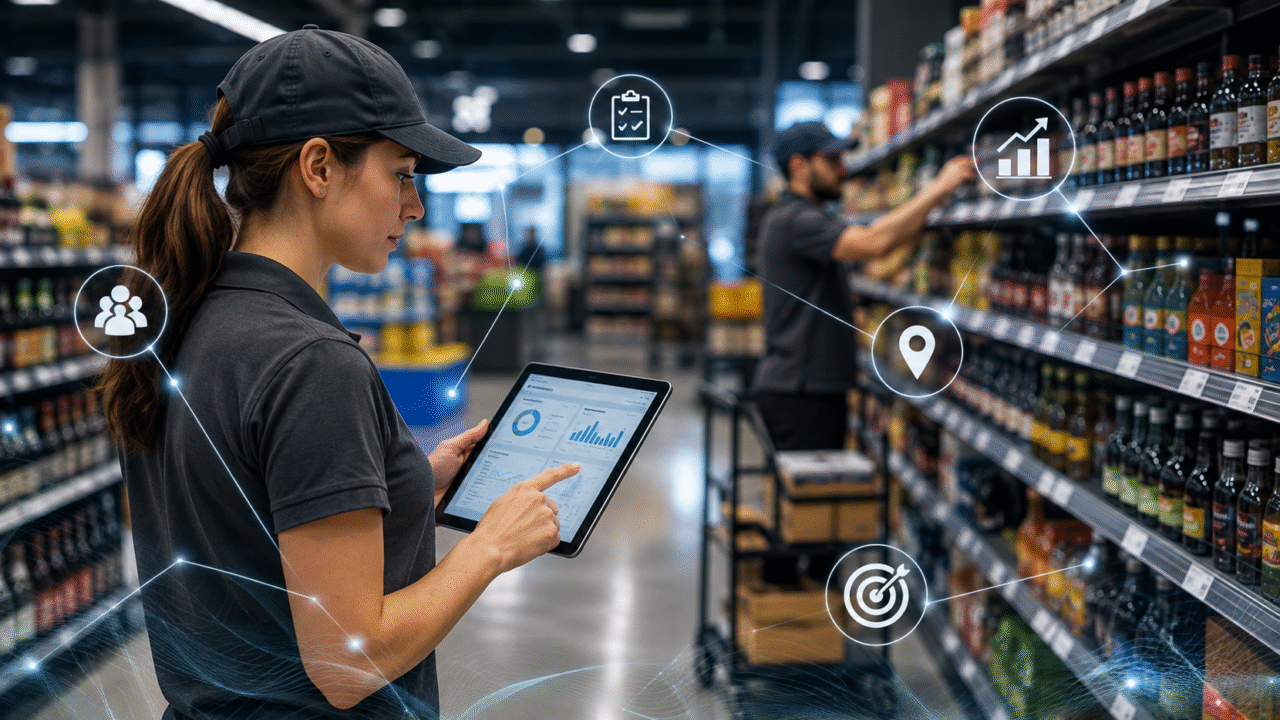
The retailers with the strongest price integrity programs combine three elements: technology (ESLs or automated label printing systems that pull prices directly from the pricing engine), process (scheduled label audits with clear accountability at the store level), and people (trained associates or field teams who execute label changes accurately and verify compliance). For organizations managing pricing execution across hundreds of locations, T-ROC’s retail operations guide outlines the operational frameworks that support consistent execution at scale.
Promotional Compliance
Promotional pricing is even more error-prone than everyday pricing because it involves temporary changes that must be implemented, monitored, and reversed on a defined schedule. A promotional price that goes live a day late, stays active a day too long, or appears in the wrong department loses money for both the retailer and the brand funding the promotion. Field audit data consistently shows that promotional compliance rates in most retail environments hover between 70% and 85% — meaning 15% to 30% of promotional investments are partially or fully wasted through execution failures.
Improving promotional compliance requires the same technology-process-people framework applied to everyday pricing, plus an additional layer of coordination with brand partners and marketing teams. The promotional calendar must flow cleanly from planning through execution, with clear communication of start dates, end dates, featured SKUs, and display requirements at every level from headquarters to the store floor. Digital task management systems that push promotional execution checklists to store associates and capture photographic verification of completed displays are closing the compliance gap faster than any audit-based approach.
Competitive Price Auditing in the Field
In-store execution also plays a critical role in competitive intelligence. While AI-powered price scraping tools can monitor competitor pricing online with ease, physical store pricing — where the majority of retail transactions still occur — requires human observation. Field teams conducting regular competitive price audits capture shelf-level pricing data that online tools cannot access, including local promotional pricing, clearance activity, and private-label price positioning that may differ significantly from what appears on a competitor’s website.
This ground-level competitive data feeds directly back into the pricing engine, enabling more precise local pricing adjustments that reflect actual in-market conditions rather than assumptions based on national pricing data alone.
Building a Resilient Pricing Strategy for the Rest of 2026
The retailers best positioned for the remainder of 2026 are those building pricing strategies that are resilient to continued disruption. Tariff schedules may change. Competitor behavior will shift. Consumer sensitivity will fluctuate with employment data, gas prices, and headline inflation. A resilient retail pricing strategy 2026 is not one that predicts every variable correctly — it is one that responds to changing conditions quickly and executes consistently at the store level.
This requires investment in three capabilities. First, pricing intelligence: the data infrastructure and analytical tools to understand cost, competition, and consumer sensitivity at the SKU-location level. Second, pricing governance: the organizational structure and decision rights that enable rapid pricing decisions without sacrificing strategic coherence. Third, pricing execution: the operational discipline and field force capability to ensure that every pricing decision translates accurately into the store environment.
Retailers that build all three capabilities into a unified pricing operating model will navigate the turbulence of 2026 with their margins and customer trust intact. Those that treat pricing as a spreadsheet exercise disconnected from store-level reality will continue to leak margin through execution gaps they cannot see from the headquarters conference room.
Frequently Asked Questions About Retail Pricing Strategy in 2026
How are tariffs affecting retail pricing in 2026?
Tariffs imposed on a broad range of imported consumer goods in late 2025 and early 2026 are increasing landed costs by 8% to 25% depending on the product category. Retailers are responding with segmented pass-through strategies, accelerated private-label development, source diversification to countries with more favorable trade terms, and adjusted promotional depth. The most effective approach allocates tariff cost increases proportionally based on consumer price sensitivity — absorbing more on traffic-driving essentials and passing through more on margin-rich categories where shoppers are less price-elastic.
What is dynamic pricing in physical retail and how does it work?
Dynamic pricing in physical retail uses AI-powered optimization engines combined with electronic shelf labels to adjust in-store prices based on real-time data including competitor pricing, demand patterns, inventory levels, and local market conditions. Unlike e-commerce dynamic pricing, physical retail implementations set guardrails around price change frequency and magnitude to maintain customer trust. The technology enables retailers to respond to competitive and market changes within hours rather than weeks, improving both margin and competitiveness.
How can retailers improve price signage accuracy across multiple locations?
Improving price signage accuracy requires a combination of technology, process, and people. Electronic shelf labels that pull pricing directly from centralized systems eliminate manual label errors. Scheduled compliance audits with photographic verification catch discrepancies before they accumulate. Trained field teams or dedicated associates who execute label changes on a defined schedule and verify accuracy against the pricing system provide the human layer of quality control. Retailers with strong programs maintain label accuracy rates above 97%, compared to the industry average of 90% to 95%.
What role does AI play in retail pricing strategy today?
AI plays an increasingly central role in retail pricing strategy in 2026. Machine learning models analyze competitor pricing, historical sales data, demand elasticity, and external variables to recommend optimal price points. AI-powered markdown optimization determines the best timing and depth for clearance pricing. Competitive monitoring tools use AI to track thousands of competitor SKUs in real time and flag pricing misalignment. The most advanced implementations use AI to simulate pricing scenarios — projecting the revenue, margin, and market share impact of proposed price changes before they go live.
How does in-store execution impact pricing strategy effectiveness?
In-store execution is the operational foundation that determines whether a pricing strategy delivers its intended results. Industry data shows that 5% to 10% of shelf price labels contain errors at any given time, and promotional compliance rates typically range from 70% to 85%. These execution gaps translate directly into margin leakage and lost promotional ROI. Retailers that invest in digital task management, field compliance auditing, and trained execution teams consistently outperform peers on pricing accuracy, promotional compliance, and overall margin performance.