


The Core Purpose of Field Merchandising
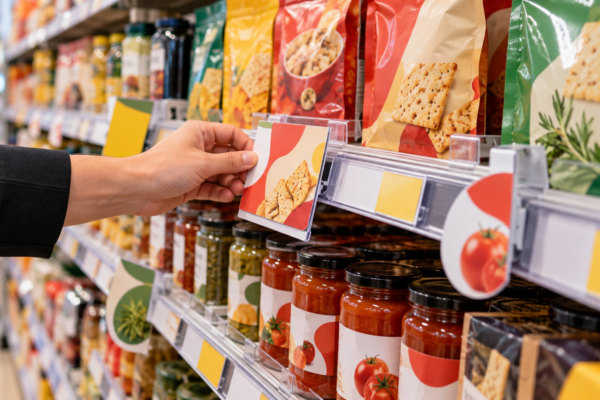
Every brand that sells through retail channels faces a fundamental challenge: the gap between what headquarters plans and what actually appears on the shelf. Field merchandising closes that gap. A field merchandising program deploys a network of trained representatives who visit assigned store locations on a recurring schedule. Their mandate is to verify, correct, and optimize everything a shopper encounters when they approach a brand’s shelf space.
Done well, field merchandising lifts sales velocity, reduces out-of-stocks, improves share of shelf, and gives brand teams reliable, ground-level intelligence about how retail conditions are evolving in real time. For a deeper look at how this fits within broader in-store strategy, see our retail merchandising guide.
What Field Merchandisers Do: Core Responsibilities
1. Planogram Execution and Compliance
A planogram specifies exactly where each product should be placed on a shelf — which row, which column, how many facings, and at what height. When a planogram resets or a new product is introduced, field merchandisers are the professionals who physically execute those changes across all assigned locations. Compliance audits follow initial execution, verifying that products are still positioned according to the approved schematic and that competing brands have not encroached on allocated space.
2. Display Setup and Promotional Execution
Endcap displays, freestanding floor units, clip strips, and power wings represent some of the highest-ROI real estate in any retail store. Yet a significant percentage of approved promotional displays never get built — they sit in the backroom because store associates lack time or instructions to assemble them. Field merchandisers take ownership of promotional display setup from unboxing to final placement, including teardown after the promotional period ends.
3. Inventory Audits and Out-of-Stock Management
An out-of-stock event is revenue lost permanently. Field merchandisers conduct shelf-level inventory audits that identify not only empty facing positions but also the root cause of the gap. Audit data captured via mobile application with photo documentation feeds back into brand reporting systems and signals supply chain and sales teams where replenishment is needed.
4. Competitive Reporting
Field merchandisers are on the floor of retail stores every day. That position gives them direct visibility into what competitors are doing: new product introductions, promotional pricing, incremental display placements, and shelf space expansions. Structured competitive reporting transforms field teams into a real-time market intelligence network.
Field Merchandising vs. Brand Ambassadors: Understanding the Difference
| Dimension | Field Merchandising | Brand Ambassador Program |
|---|---|---|
| Primary objective | In-store execution and shelf compliance | Shopper engagement and brand advocacy |
| Consumer interaction | Minimal — task-focused, often before store hours | High — proactive conversations with shoppers |
| Key outputs | Planogram compliance, audit scores, display builds | Conversion lift, product demos, brand sentiment |
| Scheduling | Recurring coverage routes, often weekly or bi-weekly | Event-based, peak traffic periods, product launches |
| Skills required | Planogram reading, physical dexterity, audit tools | Product knowledge, communication, persuasion |
In many enterprise retail programs, field merchandising and brand ambassadors operate in parallel: merchandisers ensure the shelf is perfect, and ambassadors drive conversion from that perfectly presented shelf. See our brand ambassador program guide for how ambassador programs are structured at scale.
How to Structure a Field Merchandising Team
Coverage Model Design
The foundation of any field team structure is the coverage model: which stores are visited, how often, and for how long per visit. Coverage decisions should be driven by sales data — stores accounting for the top 20–30% of volume typically warrant weekly visits, while lower-volume doors may be serviced bi-weekly or monthly.
Territory and Routing
Field merchandisers are typically assigned geographic territories sized to allow efficient travel between their assigned stores in a single day. Optimized routing reduces drive time and increases productive hours in-store, which directly affects cost per store visit.
Technology Stack
Modern field merchandising programs are managed through mobile-first field execution platforms that enable representatives to receive daily task lists, capture photo documentation, complete structured audit surveys, and log competitive observations — all from a smartphone or tablet. For a comprehensive look at how field teams are built, visit our retail field teams guide.
Key Performance Indicators for Field Merchandising Programs
| KPI | What It Measures | Target Benchmark |
|---|---|---|
| Planogram Compliance Rate | Percentage of audited stores where shelf sets match the approved planogram | 90%+ |
| Out-of-Stock Rate | Percentage of shelf positions found empty during audits | <3% |
| Display Execution Rate | Percentage of approved promotional displays built on time and in the correct location | 95%+ |
| Call Coverage | Percentage of planned store visits completed within the scheduled window | 98%+ |
| Audit Completion Rate | Percentage of required audit tasks completed with photo documentation per visit | 95%+ |
| Sales Velocity Lift | Change in units sold per store per week in covered stores vs. non-covered control group | Program-specific |
| Share of Shelf | Brand’s facing count as a percentage of total category facing count per store | Aligned to distribution agreement |
Why Field Merchandising Matters More Than Ever
Retail execution has grown more complex as the number of SKUs in any given category expands, promotional velocity increases, and store-level labor constraints leave retailers with less time to manage supplier relationships. At the same time, the data infrastructure supporting field merchandising has never been more powerful — real-time photo compliance, AI-assisted shelf recognition, and integrated sales data attribution mean that well-run programs can demonstrate ROI with precision that was impossible even five years ago.
For brands that compete on physical retail execution, field merchandising is not an optional investment. It is the mechanism by which commercial strategy becomes customer reality — one store, one shelf, one perfectly executed planogram at a time.