


\n\n
Retail Merchandising Services: The Complete Guide to In-Store Execution (2026)
\n\n
A product sitting in the wrong location, facing backward, or buried behind a competitor’s display does not sell. It does not matter how strong the brand, how smart the packaging, or how large the marketing budget. If the shelf execution is broken, the sale is lost before the shopper ever reaches the aisle.
\n\n
That is the problem retail merchandising services exist to solve. Not as a back-office logistics function, but as a direct revenue driver—one that connects every downstream investment in product development, manufacturing, and marketing to the moment that actually matters: when a shopper stands in front of a shelf and decides.
\n\n
This guide covers what retail merchandising services are, why execution quality determines sales outcomes, which service types matter most, and how to choose a retail merchandising company capable of operating at national scale. Throughout, you will see how T-ROC approaches each of these challenges across thousands of retail doors and dozens of categories.
\n\n
\n\n
1. What Are Retail Merchandising Services?
\n\n
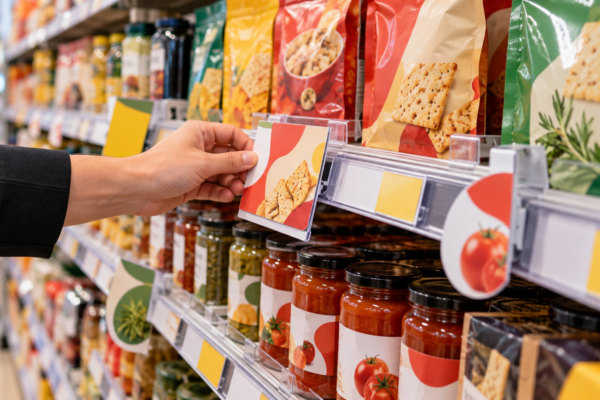
Retail merchandising services are the operational programs that ensure products are correctly placed, displayed, priced, and maintained inside physical retail stores. They sit at the intersection of brand standards and store-level reality—translating what a brand intends at headquarters into what a shopper actually encounters.
\n\n
The category covers a wide range of activities: setting planograms, installing permanent and temporary displays, conducting store resets during resets or remodels, repairing broken fixtures, stocking and rotating product, and verifying compliance across a retail network. Some programs are continuous—ongoing coverage of a chain’s full footprint. Others are project-based, activated around a product launch, seasonal changeover, or retailer reset cycle.
\n\n
What all of these services share is a dependence on trained people operating inside stores, executing to a defined standard, and reporting results back to brand and retail teams. The execution layer is where strategy either holds or falls apart.
\n\n
For brands selling through mass, specialty, home improvement, grocery, drug, or electronics channels, retail merchandising services are not optional. Retailers manage thousands of SKUs across hundreds or thousands of locations. Without a dedicated execution partner, brands lose shelf position, compliance drops, and sales underperform potential.
\n\n
T-ROC delivers retail merchandising services that go beyond the planogram—connecting compliance to revenue outcomes through technology, trained field teams, and real-time reporting at scale.
\n\n
\n\n
2. Why In-Store Execution Wins or Loses the Sale
\n\n
Roughly 70 percent of purchase decisions happen inside the store, at the shelf. A shopper who intended to buy your product but finds the shelf empty, the display collapsed, or a competitor’s SKU in your slot will make a different choice—and that choice is almost always permanent. Recovery rates for lost in-store sales are low.
\n\n
The gap between planned and actual shelf conditions is wider than most brand teams realize. Studies consistently show that planogram compliance rates in high-volume retail environments run below 70 percent without active merchandising programs in place. Out-of-stocks cost the consumer packaged goods industry tens of billions of dollars annually. Misplaced product reduces basket size. Poorly installed displays reduce traffic conversion.
\n\n
In-store execution failures compound. A store reset completed at 80 percent accuracy means one in five shelves is wrong from day one. If no one is checking compliance, that number drifts lower as stores restock, face changes, and product moves. Within weeks, the brand’s shelf presence is a fraction of what was planned—and the marketing investment driving shoppers to that location is working against a broken execution.
\n\n
The businesses that win at retail are not always the ones with the best products. They are the ones with the best execution. That means:
\n\n
- \n
- Planograms followed correctly at the store level
- Displays installed on time and built to spec
- Out-of-stock and break-fix issues resolved before the next shopper arrives
- Compliance verified and documented, not assumed
\n
\n
\n
\n
\n\n
This is the case for investing in retail merchandising strategy as a core commercial function, not a cost center.
\n\n
\n\n
3. The 8 Types of Retail Merchandising Services
\n\n
Not every merchandising program is the same. The service types below represent the core capabilities a brand or retailer needs to maintain strong in-store execution across a national footprint.
\n\n
1. Planogram Compliance
\n
A planogram defines exactly how products should be arranged on a shelf: which SKUs, in which slots, facing which direction, at which height. Planogram compliance programs verify that stores are executing to that standard and correct deviations. This is the foundation of every merchandising program.
\n\n
2. Store Resets
\n
When a retailer reorganizes a department, changes a category layout, or introduces new SKUs at scale, a store reset program executes that change across the full chain. Resets are time-sensitive, labor-intensive, and high-stakes—a poor reset can affect an entire season of sales. T-ROC’s approach to store resets prioritizes precision at scale.
\n\n
3. Display Installation
\n
Freestanding displays, end caps, power wings, and floor graphics all require professional installation to meet brand and retailer standards. Display programs are typically activated around product launches, seasonal promotions, or new account wins.
\n\n
4. Break-Fix and Maintenance
\n
Fixtures break. Displays collapse. Signage falls. Break-fix services dispatch trained technicians to repair or replace in-store assets on a defined response timeline—protecting both the brand presentation and the retailer relationship.
\n\n
5. Stocking and Product Rotation
\n
For categories with high velocity or short shelf life—consumables, health and beauty, food and beverage—continuous stocking and rotation programs keep shelves full and product fresh. This is particularly important in grocery, drug, and convenience channels.
\n\n
6. Audit and Compliance Verification
\n
Independent audit programs provide unbiased verification of shelf conditions, pricing accuracy, and promotional compliance. Audit data feeds directly into commercial decisions: where to invest, which stores need attention, which retailers are executing to standard.
\n\n
7. Training and Product Education
\n
In categories where purchase decisions depend on associate knowledge—consumer electronics, health tech, home improvement—training retail staff is a merchandising function. Trained associates sell more. They answer questions accurately, recommend the right products, and reinforce the brand story at the shelf.
\n\n
8. Alcohol Retail Execution
\n
Alcohol merchandising operates under a distinct set of rules: state and local compliance requirements, three-tier distribution constraints, and the importance of placement in both on-premise and off-premise channels. T-ROC’s specialized alcohol retail execution programs navigate this complexity while driving measurable velocity.
\n\n
\n\n
4. Retail Merchandising Strategy: Moving Beyond Compliance to Revenue
\n\n
Compliance is necessary but not sufficient. A shelf that meets the planogram standard is the floor, not the ceiling. The brands that extract the most value from their retail footprint treat merchandising as a strategic function—one that connects execution data to commercial decisions in near real time.
\n\n
A strategic merchandising program does several things that a compliance-only program does not:
\n\n
Segment stores by performance and priority
\n
Not all doors are equal. High-volume stores with strong category velocity deserve more frequent coverage, deeper execution standards, and faster break-fix response. A strategic program allocates field resources according to where the revenue opportunity is largest, not simply where the contract requires coverage.
\n\n
Use data to predict execution risk
\n
Historical compliance data, sales velocity patterns, and store-level operational signals can identify which locations are likely to drift before they actually do. Predictive deployment gets field resources to the right stores at the right time—before out-of-stocks or compliance failures affect sales.
\n\n
Connect execution to sell-through
\n
The strongest programs close the loop between field activity and point-of-sale data. When a store reset is completed, does velocity increase? When compliance drops, does sell-through fall? Answering these questions requires integrating merchandising activity data with retail sales data—and that integration is what separates execution partners from tactical vendors.
\n\n
T-ROC’s retail merchandising strategy framework is built on exactly this connection—using field intelligence to drive revenue outcomes, not just check boxes.
\n\n
The secrets behind high-performing in-store programs are detailed further in T-ROC’s guide to product merchandising—including how placement, adjacency, and visual hierarchy interact to drive conversion.
\n\n
\n\n
5. Third-Party Merchandising: Why Brands Outsource Execution
\n\n
Building an internal national field force is expensive, slow, and operationally complex. Recruiting, training, managing, and retaining a workforce that spans hundreds of markets—while maintaining the technology infrastructure to track their work—requires capabilities that most brands do not have and should not try to build.
\n\n
Third-party merchandising solves this problem. A capable partner brings:
\n\n
- \n
- Established scale: Field teams already operating in the markets where you sell, with relationships inside the stores that matter.
- Category expertise: Merchandisers trained in your specific category, with knowledge of the retailer’s requirements and the brand standards that drive results.
- Technology infrastructure: Reporting platforms, compliance tracking, photo verification, and analytics that would cost millions to build internally.
- Flexible capacity: The ability to surge coverage during resets, launches, or seasonal peaks without the fixed cost of a permanent headcount increase.
- Speed to market: Programs that can be deployed in weeks, not months—critical when a retailer window opens or a competitor gains shelf advantage.
\n
\n
\n
\n
\n
\n\n
The decision to outsource is not about giving up control. It is about getting better results than an internal team could achieve at equivalent cost. A strong third-party merchandising partner functions as an extension of the brand team—sharing data, aligning on priorities, and accountable for outcomes.
\n\n
The ROI case is straightforward: if outsourced merchandising improves compliance by 15 points and that compliance improvement drives a 5 percent velocity increase across a $50 million retail program, the incremental revenue is $2.5 million. The cost of the program is a fraction of that.
\n\n
\n\n
6. Retail Merchandising by Category
\n\n
Merchandising is not a one-size-fits-all discipline. The tactics, standards, and execution requirements vary significantly by retail category. Understanding how execution differs across verticals is essential to designing programs that actually perform.
\n\n
Consumer Electronics
\n
Electronics merchandising is uniquely demanding. Products are high-value, high-complexity, and require live demonstration to convert. Displays need power, connectivity, and software configuration. Fixtures break frequently under heavy shopper interaction. Associate knowledge directly affects attach rates and average transaction value.
\n
T-ROC has operated at the intersection of technology and retail for decades, and consumer electronics is a core category strength. From product demo setup to fixture maintenance to associate training, T-ROC’s programs are built for the complexity of electronics retail.
\n\n
Health Technology
\n
Health tech—wearables, connected health devices, diagnostic tools—combines the technical complexity of consumer electronics with the regulatory sensitivity of healthcare. Shoppers are often making high-stakes decisions and need accurate, compliant information at the shelf. Merchandisers need category literacy that goes beyond standard retail training.
\n
T-ROC’s specialized health tech merchandising programs address these requirements directly—trained field teams, compliant product communication, and execution standards designed for a category where trust drives purchase.
\n\n
CPG and Consumer Packaged Goods
\n
CPG merchandising operates at enormous velocity and scale. Hundreds of SKUs, weekly resets, promotional compliance requirements, and continuous stocking demands mean that execution programs must be highly systematized and data-driven. Margin compression in CPG makes execution efficiency a competitive advantage.
\n\n
Alcohol
\n
Alcohol is one of the most regulated and fragmented retail categories. Distribution varies by state. Placement rules differ between on- and off-premise channels. Promotional compliance requirements are strict. And the competitive environment is intense—every square foot of shelf space is contested by well-funded brands.
\n
T-ROC’s alcohol retail execution programs are designed for this environment—combining compliance rigor with commercial strategy to build velocity in a complex channel.
\n\n
Home Goods and Home Improvement
\n
Home goods merchandising involves large, complex displays, frequent seasonal resets, and categories where visual presentation directly drives purchase intent. Home improvement adds technical product knowledge requirements and high value per transaction. Both categories demand disciplined execution and fast break-fix response.
\n\n
\n\n
7. How Technology Transforms Merchandising Execution
\n\n
The difference between a merchandising program that delivers consistent results and one that underperforms is almost always data. Without real-time visibility into field activity, compliance status, and execution quality, brand and retail teams are making decisions based on incomplete information—typically sales data that is days or weeks old.
\n\n
Technology changes that equation fundamentally.
\n\n
Real-Time Reporting and Photo Verification
\n
Modern merchandising platforms capture field activity as it happens. Merchandisers check in at store locations via GPS-verified mobile apps, complete structured work orders, and submit photo documentation of completed tasks. Brand teams see execution status in near real time—not in a weekly report.
\n
Photo verification closes the compliance loop. A merchandiser can confirm that a display is installed correctly by submitting photos that are reviewed against brand standards. Any deviation is flagged immediately, and corrective action can be dispatched the same day.
\n\n
Predictive Analytics and Resource Allocation
\n
Historical execution data, combined with sales velocity and store-level operational signals, enables predictive resource allocation. Stores with a track record of compliance drift get proactive coverage before they fall out of standard. High-velocity doors get prioritized field time during peak periods. Field resources are deployed where they generate the most return.
\n\n
Retail360: T-ROC’s Execution Platform
\n
T-ROC’s proprietary retail execution platform, Retail360, is the technology infrastructure behind every T-ROC merchandising program. It provides:
\n
- \n
- Real-time field activity tracking across thousands of retail locations
- Automated compliance scoring and exception flagging
- Photo-verified task completion with brand-standard review
- Integration with POS and sell-through data for revenue correlation
- Customizable dashboards for brand, category, and market-level visibility
\n
\n
\n
\n
\n
\n
Retail360 is not a third-party tool applied to T-ROC’s work. It is built into how T-ROC operates—the platform through which every field activity is tracked, every compliance result is documented, and every performance trend is surfaced to brand partners.
\n\n
The Data Advantage
\n
Brands that operate with real-time execution data make better commercial decisions. They know which stores need attention before sales decline. They can correlate execution quality with velocity and prove the ROI of their merchandising investment. They can negotiate with retailers from a position of evidence, not assumption.
\n
That data advantage compounds over time. A year of execution data reveals patterns—which store clusters consistently underperform, which reset types drive the largest compliance improvements, which display formats convert at the highest rate. Those patterns become the foundation for increasingly precise program design.
\n\n
\n\n
8. Store Resets: The High-Stakes Execution Most Brands Get Wrong
\n\n
A store reset is one of the highest-leverage events in retail. When a major retailer resets a category, every brand’s shelf position, facing count, and display allocation changes simultaneously—across hundreds or thousands of locations, within a compressed execution window. A brand that executes its reset cleanly gains momentum. A brand that executes poorly loses position it may not recover for months.
\n\n
Most brands underestimate what a well-executed reset requires. It is not simply a matter of moving product from one shelf to another. A full-chain reset involves:
\n\n
- \n
- Advance planogram review and field team briefing
- Coordinated deployment across all affected locations within the retailer’s execution window
- New fixture assembly and installation where required
- Product placement to exact planogram specification
- Signage, price label, and display installation
- Compliance photo documentation submitted to the retailer
- Exception management for stores that deviate from plan
\n
\n
\n
\n
\n
\n
\n
\n\n
The execution window for a major retail reset is typically narrow—often 48 to 72 hours per store, coordinated across a national rollout. A merchandising partner that cannot operate at that pace and precision will miss the window. Missed resets mean lost shelf position from day one of the new planogram cycle.
\n\n
T-ROC’s complete store resets guide details exactly how to plan, execute, and verify a reset program at national scale. For brands assessing whether their current approach is adequate, it is a useful benchmark.
\n\n
There is also a deeper strategic dimension to resets. The way a store’s layout is structured—how departments flow, how categories relate to one another, where high-margin product sits relative to traffic patterns—has a direct effect on basket size and conversion. T-ROC’s analysis of store layout and retail reset strategy examines how execution decisions at reset time shape sales outcomes long after the reset team has left the building.
\n\n
\n\n
9. Choosing a Retail Merchandising Company: What to Look For
\n\n
Not every merchandising company can operate at national scale with consistent quality. The market includes large national players, regional specialists, and category-specific boutique firms. Choosing the right partner requires evaluating capability against your specific program requirements.
\n\n
National Coverage with Local Execution Quality
\n
A company can claim national coverage while relying on inconsistent subcontractor networks that vary dramatically in quality by market. The question is not whether a partner has people in your markets—it is whether those people are trained to your standards, managed to consistent performance metrics, and accountable to defined SLAs. Ask specifically how coverage is delivered in your 20 highest-priority markets.
\n\n
Technology Infrastructure
\n
A merchandising partner without a real-time execution platform is operating blind. You should expect GPS-verified check-ins, photo-documented task completion, compliance scoring, and dashboards that give your team visibility without waiting for a weekly report. If a vendor’s reporting is manual or lagged by more than 24 hours, that is a structural limitation that will cost you.
\n\n
Category Expertise
\n
General merchandising competency is not the same as category expertise. A company that executes CPG programs efficiently may not have the technical training required for consumer electronics or health tech. Verify that your potential partner has done this work—in your category, with comparable brands, at comparable scale—and ask for data on outcomes.
\n\n
Speed and Surge Capacity
\n
Retail moves fast. Retailer windows open and close. Competitors gain shelf position. Product launches accelerate or shift. You need a partner that can increase coverage rapidly when the business requires it—without a six-week ramp time and a renegotiated contract.
\n\n
Accountability and Outcome Orientation
\n
The strongest merchandising partners do not just report on activity. They take accountability for outcomes—compliance rates, velocity improvements, reset completion quality. If a prospective partner talks primarily about hours deployed rather than compliance scores and sell-through impact, that framing reflects how they measure their own success.
\n\n
Integration Capability
\n
Your merchandising partner’s data should connect to your broader commercial systems. POS integration, retailer portal data feeds, and syndicated data connections let you correlate execution quality with sales results. A partner that operates in a data silo is a partner you cannot fully evaluate—or improve.
\n\n
T-ROC combines national scale, proprietary technology, deep category expertise, and a consistent track record of execution across thousands of retail doors. Whether the program requirement is continuous compliance coverage, a single-retailer reset, or a multi-category launch deployment, T-ROC’s infrastructure is built to deliver.
\n\n
\n\n
10. Frequently Asked Questions
\n\n
What is the difference between retail merchandising and retail marketing?
\n
Retail marketing creates demand—advertising, promotions, and campaigns that drive shoppers to stores. Retail merchandising captures that demand at the shelf—ensuring the product is in the right place, correctly displayed, and available when the shopper arrives. Both functions are necessary. Merchandising is where marketing investment either converts to revenue or is wasted.
\n\n
How much does a retail merchandising program cost?
\n
Program cost depends on coverage frequency, number of doors, service type, and category complexity. A continuous compliance program covering a national chain at high frequency will have a materially different cost structure than a project-based reset program. The more useful framing is ROI: what does a 10-point compliance improvement generate in incremental velocity, relative to the cost of the program? T-ROC designs programs with that equation at the center.
\n\n
How long does it take to launch a merchandising program?
\n
With an established execution infrastructure, T-ROC can typically deploy a new program within two to four weeks. Project-based programs for specific events—a reset, a display installation rollout—can move faster when the execution window requires it. The bottleneck is rarely field capacity; it is the time required to align on standards, build work orders, and configure reporting.
\n\n
What is planogram compliance and why does it matter?
\n
A planogram is a precise schematic showing how products should be arranged on a shelf. Planogram compliance is the degree to which actual shelf conditions match that schematic. Compliance matters because placement is revenue—wrong placement means lower visibility, reduced facing count, and competitor advantage. Sustained compliance at the 90-percent-plus level typically corresponds to measurable velocity improvements in high-competition categories.
\n\n
Can T-ROC handle alcohol merchandising across multiple states?
\n
Yes. T-ROC’s alcohol retail execution programs operate across multiple states and both on-premise and off-premise channels. T-ROC’s field teams are trained in state-specific compliance requirements, and program design accounts for the structural variation in alcohol distribution regulations across markets.
\n\n
How does T-ROC’s Retail360 platform differ from other reporting tools?
\n
Most reporting tools aggregate data after the fact. Retail360 captures execution data in real time—GPS check-ins, photo-verified task completion, and automated compliance scoring as field activity happens. The platform is integrated into T-ROC’s operational workflow, not layered on top of it. That integration is what enables same-day exception management and the kind of execution precision that moves compliance scores from the 60s to the 90s.
\n\n
What categories does T-ROC specialize in?
\n
T-ROC operates across consumer electronics, health technology, CPG, alcohol, home goods, home improvement, and specialty retail. Category depth varies—T-ROC has the deepest infrastructure and longest track record in consumer electronics and technology-adjacent categories, but has expanded its capabilities across verticals as client programs have grown.
\n\n
Is third-party merchandising right for my brand?
\n
If you are selling through national retail chains and do not have a dedicated field organization with real-time execution visibility, third-party merchandising almost certainly improves your results and reduces your cost versus an internal build. The right time to evaluate a partner is before a major reset cycle, a new retailer launch, or a product line expansion—when execution precision is highest-stakes and internal capacity is most likely to be insufficient.
\n\n
\n\n
Ready to Raise Your In-Store Execution Standard?
\n\n
Every dollar of retail marketing investment depends on what happens at the shelf. Planogram compliance, display installation, store resets, break-fix response, and real-time reporting are not operational details—they are the difference between sell-through that meets plan and sell-through that misses it.
\n\n
T-ROC delivers retail merchandising services across thousands of retail doors, powered by Retail360 technology and supported by field teams trained to category-specific standards. Whether you need a continuous compliance program, a national reset deployment, or a specialized execution solution for a complex category, T-ROC has the infrastructure and track record to deliver.
\n\n
Contact T-ROC today to discuss your in-store execution requirements and learn how a technology-enabled merchandising program can improve your compliance scores, protect your shelf position, and drive measurable revenue growth.
\n\n