





In-store demo services are field marketing programs where trained product demonstrators run live, hands-on product experiences inside retail stores — letting shoppers see, touch, taste, or use the product before purchasing. For Fortune 100 brands, in-store demo services are one of the highest-ROI field marketing tactics available — typically driving 30-60% conversion lift on demo-attended purchases and creating word-of-mouth that compounds beyond the demo window.
This is the definitive 2026 guide to in-store demo services — what they include, the major demo program types, what they cost, how to run effective demos, common pitfalls, and how T-ROC delivers in-store demo services for Fortune 100 brands across consumer electronics, wireless, appliances, and connected home categories.
What In-Store Demo Services Cover
In-store demos go beyond “person standing next to the product.” A real demo program includes:
- Trained specialist demonstrators — category-expert presenters who can answer real questions and adapt to shopper needs
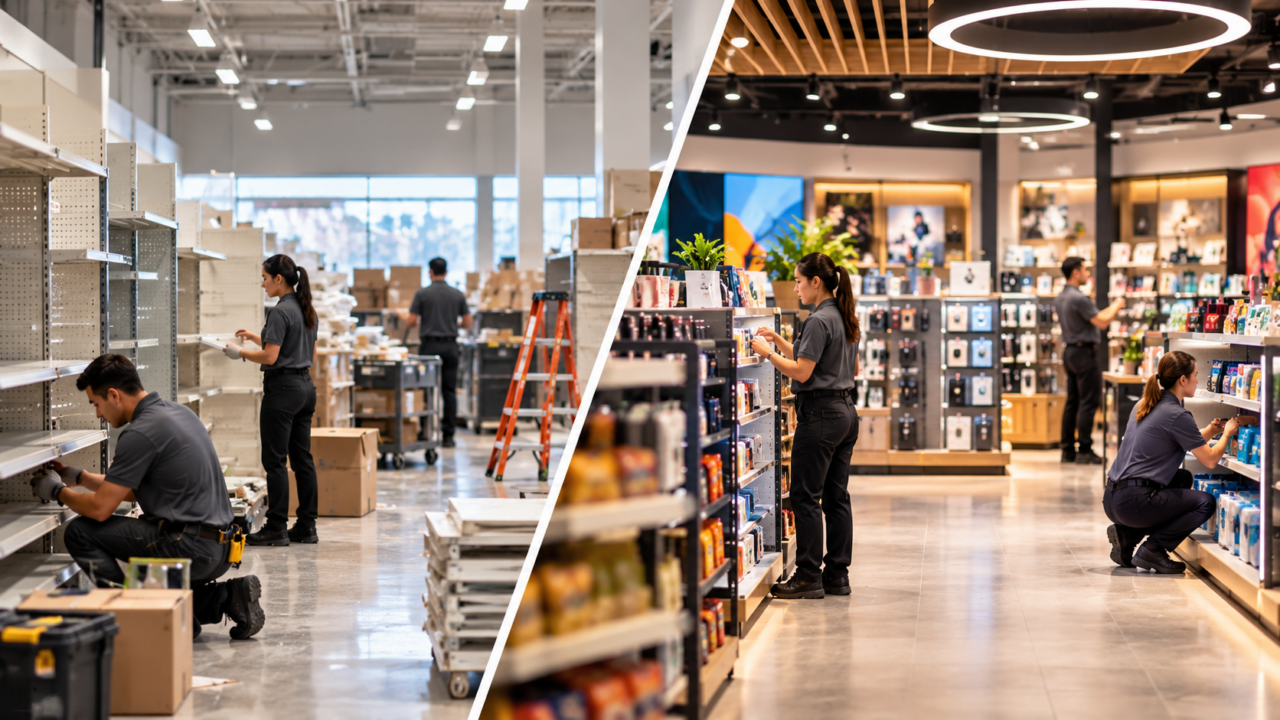
- Demo station setup and breakdown — physical infrastructure (counters, displays, samples, demo units) deployed and removed per shift
- Product samples and trial inventory — full-functioning demo units, samples, accessories
- Engagement scripts and playbooks — tested approaches for opening conversations, surfacing benefits, handling common objections, closing toward purchase
- Promotional tie-ins — demo-day discounts, trial-to-purchase paths, sweepstakes entries, coupon distribution
- Lead capture and first-party data — QR codes, sweepstakes entries, loyalty enrollments tying the demo moment to digital follow-up
- Real-time reporting — engagement counts, conversion rates, sales lift attribution per demo shift
Strong demo programs treat each demo as a measurable marketing experiment, not just an event. The data drives continuous improvement.
Major In-Store Demo Program Types
1. Product Sampling Demos (Food, Beverage, Beauty)
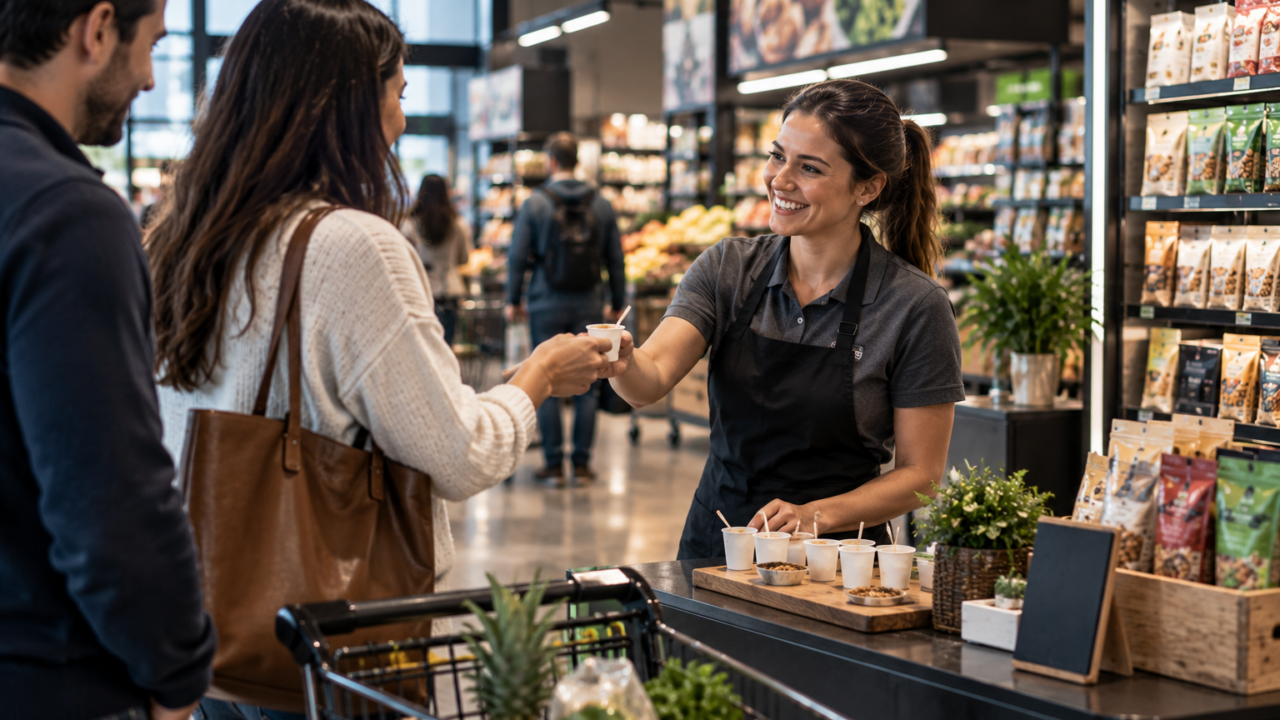
Trial-focused demos where shoppers taste, test, or apply the product before deciding. Most common in grocery (food/beverage sampling), beauty (skincare, cosmetics application), and household (cleaning product trials). Trial-to-purchase conversion typically lifts 30-60% over no-demo baseline.
2. Consumer Electronics & Tech Demos
Hands-on demos of TVs, audio, gaming, smart home, wearables, mobile devices. Best paired with category-expert demonstrators (often brand ambassadors) who can answer technical questions and surface non-obvious features. Critical for considered purchases where customer education drives conversion.
3. Appliance and Connected Home Demos
Major appliance demos (refrigerators, dishwashers, smart appliances, robot vacuums) where the value proposition requires explanation or demonstration. Common in home improvement retailers (Home Depot, Lowe’s), appliance specialty retailers, and Costco/club channel.
4. Brand Experience Pop-Up Demos
More immersive than standard demos — a temporary branded environment combining demos, education, brand storytelling, and lead capture. Often deployed for new product launches or brand repositioning. Ties to experiential retail pop-up programs.
5. Roadshow and Event-Based Demos
Demos that travel — multi-city tours, trade show floor demos, festival activations, mall tour programs. Combines demo execution with logistics and event operations.
6. Seasonal Demo Programs
Time-limited demo activation tied to holiday windows, product launches, Black Friday, back-to-school, or category seasonality. Activate, run for a defined window, demobilize.
Why In-Store Demo Services Drive Measurable ROI
1. Trial Dramatically Lifts Conversion
For sensory products (food, beverage, beauty) and considered purchases (electronics, appliances), trial dramatically reduces perceived risk and lifts conversion rates. NRF research consistently shows 30-60% trial-to-purchase conversion versus 5-15% baseline conversion without trial.
2. They Capture Adjacent Product Sales
A demo isn’t just about the demo product — a trained demonstrator surfaces accessories, complementary products, financing options, and protection plans. Strong demo programs typically lift average basket size 20-40% beyond the demo product itself.
3. They Generate Compounding Word-of-Mouth
Customers who experienced a memorable demo tell other people. Especially with photogenic demos (food, beauty) or technical “wow” moments (consumer electronics, smart home), the demo creates social media moments and word-of-mouth that compounds beyond the demo day.
4. They Capture First-Party Data
Modern demos integrate QR-code-based lead capture, sweepstakes entries, loyalty enrollments. This converts the in-person moment into ongoing digital engagement — extending the marketing ROI well beyond the demo shift.
What In-Store Demo Services Cost
| Demo Type | Typical Cost Range | Notes |
|---|---|---|
| Standard sampling demo (per shift) | $300-700 | 4-8 hour shift, 1 demonstrator |
| Tech / electronics demo (per shift) | $500-1,200 | Trained specialist, longer setup |
| Multi-store demo program (per store) | $1,500-5,000 | Includes setup/breakdown logistics |
| National rollout (full program) | $50K-1M+ | Project-based: 50-500 store program |
| Roadshow program (10-30 cities) | $200K-2M | Includes logistics, event coordination |
Budget benchmark: a fully-managed national in-store demo program covering 100-300 stores with 8-16 hours of demo time per store per quarter typically runs $500K-$2M annually. ROI benchmark: incremental sales attributable to demo activity should exceed program cost by 4-8x within 12 months.
How to Run Effective In-Store Demos
- Match demonstrator to category. Generic demonstrators reading scripts underperform category enthusiasts by 2-3x on conversion. Brand ambassador programs with deep training are the gold standard.
- Pick high-traffic shifts. Friday afternoon, Saturday, Sunday — when shopper intent is highest. Tuesday morning demos waste budget.
- Pair with promotional offer. Demos with “buy today, save X” or bundled accessory offers convert dramatically better than demos without on-the-spot incentive.
- Position visually. Demo stations need clear sightlines from store entry, away from competing demos, in the natural traffic flow toward the product.
- Train on shopper signals. Demonstrators must know when to engage actively (shopper showing interest) vs. when to give space. Aggressive engagement kills conversion.
- Capture lead data. Every demo should include a low-friction first-party data capture (QR scan to sweepstakes, loyalty enrollment, email signup).
- Measure beyond engagement. Track engagements, conversions, average basket lift, and 30-day repeat visits. Engagement count alone is a vanity metric.
- Coordinate with retailer. Confirm placement, signage approval, inventory availability, and store associate awareness before the demo runs. Surprise demos that retailer staff didn’t know about underperform.
Common In-Store Demo Pitfalls
- Generic demonstrators. Untrained event staff reading from scripts produce minimal lift. Specialist trained ambassadors produce 2-3x the conversion.
- Wrong-time scheduling. Tuesday morning demos in low-traffic windows waste budget. Demo timing should match peak shopper hours.
- No promotional tie-in. Demos without on-the-spot purchase incentive convert dramatically less than demos with a “buy today” offer.
- Counting engagements as success. Engagement count is a vanity metric. Conversion rate, basket lift, and 30-day return visits are real outcomes.
- One-off demos vs. sustained programs. A single demo day generates short-term buzz. Sustained programs (monthly demo schedules over 6-12 months) compound into category share gains.
- Skipping retailer coordination. Demos without retailer signoff, signage approval, and inventory confirmation underperform reliably.
- Bad demo station design. Demo stations that block traffic flow, hide the product, or interrupt store layout actively reduce sales.
How to Measure In-Store Demo Performance
Standard outcome metrics for evaluating a demo program:
- Engagement count per shift (necessary but not sufficient)
- Engagement-to-conversion rate — what percent of demo engagements resulted in purchase that day
- Average basket size for demo-converted vs. non-demo customers
- Adjacent product attach rate — accessories, protection plans, services pulled into the basket
- Same-store category sales lift during demo periods vs. baseline
- 30-day repeat visit rate for demo-converted customers
- Lead capture rate — QR scans, sweepstakes entries, loyalty enrollments per shift
- Cost per incremental sale — total demo cost divided by units sold above category baseline
- Mystery shop behavioral score for demo execution quality
How T-ROC Delivers In-Store Demo Services
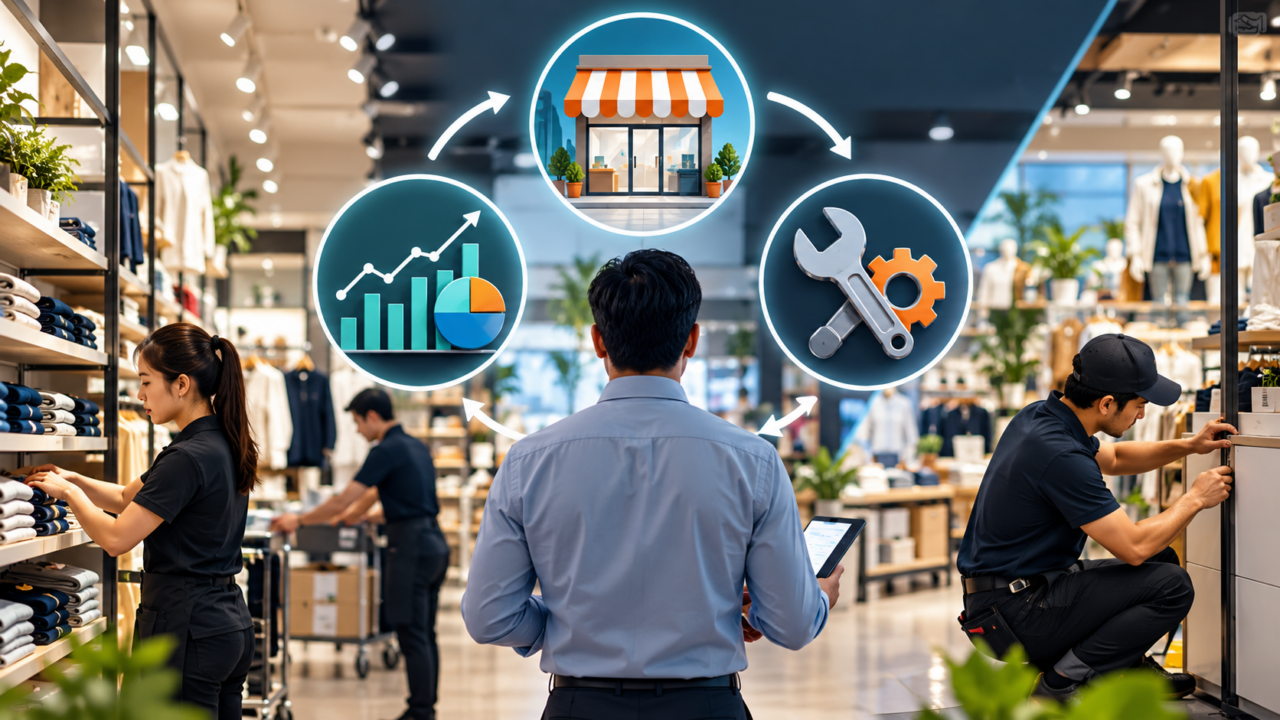
T-ROC operates in-store demos as part of integrated field marketing programs, paired with brand ambassador staffing, mystery shopping measurement, and the Retail360 retail execution platform. The model:
- Category-trained demonstrators sourced from pre-vetted national talent pools, with carrier and manufacturer certifications where applicable
- T-ROC University training covering category-specific demo playbooks, refreshed monthly
- Retail-coordination handled end-to-end — signage approval, inventory verification, station design, retailer signoff
- Mystery shopping verification that demos execute against playbook standards
- Real-time reporting via Retail360 dashboards covering engagements, conversions, basket lift, and lead capture
- Lead capture infrastructure — QR codes, sweepstakes entries, loyalty enrollments tied to client CRM
- Owned-store proof — T-ROC operates wireless retail stores under its own brand and tests demo programs against T-ROC’s own P&L before deploying for clients
Frequently Asked Questions
What are in-store demo services?
In-store demo services are field marketing programs where trained product demonstrators run live, hands-on product experiences inside retail stores — letting shoppers see, touch, taste, or use the product before purchasing. The goal is to drive trial-based conversion, lift average basket size, and create word-of-mouth that compounds beyond the demo window.
How much do in-store demo services cost?
Per-shift rates run $300-1,200 depending on category complexity. Multi-store programs run $1,500-5,000 per store. National rollouts run $50K-$1M+ per project. Fully-managed national demo programs covering 100-300 stores with quarterly cadence run $500K-$2M annually. ROI benchmark: incremental sales should exceed program cost by 4-8x within 12 months.
What’s the conversion lift from a good in-store demo?
For sensory products (food, beverage, beauty), trial-to-purchase conversion typically runs 30-60% versus 5-15% baseline conversion without trial. For considered purchases (electronics, appliances), the lift is smaller per-engagement but spread over larger basket sizes — net category sales lift typically runs 20-40% during demo windows.
What categories benefit most from in-store demos?
Sensory products (food, beverage, beauty) where trial dramatically reduces perceived risk. Considered purchases (consumer electronics, appliances, smart home) where customer education drives conversion. New product launches in any category. Categories with low awareness but high benefit per use.
How long should an in-store demo run?
Typical demo shift is 4-8 hours, scheduled during peak traffic windows (Friday afternoon, Saturday, Sunday). Demonstration interactions themselves run 2-10 minutes per customer. Demos shorter than 4 hours typically don’t catch enough traffic to justify setup/breakdown costs; longer than 8 hours suffers from demonstrator fatigue.
Should demos be paired with promotional offers?
Yes — almost always. Demos without on-the-spot purchase incentive (“buy today and save X” or bundled accessory offers) convert dramatically less than demos with a clear immediate-action incentive. The demo creates interest; the promo converts interest to purchase.
Can in-store demos work alongside digital marketing?
Yes — and the strongest programs integrate both. In-store demos can capture first-party data via QR codes, sweepstakes entries, and loyalty enrollments — extending the in-person moment into ongoing digital engagement. Demos amplify digital campaigns rather than competing with them.
How do you measure if a demo program is actually working?
Eight metrics to track: engagement count, engagement-to-conversion rate, average basket size, adjacent product attach rate, same-store category sales lift, 30-day repeat visit rate, lead capture rate, and cost per incremental sale. Engagement count alone is a vanity metric — real outcomes require the full set.
What categories does T-ROC specialize in for in-store demos?
T-ROC has deepest tenure in wireless retail (T-Mobile, AT&T, carrier device demos), consumer electronics (Samsung, Hisense, LG), appliances, connected home, and technology retail. Other categories supported, but the depth advantage is in tech-forward retail.
How fast can T-ROC deploy a new demo program?
Reputable agencies with pre-vetted talent can deploy a 50-200 store demo program within 2-4 weeks of contract signature for standard categories. Specialist categories (wireless certifications, regulated industries) may take 4-8 weeks. T-ROC’s national specialist talent pool compresses this timeline materially compared to building in-house.
Ready to discuss in-store demo services for your retail program? Get in touch with the T-ROC team for a direct conversation about your category, footprint, demo program type, and goals.