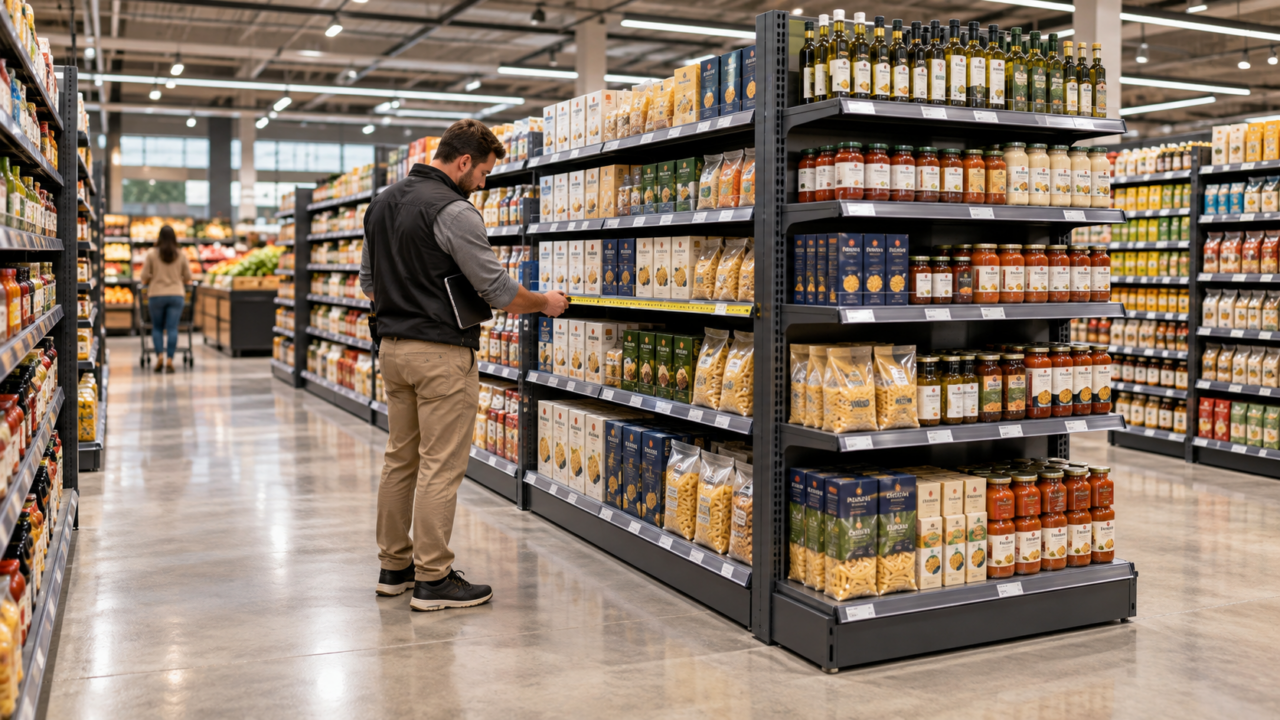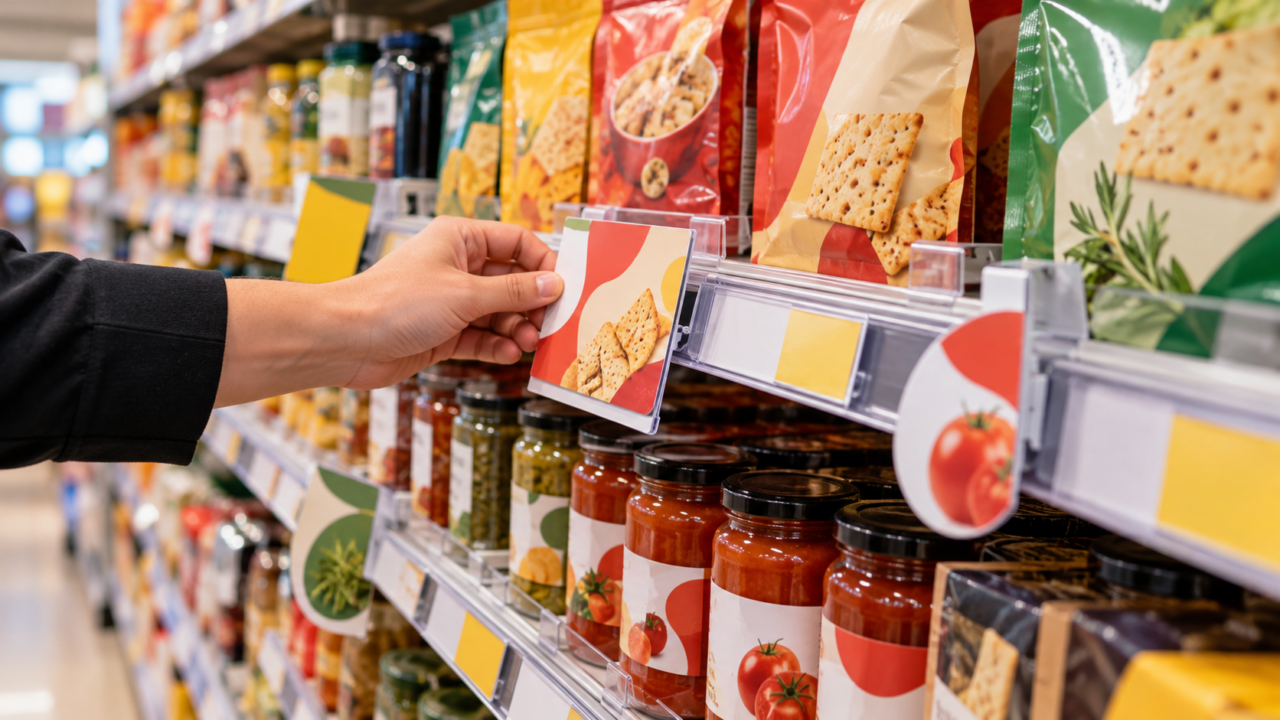




Mystery shopping services are structured retail experience programs where trained, anonymous evaluators visit stores or interact with associates as customers — then deliver detailed scoring on associate behavior, store compliance, and customer experience quality. For Fortune 100 brands and major retailers, mystery shopping services convert in-store execution from “we hope it’s working” to “we know exactly what’s happening at the aisle level” — typically driving 15-30% conversion rate improvement when integrated into a structured coaching program.
This is the definitive 2026 guide to mystery shopping services — what they include, the seven major program types, what they cost, how to evaluate providers, common pitfalls, and how T-ROC delivers mystery shopping for Fortune 100 retail clients across consumer electronics, wireless, appliances, and connected home.
What Mystery Shopping Services Actually Cover
“Mystery shopping” is sometimes confused with “secret shopping” or basic customer surveys. A real mystery shopping services program goes far beyond anonymous evaluations into a complete operational measurement system:
- Trained evaluator network — vetted shoppers matched to specific store visits based on demographics, location, and category expertise
- Structured evaluation playbooks — detailed scripts and scoring rubrics tied to specific behaviors (greeting quality, discovery questioning, adjacent product recommendations, post-purchase follow-through)
- Multi-channel coverage — in-store, phone, online chat, video, and digital mystery shopping integrated into a unified program
- Photo and video documentation — visual evidence of store conditions, planogram compliance, and signage execution
- Real-time reporting — store-level and associate-level dashboards delivered within 24-48 hours of the visit, not weeks later
- Coaching integration — scoring tied directly to associate-level coaching cycles so behavior actually improves
- Compliance and regulatory checks — for industries with formal compliance requirements (wireless, financial services, alcohol, tobacco), specialized evaluation rubrics
The gap between basic mystery shopping and full mystery shopping services is the coaching loop. Without it, mystery shopping produces interesting reports that nobody acts on. With it, mystery shopping becomes the single most actionable data source for retail performance improvement.
The Seven Major Mystery Shopping Program Types
1. In-Store Customer Experience Mystery Shopping
The classic format — an evaluator visits the store posing as a customer, runs through a defined scenario (specific product question, purchase consideration, complaint handling), and scores the associate against pre-defined behavioral criteria. Best for measuring greeting, discovery, recommendation quality, and close behavior.
Typical cadence: monthly per store, scored against 30-50 specific behaviors. Cost: $40-150 per visit depending on scenario complexity.
2. Sales Associate Behavioral Audit
More targeted than general experience evaluation — focuses specifically on whether associates execute defined sales behaviors (use-case discovery, financing introduction, accessory attach, post-purchase follow-through). Best paired with brand ambassador programs where associates are trained on specific playbooks and scoring measures playbook adherence.
3. Compliance and Regulatory Mystery Shopping
Required for retailers in regulated industries — wireless carriers (FCC, MVNO compliance), tobacco (age verification), alcohol (age verification, identification protocols), financial services (disclosure requirements). The evaluation covers whether associates execute legally required steps every time, not just average performance.
Stakes: regulatory mystery shopping often pays for itself in fine-avoidance alone. A single missed age verification can result in $10K+ fines per incident.
4. Phone and Chat Mystery Shopping
Evaluators contact the retailer through customer service phone lines, online chat, or messaging apps — testing response time, knowledge accuracy, escalation handling, and first-call-resolution rates. Best for retailers with significant remote customer service operations.
5. Competitor Benchmarking Mystery Shopping
Evaluators visit competitor stores using the same playbook used to evaluate the client’s own stores. Produces side-by-side scoring that shows where the client is winning, losing, and matching competitors on customer experience quality.
Strategic value: directly informs training priorities and competitive positioning. Most retailers don’t run this regularly — those that do operate at meaningful advantage.
6. Planogram and Compliance Audits
Less “shopping” and more “compliance audit” — evaluators verify whether displays, planograms, and signage match brand standards. Increasingly automated via computer vision but human auditors still catch nuances (signage damage, fixture wear, unauthorized adjacent products) that AI misses.
7. Mystery Shopping for New Program Launches
Pre-launch and post-launch mystery shopping designed to validate that new programs (training rollouts, new product launches, store resets) actually executed correctly across the footprint. Highest ROI when done in the first 30-60 days after launch — when course-correction is still cheap.
Why Mystery Shopping Services Drive Measurable ROI
Brands and retailers invest in mystery shopping services for three primary reasons:
1. Behavior Measurement, Not Just Outcome Measurement
Sales totals are outcomes. They tell you “what happened” but not “why.” Mystery shopping measures the actual behaviors that drive outcomes — whether associates opened with discovery questions, surfaced adjacent products, executed financing introduction, followed up after the sale. This behavior-level data gives direct coaching signal in a way sales totals never can.
Practical impact: retailers running structured behavioral mystery shopping consistently see 15-30% conversion rate improvement within 6 months as coaching catches up with measurement.
2. Catch Quality Drift Before It Hits Revenue
Without mystery shopping, retail execution quality drifts silently. Associate skills decay, store conditions deteriorate, training fades. Sales numbers may look fine for a quarter or two — until a competitor opens nearby and customers shift, exposing the quality gap suddenly.
Mystery shopping catches drift early. A drop in associate behavioral scores in Q1 signals a problem that hasn’t shown up in Q1 sales but will show up in Q3 sales. Early intervention is dramatically cheaper than recovery.
3. Compliance and Risk Management
For regulated retail (wireless, financial services, restricted products), mystery shopping is the only operational way to verify compliance happens at every customer interaction. Self-reporting is unreliable. Random spot-checks miss patterns. Structured mystery shopping with behavioral scoring across hundreds of visits per quarter produces the audit trail regulators expect.
What Mystery Shopping Services Cost
Pricing depends on visit frequency, complexity, footprint, and scoring depth. Common pricing structures:
| Pricing Model | Best For | Typical Range |
|---|---|---|
| Per-visit rate | Standard mystery shop programs | $40-150 per visit (scenario complexity dependent) |
| Bundled monthly retainer | Multi-store ongoing programs | $3K-15K/month per region depending on volume |
| Project-based fee | One-time competitive benchmarking studies | $25K-150K per project depending on scope |
| Performance-based (hybrid) | Programs tied to retailer-level KPI improvement | Base + bonus tied to behavioral score improvement |
Budget benchmark: a fully-managed mystery shopping program covering 200-300 retail locations with monthly visits, behavioral scoring, photo documentation, and integrated coaching reporting typically runs $200K-$700K annually. ROI benchmark: program should improve average compliance scores from ~70% baseline to 90%+ within 6 months, driving measurable category sales lift.
How to Evaluate Mystery Shopping Services Providers
- Evaluator network quality. How are evaluators recruited, vetted, trained, and quality-controlled? Cheap mystery shopping providers use undertrained random evaluators — quality of insights collapses.
- Behavioral scoring rigor. Does the provider score against detailed behavioral rubrics or just yes/no checklists? Behavioral rubrics produce coaching-grade insight; checklists don’t.
- Reporting speed. 24-48 hour reporting turnaround is standard among quality providers. Weekly or monthly delivery is too slow for in-season coaching.
- Photo and video documentation. Real evaluation artifacts (photos of store conditions, audio of associate interactions where allowed) are dramatically more credible than written summaries.
- Coaching integration. Does the provider help integrate findings into existing coaching workflows, or just dump data over the fence? The best providers actively support behavior change.
- Geographic coverage. National retail programs need national evaluator networks. Regional providers cannot execute consistent programs at scale.
- Industry specialization. Wireless retail, consumer electronics, regulated industries each have specialized scoring requirements. Generalist providers underperform.
- Skin in the game. Does the provider operate retail itself? T-ROC uniquely runs its own retail stores, meaning T-ROC’s mystery shopping methodology has been tested against T-ROC’s own retail operations before being applied for clients.
Common Mystery Shopping Implementation Pitfalls
- Treating mystery shopping as audit-only. If results aren’t fed into coaching, the program produces interesting reports that nobody acts on. Coaching integration is what makes the investment pay back.
- Generic evaluation playbooks. A wireless retail mystery shop and a beauty retail mystery shop should look completely different. Generic playbooks produce generic insights.
- Too few visits per store per period. Statistical noise dominates with fewer than 4-6 visits per store per quarter. Programs designed too lean produce data nobody trusts.
- Reporting too aggregated. Store-level averages hide individual associate problems. Individual associate-level scoring is where coaching value lives.
- Scoring against checklists, not behaviors. “Did the associate greet within 10 seconds?” is a checklist. “How did the associate adapt their opening based on customer signals?” is a behavioral rubric. Behavioral scoring is exponentially more valuable.
- Skipping the calibration cycle. Different evaluators score differently without calibration. Quality programs run inter-rater reliability tests quarterly.
- Ignoring evaluator burnout. The same evaluator visiting the same store repeatedly loses objectivity. Strong programs rotate evaluators systematically.
How to Measure Mystery Shopping Program Performance
Standard KPIs for evaluating whether the mystery shopping program itself is working:
- Average behavioral score across the footprint, tracked quarter-over-quarter (target: rising)
- Score distribution — bottom 20% of stores vs. top 20%. Narrowing distribution = quality consistency improving
- Associate-level score progression — are coached associates actually improving over time?
- Compliance score on regulated checks (target: 95%+ no exceptions)
- Correlation between behavioral score and category sales lift — confirms the program is measuring what matters
- Customer satisfaction (NPS) in stores running the program vs. control stores
- Reporting turnaround time (target: 24-48 hours)
How T-ROC Delivers Mystery Shopping Services
T-ROC (The Revenue Optimization Companies) operates mystery shopping as one of four core service lines, integrated tightly with brand ambassador programs, retail merchandising, and the Retail360 retail execution platform. The T-ROC mystery shopping model:
- Specialist evaluator network — vetted national pool with category specialization (wireless, CE, appliances, connected home)
- Behavioral scoring rubrics tied to each client’s specific training playbooks — coaching-grade insight, not checklist-grade
- Multi-channel coverage — in-store, phone, chat, online; integrated into one report per client
- 24-48 hour reporting via real-time dashboards in Retail360
- Coaching integration with T-ROC field leadership where T-ROC also staffs the stores — closes the measurement-to-action loop
- Compliance specialization for wireless retail (FCC, carrier compliance), regulated industries
- Owned-store testing — T-ROC operates wireless retail stores under its own brand and tests every mystery shopping methodology against T-ROC’s own operations before deploying for clients
This is uniquely different from generalist mystery shopping providers (which focus on the evaluation only) and from CPG sales agencies (which don’t offer behavioral mystery shopping at all). T-ROC’s model is purpose-built for actionable in-store execution improvement.
Frequently Asked Questions
What are mystery shopping services?
Mystery shopping services are structured retail experience programs where trained anonymous evaluators visit stores, contact phone lines, or interact with online chat as customers — then deliver detailed behavioral scoring on associate performance, store compliance, and customer experience quality. The best programs integrate findings directly into coaching workflows so behavior actually improves.
How much do mystery shopping services cost?
Per-visit rates run $40-150 depending on scenario complexity. Monthly retainer programs run $3K-15K per region. Fully-managed national programs covering 200-300 stores with monthly visits and behavioral scoring run $200K-$700K annually. ROI benchmark: average behavioral scores should improve from ~70% baseline to 90%+ within 6 months.
What is the difference between mystery shopping and customer satisfaction surveys?
Customer surveys ask actual customers about their experience after the fact — useful but biased toward extreme experiences (very satisfied or very dissatisfied). Mystery shopping deploys trained evaluators using consistent scoring rubrics, producing systematic behavioral data that reveals operational gaps which surveys miss.
How often should I run mystery shopping in my stores?
Standard cadence: 4-6 visits per store per quarter for mainstream programs. Higher cadence for new program rollouts, regulated compliance, or stores with known performance issues. Lower cadence (1-2 per quarter) only for stable, well-performing footprints. Below 4 per quarter, statistical noise dominates and the data becomes unreliable.
Can mystery shopping really improve sales performance?
Yes — when integrated with coaching. Programs that just produce reports nobody acts on don’t drive improvement. Programs that tie behavioral scores directly to associate-level coaching cycles consistently see 15-30% conversion rate improvement within 6 months. The coaching loop is what makes mystery shopping pay back.
Does mystery shopping cover phone and online customer service?
Yes. Modern mystery shopping services include in-store visits, phone calls, online chat, messaging app interactions, and digital service evaluations — all integrated into one unified scoring framework. Multi-channel coverage matters because customers interact across channels and inconsistent quality across channels destroys trust.
Is mystery shopping legal for compliance evaluation?
Yes — mystery shopping is a standard, legal compliance methodology used across regulated retail (wireless carriers, financial services, age-restricted products). Evaluators do not pose as regulators; they pose as customers. The legal requirement is that evaluators don’t materially deceive associates beyond the standard “anonymous customer” frame.
How do I choose a mystery shopping provider?
Eight evaluation criteria: evaluator network quality, behavioral scoring rigor, reporting speed (24-48 hour standard), photo/video documentation, coaching integration, geographic coverage, industry specialization, and skin-in-the-game (whether the provider operates retail itself). Bring 2-3 providers into an RFP on your specific scoring needs.
What categories does T-ROC specialize in for mystery shopping?
T-ROC has deepest specialist tenure in wireless retail (T-Mobile, AT&T, Verizon — including FCC compliance scoring), consumer electronics, appliances, and connected home. Other categories supported, but the depth advantage is in tech-forward regulated retail.
How fast does T-ROC deliver mystery shopping reports?
24-48 hour reporting turnaround via real-time dashboards in the Retail360 platform. Photo and video documentation included. Behavioral scoring at the individual associate level — not store averages. Direct integration with coaching workflows where T-ROC also staffs the stores.
Ready to discuss mystery shopping services for your retail program? Get in touch with the T-ROC team for a direct conversation about your specific footprint, category, compliance requirements, and program goals.
See also: Retail Compliance Audit: How to Run One
See also: In-Store Demo Services Complete Guide