



Self-checkout is one of the most polarizing operational decisions in retail today. Customers either love the speed and autonomy or hate the friction and feel of being abandoned by the brand. For retailers, getting self-checkout right means more than installing kiosks — it requires designing the experience as a customer-facing program, not just a labor-cost reduction tactic. Done correctly, self-checkout drives faster transactions, lower labor costs, and higher customer satisfaction. Done poorly, it accelerates customer churn while creating new shrinkage problems.
This is the 2026 guide to making self-checkout a winning solution: when it works, when it fails, the operational design choices that separate the two, and how Fortune 100 retailers are integrating self-checkout with traditional service for the best of both.
The Self-Checkout Reality in 2026
Self-checkout has rapidly evolved from grocery-store novelty to ubiquitous retail format. It’s now standard at:
- Grocery (Kroger, Safeway, Whole Foods, Walmart, Costco)
- Big-box retail (Target, Walmart, Home Depot, Lowe’s)
- Quick-service restaurants (McDonald’s, Panera, Chipotle, Starbucks mobile)
- Stadiums and entertainment venues (food service, merchandise)
- Hotels and airports (check-in kiosks, retail concessions)
- Convenience and drug retail (CVS, Walgreens)
The trend shows no sign of slowing — labor shortages, rising minimum wages, and customer demand for transaction speed all push retailers toward self-service. But the implementation matters enormously: a well-designed self-checkout program can lift NPS, while a poorly designed one accelerates customer attrition.
What Makes Self-Checkout Win or Fail
What Customers Actually Want From Self-Checkout
Across customer research and mystery shopping evaluations, four customer needs predict self-checkout satisfaction:
- Speed advantage over staffed checkout. If self-checkout takes longer than waiting for a cashier, customers feel cheated. Self-checkout must be measurably faster — or the time savings disappear.
- Help when needed, not when not needed. Customers want self-service when transactions are simple and immediate help when something goes wrong (price check, age verification, item won’t scan).
- Predictable, easy payment flow. Confusing prompts, unclear “did my card work?” feedback, and surprise membership signup screens kill self-checkout NPS.
- Trust in accuracy. When the customer sees the total, they need to trust it’s right. Errors that put the customer in the wrong (item didn’t scan, wrong price) destroy long-term trust.
Why Self-Checkout Fails
Common failure patterns observed across audits:
- Insufficient staff for assistance. One associate covering 8 self-checkout lanes during peak hours leaves customers waiting longer than they would for staffed checkout. Defeats the speed advantage.
- Aggressive shrinkage protection that punishes honest customers. “Unexpected item in bagging area” alerts that fire on legitimate items create friction; theft-deterrent features that lock the kiosk on small discrepancies generate anger.
- Outdated or buggy software. Slow scanning, wrong prices in the system, payment terminal glitches all compound friction. Self-checkout requires modern, well-maintained tech.
- No path back to human service. When the kiosk fails, customers shouldn’t have to start over at a different lane. Service recovery design matters.
- Misalignment with category. Self-checkout works for grocery and small basket sizes. It fails for high-touch categories (electronics with setup questions, beauty with consultation, wireless with carrier paperwork).
The Hybrid Model That Wins
The retailers winning at self-checkout don’t choose between self-service and staffed service — they design a hybrid model where:
- Self-checkout handles fast, simple transactions (small basket, no special handling, payment-only)
- Staffed checkout handles complex transactions (large baskets, special needs, returns, age-restricted items, customer questions)
- Customer service stations handle problems (refunds, exchanges, complaints, escalations)
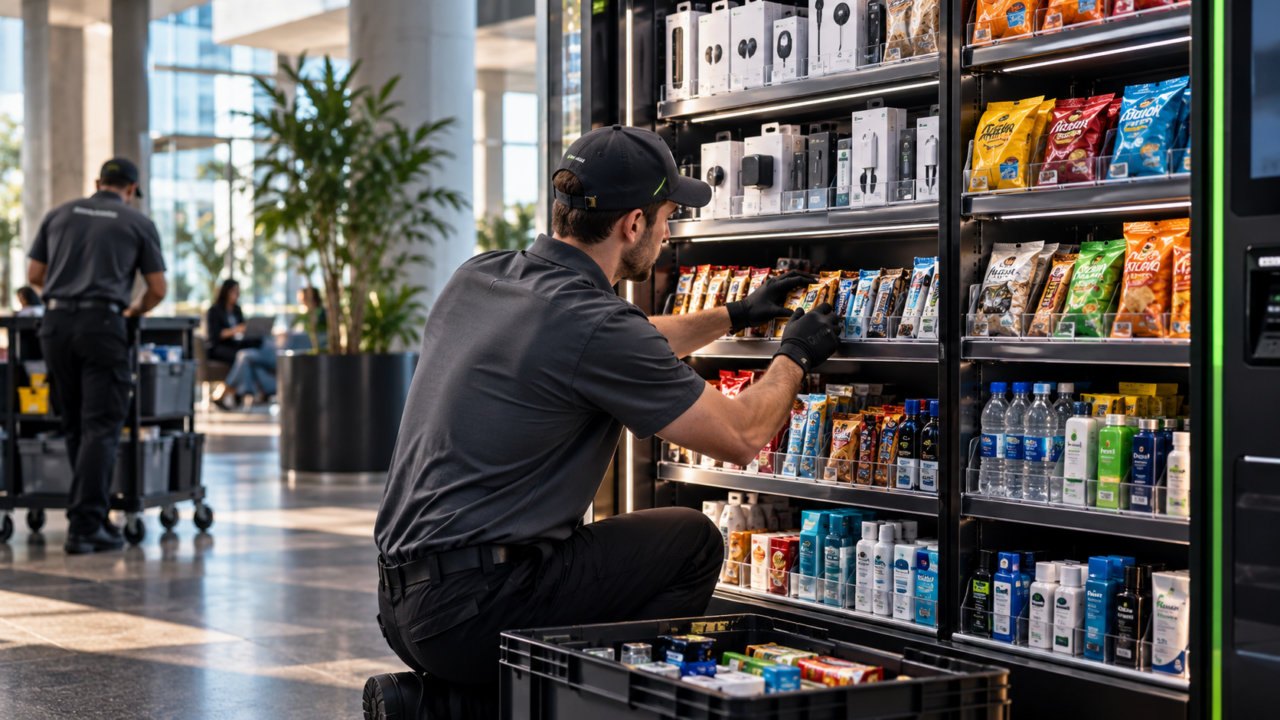
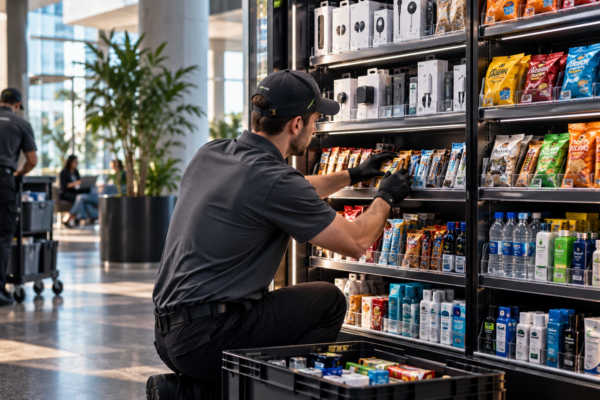
- Trained associates roam the self-checkout area proactively offering help, building rapport, catching shrinkage gently
The trained-associate piece matters more than retailers often appreciate. Specialist retail associates who understand the brand and the technology turn self-checkout from a labor-cost reduction tactic into a brand experience differentiator.
Self-Checkout for Considered-Purchase Categories
Self-checkout works for grocery and small-basket retail. It fails for considered purchases — wireless, consumer electronics, appliances, luxury — because:
- Customers need consultation, not just transaction
- Adjacent product attach happens through associate recommendation
- Trust signals (warranty options, financing terms, return policies) require trained communication
- Higher AOV (average order value) makes the labor savings less compelling vs. the conversion lift from staffed sales
For these categories, the right model isn’t self-checkout — it’s brand ambassador staffing backed by retail technology that makes associates more effective.
How Top Retailers Make Self-Checkout Win
1. They Measure What Customers Actually Experience
Most retailers measure self-checkout efficiency (transactions per hour, error rate). Few measure customer experience (NPS at the kiosk, time-from-arrival-to-departure, abandonment rate). Programs running structured mystery shopping on self-checkout consistently catch UX problems before they show up in customer satisfaction declines.
2. They Staff the Self-Service Area Generously
Counterintuitively, the retailers winning at self-checkout staff the self-service area more — not less. Trained associates roving the area, offering proactive help, catching errors before they happen, and building customer relationships in moments where staffed checkout never would.
3. They Integrate Loyalty + Data Capture
Self-checkout is a first-party data capture opportunity. Top programs prompt loyalty enrollment, capture email addresses, integrate purchase history into the customer’s digital profile. Programs without this are missing 40-60% of the lifetime value the kiosk could generate.
4. They Use Technology That Reduces False-Positive Friction
Modern self-checkout systems use computer vision to verify items, weight sensors with tolerances, and AI-driven loss prevention that flags genuine shrinkage without harassing honest customers. Investing in 2024+ generation hardware pays back through reduced friction.
5. They Communicate Hybrid Choice Clearly
Customers who can self-select between staffed and self-checkout based on their basket size and needs report higher satisfaction than customers funneled into self-checkout by default. Clear signage matters.
The Operational Cost-Benefit of Self-Checkout
Standard cost-benefit analysis:
- Labor savings: 25-40% reduction in checkout-line labor hours typical
- Shrinkage: 1-3% increase typical without strong loss prevention; can be neutralized with modern computer vision systems
- Throughput: 30-50% increase in transactions per hour for simple-basket categories
- NPS impact: +5 to +15 points if program is well-designed; -10 to -20 points if poorly designed
- Customer retention: 12-month repeat visit rate improves 8-15% with strong programs; declines 5-12% with weak ones
The labor savings alone often justify investment, but the customer-experience downside is severe enough that under-invested programs destroy more value than they save.
Self-Checkout in Considered-Purchase Categories: Better Alternatives
For wireless, consumer electronics, appliances, and beauty retail, self-checkout is rarely the right answer. Better alternatives:
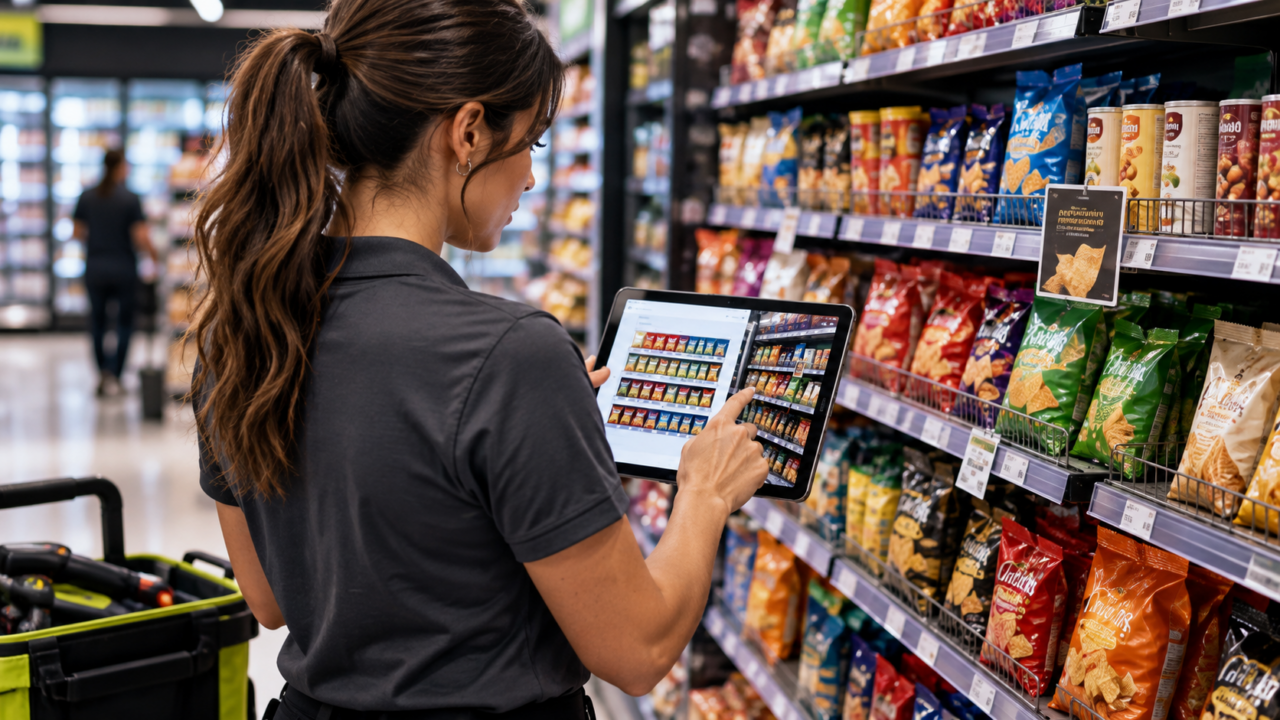
- Mobile checkout via associate’s tablet: trained associate completes the entire transaction at the customer’s location in the store, including consultation, product fit, financing, payment
- Buy-online-pickup-in-store (BOPIS): customer transacts online, picks up at dedicated counter — no checkout line at all
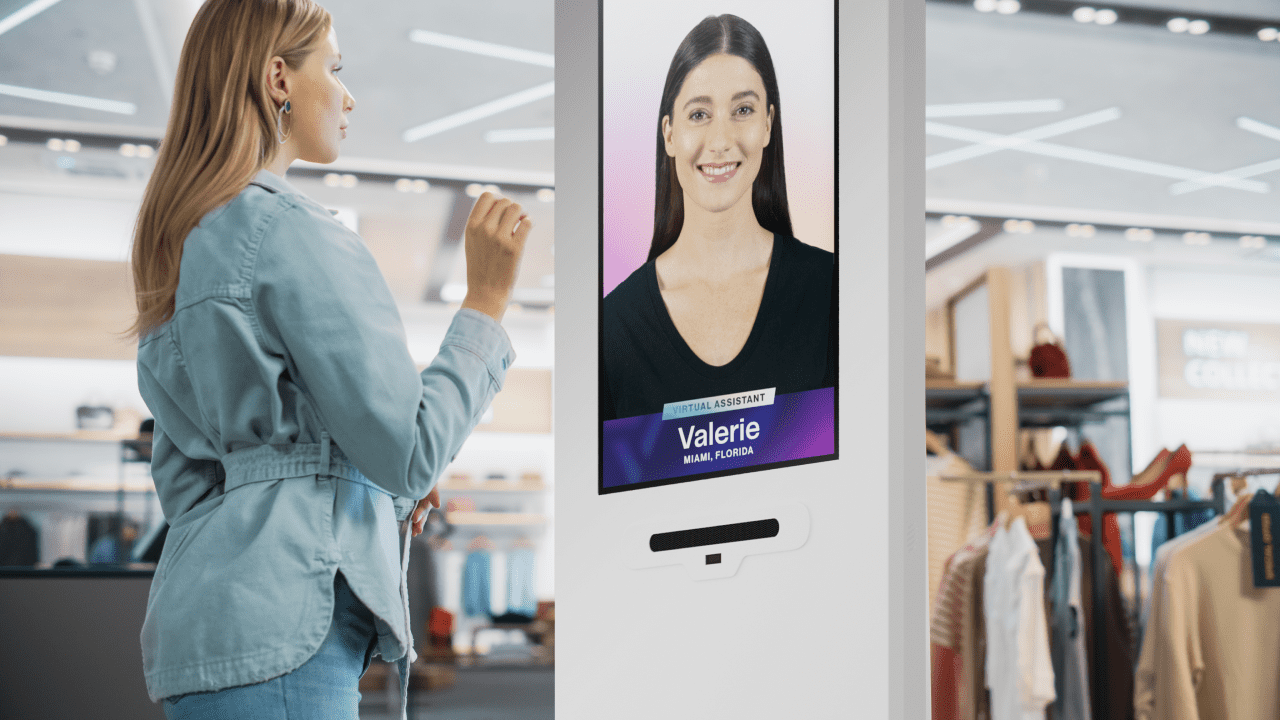
- Trained associate-assisted self-checkout: customer scans, associate verifies, transaction completes — combines speed of self-service with knowledge of trained sales
The common pattern: technology that augments trained retail associates beats technology that tries to replace them, especially in considered-purchase categories.
Frequently Asked Questions
Does self-checkout actually save money?
Yes, when implemented well. Typical labor savings: 25-40% reduction in checkout-line hours. But these savings can be eliminated by increased shrinkage (1-3% baseline if not addressed), customer attrition from poor UX (5-12% retention decline if program is weak), and need for additional roving associates. Strong programs net positive ROI; weak programs net negative.
Why do customers hate self-checkout sometimes?
Four reasons: insufficient help when something goes wrong, aggressive shrinkage protection that triggers on legitimate items, slow/buggy software, and feeling like the retailer is offloading work onto them without compensation. Strong programs address all four.
What categories work for self-checkout vs. don’t?
Self-checkout works for: grocery, convenience, small-basket retail, fast-food, transactions where the customer doesn’t need consultation. Self-checkout fails for: wireless retail, consumer electronics, appliances, beauty, luxury — any category where consultation drives conversion.
How do retailers prevent shrinkage at self-checkout?
Modern programs use computer vision to verify items, weight sensors with appropriate tolerances, AI-driven anomaly detection, and trained roving associates who maintain visibility. The combination keeps shrinkage near baseline without creating customer friction.
Should I replace human cashiers with self-checkout entirely?
No. The retailers winning at self-checkout run hybrid models — self-service for simple transactions, staffed for complex ones, plus customer service stations for problems. Pure self-service models consistently underperform on NPS and retention.
Can mystery shopping evaluate self-checkout experience?
Yes — and it’s particularly valuable here because traditional satisfaction surveys miss the moment-by-moment friction points that drive abandonment. Structured mystery shopping can score every aspect of the self-checkout experience and surface specific improvement targets.
What’s the right ratio of self-checkout to staffed checkout?
Depends on basket profile. Grocery: 50-70% self-checkout for typical traffic. Big-box: 30-50%. Specialty retail: under 25%. Wireless/electronics: typically 0% — staffed sales drives the conversion. Match the ratio to your basket complexity.
How does T-ROC support retailers with self-checkout strategy?
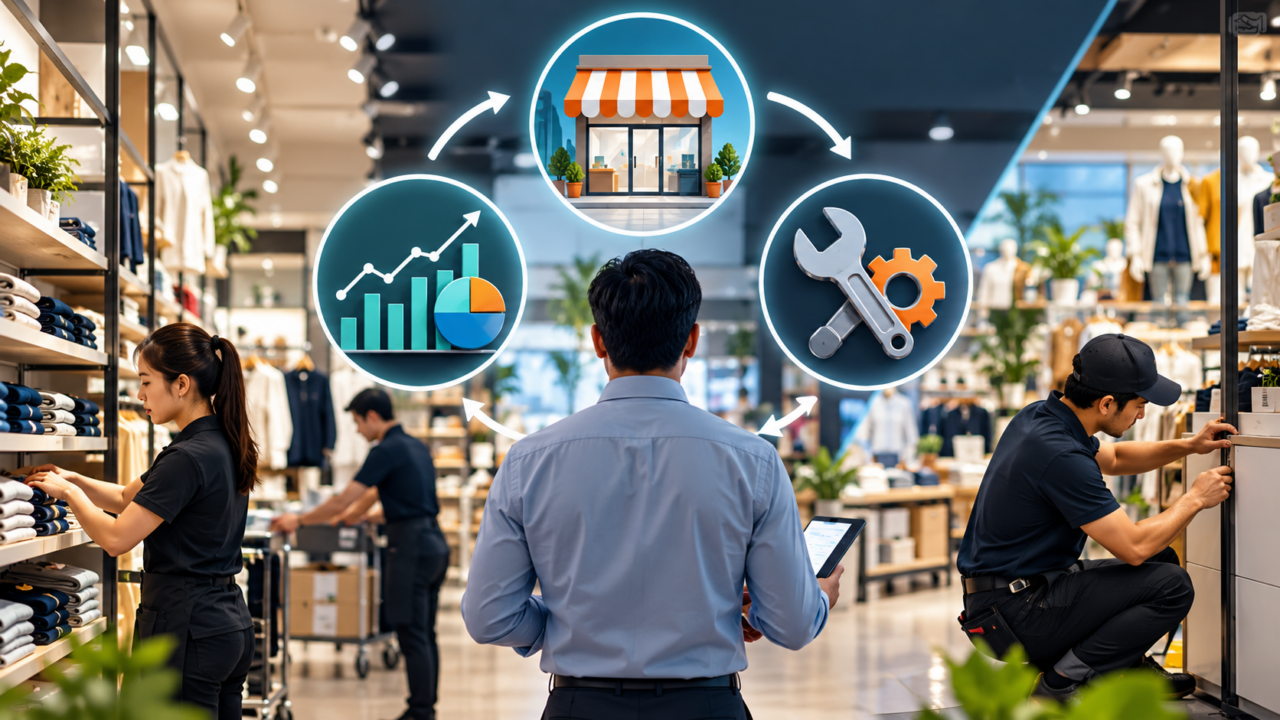
T-ROC delivers staffed retail solutions that integrate with self-checkout — trained brand ambassadors who augment self-service areas, mystery shopping evaluation of self-checkout UX, and retail operations consulting on the right hybrid model for each category. T-ROC also operates wireless retail stores under its own brand, giving direct operational experience with how self-checkout integrates with high-touch consultative sales.
Ready to discuss self-checkout strategy or related retail operations? Get in touch with the T-ROC team.
Read the complete guide: Retail Technology & Innovation →
T-ROC Editorial Team
The T-ROC editorial team brings 20+ years of retail industry expertise across brand ambassador programs, mystery shopping, retail merchandising, and managed technology solutions. Learn more about T-ROC.