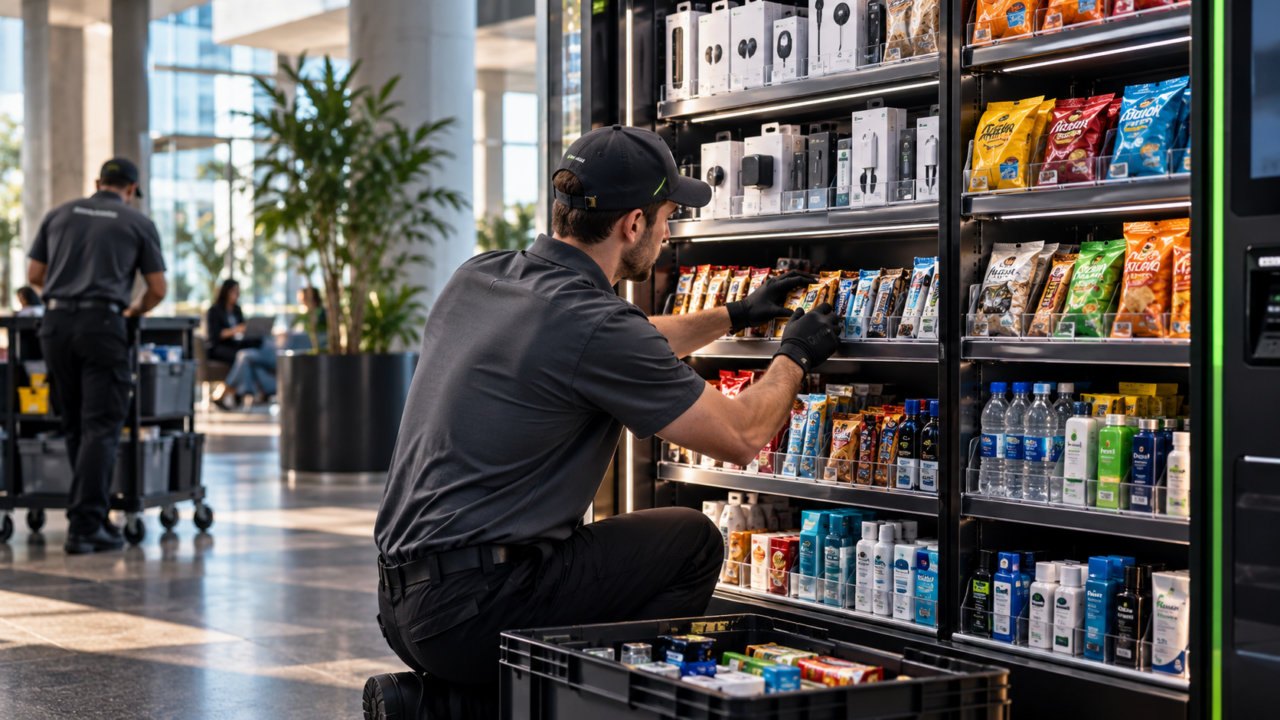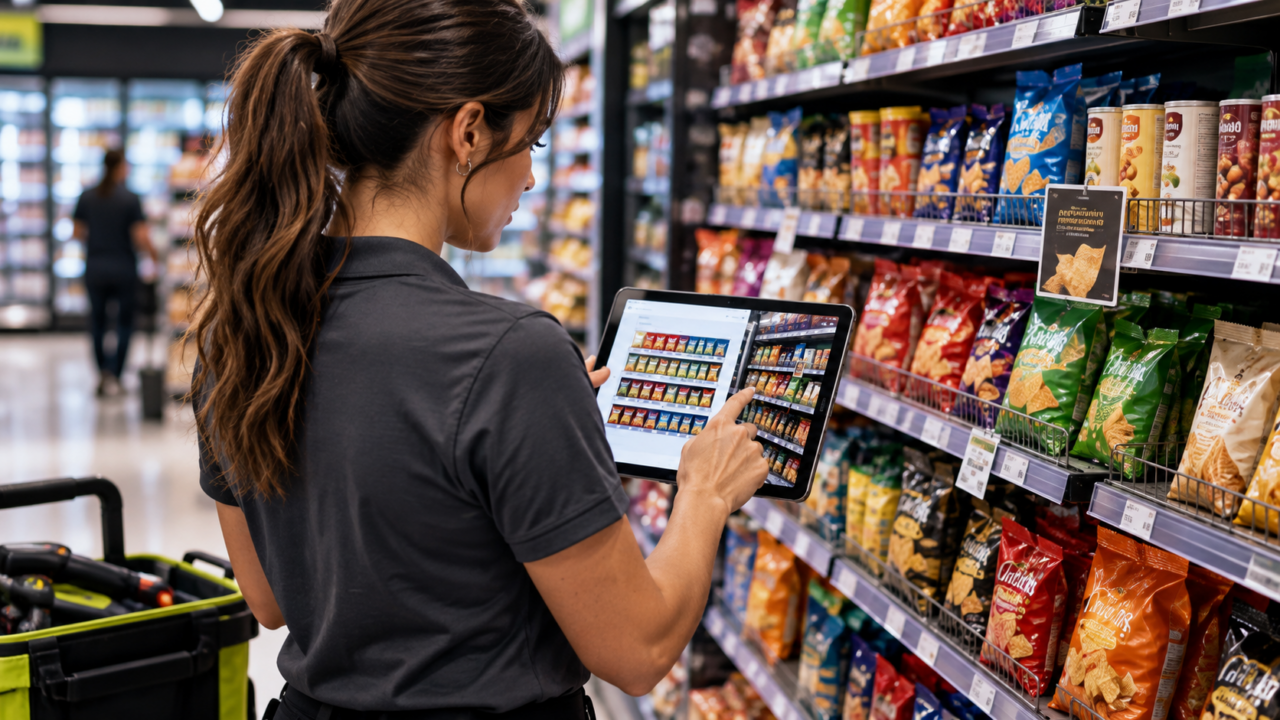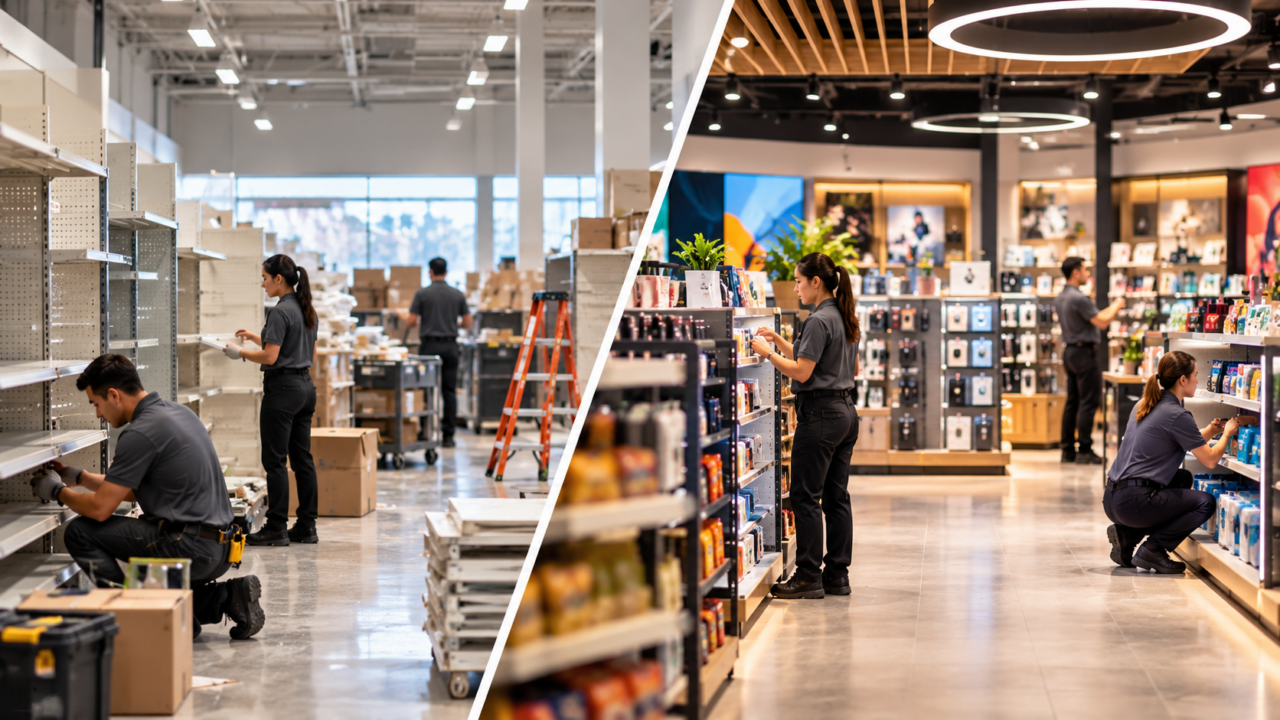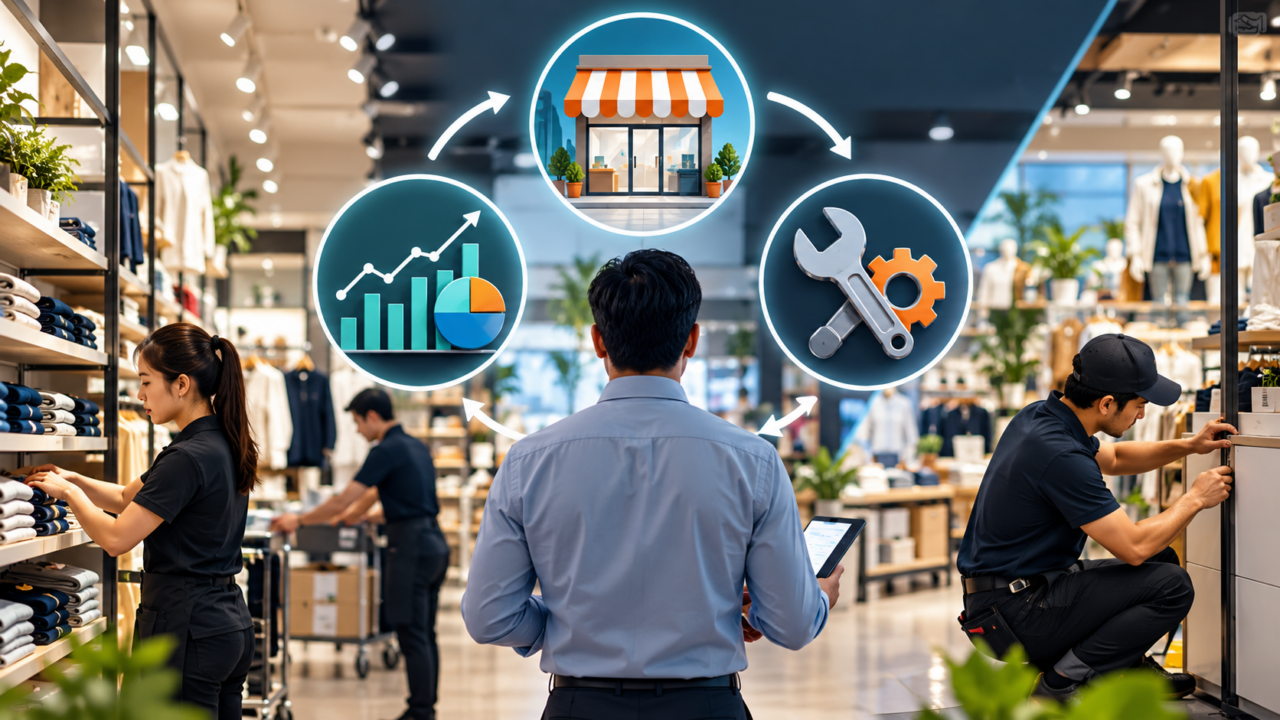

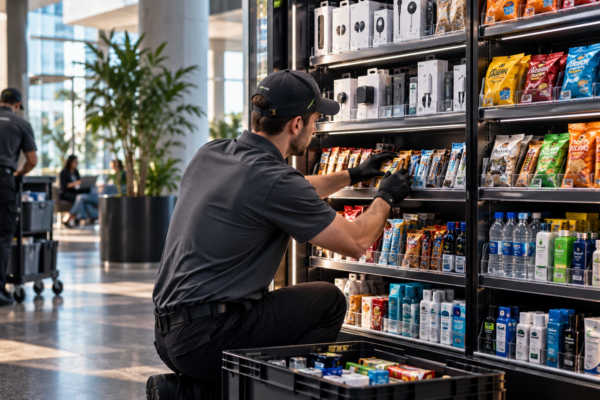

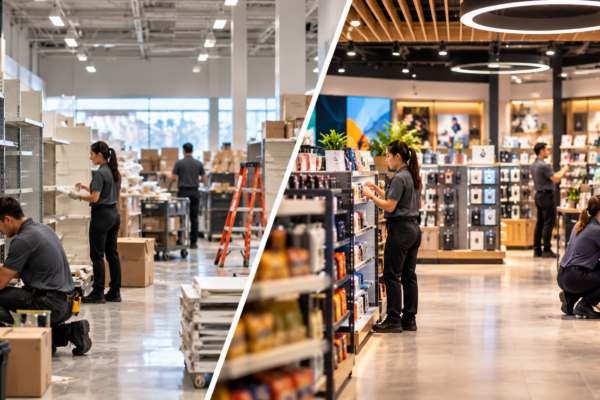


Experiential retail strategy is the deliberate use of physical retail spaces to create immersive brand experiences that drive purchase, loyalty, social sharing, and customer data capture — going beyond passive merchandise display into active customer engagement. For Fortune 100 brands, well-executed experiential retail consistently delivers 20-40% category sales lift during program windows and creates measurable brand-mention amplification beyond the activation itself.
This is the 2026 guide to experiential retail strategy — what it is, the major formats, when to use it, what it costs, how to measure ROI, and how T-ROC delivers experiential programs for Fortune 100 brands across consumer electronics, wireless, appliances, and connected home.
What Experiential Retail Strategy Actually Means
“Experiential retail” gets used loosely. In strategic operating terms, it includes:
- Active sensory engagement — letting shoppers touch, taste, try, or use the product
- Trained brand storytelling — staff (often brand ambassadors) who can explain the brand promise authentically
- Memorable moments — creating shareable, photo-worthy interactions that travel beyond the venue
- Clear conversion path — every experiential moment has a defined next-step (purchase, signup, loyalty enrollment)
- Data capture infrastructure — first-party data via QR codes, sweepstakes, loyalty enrollments, social tagging
Without all five elements, experiential retail becomes “nice display, no measurable outcome.” With all five, it becomes a measurable revenue and brand-building engine.
Major Experiential Retail Formats
1. Pop-Up Stores and Temporary Activations
Pop-up retail experiences create temporary branded environments inside existing retail venues, in standalone locations, or at events. Best for brand launches, repositioning campaigns, and lifestyle brands.
2. Flagship Experience Stores
Permanent or semi-permanent destinations designed primarily for brand experience rather than sales volume. Examples: Apple Stores, Samsung Experience, Nike House of Innovation. Best for high-consideration categories where brand affinity drives lifetime value.
3. In-Store Demonstration Programs
Live product demonstration services embedded inside major retailers — cooking demos in grocery, audio demos in electronics, beauty applications in beauty retailers. Trial-driven conversion programs.
4. Multi-City Roadshow Programs
Mobile experiential activations touring through key markets — events at trade shows, festivals, college campuses, mall venues. Best for product launches needing market education across geography.
5. Branded Event Sponsorships
Custom experiences within sponsored events — sports activations, music festivals, conferences. Best for brands targeting specific lifestyle audiences in concentrated venues.
6. Hybrid Physical-Digital Experiences
Experiential moments deliberately designed to drive social media content and digital engagement — Instagram-friendly photo zones, AR experiences, gamified interactions. Best for brands targeting younger consumers where social amplification compounds the in-person reach.
When Experiential Retail Strategy Wins
Three conditions where experiential retail consistently outperforms traditional advertising:
- High-consideration categories — consumer electronics, appliances, beauty, automotive, fashion. Trial dramatically reduces purchase risk.
- New product launches — when education drives adoption, hands-on experience compresses the learning curve.
- Brand repositioning — when shifting consumer perception, lived experience beats messaging.
Experiential retail does NOT win in pure-commodity categories (basic groceries, convenience items) where consumers don’t need education and trial doesn’t lift conversion meaningfully.
Building an Experiential Retail Strategy: The 5-Phase Framework
Phase 1: Define the Brand-Experience Goal
Every experiential program needs ONE primary outcome: drive trial-to-purchase, capture first-party data, generate social content, repositioning awareness, or category education. Programs trying to do all five fail at all five.
Phase 2: Choose the Format-to-Goal Match
Pop-up = launch awareness + sampling. Demos = trial-to-purchase. Flagship = brand affinity. Roadshow = market education. Match format to goal explicitly.
Phase 3: Design the Customer Journey
Map the moment-by-moment flow: how does a shopper enter, engage, decide, and exit? Where does each transition happen? What’s the ONE action you want at each stage?
Phase 4: Build the Operating System
Trained brand ambassadors, real-time inventory, lead capture infrastructure, retailer coordination, measurement framework. Without operational rigor, design intent doesn’t survive contact with reality.
Phase 5: Measure What Matters
Engagement count is a vanity metric. Real outcomes: trial-to-purchase conversion, average basket size, 30-day return visit rate, first-party data captured per visit, cost per incremental sale.
What Experiential Retail Programs Cost
| Format | Typical Cost Range |
|---|---|
| Single pop-up activation (1-week) | $50K-500K+ |
| Multi-city roadshow (10-30 cities) | $200K-$2M+ |
| In-store demo program (national, quarterly) | $500K-$2M annually |
| Flagship experience store (build + ongoing ops) | $2M-$20M+ depending on size |
| Brand event sponsorship + custom activation | $100K-$5M per event |
ROI benchmark: well-executed experiential programs return 3-6x program cost within 12 months when measured against baseline category sales lift. Programs that only measure engagement count typically don’t reach 1x ROI.
Measuring Experiential Retail ROI
Required metrics:
- Engagement count (input metric — necessary but not sufficient)
- Trial-to-purchase conversion (the real outcome metric)
- Average basket size for engaged vs. non-engaged customers
- 30-day repeat visit rate for engaged customers
- First-party data captured (QR scans, loyalty enrollments, email opt-ins)
- Social media earned reach from program-generated content
- Cost per incremental sale (program cost / units sold above baseline)
- Brand lift measured via pre/post survey if budget supports it
Common Experiential Retail Strategy Pitfalls
- Spectacle without conversion path — beautiful activations that don’t drive purchase
- Untrained staff — generic event workers underperform category-trained ambassadors by 2-3x
- One-off activations vs. sustained programs — single events generate buzz, sustained programs build category share
- Poor retailer coordination — activations that retailer staff didn’t know about underperform reliably
- No data capture infrastructure — missing the first-party data opportunity wastes the in-person moment
- Measuring inputs not outcomes — counting engagements while ignoring conversion
How T-ROC Delivers Experiential Retail Strategy
T-ROC delivers experiential retail as part of an integrated field marketing services stack, combining:
- Specialist brand ambassadors trained in category-specific selling and brand storytelling
- Pop-up infrastructure design and execution (build, staff, operate, measure, breakdown)
- Multi-channel data capture (QR codes, sweepstakes, loyalty integration)
- Real-time measurement via the Retail360 platform
- Owned-store testing infrastructure — T-ROC operates wireless retail stores under its own brand and tests experiential concepts against T-ROC’s own P&L before deploying for clients
Frequently Asked Questions
What is experiential retail strategy?
Experiential retail strategy is the deliberate use of physical retail spaces to create immersive brand experiences that drive purchase, loyalty, social sharing, and customer data capture — going beyond passive merchandise display into active customer engagement.
What are the main formats of experiential retail?
Six major formats: pop-up stores and temporary activations, flagship experience stores, in-store demonstration programs, multi-city roadshow programs, branded event sponsorships, and hybrid physical-digital experiences. Format choice should match the primary brand-experience goal.
How much does an experiential retail program cost?
Costs vary by format. Single pop-ups: $50K-$500K. Multi-city roadshows: $200K-$2M. National demo programs: $500K-$2M annually. Flagship experience stores: $2M-$20M+ depending on scale. ROI benchmark: 3-6x program cost within 12 months when measured against baseline sales lift.
What categories benefit most from experiential retail?
High-consideration categories where trial dramatically reduces purchase risk: consumer electronics, appliances, beauty, automotive, fashion. New product launches in any category. Brand repositioning campaigns. Experiential does NOT lift commodity categories meaningfully.
How do you measure experiential retail ROI?
Real outcome metrics: trial-to-purchase conversion, average basket size, 30-day return visit rate, first-party data captured per visit, cost per incremental sale, brand lift (if budget supports). Engagement count alone is a vanity metric.
What is the biggest experiential retail strategy mistake?
Spectacle without conversion path. Beautiful activations that don’t include trained staff, clear next-step actions, or data capture infrastructure produce social media content but rarely measurable revenue lift. Strategy must connect experience to outcome.
Can small brands do experiential retail or only major brands?
Both. Small brands can run targeted pop-ups in 5-10 strategic markets for $50K-$200K and generate disproportionate brand awareness. The principles (trained staff, conversion path, data capture, measurement) apply at any budget level.
Does T-ROC build experiential retail programs?
Yes. T-ROC operates experiential retail as part of an integrated field marketing services stack — pop-ups, in-store demos, roadshows, brand event activations — for Fortune 100 brands across consumer electronics, wireless, appliances, and connected home categories. Includes ambassador staffing, infrastructure, data capture, and Retail360 measurement integration.
Ready to design an experiential retail strategy for your brand? Get in touch with the T-ROC team.