



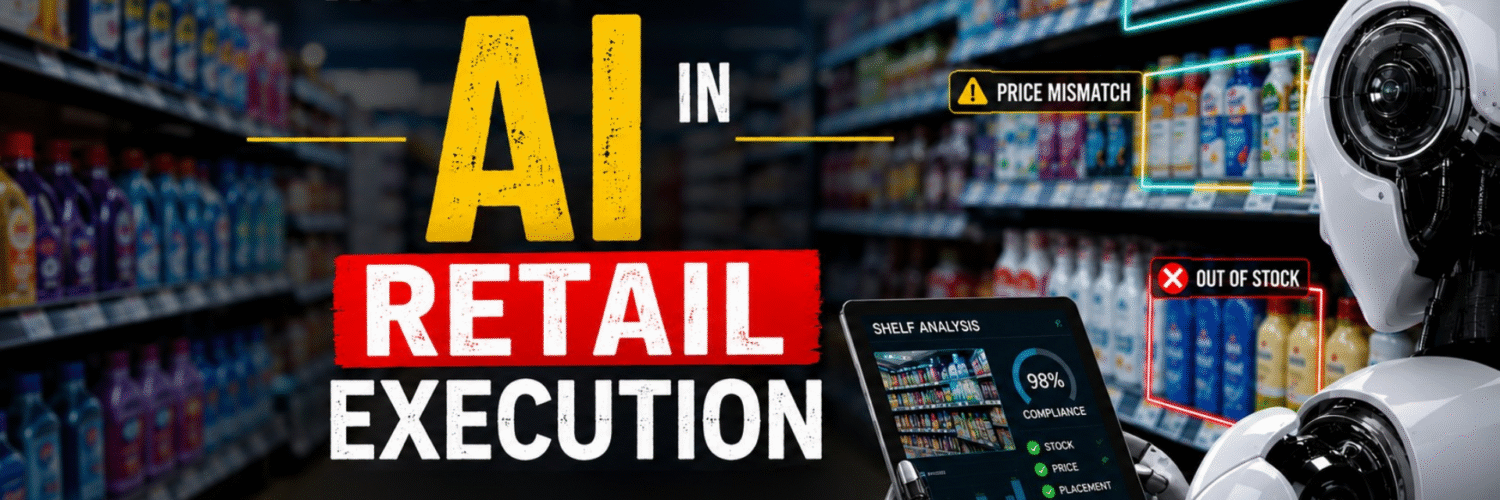
Retail has spent decades trying to answer one question: what is actually happening in the stores right now? Field reports, store photos and manual audits all took a run at it. They gave real visibility, and they were also slow, sampled, and only as reliable as the person filling in the form.
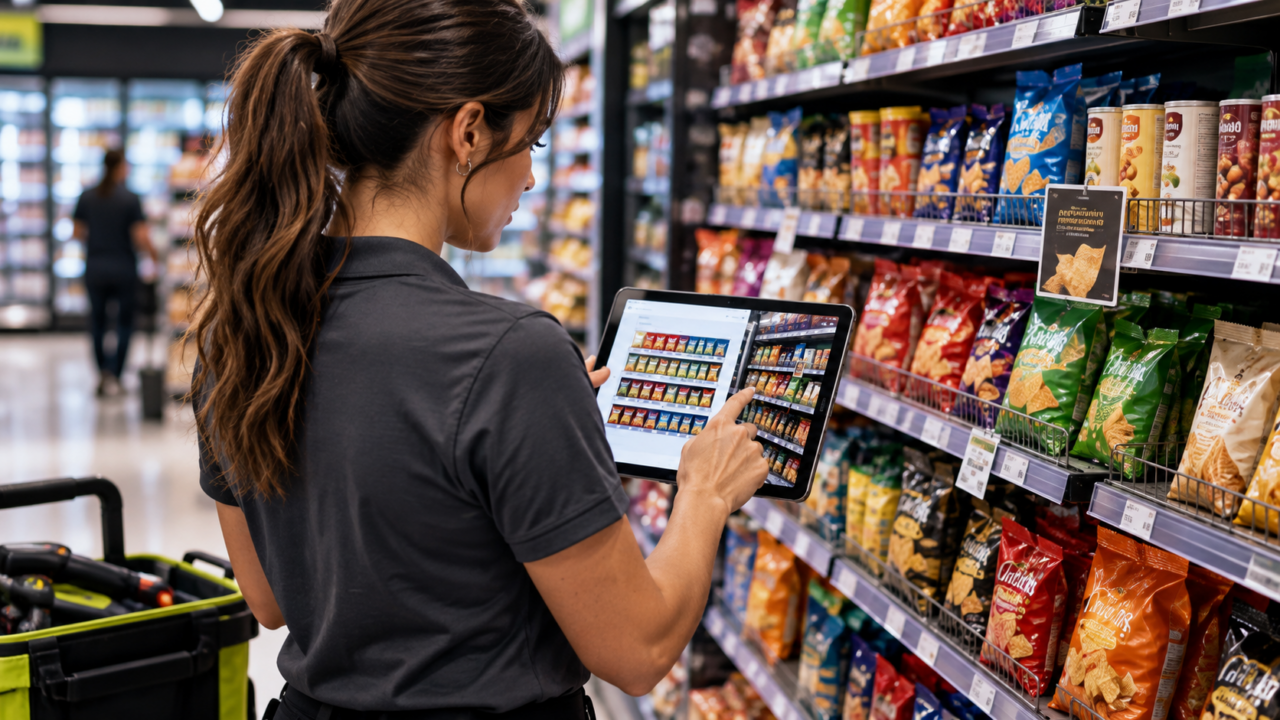
AI-powered image recognition changes the economics of that question. A photograph can now be checked against the planogram automatically, at a scale no audit programme could staff. The technology is no longer the hard part.
The hard part is implementation. Computer vision deployed into a business without consistent data standards, defined workflows and clear ownership does not produce fewer problems. It produces the same problems, faster, in a dashboard nobody has agreed to act on.
Visibility was never the bottleneck
It is tempting to treat detection as the goal. Find the out-of-stock, flag the pricing error, catch the display that was never built. But identifying a problem has never been where retail execution breaks down.
The breakdown is in what happens next. A finding that sits in a report for three weeks until the next scheduled visit carries three weeks of lost sales with it. The detection was correct and worth nothing.
This is the same gap we described in the retail execution gap: the distance between the plan as written and the shelf as it actually stands. AI narrows the measurement half of that gap dramatically. It does nothing to the correction half unless the operating model is built to close it.
What has to be true before you deploy
Three foundations decide whether a computer vision programme produces trustworthy output or expensive noise.
Image capture has to be consistent
A model trained on well-lit, square-on shelf photographs will behave unpredictably on images taken at an angle, in shadow, or from six feet back. Capture standards are not a technical detail to sort out later — they are the input the entire system depends on. If the field team has no defined way to take the photograph, the accuracy problem you will spend months debugging is not in the model.
Store processes have to be standardised
Computer vision compares what it sees against what it expects. If the expectation differs by banner, by region, or by whoever set the section last, the system will report variance that is not variance. Standardising the process comes before automating the check on it.
The operational data has to be reliable
Planogram data, product hierarchies and store attributes are the reference the model measures against. Where that reference is stale, the output is confidently wrong — which is worse than no output, because people act on it once and stop trusting it afterwards.
Trust is earned in the aisle, not in the demo
The common assumption is that better technology produces better execution. In practice, the determining factor is whether the field team believes the system enough to act on what it says.
That belief is built the slow way. Start with a narrow, clearly defined use case rather than every category at once. Set an accuracy benchmark before launch, not after. Then validate the AI’s findings against what a person actually sees in the store, repeatedly, and publish the result to the teams being asked to trust it.
Retail environments are genuinely difficult for vision systems — reflective packaging, seasonal resets, crowded aisles, changing lighting through the day. Expecting immediate perfection sets the programme up to be judged a failure at exactly the point where it should be improving. Expecting steady, measured improvement, with human judgment retained where it matters, sets it up to be adopted.
The useful framing is AI as decision support rather than decision replacement. The model narrows thousands of stores down to the twenty that need attention this week. Deciding what to do in those twenty stores is still a judgment call, made better by having the shortlist.
Closing the loop
The distinction between a programme that pays for itself and one that quietly gets cancelled is whether insights are connected to a correction with a name on it.
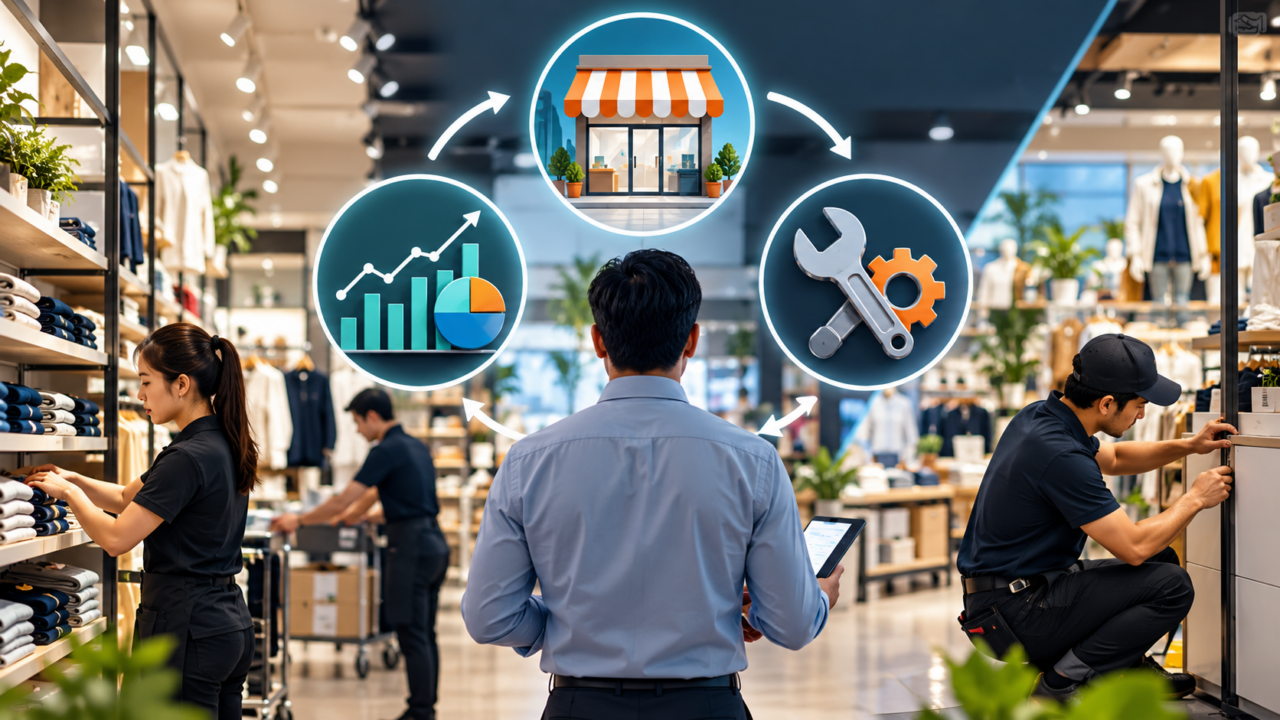
A closed loop has four parts, and skipping any one of them breaks it:
- Detection — the system identifies the condition
- Assignment — a specific person owns resolving it, with a deadline
- Correction — the fix happens in the store
- Verification — the fix is confirmed, ideally by the same measurement that found the problem
Most programmes implement the first step well and treat the other three as somebody else’s problem. That is how organisations end up with excellent visibility into problems they are not fixing any faster than before.
Verification is the part most often dropped, and it is the part that makes the number credible. Without it there is no evidence the correction happened, and the same condition reappears next quarter with nobody able to say whether it was ever resolved. This is the discipline behind retail audit programmes, and it does not become less necessary because a model is doing the looking.
What this changes about measurement
For a long time retail execution was measured by activity. Was the visit completed? Was the checklist submitted? Was the reset scheduled?
Those questions are answerable and largely beside the point. The questions worth asking are about outcomes: was the display built correctly, was the product on the shelf and reachable, did the store present the way the plan intended.
That shift is only possible once verification is cheap enough to do at scale, which is what image recognition delivers. It also raises the bar: when you can measure whether the thing actually happened, “the visit was completed” stops being an acceptable answer. The metric set that follows from this is covered in more depth in our note on retail KPIs a store visit can move and in measuring retail execution ROI.
Where to start
Begin with one category, in a representative sample of stores, with a measured baseline recorded before anything changes. You need to know the current state of compliance and availability to size the opportunity, and more practically because you cannot demonstrate improvement against a starting point nobody wrote down.
Fix the capture standard and the reference data before scaling the model. Define who owns a finding and what happens when one appears. Then expand.
The organisations getting the most out of these systems are not the ones with the most data. They are the ones with the clearest process for turning a finding into a correction, and the discipline to check that the correction held. Broader context in what retail execution means and in Retail360, our AI-powered execution platform.
This article draws on Brett Beveridge’s piece for the Forbes Technology Council, “From Visibility To Action: Implementing AI For Better Retail Execution”, published August 28, 2026. Brett is Founder and CEO of T-ROC Global.
Frequently Asked Questions
What does AI-powered image recognition do in retail execution?
It compares a photograph of the shelf against the approved planogram and product data, automatically identifying conditions such as out-of-stocks, pricing discrepancies, missing displays and share-of-shelf changes. The value is scale: verification that would take an audit team weeks can be applied across thousands of stores, which makes outcome-based measurement practical rather than aspirational.
What do we need in place before deploying computer vision in stores?
Three things. A consistent image capture standard, so the field team photographs the shelf the same way every time. Standardised store processes, so the system has a stable expectation to compare against. And reliable reference data — planograms, product hierarchies, store attributes — because the model measures against that reference, and a stale reference produces output that is confidently wrong.
Why do AI retail execution programmes fail?
Most often because detection is connected to a dashboard rather than to a correction. Identifying an out-of-stock creates no value unless a named person owns resolving it, with a deadline, and the fix is verified afterwards. Programmes also fail when accuracy is judged at launch instead of improved over time, since retail environments are genuinely difficult for vision systems and early results rarely reflect the eventual standard.
Does AI replace field teams in retail execution?
No. It changes what the field team spends its time on. The model narrows thousands of stores to the ones that need attention this week; deciding what to do in those stores, and doing it, remains human work. Treating AI as decision support rather than decision replacement is also what makes adoption possible, because teams act on recommendations they trust and ignore ones handed down without context.
How should we measure the return on a computer vision programme?
In two layers. Execution metrics confirm the loop is closing: detection volume, time from finding to correction, and verified fix rate. Commercial metrics test whether it mattered: sell-through in participating stores against a matched control group of similar stores, over a window long enough to survive weekly noise. Without the control group, seasonal movement and programme effect cannot be separated.