

What Is Retail Merchandising? Definition, Examples, and How It Works | T-ROC Global
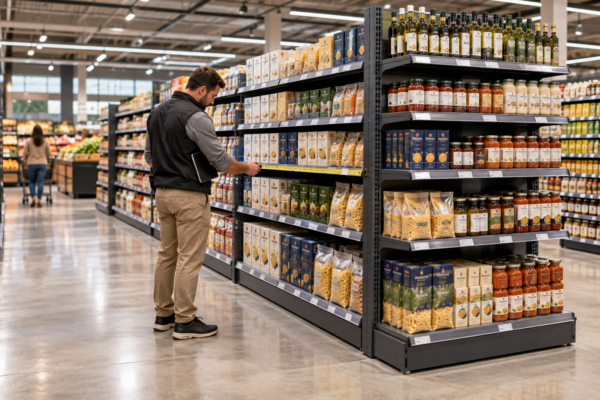
Retail merchandising is the discipline of presenting products in retail environments to maximize visibility, accessibility, and conversion. It covers the full set of operational decisions and execution activities that determine how a brand’s products appear on store shelves: planogram design, secondary placement, signage, fixture execution, in-stock management, and the field labor that translates merchandising plans into actual store-level execution.
Modern retail merchandising operates as an institutional discipline at the intersection of brand strategy, category management, retailer operations, and field execution. This page covers the working definition, the key components, common use cases, and how brands operate merchandising programs at scale.
The Components of Retail Merchandising
Retail merchandising includes several distinct operational components that work together to produce in-store execution:
Planogram Design and Compliance
A planogram is the documented diagram specifying exactly how a brand’s products should appear on the shelf — which SKUs, in which positions, in which facings, at which shelf heights. Planogram compliance is the percentage of stores executing the planogram as designed. Strong merchandising programs measure planogram compliance with photo verification.
Secondary Placement
Secondary placement is product displayed outside the standard category section — endcaps, sidekicks, power wings, floor stands, checkout displays. Secondary placement typically delivers materially higher velocity than primary shelf placement because of visibility advantages.
Signage and Communication
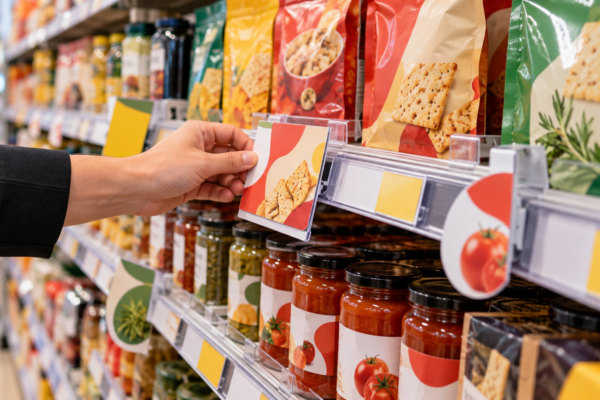
In-store signage includes shelf talkers, on-pack messaging, category signage, and promotional communication. Signage execution is a routine source of merchandising gaps because installation requires field labor and verification.
Fixture Execution
Fixtures are the physical infrastructure displaying products — dedicated brand fixtures, category fixtures, modular displays. Fixture execution includes installation, ongoing maintenance, and refresh cycles tied to merchandising program updates.
In-Stock Management
In-stock management ensures promoted SKUs are actually available when customers arrive at the shelf. Out-of-stock rates on promoted SKUs are a common merchandising gap that destroys substantial program ROI.
Field Execution Labor
Field merchandising labor is the field labor that translates merchandising plans into store-level execution — visiting stores, verifying compliance, correcting issues, installing signage, executing resets. Modern field execution operates with photo verification, GPS check-in, and real-time reporting.
Common Retail Merchandising Use Cases
Brands operate retail merchandising programs for several distinct use cases:
- Ongoing planogram compliance — sustained programs ensuring brand SKUs are consistently in their planogram positions
- Secondary placement programs — endcap, power wing, and floor display execution at promotional intensity stores
- New product launch execution — concentrated execution behind product launches to maximize launch-window performance
- Seasonal program execution — holiday programs, seasonal pivots, summer/winter category execution
- Category reset and remodel — full category resets when retailers refresh planograms or fixtures
- Compliance audits and verification — third-party verification of merchandising execution for senior management visibility
How Merchandising Programs Are Operated
Brands typically operate merchandising programs through one of three models:
1. In-house field organizations — the brand operates its own merchandising field organization. Common for brands with very deep retail commitment and consistent multi-state coverage requirements.
2. Broker merchandising — CPG brokers bundle merchandising services within broader brand representation contracts. Common in mainstream CPG categories. See our retail merchandising vs broker merchandising comparison for the trade-offs.
3. Specialized retail merchandising providers — independent merchandising services companies execute the field layer with explicit KPI accountability. Common for brands wanting transparent unit economics and explicit measurement.
What Distinguishes Good Retail Merchandising
Strong retail merchandising programs share five characteristics:
- Photo-verified compliance scoring at every store visit, with timestamps and GPS verification
- Same-visit correction authority — field reps trained and equipped to fix compliance issues on the visit, not just identify them
- Real-time reporting through field management software that lets clients see compliance data within hours, not weeks
- Category-specialized talent matched to the specific category’s operational realities
- Documented measurement methodology that lets the brand attribute program ROI rigorously rather than relying on aggregate sales comparison
How Retail Merchandising Connects to Other Retail Services
Retail merchandising operates most effectively as part of an integrated retail services portfolio rather than in isolation. Common integrations:
- Brand ambassador programs — merchandising compliance plus customer-facing brand representation
- Mystery shopping — independent verification of execution from the customer perspective
- Store resets — coordinated category reset execution as part of ongoing merchandising
- Retail technology — unified operational dashboards spanning merchandising, ambassador, and audit data
How Much Does Retail Merchandising Cost?
Retail merchandising typically costs $35-85 per store visit at institutional quality, with full programs ranging from $50K for regional pilots to $5M+ for national enterprise programs. See our retail merchandising services cost guide for the full breakdown.
T-ROC Global Retail Merchandising
T-ROC Global operates one of the largest integrated retail merchandising services operations in North America, with category specialization across CPG, beauty, pharmacy, and other major retail categories. Standard programs include photo-verified compliance scoring, same-visit correction, real-time Retail360 dashboards, and KPI accountability.