


Retail Execution: The Operational Discipline That Determines Retail Performance | T-ROC Global
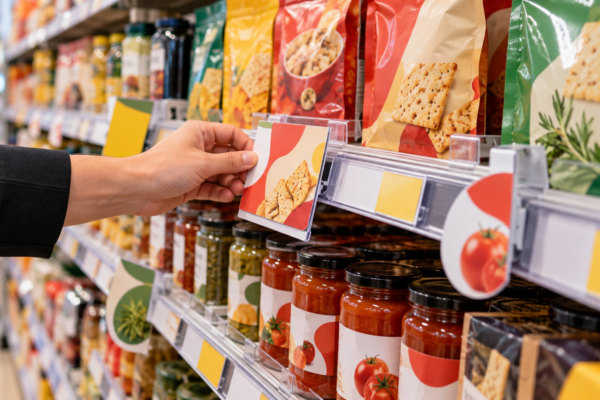
Retail execution is the operational discipline of turning brand strategy and category plans into consistent store-level performance. It’s the layer between corporate decisions (what to merchandise, what to stock, what to staff for, what to advertise) and what shoppers actually see and experience in stores. When retail execution is strong, brand investments compound. When it’s weak, even excellent strategy underperforms because the floor doesn’t match the plan.
This page covers what retail execution actually involves, the operational disciplines that distinguish leaders from laggards, and how T-ROC Global structures retail execution programs for Fortune 100 brands and major retailers.
What Retail Execution Includes
Retail execution spans seven operational dimensions, each measurable and improvable as a discipline:
1. Planogram Compliance
Whether each store is executing the brand’s planogram correctly — every SKU in the right facing, every shelf strip in place, every secondary placement in the right location. Most CPG brands operate with 40-60 percent baseline compliance; well-executed programs improve this to 85-95 percent. See retail merchandising services.
2. In-Stock Position (OSA)
On-shelf availability — the percentage of time a product is actually available for purchase at the shelf. Every out-of-stock costs a sale. Strong retail execution programs identify and correct out-of-stocks rapidly.
3. Promotional Execution
Whether promotional pricing, signage, and trade-funded programs actually execute correctly at the store level. Promotional execution drift is one of the largest unmeasured categories of brand-retailer waste.
4. New Item Cut-Ins
When a brand launches a new SKU or revises an existing one, whether the change actually executes across the full retail footprint within the planned window.
5. Seasonal Pivots
Coordinated execution of seasonal planogram changes — back-to-school, holiday, summer, spring. Whether stores transition within the planned window or drift over weeks.
6. Brand Standard Adherence
For retailers, whether each location is meeting the chain’s brand standards — uniforms, cleanliness, signage, music, atmosphere, customer service protocols.
7. Customer Experience Quality
The cumulative shopper experience across staffing, product availability, store cleanliness, service speed, and brand standard adherence. Measured through mystery shopping and direct observation.
Why Retail Execution Matters Economically
Three economic realities make retail execution one of the highest-leverage operational disciplines available:
1. Most brands underfund execution relative to strategy. Brands routinely spend 90%+ of merchandising budgets on the front-end (strategy, design, fixtures, distribution) and 10% on the back-end (verification, correction, ongoing measurement). The back-end is where the revenue actually lives.
2. Execution gaps are typically 30-50 percent. The difference between what corporate designed and what stores actually execute averages 30-50 percent across the typical national program. Closing this gap typically lifts category sales 15-40 percent in covered categories.
3. Execution improvements compound. Unlike one-time strategy changes, retail execution improvements deliver sustained operational lift. A 20-point compliance improvement maintained over years compounds substantially across category sales, customer satisfaction, and retailer relationships.
The Three Operational Disciplines That Distinguish Retail Execution Leaders
Across our work running execution programs for Fortune 100 brands and retailers, three operational disciplines consistently separate leaders from laggards:
Discipline 1: Photo-Verified Measurement
Leaders measure execution photographically, not via self-report. Field teams visit stores on a defined cadence, photograph the planogram, signage, and operational state, and score against documented standards. Retailer self-reports and surveys consistently understate the execution gap; photo verification reveals reality.
Discipline 2: Same-Visit Correction
Leaders invest in correction infrastructure, not just identification. When a field team finds non-compliance, they fix it on the same visit where possible. Brands without correction infrastructure generate compliance reports that gather dust; brands with it close the loop within hours of identification.
Discipline 3: Integrated Operational Reporting
Leaders integrate compliance data, sales data, staffing data, and customer experience data into unified dashboards. Brands operating with five disconnected reporting tools spend more time reconciling reports than acting on them. Owned operational platforms like Retail360 close this gap.
How T-ROC Global Structures Retail Execution Programs
T-ROC operates retail execution programs combining:
- National field workforce: 50,000+ pre-vetted retail workers across all 50 U.S. states
- Owned technology: T-ROC Connect for field execution, Retail360 for integrated operations analytics, VIBA for virtual expert coverage
- Photo-verified compliance scoring: Every store visit documented, time-stamped, GPS-verified, and scored against brand standards
- Same-visit correction protocols: Field reps trained and equipped to fix common compliance issues on the spot
- Integrated reporting: Unified dashboards combining compliance, sales, staffing, and customer experience data
Common Retail Execution Questions
How do you measure retail execution ROI?
The standard methodology uses matched test and control stores. Execute the program in test stores; leave control stores at baseline; measure category sales lift in test versus control. Well-designed programs typically show 4-8x return on program investment within 6-12 months.
What’s the typical compliance baseline before a retail execution program?
For most national CPG and retail programs, baseline compliance runs 40-60 percent (self-reported numbers are typically much higher; audited numbers are typically lower). Strong programs improve this to 85-95 percent within 6-12 months.
How frequently should compliance be audited?
Most national programs run monthly compliance audits across the full footprint, with weekly or bi-weekly cadence for top-velocity stores. Quarterly audits are too infrequent for active management.
Is retail execution a brand responsibility or a retailer responsibility?
Both. Retailers own the stores; brands own the planograms and merchandising programs. Strong execution requires both sides operating against shared measurement and accountability. T-ROC programs typically operate as joint accountability between the brand and the retailer.
Ready to Discuss Retail Execution?
Schedule a conversation — tell us about your specific execution challenges, category, and retail footprint.
Related
- Retail merchandising services
- Mystery shopping for execution measurement
- Retail360 operations platform
- Retail outsourcing overview
- Retail staffing services
Going deeper on retail execution?
The articles below extend the retail execution discipline into specific operational sub-topics: the execution gap, ROI measurement methodology, and the execution-vs-operations distinction.
Related reading: Store closures fell 44% — why your coverage plan still changed.