



What Is a Planogram? Definition, Examples, and How They Work | T-ROC Global
A planogram is the documented diagram specifying exactly how a brand’s products should appear on a retail shelf or fixture — which SKUs, in which positions, in which facings, at which shelf heights, and in what category-section structure. Planograms operate as the operational standard for merchandising execution: retailers and brands agree on the planogram, field labor executes against it, and compliance scoring measures whether the planogram is actually being executed at the store level.
Planograms sit at the intersection of category management, retail merchandising, and field execution. This page covers the working definition, the components of a planogram, how planogram compliance is measured, and how brands operate planogram-driven programs at scale.
Components of a Planogram
Standard planograms specify:
- SKU placement — which specific SKUs occupy which positions on the shelf
- Facings count — how many facings each SKU receives (driving shelf-share visibility)
- Shelf height — which shelves SKUs occupy (eye-level placement vs. lower shelves)
- Section structure — how the category section is organized (by brand, by subcategory, by price tier)
- Signage and shelf talkers — communication piece placement within the planogram
- Secondary placement coordination — how the primary shelf section coordinates with endcaps, sidekicks, or floor displays
- Fixture specifications — for resets, which fixtures the planogram requires
Planograms are typically distributed as visual diagrams (PDF or image) alongside SKU lists and structured spreadsheet data that field reps work from during store visits.
Why Planograms Matter
Planograms operationalize what would otherwise be ambiguous category execution. Without planograms, every store would interpret category section structure differently, producing inconsistent customer experience, unpredictable category performance, and operational chaos at scale.
With planograms, the brand and retailer agree on a documented standard; field labor has clear execution instructions; and compliance against the standard becomes measurable.
Planogram Compliance Measurement
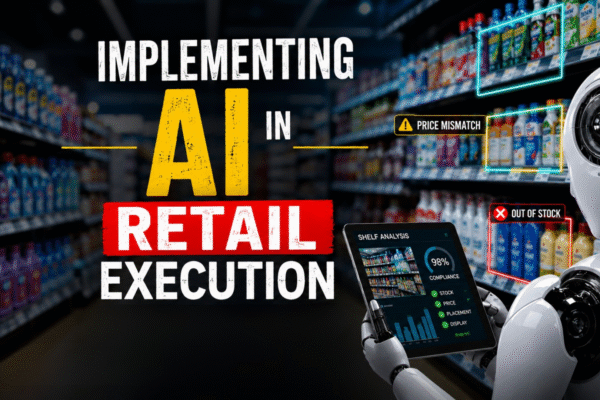
Planogram compliance is the percentage of stores executing the planogram as designed. Strong merchandising programs measure planogram compliance with photo verification at every store visit, comparing actual shelf execution against the planogram standard.
The typical compliance gap across categories runs 30-50 percent — meaning 30-50 percent of stores in a typical retail program are not executing the planogram correctly at any given measurement point. Closing this compliance gap is the operational mission of retail execution as a discipline.
Common Planogram Use Cases
- Ongoing category execution — sustained planogram compliance for current category section
- Category reset — full execution of a new planogram replacing the prior planogram
- Promotional execution — planogram modifications supporting promotional intensity periods
- New product launch — planogram updates incorporating newly-launched SKUs
- Seasonal pivot — planogram changes supporting seasonal category dynamics
- Channel-specific planogram variants — different planograms for different retail channels (grocery vs. club vs. drug)
Who Owns the Planogram
Planogram ownership varies by category and retailer relationship:
Retailer-owned planograms — the retailer designs the planogram for their stores and expects brands to support execution. Common in mass channels.
Brand-owned planograms — the brand designs the planogram and the retailer accepts it (typically with modifications). Common when the brand operates as category captain.
Jointly-developed planograms — brand and retailer collaborate on planogram design through category management partnership. The most common pattern in modern CPG retail.
Planograms and the Execution Layer
Planograms are only valuable if they actually execute. The execution layer — field merchandising labor, photo verification, compliance scoring, same-visit correction — is what translates the planogram diagram into actual shelf execution. See our retail merchandising overview for the full execution layer framework.
T-ROC Global Planogram Execution
T-ROC Global operates planogram execution as a core capability within retail merchandising services. Standard programs include photo-verified planogram compliance scoring at every store visit, same-visit correction protocols, real-time client dashboards through Retail360, and integration with adjacent store reset services for major category execution moments.