


Team Woodstock Provides Exceptional Customer Experience
Team Woodstock: A Blueprint for Exceptional Customer Experience in Retail
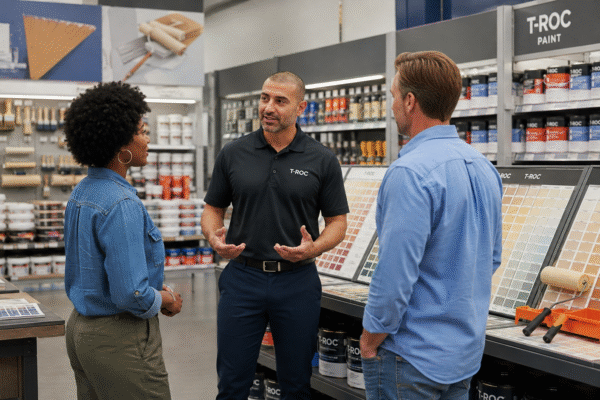
When T-ROC deployed Team Woodstock, the mission was clear: deliver an exceptional customer experience at every touchpoint. What happened next became one of our most compelling proof points for the power of trained, engaged field teams operating inside retail environments. Team Woodstock didn’t just meet expectations—they redefined what retailers and brand partners thought was possible on the sales floor.
The team was built around a simple but powerful idea. When you invest in the right people, equip them with deep product knowledge, and give them a culture worth rallying behind, the customer experience transforms. Shoppers stop feeling like transactions. They start feeling like they matter. And that shift—from transactional to relational—is exactly what separates retailers who thrive from those who struggle to retain customers in an increasingly competitive landscape.
Team Woodstock’s results weren’t accidental. They were the product of rigorous hiring, hands-on training, consistent coaching, and a relentless focus on the customer. Associates knew the products inside and out, understood how to read individual shoppers, and had the confidence to personalize every interaction. The outcome was higher conversion rates, stronger attach rates, and customer satisfaction scores that consistently outpaced benchmarks.
But Team Woodstock’s story is about more than one program. It’s a case study in a broader truth: exceptional customer experience in retail is engineered, not inherited. It requires deliberate strategy, measurable processes, and people who genuinely care. The rest of this guide unpacks what that looks like—and how any retailer or brand can build toward it.
What Defines Exceptional Customer Experience in Retail
Every retailer claims to prioritize the customer. Few actually deliver an experience worth talking about. So what separates a forgettable store visit from one that builds loyalty, drives word-of-mouth, and keeps shoppers coming back?
Exceptional customer experience in retail is defined by five core pillars:
- Personalization at the point of interaction. Shoppers want to feel recognized and understood—not processed through a script. Associates who ask the right questions and tailor recommendations based on actual needs create moments that feel genuinely helpful rather than pushy.
- Speed and ease of resolution. Whether a customer needs help finding a product, understanding a promotion, or resolving a return, friction kills loyalty. The best retail experiences eliminate unnecessary steps and empower frontline teams to solve problems on the spot.
- Consistency across every channel and location. A great experience at one store means nothing if the next visit—or the online interaction—feels completely different. CX excellence requires brand standards that hold across geographies, channels, and associates.
- Emotional connection. Research from Harvard Business Review shows that emotionally connected customers are more than twice as valuable as highly satisfied customers. They buy more, visit more often, and are far less price-sensitive. The in-store interaction is where that emotional bond is forged.
- Proactive engagement. The best retail experiences don’t wait for customers to ask for help. Associates who approach shoppers with genuine curiosity—not a hard sell—consistently drive higher satisfaction and conversion.
What ties all five pillars together is people. Technology enables efficiency. Merchandising creates appeal. But the human interaction on the sales floor is what determines whether a customer walks away feeling valued or ignored. That’s why programs like Team Woodstock invest so heavily in associate quality—because the people are the experience.
For a deeper framework on building customer-centric retail operations, our customer experience guide walks through the full strategy from assessment to execution.
How Trained Field Teams Create Memorable In-Store Moments
The gap between average and exceptional in-store experiences almost always comes down to one variable: how well the frontline team is prepared. Product knowledge alone isn’t enough. Associates need situational awareness, emotional intelligence, and the confidence to adapt their approach to each individual shopper.
Hiring for Attitude, Training for Skill
Team Woodstock’s success started before anyone stepped onto the sales floor. The hiring process prioritized personality traits that correlate with strong customer engagement—curiosity, empathy, resilience, and genuine enthusiasm for helping people. Technical product knowledge was layered on top through structured onboarding and ongoing coaching.
This philosophy reflects a broader truth about retail CX: you can teach product specs, but you can’t train someone to care. The retailers and brands that consistently deliver exceptional customer experience hire for attitude and invest heavily in skill development after the fact.
Scenario-Based Training That Mirrors Real Interactions
Classroom training has its place, but the most effective programs use scenario-based learning that mirrors actual customer interactions. Role-playing common objections, practicing upsell conversations that feel natural, and rehearsing how to handle frustrated customers—these exercises build muscle memory that shows up when it matters most.
Team Woodstock associates went through immersive training sessions that included live product demonstrations, competitive comparisons, and customer persona exercises. By the time they hit the floor, they weren’t just knowledgeable—they were confident. And that confidence translated directly into better customer interactions.
Coaching Cadence That Sustains Performance
Initial training fades without reinforcement. The most effective field teams operate within a coaching cadence that includes weekly check-ins, monthly skill refreshers, and real-time feedback loops from floor supervisors. This isn’t micromanagement—it’s the infrastructure that keeps performance consistent over time.
When associates know they’ll receive constructive feedback regularly, they stay engaged. When they see their performance data tied to specific behaviors, they improve faster. The result is a team that gets better every week rather than plateauing after the first month.
Our brand ambassador guide details how leading brands structure their field team training and coaching programs to sustain CX performance at scale.
The Power of Culture and Team Identity
Team Woodstock wasn’t just a staffing label—it was an identity. The team had shared goals, internal recognition programs, and a sense of belonging that translated into visible energy on the sales floor. Customers noticed. Associates who feel connected to a team and a mission bring a different energy than those who feel like interchangeable parts in a retail machine.
Building that culture requires intentional effort. Team names, branded gear, group incentives, competitive leaderboards, and celebration of wins all contribute to a sense of pride that customers can feel the moment they walk into a store.
The Measurable Impact of CX Excellence
Exceptional customer experience isn’t a feel-good initiative—it’s a financial strategy. The brands and retailers that invest in CX consistently outperform their peers on the metrics that matter most. Here’s where the impact shows up.
Net Promoter Score (NPS)
NPS measures the likelihood that a customer will recommend your brand to someone else. It’s one of the most widely used CX metrics because it correlates directly with organic growth. Bain & Company research shows that NPS leaders in retail grow revenue at more than twice the rate of their competitors.
Trained field teams like Team Woodstock drive NPS improvements by creating interactions worth talking about. When a customer walks out of a store feeling genuinely helped—not sold to—they tell their friends. That word-of-mouth is the most valuable marketing channel any brand can access, and it starts on the sales floor.
Repeat Purchase Rate
Acquiring a new customer costs five to seven times more than retaining an existing one. Repeat purchase rate is the clearest signal that your CX strategy is working. When customers return because of how they were treated—not just because of price—you’ve built something durable.
Programs that prioritize exceptional customer experience in retail consistently see repeat purchase rates climb by 15% to 30% within the first six months of deployment. The compounding effect is significant: each retained customer represents not just their next purchase, but their lifetime value to the brand.
Customer Lifetime Value (CLV)
CLV is the total revenue a customer generates over the entire duration of their relationship with your brand. It’s the metric that connects daily floor interactions to long-term financial performance. According to Temkin Group research, customers who have positive experiences spend 140% more than those who report negative ones.
The math is straightforward. A customer who visits four times per year and spends $75 per visit is worth $300 annually. Improve their experience and increase visit frequency to six times per year with a $90 average spend, and that same customer is now worth $540—an 80% increase in annual value driven entirely by CX improvements.
Conversion Rate and Average Transaction Value
Engaged associates don’t just make customers feel good—they drive commercial outcomes. When field teams are trained to understand customer needs and recommend relevant products, conversion rates increase because shoppers get help making confident purchase decisions. Attach rates on accessories, protection plans, and complementary products also climb because recommendations feel helpful rather than forced.
Team Woodstock consistently outperformed store averages on both metrics, demonstrating that CX investment isn’t a cost center—it’s a revenue driver.
Using Mystery Shopping to Validate CX Execution
Measuring CX at scale requires more than customer surveys. Mystery shopping programs provide objective, standardized assessments of in-store execution—evaluating everything from greeting quality to product knowledge to checkout experience. These insights reveal gaps between CX strategy and actual floor execution, giving brands the data they need to coach and improve.
For brands looking to benchmark their in-store experience against best practices, our mystery shopping guide explains how to design and deploy evaluation programs that produce actionable intelligence.
Building Your Own Exceptional CX Program
Team Woodstock’s results are replicable. The principles behind their success apply to any retailer or brand willing to invest in the fundamentals. Here’s a practical roadmap:
- Audit the current state. Use mystery shopping, customer surveys, and NPS data to establish a baseline. You can’t improve what you haven’t measured.
- Define the target experience. Map the ideal customer journey for your specific retail environment. Identify the three to five moments that matter most and design your training around them.
- Hire for fit, train for mastery. Prioritize empathy, communication skills, and genuine enthusiasm in your hiring criteria. Build a training program that combines product knowledge with scenario-based skill development.
- Establish a coaching cadence. Weekly one-on-ones, monthly skill sessions, and quarterly performance reviews keep associates engaged and improving.
- Measure and iterate. Track NPS, conversion rate, repeat purchase rate, and CLV. Use the data to refine your approach continuously.
The brands that win in retail aren’t the ones with the biggest budgets or the flashiest stores. They’re the ones that invest in their people—and those people deliver experiences that customers remember, talk about, and come back for.
Frequently Asked Questions
What is exceptional customer experience in retail?
Exceptional customer experience in retail is the result of every in-store interaction feeling personalized, efficient, and genuinely helpful. It goes beyond basic service to create emotional connections between customers and brands. This includes knowledgeable associates who listen before recommending, fast resolution of questions or issues, and consistent quality across every store visit. When done well, it drives measurable business outcomes including higher NPS scores, increased repeat purchases, and stronger customer lifetime value.
How do trained field teams improve the in-store customer experience?
Trained field teams improve the in-store experience by combining deep product knowledge with strong interpersonal skills. Through scenario-based training, ongoing coaching, and real-time performance feedback, these teams develop the ability to read individual shoppers, adapt their approach, and provide recommendations that feel genuinely helpful. The result is higher conversion rates, stronger customer satisfaction scores, and repeat visits driven by positive personal interactions rather than price alone.
What metrics should retailers track to measure customer experience quality?
The most important CX metrics for retailers include Net Promoter Score (NPS), which measures likelihood to recommend; repeat purchase rate, which indicates whether customers are returning because of their experience; customer lifetime value (CLV), which quantifies the long-term financial impact of CX investment; and conversion rate paired with average transaction value, which shows whether in-store interactions are driving commercial outcomes. Mystery shopping scores provide an objective assessment of execution quality across locations.
How long does it take to see results from a customer experience improvement program?
Most retailers begin seeing measurable improvements within 60 to 90 days of deploying a structured CX program. Early indicators include improved mystery shopping scores and higher customer satisfaction ratings. Financial metrics like repeat purchase rate and CLV typically show meaningful movement within three to six months. Full program maturity—where CX improvements compound into sustained competitive advantage—usually takes 12 to 18 months of consistent execution and refinement.
Can small retailers deliver the same level of customer experience as large national brands?
Absolutely. In many cases, smaller retailers have a natural advantage because their teams are closer to their communities and can personalize interactions more easily. The principles of exceptional customer experience—hiring for empathy, training for skill, coaching for consistency, and measuring for improvement—apply regardless of scale. What matters is the commitment to investing in people and processes, not the size of the budget. Even a single-location retailer can outperform a national chain on CX by executing the fundamentals with discipline and care.