





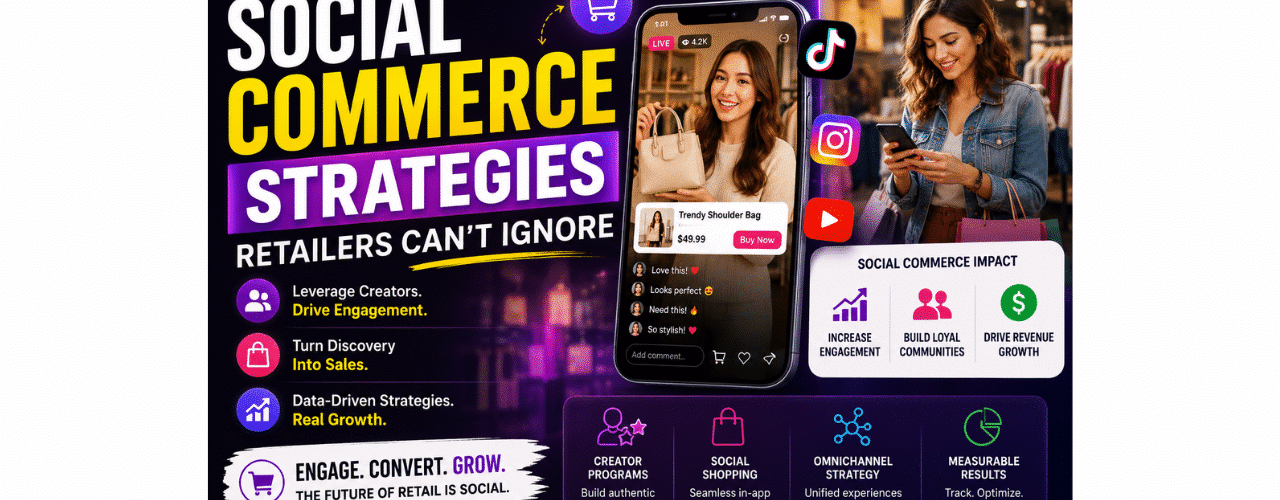
Retail marketing is evolving faster than ever. Consumers no longer discover products exclusively through websites, television ads, or in-store displays. Today, discovery happens through creators, short-form videos, live shopping experiences, and user-generated content shared across social platforms.
Major retailers are adapting quickly. A recent report highlighted how Target restructured its creator strategy to support both large influencers and smaller community creators through new initiatives focused on social engagement and affiliate-driven growth.
This shift reflects a broader retail trend: social commerce is becoming a core business strategy rather than a secondary marketing channel.
For retailers, the opportunity is enormous. Brands that build strong creator ecosystems and authentic social engagement can increase visibility, improve customer loyalty, and drive measurable revenue growth.
Why Social Commerce Matters for Retailers
Social commerce combines e-commerce with social media engagement. Instead of directing consumers through traditional advertising funnels, brands meet shoppers where they already spend time.
Platforms like TikTok, Instagram, and YouTube now influence purchasing decisions at every stage of the customer journey.
Retailers are paying attention because modern consumers expect:
- Personalized recommendations
- Authentic product demonstrations
- Fast purchasing experiences
- Community-driven engagement
- Creator-backed trust signals
According to the uploaded source, social commerce sales in the United States are projected to surpass $100 billion this year, with TikTok Shop capturing a significant portion of market growth.
That growth is changing how retailers allocate marketing budgets, structure partnerships, and engage with customers online.
The Rise of Retail Creator Programs
One of the biggest developments in retail marketing is the rise of structured creator programs.
Instead of relying only on celebrity influencers, retailers are increasingly investing in micro-creators and community advocates who generate consistent engagement with smaller audiences.
The article about Target’s creator overhaul highlights this transition clearly. The company launched two distinct creator initiatives:
- A premium ambassador program for major influencers
- A community-focused creator platform for smaller TikTok and Instagram creators
This strategy reflects an important industry insight: smaller creators often generate stronger trust and more authentic engagement than large celebrity influencers.
Retailers benefit because:
- Smaller creators are more affordable
- Content feels less promotional
- Audiences perceive recommendations as more genuine
- Engagement rates are often higher
For brands, this creates scalable opportunities to build long-term customer relationships.
Why User-Generated Content Drives Better Results
Consumers trust people more than polished advertising.
That reality explains why user-generated content (UGC) continues to outperform many traditional retail campaigns. Shoppers want to see real experiences, real product usage, and authentic recommendations before making purchasing decisions.
Target reportedly receives more than 50,000 daily mentions in user-generated content, reinforcing the power of organic brand advocacy.
Retailers that encourage customer participation often see benefits such as:
Higher Engagement Rates
UGC typically generates stronger interaction because audiences perceive it as more relatable and trustworthy.
Improved Conversion Rates
Consumers are more likely to purchase products recommended by creators they follow regularly.
Lower Content Production Costs
Brands can scale content creation without relying exclusively on expensive studio campaigns.
Increased Brand Loyalty
Community participation strengthens emotional connections between consumers and brands.
How Retailers Can Build Effective Social Commerce Strategies
Retail success in social commerce requires more than simply partnering with influencers. The most effective programs combine content, community, analytics, and omnichannel consistency.
Focus on Authenticity
Consumers quickly recognize overly scripted campaigns. Retailers should prioritize creators whose audiences naturally align with the brand.
Authenticity matters more than follower count.
Support Multiple Creator Tiers
A balanced strategy includes:
- Macro influencers for reach
- Mid-tier creators for engagement
- Micro-creators for community trust
This layered approach expands audience coverage while maintaining authenticity.
Integrate Social Commerce With Omnichannel Retail
Social media should support the broader customer experience.
Successful retailers connect:
- In-store experiences
- Mobile shopping
- Social engagement
- Loyalty programs
- E-commerce platforms
Customers expect consistency across every touchpoint.
Use Performance Data Strategically
Retailers should track:
- Engagement rates
- Click-through rates
- Conversion performance
- Revenue attribution
- Audience sentiment
Data helps brands optimize creator partnerships and identify high-performing content styles.
The Future of Retail Social Commerce
Social commerce is still evolving, but several trends are already shaping the future.
AI-Driven Personalization
Retailers are using AI tools to recommend products, personalize feeds, and optimize social campaigns.
Live Shopping Experiences
Live commerce continues growing as consumers seek interactive product demonstrations and real-time engagement.
Community-Based Retail Marketing
Brands are shifting away from one-way advertising toward community participation and creator collaboration.
Affiliate-Driven Ecosystems
Retailers increasingly reward creators through performance-based commissions and incentive programs.
These models create scalable partnerships while aligning incentives between brands and creators.
Challenges Retailers Must Navigate
Despite the opportunities, social commerce also introduces new challenges.
Platform Dependence
Retailers relying heavily on one platform risk losing visibility if algorithms or platform policies change.
Brand Safety Concerns
Creator partnerships require careful oversight to ensure messaging aligns with brand standards.
Attribution Complexity
Tracking revenue across multiple social touchpoints can be difficult without advanced analytics infrastructure.
Consumer Trust
Audiences are becoming more selective about sponsored content. Transparency is critical.
Retailers that prioritize authenticity and customer value will be better positioned for long-term success.
Why Social Commerce Is Becoming a Competitive Necessity
Social commerce is no longer optional for modern retailers.
Consumers increasingly expect brands to engage through creator content, community interaction, and seamless social shopping experiences. Retailers that ignore these shifts risk losing visibility, relevance, and customer loyalty.
The evolution of creator programs across major retail brands demonstrates how quickly the industry is adapting. As highlighted in the uploaded source, retailers are redesigning their marketing ecosystems around social engagement, creator partnerships, and community-driven commerce.
The brands that succeed will not simply advertise products. They will build communities, empower creators, and create experiences consumers actively want to share.
Frequently Asked Questions
What is social commerce and how does it differ from traditional e-commerce?
Social commerce is the convergence of e-commerce and social media engagement, enabling brands to interact with consumers where they naturally spend time. It shifts product discovery from traditional advertising to creator-led content, short-form videos, and live shopping, integrating social platforms into core retail operations to drive engagement and growth.
Why is social commerce important for retailers today?
Social commerce has moved from a secondary marketing tactic to a critical business channel, fundamentally reshaping retail by changing how consumers discover products. In the U.S., sales are projected to exceed $100 billion this year, which highlights the need for retailers to integrate social platforms into operations to capture engagement and growth opportunities.
What are structured retail creator programs and how does Target’s approach illustrate them?
Structured retail creator programs organize creators into tiers and roles to align influence with business goals. Target’s two-tier approach pairs a premium ambassador program for major influencers with a community-focused platform for micro-creators, acknowledging that smaller creators often foster higher trust and more authentic engagement than celebrity talent.
What role does user-generated content (UGC) play in social commerce?
User-generated content (UGC) refers to content created by customers and community members, which often outperforms traditional ads because consumers trust peer recommendations over polished brand messaging. UGC can deliver higher conversion rates, reduce production costs, and strengthen brand loyalty by showcasing authentic experiences and social proof.
What practical steps should retailers take to succeed with social commerce and how should they measure it?
Retailers should prioritize authenticity over follower counts and implement a layered creator strategy using macro-influencers for reach, mid-tier creators for engagement, and micro-creators for community trust. They should ensure omnichannel consistency across social discovery, mobile shopping, loyalty programs, and stores, and measure success with engagement rates, click-through rates, and revenue attribution while acknowledging attribution complexity.