



What is Shopper Marketing? (Definition, Examples & Strategy)
Winning shelf space and securing retailer buy-in is only half the battle. The real competitive advantage for CPG and retail brands belongs to those who understand exactly how, when, and why a shopper makes a purchase decision — and then architect every touchpoint around that moment. That discipline is shopper marketing, and it has become one of the highest-leverage capabilities a brand can build. This guide covers the shopper marketing definition, how it compares to trade and consumer marketing, the core program elements, real-world examples, and how leading brands use shopper insights to continuously sharpen their strategies.
Shopper Marketing Definition
Shopper marketing is a strategic discipline that applies a deep understanding of shopper behavior — how people research, evaluate, and ultimately buy products — to develop marketing activities that influence purchase decisions at or near the point of sale. Unlike brand advertising that builds long-term awareness, shopper marketing targets the shopper in the buying mindset, whether that moment occurs in a physical store aisle, on a retailer’s e-commerce product page, or in the digital path that immediately precedes a store visit.
The formal shopper marketing definition, as adopted by the industry body POPAI (now known as the Path to Purchase Institute), characterizes it as the use of insights-driven marketing and merchandising activities to satisfy the needs of targeted shoppers, enhance the shopping experience, and improve business results for retailers and brands alike. Three words in that definition carry significant weight: insights-driven. Shopper marketing programs that consistently outperform are rooted in data — loyalty card data, eye-tracking studies, conversion funnel analytics, and field observation — rather than assumptions about how shoppers behave.
It is also worth distinguishing the shopper from the consumer. A consumer is the person who uses the product. A shopper is the person who goes to the store (physical or digital) to buy it. These are sometimes the same individual, but often they are not. A parent buying cereal for a child, a procurement manager sourcing facility supplies for an office, or a caregiver purchasing medication on someone else’s behalf — each is a shopper buying for a consumer. Effective shopper marketing recognizes that distinction and creates messaging and experiences calibrated to the shopper’s decision-making context, not merely the product’s end-use attributes.
Shopper Marketing vs. Trade Marketing vs. Consumer Marketing
Brand managers frequently wrestle with how shopper marketing fits alongside trade marketing and traditional consumer marketing. The three disciplines are complementary but address fundamentally different audiences and objectives.
Consumer Marketing
Consumer marketing — television spots, digital display, social media, and content programs — focuses on building brand preference and demand among the people who will ultimately use the product. Its primary goal is pull: creating desire that draws shoppers toward a brand when they reach the purchase moment. The audience is defined by demographics, psychographics, and usage occasions. The timeline is long; brand equity is built over months and years.
Trade Marketing
Trade marketing addresses the retailer as the customer. It encompasses the programs brands run to earn distribution, secure prime shelf placement, negotiate promotional calendars, and fund co-op advertising. Trade funds — including slotting fees, volume rebates, and feature-and-display allowances — are the primary currency. Trade marketing creates the conditions under which shopper marketing can operate, but it does not itself speak to the shopper.
Shopper Marketing
Shopper marketing sits at the intersection of the two. It takes the brand equity built by consumer marketing and the retail presence secured by trade marketing, then converts both into actual transactions by influencing the shopper during the purchase journey. Its audience is defined by shopping mission (stock-up trip vs. fill-in trip), retail channel (grocery vs. club vs. drug vs. e-commerce), and purchase occasion. The timeline is tight — shopper marketing often operates at the campaign level, aligned to retailer promotional windows and seasonal sell-in periods.
| Dimension | Consumer Marketing | Trade Marketing | Shopper Marketing |
|---|---|---|---|
| Primary audience | End consumer | Retailer/buyer | Shopper (at point of purchase) |
| Core objective | Brand preference & pull demand | Distribution & shelf placement | Convert intent to purchase |
| Primary channels | TV, digital, social, content | Sales calls, trade shows, JBPs | In-store display, POS, retail media, sampling |
| Measurement focus | Awareness, brand equity | Distribution, trade ROI | Conversion rate, basket size, trial lift |
Key Elements of a Shopper Marketing Program
A well-constructed shopper marketing program integrates several capabilities that work together across the path to purchase.
1. Shopper Insights and Segmentation
Every effective program begins with a rigorous understanding of who is shopping the category, what missions bring them into a particular channel, what barriers prevent purchase, and what triggers accelerate it. Insights are gathered through loyalty data analysis, shopper surveys, in-store observation, eye-tracking, and digital behavior analytics. Segmentation maps distinct shopper archetypes — the habitual buyer, the deal-seeker, the brand explorer — so that messaging and promotions can be tailored accordingly.
2. Retailer Collaboration
Shopper marketing programs are executed within a retailer’s environment, which means retailer partnership is non-negotiable. Joint business planning (JBP) with key accounts aligns brand investments with retailer objectives — category growth, basket size, store traffic — and unlocks co-investment in displays, retailer media networks, and exclusive activations. Brands that present shopper marketing plans as mutual growth opportunities, backed by category data, earn preferred partner status and superior execution.
3. In-Store Activation
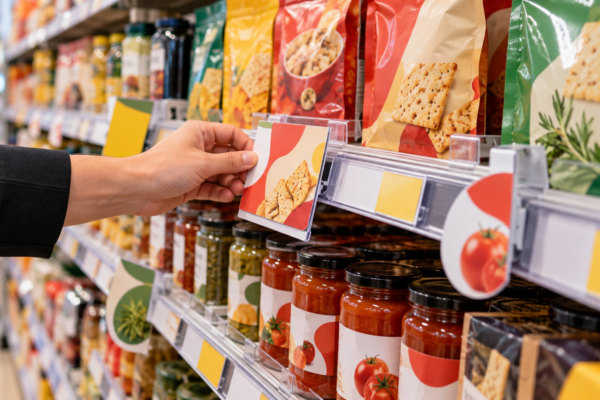
Point-of-sale materials, secondary displays, end-caps, floor graphics, shelf talkers, and sampling stations are the physical manifestations of shopper marketing. Execution quality is paramount: a perfectly designed display that is never set up, stocked incorrectly, or placed in a low-traffic aisle delivers no value. Field execution teams — such as the retail merchandising specialists deployed by T-ROC — are responsible for ensuring that in-store activations are set correctly, maintained throughout the promotional period, and audited for compliance.
4. Digital and Omnichannel Touchpoints
The path to purchase increasingly begins online, even for products bought in-store. Retailer media networks (such as Walmart Connect, Kroger Precision Marketing, and Amazon Ads), digital circulars, shoppable social content, and geo-targeted mobile ads all influence shoppers before they arrive at shelf. An integrated shopper marketing program synchronizes these digital touchpoints with in-store activation so that the shopper encounters a consistent, reinforcing message across the entire journey.
5. Measurement and Optimization
Shopper marketing ROI is measurable at the SKU level. Scan data from retailer point-of-sale systems, combined with loyalty card data and controlled test-and-control methodologies, allows brands to isolate the sales lift attributable to specific activations. This closed-loop measurement discipline separates high-performing shopper marketing organizations from those that fund programs on faith.
Shopper Marketing Examples (In-Store and Digital)
Abstract principles become clear through concrete applications. The following shopper marketing examples span physical and digital environments and represent categories from CPG to consumer electronics.
In-Store Examples
- Seasonal end-cap display with cross-category bundling. A beverage brand partners with a snack brand to co-own an end-cap display during the NFL season, increasing basket size for both brands and providing the retailer with an incremental destination that drives store traffic.
- Sampling activation at point of decision. A specialty food brand deploys trained brand ambassadors in-store to sample a new product line at the shelf where the item is stocked, directly connecting the trial moment to the purchase location. Conversion rates from sampling events consistently outperform traditional media for trial-driving objectives.
- Shelf-level education for high-consideration categories. A consumer electronics brand places QR-code-enabled shelf talkers that link to comparison videos, helping a shopper understand the difference between product tiers without requiring a sales associate. This reduces shopper anxiety and reduces return rates post-purchase.
Digital Shopper Marketing Examples
- Retailer media sponsored search. A personal care brand bids on category keywords within a major grocery retailer’s on-site search to ensure that their product appears at the top of results when a shopper searches for “moisturizer” or “SPF lotion” — at the exact moment of highest purchase intent.
- Geo-fenced mobile advertising. A CPG brand runs mobile display ads targeting shoppers who enter a specific retail chain’s parking lot, surfacing a digital coupon tied to a current in-store promotion. The ad bridges the digital path and the physical store, reducing friction between intent and transaction.
- Shoppable content via loyalty app integration. A brand partners with a retailer’s loyalty app to create recipe content that auto-populates a digital shopping list with all required ingredients, each linked directly to the product detail page for one-click add-to-cart.
Benefits of Shopper Marketing
For brand managers and category managers accountable to volume, margin, and market share targets, a well-executed shopper marketing program delivers measurable value across several dimensions.
- Higher conversion at the point of sale. Shopper marketing directly addresses the final decision gate, reducing the gap between shopper intent and completed purchase. Brands that invest in the point-of-sale environment consistently outperform category average conversion rates.
- Incremental trial among new buyers. Sampling, in-store demonstrations, and targeted promotions reach shoppers who have not previously purchased the brand, generating trial that can convert into loyal repeat buyers.
- Stronger retailer relationships. Presenting shopper marketing programs as joint category growth initiatives — grounded in shopper data specific to that retailer’s customer base — elevates the brand’s standing from a vendor to a strategic category partner, resulting in better placement and execution support.
- More efficient marketing spend. Because shopper marketing targets high-intent shoppers at the moment of decision, cost-per-conversion tends to be significantly lower than upper-funnel awareness media. Closed-loop measurement via scan data enables continuous budget reallocation toward the highest-performing activations.
- Basket size expansion. Cross-category and cross-SKU bundling strategies — executed at the point of sale — grow average transaction value for both the brand and the retailer, creating a compelling business case for deeper retailer collaboration.
How Shopper Insights Drive Marketing Strategy
The most sophisticated shopper marketing organizations treat insights not as a one-time research investment, but as a continuous operational capability that feeds every strategic and tactical decision. The journey from raw data to actionable strategy follows a consistent pattern.
Data collection begins with the richest available sources: retailer loyalty data linked to individual purchase histories, POS scan data segmented by store cluster or trade area, and primary shopper research conducted through in-store observation or intercept surveys. Digital behavior data — search queries, product page dwell time, add-to-cart abandonment rates — adds a crucial omnichannel layer that illuminates the pre-store journey.
Insight synthesis transforms data into understanding. Why do shoppers who buy Brand A in grocery choose Brand B in the club channel for the same occasion? What is the conversion rate difference between shoppers who engage with in-store sampling versus those who do not? Which demographic segment is the highest-value incremental opportunity, and which retailer channel over-indexes for that segment? These questions, answered rigorously, produce insights — not merely observations.
Strategic activation translates insights into specific program investments: which retailers to prioritize, which shopping missions to target, which messaging architecture to deploy in-store versus pre-store, and how to allocate budgets across activation types. Insights also inform product assortment recommendations presented to retail buyers during category review periods, making the shopper marketing team a genuine contributor to the brand’s commercial strategy — not merely its promotional execution.
For brands that lack internal shopper insights infrastructure, partnering with a field execution and insights provider allows them to capture in-store behavioral data at scale — store-level compliance rates, display placement accuracy, competitive shelf conditions — and integrate it with POS performance data to close the loop between execution and sales outcomes. Learn more in T-ROC’s Shopper Insights Guide.
Shopper Marketing FAQ
What is the difference between shopper marketing and consumer marketing?
Consumer marketing targets the end user of a product with the goal of building brand preference and demand over time. Shopper marketing targets the person actively engaged in the purchase journey — in a store, on a retailer website, or in the digital path leading to purchase — with the goal of converting that intent into a completed transaction. The same person may be both a consumer and a shopper, but shopper marketing specifically addresses the buying mindset, not the usage mindset.
How do brands measure the ROI of shopper marketing programs?
The most rigorous approach uses a test-and-control methodology: comparing sales performance in stores that received the shopper marketing activation against a matched control group of stores that did not. Retailer-provided loyalty and POS data enables this analysis at the SKU level, isolating incremental volume lift attributable to the program. Brands also track metrics such as trial rate, repeat purchase rate, average basket size, and display compliance scores to evaluate both in-market performance and in-store execution quality.
What role do brand ambassadors play in shopper marketing?
Brand ambassadors are a high-impact activation lever within the broader shopper marketing toolkit, particularly for trial generation, product education, and high-consideration purchase categories. A trained brand ambassador stationed at the point of sale can engage shoppers, demonstrate product features, overcome purchase objections, and guide shoppers to the right SKU — directly influencing conversion in a way that static point-of-sale materials cannot. Effective ambassador programs require rigorous selection, training on brand standards and product knowledge, and consistent field management to ensure performance. T-ROC’s brand ambassador program guide covers how to build and scale a high-performing ambassador force.
Ready to Build a Smarter Shopper Marketing Program?
T-ROC partners with CPG brands and retailers to design, execute, and measure shopper marketing programs at scale — from field merchandising and brand ambassador deployment to shopper insights and retail media strategy. Two resources to help you go deeper:
- Shopper Insights Guide — How to collect, analyze, and activate shopper data to improve conversion and grow category share.
- Retail Merchandising Guide — In-store execution strategies that ensure your shopper marketing investments translate into compliant, high-quality shelf presence.
Talk to a T-ROC strategist to discuss how a shopper marketing program can be scoped and deployed for your brand and retail channels.