



Price Optimization in Retail: An Overview
Pricing is the single lever with the greatest immediate impact on profitability. A one-percent improvement in average selling price can lift operating profit by six to ten percent for a typical retailer — outperforming equivalent gains in unit volume or cost reduction. Yet most retailers still set prices through a combination of cost-plus markup, competitor matching, and intuition rather than rigorous optimization.
Retail price optimization changes that equation. By systematically analyzing how demand shifts in response to price changes — across seasons, geographies, customer segments, and competitive environments — retailers can move from reactive pricing to proactive, profit-maximizing decisions made at scale.
The practice spans the entire price lifecycle: initial pricing when a product is first introduced, ongoing promotional pricing decisions, markdown management as products age through their lifecycle, and competitive response pricing when a rival changes their prices in the market.
Price Optimization vs. Dynamic Pricing: What Is the Difference?
These two terms are often used interchangeably, but they describe distinct — if related — concepts within a broader retail pricing strategy.
Dynamic pricing refers to the automated, real-time adjustment of prices in response to changing conditions such as competitor price moves, inventory levels, time of day, or demand spikes. It is the execution engine — the mechanism by which a price changes quickly and automatically. Dynamic pricing is common in e-commerce, airline ticketing, and ride-sharing apps.
Price optimization is the broader strategic process that determines what the right price should be. It involves modeling consumer demand curves, calculating price elasticity, simulating competitive scenarios, and setting guardrails that govern how much prices can move and when. Dynamic pricing is one of the tools that optimization strategies may deploy.
In practice: a price optimization platform recommends a target price range and update cadence for a product category; a dynamic pricing engine executes those recommendations automatically across channels in near real time.
How Retail Price Optimization Works
Modern price optimization systems combine large data inputs, statistical and machine-learning models, and business rules to produce actionable price recommendations. The process typically follows three stages.
Stage 1 — Data Inputs
Effective optimization requires a broad, clean data foundation. Key inputs include:
Historical Sales
Transaction data at the SKU, store, and time-period level reveals true demand patterns and seasonal rhythms.
Price Elasticity
Measures how sensitively a product’s demand responds to price changes. High-elasticity items require more conservative adjustments.
Competitor Prices
Web-scraped or third-party competitive price feeds enable real-time benchmarking against direct rivals and key accounts.
Cost & Margin Data
COGS, freight, and landed-cost data set the floor for any price recommendation and protect margin thresholds.
Inventory Levels
Excess inventory signals a need for markdown acceleration; low stock signals price stability or modest increases.
Macroeconomic Signals
Inflation indices, category deflation trends, and consumer confidence data inform medium-term pricing posture.
Stage 2 — Modeling and Algorithms
Optimization engines apply demand-forecasting models — often gradient-boosted trees, regression-based elasticity models, or neural networks — to the data inputs. The models estimate how a proposed price change would affect unit demand, revenue, and margin across a defined horizon. Business rules are layered on top to enforce brand positioning constraints (e.g., never price a flagship SKU below a national competitor), regulatory requirements (e.g., minimum advertised price agreements), and channel-consistency rules.
Stage 3 — Price Recommendations and Outputs
The optimization engine surfaces recommended price points, projected revenue and margin impact, and confidence intervals. Merchandising and pricing teams review and approve recommendations before they are pushed to point-of-sale systems, shelf-label printing queues, and e-commerce platforms. Continuous feedback loops update model accuracy as new sales data is ingested.
Benefits of Retail Price Optimization
-
Gross Margin Improvement — By identifying which products have low price sensitivity and can sustain a modest price increase without volume loss, retailers can expand margin without sacrificing customer loyalty. Industry studies consistently find two to five percentage-point gross margin gains in the first year of a full price-optimization rollout.
-
Revenue Growth — Optimization captures incremental revenue by correcting prices that are too low for the demand the product commands, while simultaneously protecting high-velocity volume at competitive price points.
-
Competitive Positioning — Real-time competitive price monitoring enables retailers to respond to rival price moves within hours rather than weeks, protecting market share on key value items while defending margin on less price-sensitive categories.
-
Markdown Efficiency — Data-driven markdown optimization times and depths discounts to clear seasonal or end-of-life inventory with less margin sacrifice, reducing the annual markdown dollar burden significantly.
-
Inventory Turn Improvement — Aligning pricing with demand and inventory levels reduces excess stock and out-of-stock risk simultaneously, improving overall supply chain performance.
Common Retail Pricing Strategies
Price optimization does not replace a retailer’s overarching pricing strategy — it amplifies it. Understanding the strategic context is essential for configuring optimization systems correctly.
| Strategy | Description | Best Suited For |
|---|---|---|
| EDLP (Every Day Low Price) |
Consistently low prices without frequent promotions. Builds customer trust and simplifies operations. | Mass-market grocery, club stores, value-oriented big-box retailers |
| Hi-Lo Pricing | Regular prices are set at a premium; frequent promotions drive traffic and urgency. Optimization governs promotion depth and timing. | Specialty apparel, department stores, consumer electronics |
| Competitive Pricing | Prices are anchored to specific competitors on key value items. Optimization manages the balance between price parity and margin protection. | Grocery, drug, and home improvement retailers in competitive metro markets |
| Value-Based Pricing | Prices reflect the perceived value the product delivers to a specific customer segment, independent of cost. Requires deep consumer insight data. | Premium grocery, specialty retail, private-label programs |
| Dynamic / Algorithmic Pricing | Prices update automatically based on real-time signals. Optimization sets the guardrails; automation handles execution. | E-commerce, omnichannel retailers with strong digital presence |
Challenges in Implementing Retail Price Optimization
Despite its clear financial benefits, price optimization is not without implementation risk. Retailers who approach it without careful change management frequently encounter the following obstacles.
- Data quality and completeness. Optimization models are only as reliable as the data that feeds them. Inconsistent SKU hierarchies, missing cost data, and poor historical price-change capture all degrade model accuracy.
- Organizational change management. Merchandising and buying teams accustomed to manual pricing processes often resist algorithmic recommendations. Building trust in the model outputs requires transparent explainability and a phased rollout that demonstrates early wins.
- Omnichannel price consistency. Maintaining coherent price positioning across physical stores, branded e-commerce, and third-party marketplaces is technically complex. Price discrepancies between channels erode consumer trust and can trigger retailer penalty clauses from brand partners.
- Regulatory and MAP compliance. Minimum advertised price agreements and certain jurisdiction-specific pricing regulations constrain the optimization algorithm’s degrees of freedom and must be enforced as hard constraints within the system.
- In-store price execution gaps. Even the most sophisticated optimization platform delivers zero value if shelf labels, POS systems, and promotional signage are not updated accurately and on time. Price compliance at the shelf is the final mile of every pricing decision.
The Role of In-Store Execution in Price Compliance
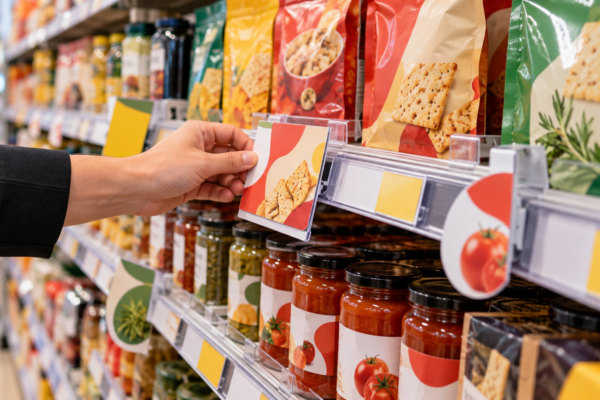
Price optimization strategy and in-store price execution are two sides of the same coin. A retailer can invest in best-in-class pricing software and data science talent, but if shelf price labels are wrong, promotional end-caps reflect outdated prices, or POS systems carry stale data, the strategy fails at the moment of purchase.
Research consistently shows that retail price discrepancies — where the price on the shelf differs from the price at the register — erode consumer trust at a rate that takes months of marketing spend to recover. For the retailer, incorrect shelf prices also create compliance exposure with pricing regulators in many U.S. states, which require that the scanned price never exceeds the shelf-posted price.
Price compliance auditing, rapid label change execution, and structured merchandising visit programs are therefore not operational afterthoughts — they are core components of a functioning price-optimization program. Retailers who treat in-store execution as a separate workstream from pricing strategy frequently see their realized margin improvements fall well short of model projections.
This is where field merchandising, retail technology solutions, and structured audit programs play a direct role in protecting the ROI of a price-optimization investment. Accurate retail analytics depend on clean, shelf-accurate pricing data — and that data quality starts with disciplined in-store execution.
How T-ROC Global Supports Retail Price Accuracy and Compliance
T-ROC Global — The Revenue Optimization Companies — works with retailers and brands across every major retail channel to close the gap between pricing strategy and shelf reality. Our field teams, retail technology solutions, and compliance programs are built specifically around the operational disciplines that protect a retailer’s pricing investments.
Our services that directly support price optimization execution include:
- Retail merchandising programs that ensure shelf sets, promotional placements, and price labels are updated accurately and on schedule during resets, new-item introductions, and promotional changeovers.
- Mystery shopping and price-compliance audits that capture shelf-versus-register price discrepancies across a statistically valid store sample, providing actionable data for compliance remediation and root-cause analysis.
- Brand ambassador and in-store associate programs that keep retail partners informed about current pricing, promotional mechanics, and compliance requirements at the point of sale, reducing execution errors driven by training gaps.
- Retail technology deployment that supports electronic shelf label (ESL) rollouts, POS system updates, and other digital infrastructure investments that reduce the latency between a price-optimization decision and its execution in store.
Whether you are launching a new price-optimization platform and need field execution support, or you are auditing existing price compliance and need a rigorous measurement program, T-ROC’s retail operations capabilities are designed to make pricing strategy real at the shelf.
Explore related definitions to deepen your understanding of the retail disciplines that intersect with price optimization: retail compliance and category management both play integral roles in the price-optimization value chain.