

CPG Definition and Overview
Consumer packaged goods (CPG) are items consumed or replaced on a regular, recurring basis, sold to end consumers in standardized packaging, and typically purchased at a relatively low unit price. Unlike a television or a mattress, a bottle of shampoo or a box of cereal is used up and repurchased within days or weeks. That high-velocity repurchase cycle defines the entire CPG business model.
“Consumer packaged goods are products that are sold to consumers in packaging, consumed frequently, and replaced at a predictable cadence — creating the high-volume, margin-sensitive retail environment that separates CPG from every other category of trade.”
The term is used interchangeably with fast-moving consumer goods (FMCG), particularly outside North America. Whether the label is CPG or FMCG, the defining characteristics remain the same: short shelf life or rapid consumption, low switching costs for the buyer, and intense competition for limited retail shelf space.
The global CPG industry is one of the largest sectors in the world economy. In the United States alone, CPG accounts for more than $2 trillion in annual retail sales across grocery, mass, club, drug, convenience, and e-commerce channels. For brands, that scale creates both enormous opportunity and unrelenting competitive pressure.
Annual U.S. CPG retail sales across all channels
SKUs competing for space in a typical supermarket
Of purchase decisions made at the shelf, not before entering the store
Consumer Packaged Goods vs. Durable Goods
Understanding what CPG is becomes clearer when contrasted with the other primary product classification: durable goods. The distinction shapes everything from manufacturing economics to retail strategy.
| Dimension | Consumer Packaged Goods (CPG) | Durable Goods |
|---|---|---|
| Lifespan | Days to weeks (consumed or depleted) | 3+ years (used repeatedly) |
| Unit price | Low to moderate ($1 – $50) | Moderate to high ($100 – $10,000+) |
| Purchase frequency | Weekly to monthly | Once every several years |
| Shopper consideration time | Seconds to minutes at shelf | Days to weeks of research |
| Distribution | Mass grocery, drug, club, convenience, e-commerce | Specialty retail, electronics, appliance dealers |
| Margin pressure | Extreme — volume and velocity are critical | Higher per-unit margin, lower volume |
| Brand loyalty driver | Habit, packaging familiarity, shelf presence | Feature differentiation, service, warranty |
It is also useful to distinguish consumer packaged goods from the broader category of consumer goods. Consumer goods is an umbrella term covering everything purchased by individuals for personal use — including durable goods such as electronics, vehicles, and appliances. CPG is the sub-category where high purchase frequency, packaging-centric presentation, and retail shelf velocity are the primary business drivers.
Major CPG Categories
The CPG industry spans dozens of product segments. The four most commercially significant are:
Food & Beverage
The largest CPG segment by revenue. Includes packaged foods, snacks, frozen meals, cereals, dairy, condiments, soft drinks, juices, bottled water, and alcoholic beverages. Grocery and mass retailers are the primary channels, with club and convenience as important secondary outlets.
Personal Care
Shampoo, conditioner, body wash, skincare, deodorant, oral care, cosmetics, and feminine hygiene. High brand loyalty in some sub-segments (oral care) but intense private-label pressure in others. Drug chains, mass retailers, and specialty beauty formats compete for shopper wallet share.
Household Products
Laundry detergents, fabric softeners, surface cleaners, dishwashing products, air fresheners, trash bags, and paper products. Characterized by strong incumbent brands with decades of consumer recognition, but increasingly disrupted by direct-to-consumer challengers and private-label expansion.
Health & OTC
Over-the-counter medications, vitamins, supplements, first-aid products, and digestive health items. Drug and mass channels dominate, though grocery and club formats have expanded their health footprint. Regulatory compliance and packaging accuracy are essential brand responsibilities in this segment.
Pet care, baby products, and tobacco are additional high-revenue CPG segments, each with distinct channel mixes and compliance requirements that shape the retail execution strategies brands must deploy.
The CPG Retail Landscape: Distribution Channels
CPG products reach consumers through a complex, multi-channel distribution network. The major retail formats are not interchangeable — each channel carries different shopper demographics, merchandising standards, margin structures, and compliance requirements.
- Grocery / Supermarkets: The traditional anchor channel for CPG. High shopper frequency drives strong velocity, but slotting fees, promotional co-op requirements, and planogram compliance expectations are demanding for brands of all sizes.
- Mass Merchandise (Walmart, Target): Enormous volume potential, but extraordinarily high performance standards. Brands that win at mass must maintain flawless in-stock conditions, perfect planogram compliance, and aggressive promotional pricing to retain shelf position.
- Club (Costco, Sam’s Club): Distinct pack sizes and merchandising formats. High-volume, treasure-hunt shopper mentality. Brands require custom packaging and dedicated field support to execute club-specific programs effectively.
- Drug (CVS, Walgreens, Rite Aid): Critical for personal care, health, and beauty CPG brands. Drug channels are high-margin but require precise planogram adherence and promotional display execution to convert foot traffic into purchase.
- Convenience: Immediate consumption categories — beverages, snacks, single-serve personal care — depend heavily on c-store distribution. Smaller store footprints create fierce competition for the limited facing allocations available.
- E-commerce (Amazon, Walmart.com, Instacart): The fastest-growing CPG channel. Digital shelf optimization — product content, imagery, search placement, ratings — has become as strategically important as physical shelf placement.
Key Challenges for CPG Brands in Retail
The CPG industry is structurally unforgiving. A brand can invest millions in product development and consumer advertising and still lose at the shelf because of execution gaps that are invisible from headquarters. The three most consequential challenges are:
Shelf Space and Planogram Compliance
Retailers allocate shelf space based on category performance data, but that allocation is only as valuable as the execution on the store floor. Out-of-position facings, unauthorized planogram changes by store personnel, and competitor products encroaching on allocated space are chronic problems across virtually every retail chain. Studies consistently show that non-compliance rates at the store level range from 20 to 40 percent — meaning a substantial portion of a brand’s theoretically secured shelf space is not actually delivering the intended shopper experience.
Velocity and Out-of-Stock Rates
In CPG, velocity — units sold per store per week — is the metric that determines whether a brand retains its shelf allocation or loses it. Out-of-stocks directly destroy velocity numbers, erode shopper loyalty, and hand purchase occasions to competitors. Yet out-of-stocks persist across retail because replenishment is a complex, store-level operational problem that requires human attention. The average out-of-stock rate in U.S. grocery is approximately 8 percent; in high-velocity promotional periods, it can spike to 15 percent or higher.
Promotional and Display Compliance
Trade promotion represents the single largest line item in most CPG brand budgets — often 15 to 25 percent of gross revenue. Yet industry research consistently finds that a third or more of promotional programs do not execute as planned at store level. Displays that never get built, price promotions that never get tagged, feature circulars that never get supported with actual stock — each gap represents direct revenue leakage and erodes the brand’s return on its trade investment.
Field Sales and Merchandising for CPG Brands
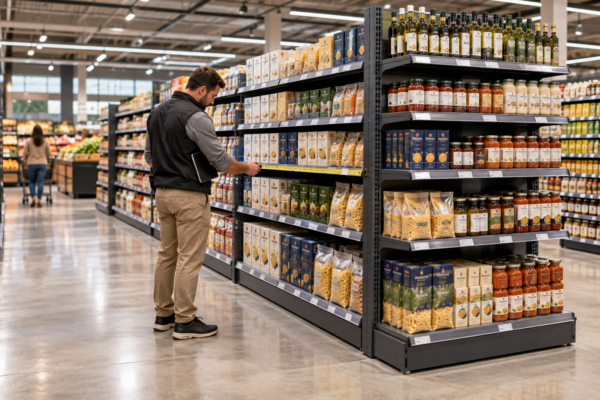
Because the retail execution gap is so consequential and so persistent, CPG brands rely on dedicated field sales and merchandising teams to close the distance between what retailers agree to and what shoppers actually see at the shelf.
Field merchandising for CPG encompasses a spectrum of in-store activities:
- Verifying and correcting planogram compliance across assigned store sets
- Building and maintaining permanent and temporary promotional displays
- Conducting product resets and new item cut-ins following category reviews
- Auditing pricing accuracy and promotional tag placement
- Identifying and communicating out-of-stock conditions to retail partners
- Training store-level associates on new products and brand messaging
- Capturing and reporting photo-verified compliance data back to brand and retail account teams
The scale of this challenge is significant. A mid-size CPG brand distributed across 20,000 retail doors and operating in multiple channels needs hundreds or thousands of field visits per week to maintain acceptable execution quality. Building, managing, and deploying that field capacity is a core operational competency — and one that many brands choose to outsource to specialized partners rather than build entirely in-house.
How T-ROC Helps CPG Brands Win at Retail
T-ROC Global — The Revenue Optimization Companies — is a retail services company that specializes in the people, processes, and technology CPG brands need to execute flawlessly across mass, grocery, drug, club, and specialty retail channels.
T-ROC’s CPG service model addresses the full retail execution lifecycle:
- Retail Merchandising: T-ROC deploys trained, dedicated field teams that cover store resets, planogram compliance audits, new item cut-ins, and ongoing shelf maintenance across national and regional retail accounts. Every store visit is documented with photo-verified compliance data, giving brand and account teams real-time visibility into execution quality across their entire store footprint.
- Brand Ambassador Programs: For CPG categories where shopper education and product sampling accelerate trial and purchase — health and wellness, premium food and beverage, personal care innovation — T-ROC recruits, trains, and deploys product specialists who represent the brand at shelf and in live demonstration environments.
- Mystery Shopping and Compliance Auditing: T-ROC conducts structured retail audits that measure how brands’ retail programs are actually performing at the store level — pricing accuracy, display compliance, promotional execution, associate product knowledge, and competitive shelf positioning. Audit data flows into reporting dashboards that enable brands and their retail partners to identify and correct gaps rapidly.
- Retail Technology Integration: T-ROC supports CPG brands in deploying and maintaining retail technology solutions — including interactive displays, digital shelf tools, and connected fixtures — that enhance the shopper experience and generate performance data brands can act on.
- Scalable Field Capacity: Whether a CPG brand needs a burst of field labor for a national new product launch, ongoing dedicated coverage for a key retail account, or a fully outsourced field sales and merchandising operation, T-ROC provides scalable, managed workforce solutions calibrated to program objectives and budget parameters.
The result is a unified, accountable field execution capability that allows CPG brand teams to focus on strategy, innovation, and trade relationships — while T-ROC handles the complex, people-intensive work of making sure those strategies actually show up at the shelf where shoppers make their decisions.
For CPG brands competing in a retail environment where execution quality is the final differentiator, T-ROC provides the on-the-ground infrastructure that turns retail plans into retail results.