




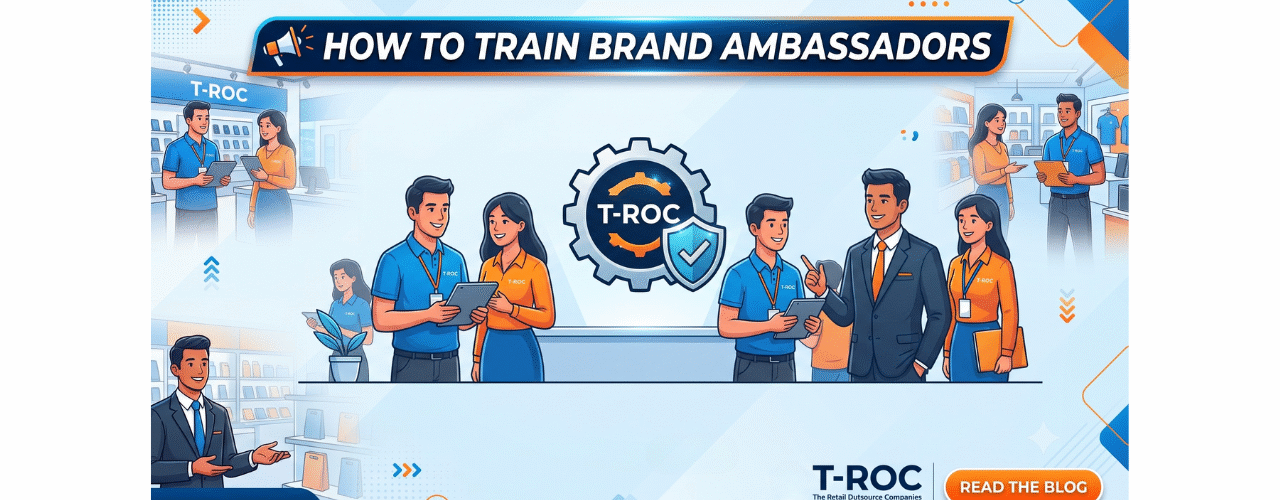
Hiring brand ambassadors is only half the equation. A charismatic person in a branded shirt won’t move product if they don’t know the story, the pitch, or how to read a shopper. What separates a brand ambassador program that drives sales from one that just fills floor space is training. This guide breaks down how to train brand ambassadors so they turn into confident, sales-driving representatives from their very first shift.
Why Brand Ambassador Training Matters
A brand ambassador is often the only human a shopper interacts with before deciding to buy. That interaction is a make-or-break moment. An untrained ambassador hesitates, gives vague answers, and lets the sale slip away. A well-trained one educates, builds trust, and closes.
The difference shows up directly in the numbers: higher conversion, larger baskets, better shopper sentiment, and cleaner brand representation across every location. Training is what converts the potential of a good hire into performance on the floor.
What Great Brand Ambassador Training Covers
1. Product knowledge and the pitch
Ambassadors must know the product cold — features, benefits, differentiators, and the answers to the questions shoppers actually ask. But knowledge alone isn’t enough; they need a pitch: a clear, benefit-led way to explain why the product solves the shopper’s problem. Train them to lead with the benefit, not the spec sheet.
2. Brand voice and values
An ambassador represents the brand’s identity, not just its catalog. Training should immerse them in the brand’s tone, story, and values so every interaction feels on-brand. Consistency here is what protects the brand experience across dozens or hundreds of stores.
3. Engagement and selling skills
This is where most programs under-invest. Ambassadors need practical skills for the floor:
- Approaching shoppers without being pushy — a natural opener that invites conversation.
- Reading intent — recognizing who’s ready to buy versus who’s just browsing.
- Handling objections — turning “I’m just looking” or “it’s too expensive” into a conversation.
- Guiding to the close — moving from interest to purchase without pressure.
4. In-store execution
Great ambassadors do more than talk. Train them on the operational side: keeping the display stocked and tidy, running product demos correctly, following the planogram, and maintaining an inviting presentation. Selling and execution go hand in hand.
5. Reporting and feedback
Ambassadors are your eyes and ears in the store. Train them to capture what matters — what sold, what shoppers asked, what competitors were doing, what stock ran low — and to report it consistently. That field intelligence is often as valuable as the sales themselves.
How to Deliver the Training
Knowing what to teach is only useful if the delivery makes it stick. The most effective programs combine several methods:
- Structured onboarding — a consistent starting curriculum so every ambassador begins with the same foundation, not a rushed “figure it out on the floor.”
- Role-play and practice — rehearsing the pitch and objection-handling before facing real shoppers builds confidence fast.
- Shadowing — pairing new hires with experienced reps to learn by watching.
- Ongoing coaching — short, regular feedback beats a one-time training day. Skills fade without reinforcement.
- Refreshers for launches and seasons — new products, promotions, and peak periods each need targeted updates.
Measuring Whether the Training Worked
Training isn’t complete until you can see its impact. Tie it to the metrics that matter: conversion rate, units per transaction, sales lift versus unstaffed periods, and shopper feedback scores. If a location’s numbers lag, that’s usually a training signal, not a hiring one — and it tells you exactly where to coach.
The Real Challenge: Training at Scale
Training one ambassador well is straightforward. Training — and consistently re-training — dozens or hundreds of ambassadors across many locations, with turnover and new product launches in the mix, is a discipline of its own. This is where many brands struggle: the strategy is sound, but the execution at scale breaks down.
That’s the gap a specialized workforce partner closes. T-ROC’s brand ambassador services provide reps who are recruited, trained, and brand-ready before they ever set foot on the floor — plus the management structure to keep training consistent across every market. The result is a program where every ambassador performs like your best one.
Frequently Asked Questions
Why is training brand ambassadors so important?
Ambassadors are often the only human interaction a shopper has before buying. Training turns a charismatic hire into a consistent seller, improving conversion, basket size, shopper sentiment and brand representation across locations.
What core topics should ambassador training cover?
Effective programs teach product knowledge and a benefit-led pitch, brand voice and values, engagement and selling skills such as approaching shoppers, reading intent, handling objections and closing, in-store execution covering demos, planogram and presentation, and reporting and feedback from the field.
How should training be delivered so it sticks?
Use a mix: structured onboarding for a consistent foundation, role-play and practice to build confidence, shadowing with experienced reps, ongoing short coaching sessions, and targeted refreshers for launches and peak seasons.
How do you measure whether training is working?
Tie training to metrics: conversion rate, units per transaction, sales lift versus unstaffed periods, and shopper feedback scores. Lagging numbers usually point to a training gap and show where coaching is needed.
What is the best approach to train ambassadors at scale?
Standardize a core curriculum, combine scalable digital modules with in-person shadowing and micro-coaching, track performance by location, and run targeted refreshers tied to product launches or seasonal peaks to maintain consistency across many stores.
Training Is What Turns Hires Into Performance
The best brand ambassador program isn’t the one with the most charismatic hires — it’s the one that trains those hires into confident, knowledgeable, sales-driving representatives, and keeps them sharp over time. Invest in the training, measure its impact, and every ambassador becomes an extension of your best salesperson. The people are the asset; training is what unlocks their value.