






Why Mystery Shopping in Consumer Electronics Matters More Than Ever
Consumer electronics is one of the most competitive retail categories on the planet. Brands invest millions in product development, marketing campaigns, and retail partnerships — yet much of that investment evaporates at the shelf. The in-store experience a shopper encounters rarely matches the experience the brand intended. Pricing errors, untrained staff, missing demo units, and incorrect product placement quietly erode sell-through rates and brand perception every single day.
Mystery shopping in consumer electronics is the most direct way to measure what is actually happening at the point of purchase. Unlike self-reported audits or store manager checklists, mystery shopping captures the unfiltered reality of the shopper experience — from the moment they walk into a big-box electronics retailer to the moment they leave, purchase in hand or not. For brands that want to understand why their products are underperforming in specific retail accounts, mystery shopping provides the ground truth that no dashboard or POS report can deliver. If you are new to the discipline, T-ROC’s what is a mystery shopper overview explains the fundamentals.
What Mystery Shoppers Evaluate in Consumer Electronics Retail
A well-designed mystery shopping program for consumer electronics goes far beyond a simple pass/fail checklist. Shoppers are trained to evaluate multiple dimensions of the retail experience that directly influence whether a consumer buys your product or walks out the door with a competitor’s.
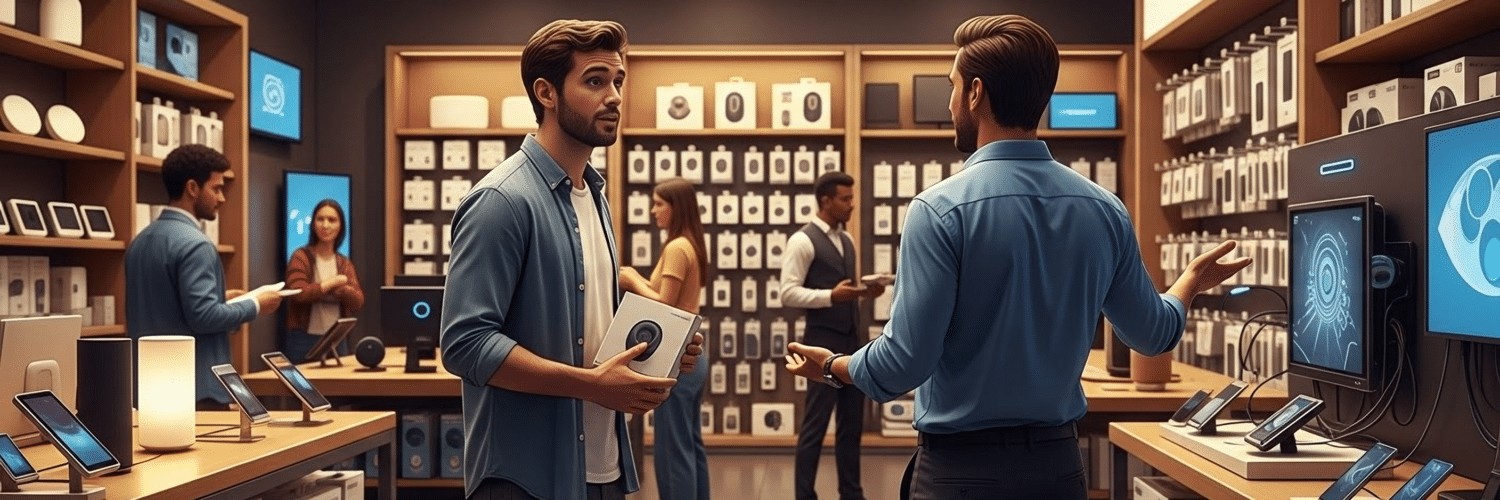
The first dimension is product presentation. Are demo units powered on and functioning? Is the product displayed at the correct fixture position according to the planogram? Are price tags accurate and visible? Is point-of-purchase signage in place and current? In consumer electronics, where shoppers expect to interact with products before buying, a dead demo unit is not a minor inconvenience — it is a lost sale.
The second dimension is associate knowledge and engagement. When the mystery shopper asks about a product, can the associate explain key features and differentiators? Do they proactively recommend accessories or protection plans? Do they compare the product favorably against competitors, or do they steer the shopper toward a different brand? Staff interactions in CE retail have an outsized impact on conversion because most shoppers arrive with a shortlist of two or three options and are looking for a reason to choose one over the others.
The third dimension is competitive positioning. Mystery shoppers document how competing brands are displayed relative to yours — shelf placement, signage prominence, demo quality, and promotional pricing. This competitive intelligence is often the most actionable output of a CE mystery shopping program because it reveals whether your retail partners are delivering the visibility you are paying for.
The High Cost of Poor In-Store Execution
Brands in the consumer electronics space typically negotiate detailed merchandising agreements with their retail partners. These agreements specify fixture placement, demo configurations, signage, and minimum training requirements for floor associates. The problem is that compliance with these agreements degrades rapidly after the initial setup — and without a systematic measurement mechanism, brands have no way to know how far execution has drifted from the plan.
Industry research consistently shows that in-store compliance rates for merchandising standards average between 40% and 60% across large retail chains. In consumer electronics specifically, the complexity of demo setups and the pace of product refresh cycles push compliance rates even lower. A brand that launches a new laptop or smart home device with a carefully designed fixture experience may find that within 60 days, fewer than half of retail locations are maintaining that experience as intended.
The financial impact is significant. When a demo unit is unplugged, a product is missing from its allocated shelf position, or an associate actively recommends a competitor, the cost is not just one lost sale — it is a compounding pattern of lost revenue that accumulates across hundreds of doors over weeks and months. Mystery shopping is the mechanism that makes this invisible problem visible, allowing brands to intervene before the damage becomes systemic.
Common Compliance Failures in Consumer Electronics Retail
After analyzing thousands of mystery shopping evaluations across major CE retailers, several compliance failures appear with striking consistency. Understanding these patterns helps brands design more targeted audit criteria and more effective corrective action plans.
Demo units not powered or functional. This is the single most common failure in consumer electronics mystery shopping. Laptops with dead batteries, smart speakers disconnected from Wi-Fi, televisions displaying the wrong content or turned off entirely — these issues are pervasive. The root cause is typically a combination of understaffed stores, lack of daily opening checklists, and the absence of accountability for demo maintenance. When a shopper cannot interact with a $1,500 television before purchasing, they default to price comparison — which is rarely where premium brands win.
Missing or outdated signage. Promotional signage has a short shelf life in consumer electronics, where product cycles and pricing promotions change frequently. Mystery shoppers routinely find expired promotional pricing, signage for discontinued products still on display, or missing feature callout cards that were part of the original merchandising plan. This creates shopper confusion and undermines the investment brands make in co-op marketing programs with retailers.
Staff knowledge gaps. Perhaps the most damaging compliance failure is an associate who cannot articulate the value proposition of a product they are supposed to be selling. Mystery shoppers frequently report encounters where associates are unable to explain the difference between product tiers, are unaware of current promotions, or actively recommend a competing product because they are more familiar with it. These knowledge gaps are a direct signal that the brand’s training program — or the retailer’s willingness to prioritize it — is falling short. For a deeper look at how retail technology can close execution gaps, the guide covers the tools and platforms that leading brands use to maintain visibility at scale.
Using Mystery Shopping Data to Improve Brand Ambassador Programs
Mystery shopping and brand ambassador programs are often managed as separate initiatives, but the most effective brands treat them as two halves of a closed-loop system. Mystery shopping identifies where execution is failing. Brand ambassadors fix it on the ground.
When mystery shopping data reveals that associates at a particular retail chain consistently lack product knowledge, that insight should directly inform ambassador deployment. Instead of spreading ambassador coverage evenly across all doors, brands can concentrate visits at the locations and retail accounts where knowledge gaps are most severe. The ambassador’s role then shifts from general promotion to targeted training — addressing the specific objections, misconceptions, and competitive positioning weaknesses that mystery shoppers documented.
Similarly, mystery shopping scores can serve as a performance benchmark for ambassador programs. If compliance rates and associate knowledge scores improve at locations receiving ambassador visits but remain flat at control locations, the data makes a compelling case for expanding the program. Conversely, if mystery shopping scores do not improve despite ambassador coverage, it signals that the ambassador training approach needs to be redesigned — or that the problem lies deeper in the retailer’s operational processes.
The most sophisticated programs use mystery shopping data to create location-level scorecards that ambassadors review before every visit. This transforms the ambassador from a general brand representative into a targeted problem-solver who walks into every store with a specific action plan based on real shopper experience data. Read T-ROC’s comprehensive mystery shopping guide for a detailed look at how to design a program that feeds directly into your field execution strategy.
Building a Mystery Shopping Program for Consumer Electronics
Designing an effective mystery shopping program for CE retail requires more than hiring shoppers and handing them a questionnaire. The program must be built around the specific failure modes and success drivers that define the consumer electronics purchase journey.
Start with scenario design. Mystery shoppers should enter the store with a realistic purchase intent — for example, shopping for a new television for a living room, comparing two laptop brands for a college student, or evaluating smart home systems. The scenario should mirror the actual decision-making process of your target customer, including the questions they would ask, the objections they might raise, and the competitive alternatives they would consider.
Next, define the evaluation criteria with precision. Vague measures like “Was the associate helpful?” produce unreliable data. Instead, build the scorecard around observable, binary behaviors: Did the associate greet the shopper within two minutes? Did they demonstrate the product without being asked? Did they mention the current promotion? Did they offer an accessory or protection plan? Each criterion should be tied to a specific business outcome — conversion, average transaction value, or brand perception — so that the resulting data drives actionable decisions.
Finally, establish a reporting cadence that matches the pace of the business. In consumer electronics, where promotional cycles run weekly and product launches happen monthly, mystery shopping data that arrives quarterly is too slow to be useful. The best programs deliver location-level scorecards within 48 hours of each shop, allowing field teams to respond to compliance failures before they become entrenched patterns.
Frequently Asked Questions About Mystery Shopping in Consumer Electronics
What does a mystery shopper evaluate in a consumer electronics store?
A mystery shopper in consumer electronics evaluates product presentation (demo unit functionality, shelf placement, signage accuracy), associate knowledge and engagement (ability to explain features, recommend accessories, compare against competitors), store cleanliness, and overall compliance with the brand’s merchandising standards. The evaluation is designed to mirror a real shopper’s experience from entry to exit.
How often should brands conduct mystery shops in CE retail?
The ideal frequency depends on the number of retail doors, product launch cycles, and promotional calendar. Most brands benefit from monthly mystery shops at high-priority locations and quarterly shops at lower-tier doors. During major product launches or promotional events, increasing frequency to bi-weekly provides the rapid feedback needed to correct execution issues before they impact peak selling periods.
Can mystery shopping data be used to hold retail partners accountable?
Yes. Mystery shopping reports provide objective, documented evidence of in-store execution quality. Brands routinely use this data in quarterly business reviews with retail buyers and operations teams to demonstrate compliance gaps, request corrective action, and justify co-op marketing investments. The key is structuring the scorecard around the specific commitments outlined in the retail partnership agreement.
What is the difference between mystery shopping and a retail audit?
A retail audit is typically conducted by a brand’s own field team or merchandising partner and focuses on physical compliance — shelf placement, inventory levels, signage presence. Mystery shopping adds the human experience layer: how associates interact with shoppers, what they recommend, and how the overall purchase journey feels. Both are valuable, but mystery shopping captures insights that a visual audit alone cannot.
How does mystery shopping improve consumer electronics sales?
Mystery shopping improves sales by identifying and eliminating the friction points that prevent shoppers from converting. When brands discover that demo units are consistently unpowered, that associates are recommending competitors, or that promotional pricing is not being communicated, they can deploy targeted corrective actions — retraining, ambassador visits, operational escalations — that directly address the root causes of lost sales. Over time, this creates a continuous improvement loop where execution quality steadily rises across the retail footprint.