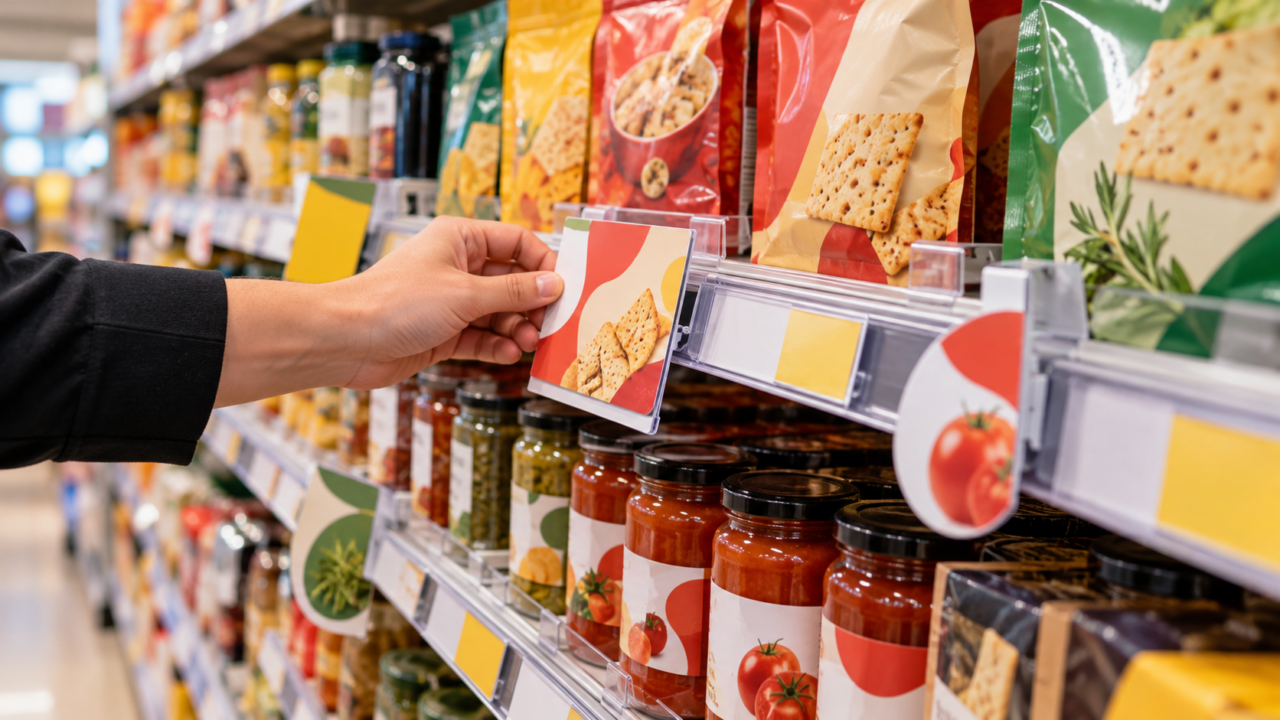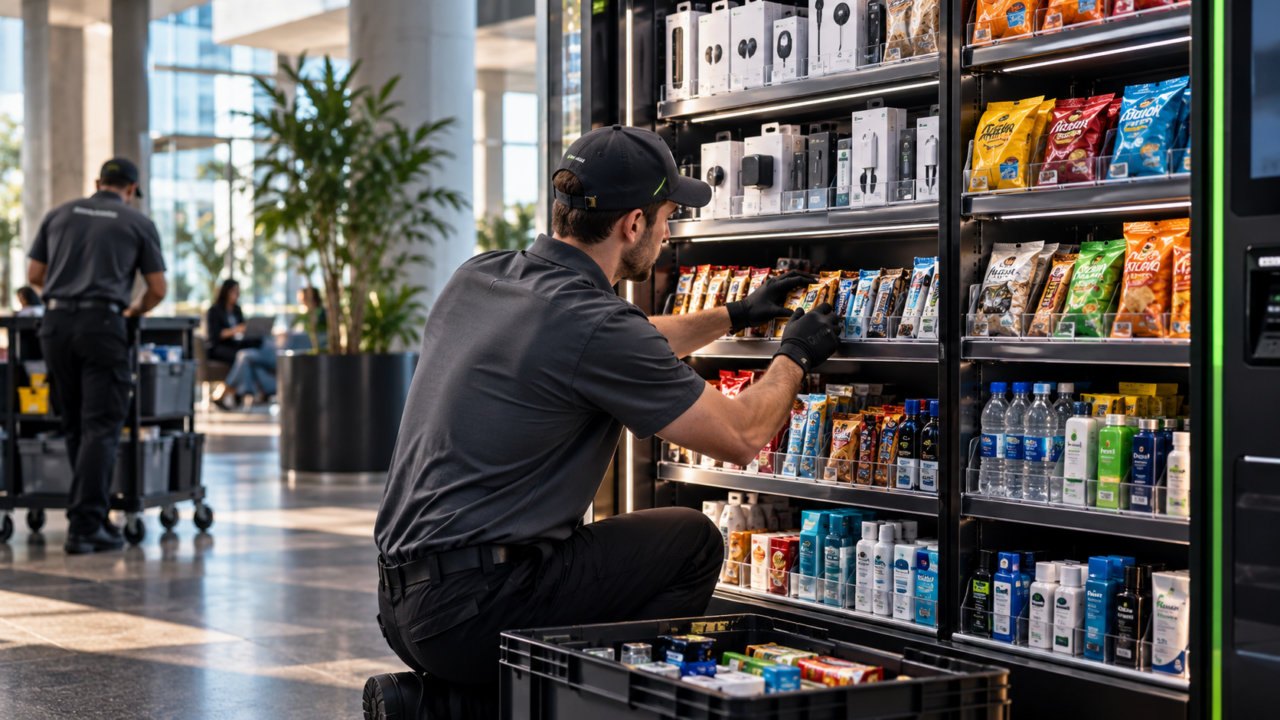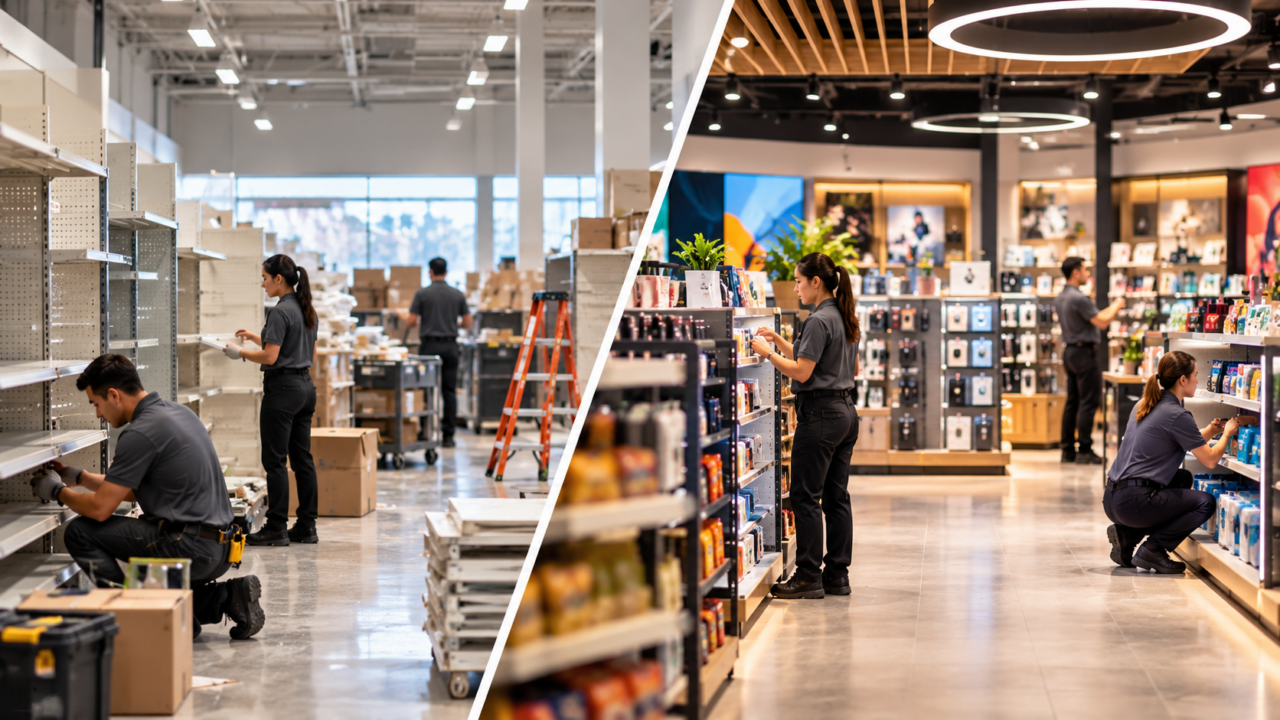




Most brands do not have a merchandising problem on paper. The assortment is agreed, the planogram is signed off, the reset calendar is circulated. The problem shows up in the aisle, where the shelf a shopper actually sees is a diluted version of the plan that was approved months earlier. Merchandising optimization is the discipline of closing that gap, and it is where in-store revenue is won or quietly lost.
What merchandising optimization actually means
It helps to separate three things that often get treated as one.
Merchandising planning decides what should be on the shelf: the assortment, the space allocation, the planogram, the promotional calendar.
Merchandising execution is what happens when someone stands in front of the fixture and builds it.
Merchandising optimization is the loop that connects the two. It measures what execution actually produced, compares it against the plan, and changes where effort goes next cycle based on that evidence.
A brand can have an excellent plan and a poor result, because a plan is an instruction and a shelf is an outcome. Optimization is the only part of the process that treats the difference between them as data rather than as an excuse.
Why merchandising plans degrade in store
Execution rarely fails all at once. It erodes, and it erodes in predictable ways:
- Planogram drift. A reset is built correctly on day one. By week three, restocking staff have filled the easiest facings, a promotional endcap has borrowed product, and the section no longer matches the plan it was built from.
- Phantom inventory. The system shows units on hand, so no replenishment is triggered, but the product is in the backroom, mis-scanned, or gone. The shelf reads as in stock in every report and is empty to every shopper.
- Inconsistent execution across banners. The same national plan lands differently in a supercenter, a regional grocer and a specialty door. Without store-level visibility, a brand sees an average that hides both the best and the worst.
- Reporting that arrives too late to act on. A compliance issue found in week one and reported at month end has already cost four weeks of sales before anyone can respond.
- A slow fix cycle. Finding a problem is not the same as solving it. If the standard is to log an issue and return on the next scheduled visit, the cost of that issue is measured in weeks, not minutes.
Each of these is an execution failure, not a planning failure. That is why buying a better plan does not fix them.
The metrics that make merchandising optimization measurable
Optimization requires numbers that can move. In practice, five carry most of the weight:
- Planogram compliance rate. The percentage of audited stores where the section matches the approved plan. Track it by store and by banner, never as a single national figure.
- On-shelf availability. The percentage of visits where the priority SKUs were physically present and shoppable. This is the number that most often contradicts the inventory system.
- Share of shelf. Facings held versus facings agreed. Erosion here is usually gradual, and it almost always favours a competitor.
- Display and signage integrity. Whether promotional material is up, correct, and in the location it was paid for. Promotional spend with no display verification is spend with no proof.
- Fix rate and time to resolution. Of the issues identified, how many were corrected during the same visit, and how long the rest took. This is the metric that separates auditing from retail execution.
If a merchandising program cannot report those five by store, it is not being optimized. It is being scheduled.
How to optimize a retail merchandising strategy
1. Measure the baseline before changing anything
Audit a representative sample of stores across every banner and region, and record the five metrics above with photo evidence. The purpose is not to grade the field team. It is to establish what the plan is currently worth once it reaches the shelf, so that every later change has something to be compared against. A retail compliance audit is the fastest way to get that baseline in a form leadership will trust.
2. Rank stores by revenue impact, not by convenience
Most coverage models are built around geography and travel time, because that is what is easy to plan. Revenue is not distributed that way. A small number of doors usually carry a disproportionate share of volume, and those doors deserve a different service level from the long tail. Rank every store by its actual contribution, then decide coverage from that ranking.
3. Set visit frequency by store value
A uniform national cadence overserves stores that do not need it and underserves the ones that pay for the program. Tiering visits by store value is usually the single highest-return change available, and it is often cost neutral: the hours already exist, they are simply pointed at the wrong doors.
4. Require photo evidence and a fix-on-visit standard
Two rules change behaviour more than any dashboard. First, every visit produces dated photographic evidence of the section. Second, anything that can be corrected during the visit is corrected during the visit, not logged for later. Together they turn each visit into a repair rather than an inspection.
5. Re-measure the same metrics, the same way
Optimization only exists if the second measurement is comparable to the first. Keep the metric definitions, the sample and the method stable across cycles. Improvement that cannot be demonstrated against a baseline will not survive the next budget review, however real it was.
Real-time execution changes what the data is worth
The value of merchandising data decays quickly. An out-of-stock reported today can be fixed today. The same out-of-stock reported in a month-end summary is a historical note.
Real-time merchandising execution means field teams capture findings at the shelf, with structured data and images, and that information reaches the brand the same day. It allows three things that batch reporting cannot: seeing compliance store by store while the cycle is still running, redeploying coverage toward the doors that are failing, and proving to a retail partner that an issue was found and resolved rather than merely observed.
This is also where a third-party merchandising model tends to outperform ad-hoc coverage. A dedicated field organisation can standardise how a visit is recorded across thousands of doors, which is what makes the resulting numbers comparable in the first place.
Where optimization usually pays back first
Programs that start optimizing tend to find the same early wins:
- Recovering lost facings. Share-of-shelf erosion is common, reversible during a normal visit, and immediately visible in sell-through.
- Correcting phantom inventory. Physically verifying priority SKUs in high-value doors surfaces stock that the system believed was already on the shelf.
- Verifying promotional compliance. Confirming that paid displays are actually up during the promotional window protects spend that is otherwise unaudited.
- Rebuilding sections that drifted after a reset. A store reset is not a one-time event; the maintenance visits after it determine whether the investment holds.
- Improving display quality where it is seen. Applying strong visual merchandising in the highest-traffic doors returns more than applying it evenly everywhere.
None of these require a new plan. They require someone in the store, working from evidence, with the authority to fix what they find.
Turning merchandising optimization into revenue
Optimization is an operating capability, not a report. It needs trained people in stores on a cadence that reflects store value, a consistent way of recording what they find, and reporting that a brand team can act on inside the same cycle.
That is what T-ROC does. We deploy field merchandising teams nationwide and pair them with store-level reporting on compliance, on-shelf availability and completed fixes, so brands can see where execution stands and prove what changed. If you are evaluating partners, our guide to choosing a retail merchandising company sets out what to ask, and our breakdown of retail merchandising services cost explains how programs are typically priced.
Ready to see what your merchandising plan is worth at the shelf? Let us talk. Schedule a conversation with our field teams and we will walk you through what a baseline audit would show for your doors. Book a consultation now.
Frequently Asked Questions
What is merchandising optimization?
Merchandising optimization is the practice of improving how a merchandising plan is actually executed in stores, so that shelves match the plan, products stay in stock and each visit produces measurable sales lift. It differs from merchandising planning, which decides the assortment and the planogram. Optimization is about closing the gap between the plan on paper and the shelf a shopper sees.
What are the main challenges of in-store merchandising execution?
The most common challenges are planogram drift, where displays degrade within days of a reset; phantom inventory, where a system shows stock that is not on the shelf; inconsistent execution across regions and banners; late or missing visit reporting that leaves head office blind; and slow issue resolution, where a problem found on Monday is not fixed until the next scheduled visit weeks later.
What is real-time merchandising execution in retail?
Real-time merchandising execution means field teams capture what they find at the shelf during the visit, with photos and structured data, and that information reaches the brand the same day rather than in an end-of-month report. It allows a brand to see compliance by store, spot out-of-stocks while they still matter, and redeploy coverage to the locations that need it most.
How do you optimize a retail merchandising strategy?
Start by measuring execution rather than intent: audit planogram compliance, share of shelf, in-stock rate and display integrity across a representative sample of stores. Rank stores by revenue impact, not by convenience. Set visit frequency by store value instead of applying one cadence everywhere. Require photo evidence and a fix-on-visit standard, then re-measure the same metrics each cycle so improvement is provable.
How does T-ROC support merchandising optimization?
T-ROC deploys trained field merchandising teams nationwide and pairs them with reporting that shows compliance, in-stock position and completed fixes store by store. Brands get resets, remerchandising, audits, display maintenance and issue resolution executed on a schedule built around store value, with the visibility needed to prove the program is working.
Read the complete guide: Retail Merchandising →
T-ROC Editorial Team
The T-ROC editorial team brings 20+ years of retail industry expertise across brand ambassador programs, mystery shopping, retail merchandising, and managed technology solutions. Learn more about T-ROC.