



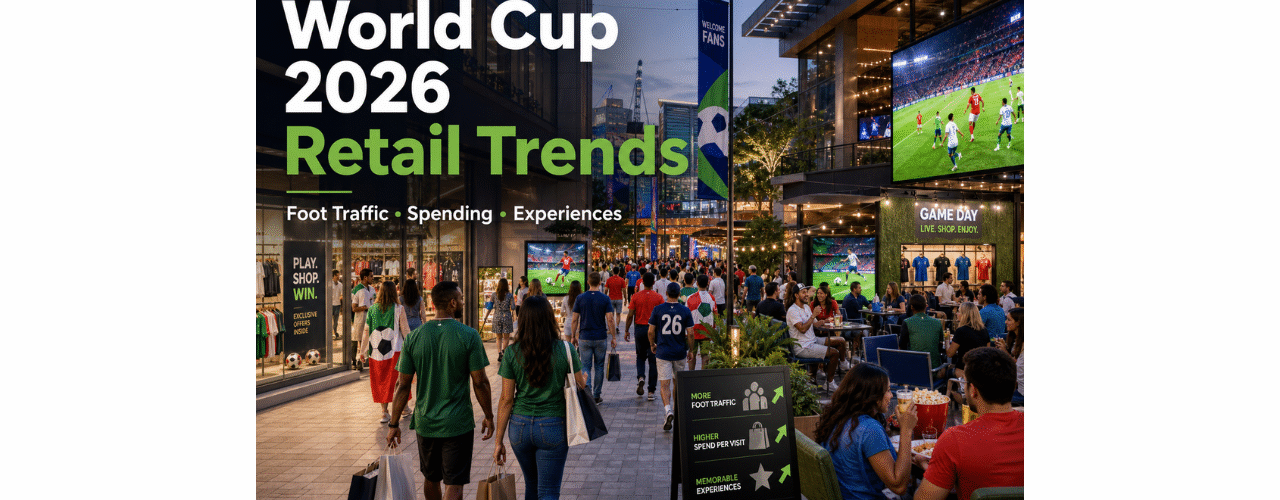
The FIFA World Cup 2026 is expected to deliver more than memorable moments on the pitch. It could also provide a meaningful boost for retailers, shopping centers, restaurants, and entertainment destinations across North America.
According to a 2025 analysis conducted by OpenEconomics for FIFA and the World Trade Organization, the tournament is projected to generate $1.47 billion in economic activity for the U.S. wholesale and retail sectors. Over the course of 39 days, from June 11 through July 19, an estimated 6.5 million fans are expected to attend 104 matches played across the United States, Canada, and Mexico.
For retailers, the opportunity extends well beyond merchandise sales.
World Cup Retail Trends Point to Select Winners
While excitement around the tournament is high, experts expect spending gains to be concentrated in specific categories rather than spread evenly across retail.
According to Placer.ai, sectors positioned to benefit include:
- Grocery retailers
- Sporting goods stores
- Consumer electronics retailers
- Restaurants and dining destinations
- Entertainment concepts
- Experiential retail centers
Consumers are expected to stock up for watch parties, purchase team gear, and spend more time at destinations offering entertainment and social experiences.
However, analysts caution that the World Cup won’t create a universal retail windfall. Coresight Research notes that some spending may simply shift from other categories or services, while broader economic uncertainty could lead consumers to remain selective with discretionary purchases.
Why Experiences Matter More Than Ever
The World Cup highlights a larger shift taking place across retail.
Consumers increasingly want experiences, not just transactions.
Retail centers, mixed-use developments, and landlords are responding by transforming properties into destinations designed to drive foot traffic, extend dwell times, and encourage spending.
Pacific Retail Capital Partners
Pacific Retail Capital Partners is launching its “Where the World Unites” campaign across 16 retail centers.
The initiative includes:
- Watch parties
- Penalty-kick simulators
- Fan contests
- Interactive photo stations
- Soccer-themed promotions
These experiences are designed to create reasons for consumers to gather and stay longer.
American Dream Mall
Located near MetLife Stadium in New Jersey, American Dream is hosting a 39-day Dream Fan Fest featuring:
- Celebrity appearances
- Brand activations
- Concerts
- Viewing parties
- Soccer-themed experiences
With the World Cup Final taking place nearby, the complex expects to become a major destination for fans throughout the tournament.
South Florida Fan Hubs
South Florida, which will host seven matches, is also embracing experiential retail.
Lincoln Road in Miami Beach and Atlantic Village in Hallandale Beach are introducing:
- Match watch parties
- Pop-up activations
- Global soccer merchandise
- Dining specials
- Family-friendly soccer clinics
These initiatives reflect a growing trend across retail real estate: using major cultural moments to create community and drive engagement.
Sporting Goods Retailers Expect Strong Sales
Sporting goods retailers are among the businesses expecting the greatest impact.
Academy Sports + Outdoors
Academy operates more than 320 stores, and executives estimate the World Cup could add approximately 30 basis points to same-store sales.
The company also expects increased soccer participation to drive demand well into 2027.
Dick’s Sporting Goods
Dick’s Sporting Goods operates nearly 3,400 locations under 11 banners.
Company leadership has described the period surrounding the World Cup and the 2028 Los Angeles Olympics as one of the most exciting multi-year opportunities for sports participation and consumer engagement in decades.
Executives anticipate stronger same-store sales throughout the first half of fiscal 2026.
Retail Real Estate Is Making Big Bets
Some landlords are making substantial investments to capitalize on World Cup traffic.
Whitestone REIT acquired the restaurant-anchored World Cup Plaza in Frisco, Texas, a 90,391-square-foot retail center adjacent to Toyota Stadium, which will serve as an official base camp during the tournament.
Dallas-Fort Worth will host nine World Cup matches, creating additional traffic opportunities for nearby retailers and restaurants.
The investment reflects a broader strategy among landlords: positioning retail destinations around experiences and high-profile events.
Foot Traffic Could Matter More Than Transactions
The World Cup may reinforce a trend that has been building for years.
Retail success increasingly depends on creating reasons for consumers to visit.
Major events generate:
- Longer dwell times
- Increased cross-shopping
- Higher spending
- More social engagement
- Stronger tenant performance
Physical retail continues to evolve from a place of transaction into a place of experience.
For shopping centers and brands alike, cultural moments provide opportunities to strengthen connections with customers in ways that traditional promotions cannot.
By the Numbers: FIFA World Cup 2026
| Metric | Figure |
|---|---|
| Tournament Length | 39 Days |
| Matches | 104 |
| Expected Attendance | 6.5 Million Fans |
| Estimated U.S. Retail & Wholesale Impact | $1.47 Billion |
| Academy Sports Stores | 320+ |
| Dick’s Sporting Goods Locations | Nearly 3,400 |
| Pacific Retail Centers Participating | 16 |
| World Cup Plaza Size | 90,391 Square Feet |
| Dallas-Fort Worth Matches | 9 |
| South Florida Matches | 7 |
| East Rutherford Matches | 8 |
What Retail Leaders Should Take Away
The FIFA World Cup 2026 is much more than a sporting event.
It is a global cultural moment capable of influencing shopping behavior, increasing traffic, and creating new opportunities for retailers, landlords, and brands.
The biggest winners may not simply be those selling merchandise. They may be the organizations that turn excitement into experiences.
From watch parties and pop-ups to fan zones and entertainment districts, retailers are learning that consumers increasingly value connection, community, and memorable experiences.
As the lines between shopping, dining, and entertainment continue to blur, one thing becomes clear:
Retail is becoming increasingly experiential.
And major events like the World Cup offer a glimpse into what the future of physical retail may look like.
Frequently Asked Questions
How much economic impact is the FIFA World Cup 2026 expected to have on U.S. wholesale and retail?
According to a 2025 analysis by OpenEconomics for FIFA and the World Trade Organization, the tournament is projected to generate about $1.47 billion in economic activity for the U.S. wholesale and retail sectors. The event runs 39 days, from June 11 to July 19, with an estimated 6.5 million fans attending matches across the U.S., Canada and Mexico.
Which retail sectors are expected to benefit most from the World Cup?
Placer.ai and industry observers expect gains concentrated in grocery retailers, sporting goods stores, consumer electronics retailers, restaurants and dining, entertainment concepts and experiential retail centers. Benefits come from watch-party stocking, team-gear purchases, dining out, and visits to venues offering events and interactive experiences.
How are shopping centers and landlords planning to capitalize on the event?
Retail real estate is prioritizing experiences to drive foot traffic and dwell time. Examples include the Pacific Retail Capital Partners campaign Where the World Unites, with watch parties, penalty-kick simulators and fan contests; the 39-day American Dream Dream Fan Fest with celebrity appearances, concerts and viewing parties; and South Florida fan hubs offering pop-ups, match watch parties and family clinics.
Will the World Cup create a universal retail windfall?
No. Analysts warn that gains will be uneven. Some spending may shift from other categories, and ongoing economic uncertainty could make consumers selective with discretionary purchases. The lift is likely to be concentrated in specific categories and locations rather than spread across all retail.
What impact are sporting goods retailers expecting from the tournament?
Sporting goods chains expect notable upside. Academy Sports + Outdoors estimates the World Cup could add roughly 30 basis points to same-store sales and drive soccer participation into 2027. Dick’s Sporting Goods views the period around the World Cup, and the 2028 Olympics that follow, as a major multi-year opportunity and anticipates stronger same-store sales into the first half of fiscal 2026.