



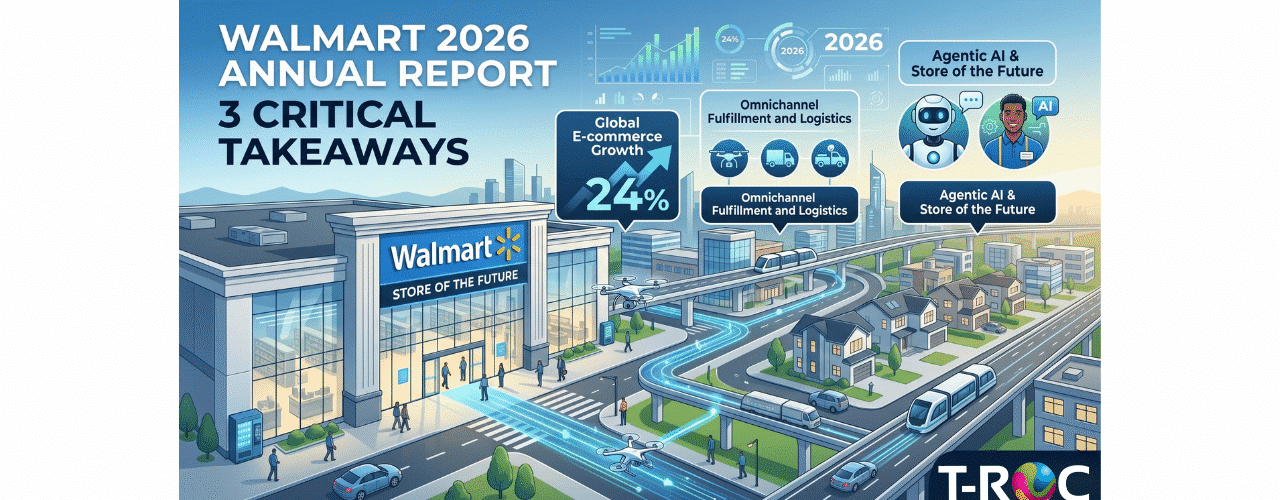
The retail landscape has officially shifted from “recovering” to “reinventing.” According to the Walmart 2026 annual report, the world’s largest retailer has hit what CEO John Furner calls a “pivotal moment.”
With total revenues climbing 5.1% to a staggering $715.9 billion, the data reveals a company that is no longer just a brick-and-mortar giant, but a high-tech omnichannel powerhouse. For small business owners and e-commerce retailers, Walmart’s fiscal year 2026 performance serves as a blueprint for growth in an AI-driven market.
Here are the three most significant takeaways from the report.
1. E-commerce is No Longer a Sidekick—It’s the Hero
For years, e-commerce was seen as a secondary channel for big-box retailers. The Walmart 2026 annual report proves those days are over. Global e-commerce sales surged by 24%, reaching $150.4 billion.
What’s more impressive is the improvement in margins. Historically, e-commerce has been a “margin killer” due to high fulfillment costs. However, Walmart is now seeing “bending profitability” thanks to:
-
Store-fulfilled pickup and delivery: Using existing stores as fulfillment hubs to drastically reduce last-mile costs.
-
Express fees: Nearly one-third of deliveries now include an express fee, adding a high-margin revenue stream.
-
Network density: Higher order volumes allow for more efficient “batching” of deliveries, spreading costs across more units.
Expert Insight: Walmart’s U.S. e-commerce business now contributes 4.3% to total comparable sales, a significant jump from 2.9% just a year prior.
2. The Rise of “Agentic AI” and Sparky
While many retailers are still experimenting with basic chatbots, Walmart has leaned heavily into Agentic AI. Their proprietary customer agent, “Sparky,” is a prime example of how AI is being used to drive “contextual commerce.”
According to the report, Sparky isn’t just answering questions—it’s driving measurable results. Users interacting with the AI agent show 35% higher baskets.
Unlike traditional search tools, Agentic AI uses authenticated data to predict what a customer needs, moving the needle from “searching for products” to “capturing demand.” For retailers, the message is clear: AI is now a fundamental tool for increasing shopping frequency rather than just a cost-saving measure for customer service.
3. The Strategic Comeback of the Supercenter
Perhaps the most surprising insight from the Walmart 2026 annual report is the renewed focus on physical Supercenters. After years of slowing store growth, Walmart added seven new Supercenters to its fleet, marking a strategic pivot back to physical expansion.
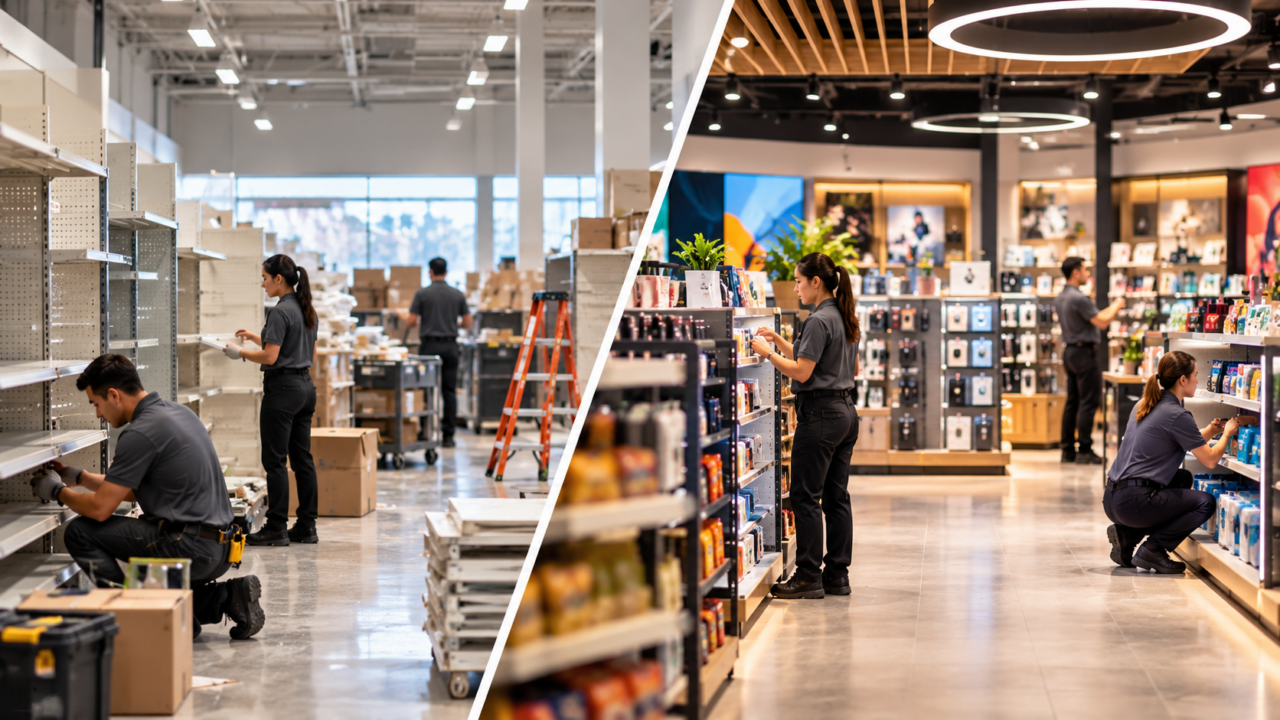
These aren’t the Supercenters of the past. The “Store of the Future” model focuses on:
-
Regional Customization: Specialized sections, such as Hispanic bakeries or local fresh markets, tailored to specific local demographics.
-
Omnichannel Integration: Floor plans are specifically designed to support both in-person browsing and rapid e-commerce fulfillment under one roof.
-
Capital Allocation: Investment in new stores and expansions grew by a massive 212% year-over-year, totaling approximately $1.4 billion.
Summary of Walmart’s Fiscal Year 2026 Performance
-
Total Revenue: $715.9 Billion (Up 5.1%)
-
Global E-commerce Growth: 24% (Reached $150.4 Billion)
-
U.S. Comparable Sales: Increased 4.3%
-
Physical Store Investment: $1.4 Billion (Up 212% for new stores/clubs)
-
AI Impact: Sparky AI driving 35% larger basket sizes for users.
The Bottom Line
Walmart is successfully navigating the “technological evolution” by balancing high-tech AI initiatives with a robust, modernized physical presence.
For any retailer looking to scale in the coming year, the strategy is clear: optimize your digital margins through localized fulfillment, embrace predictive AI to grow basket sizes, and don’t underestimate the power of a localized, high-efficiency physical storefront. This omnichannel dedication is the new standard for helping customers “save money and live better.”
Frequently Asked Questions
What are the three critical takeaways from Walmart’s 2026 annual report?
The report highlights three shifts: e-commerce becoming a primary profit driver, the operationalization of "Agentic AI" for contextual commerce, and renewed investment in physical Supercenters. Together these changes reflect Walmart’s move from "recovering" to "reinventing" based on fiscal 2026 performance and related metrics.
How did Walmart make e-commerce more profitable in fiscal 2026?
Walmart "bent profitability" by reducing last-mile costs using existing stores as fulfillment hubs, increasing network density for efficient batching, and introducing express delivery fees used in one-third of deliveries. Those steps helped global e-commerce sales surge 24% to $150.4 billion and shift e-commerce toward profitability.
What is "Agentic AI" and how does Walmart’s "Sparky" change shopping behavior?
Agentic AI refers to proactive AI agents that act on authenticated customer data to predict needs; Walmart’s agent "Sparky" enables "contextual commerce" by capturing demand rather than relying on traditional search. Users interacting with Sparky had 35% higher basket sizes, and the report frames AI as a core tool for increasing shopping frequency.
Why is Walmart investing again in physical Supercenters?
Walmart increased physical investment, spending $1.4 billion (a 212% year-over-year increase) to add seven new Supercenters described as "Stores of the Future." These stores emphasize regional customization, such as local fresh markets, and floor plans designed to support simultaneous in-store browsing and rapid e-commerce fulfillment.
What actions does the report recommend for other retailers?
The report recommends optimizing digital margins through localized fulfillment like leveraging stores as fulfillment hubs, adopting predictive AI to grow basket sizes and capture demand proactively, and integrating omnichannel capabilities into storefronts so stores can support both in-person shoppers and efficient e-commerce fulfillment.