






Store Resets: A Complete Guide to Boosting Retail Sales
-
 T-ROC Staff
-
 Jul 16, 2025
 -
 7 mins read
Is your retail space working as hard as it could be? In the competitive world of brick-and-mortar, your store’s layout and product presentation are powerful tools. If sales are stagnating or your aisles feel dated, it might be time for a strategic overhaul. This is where store resets come in—a comprehensive process designed to refresh your retail environment, optimize product placement, and ultimately, drive revenue.
This guide breaks down everything you need to know about planning and executing a flawless store reset, transforming your physical space into a more profitable and engaging asset.
What Are Store Resets and Why Are They Crucial?
A store reset (or retail merchandising reset) is the large-scale process of rearranging a section, a category, or even an entire store. It goes far beyond simple tidying up. It involves updating product assortments, implementing new layouts and planograms (POGs), installing new fixtures or displays, and ensuring every product is perfectly placed to maximize visibility and sales.
Why are they so important?
- Adapts to Consumer Behavior: Shopper preferences are always changing. A reset allows you to align your store with the latest trends and buying habits.
- Boosts Sales: By placing high-margin products in high-traffic areas and creating a more intuitive shopping path, resets can lead to a significant sales lift.
- Improves Customer Experience: A clean, organized, and easy-to-navigate store enhances the shopping experience, encouraging customers to stay longer and return more often.
- Introduces New Products: It’s the most effective way to introduce new items or feature seasonal collections, ensuring they get the attention they deserve.
The Key Components of a Successful Store Reset
A successful project requires more than just manpower; it demands meticulous planning and coordination. Each phase is critical to achieving the desired outcome without disrupting business operations.
Strategic Planning and Goal Setting
Before a single product is moved, you must define what you want to achieve. Are you aiming to increase sales in a specific category by 15%? Do you want to improve the flow of foot traffic? Your goals will dictate the entire strategy. This phase involves analyzing sales data, understanding customer demographics, and reviewing market trends.
Planogram (POG) Development
The planogram is the blueprint for your reset. This detailed diagram dictates the exact placement of every product on every shelf. A well-designed POG considers:
- Product Adjacencies: Placing complementary items together (like chips and salsa).
- Brand Blocking: Grouping products from the same brand to create a strong visual impact.
- Shelf Placement: Positioning top-sellers at eye level.
- SKU Data: Ensuring there’s enough space allocated for the fastest-moving items.
Logistics and Team Coordination
This is where the plan meets reality. Logistics involves ensuring all new fixtures, signage, and products are at the location before the reset begins. It also involves scheduling the right team—whether an internal crew or a specialized third-party merchandising partner—to execute the project efficiently, often during off-hours to minimize sales disruption.
Flawless Execution
The execution team arrives to bring the planogram to life. This phase includes:
- Removing old products and fixtures.
- Cleaning the shelves and section.
- Installing new shelving, displays, or signage.
- Setting all products according to the POG.
- Ensuring all labels and price tags are accurate.
Precision is key. A single misplaced product can throw off an entire section and negatively impact sales data.
Post-Reset Analysis and Reporting
The job isn’t finished when the team leaves. The final step is to measure success. This involves tracking key performance indicators (KPIs) like category sales, unit movement, and overall store revenue. Detailed photo reports and compliance checks confirm the reset was completed to standard, and ongoing analysis proves its return on investment (ROI).
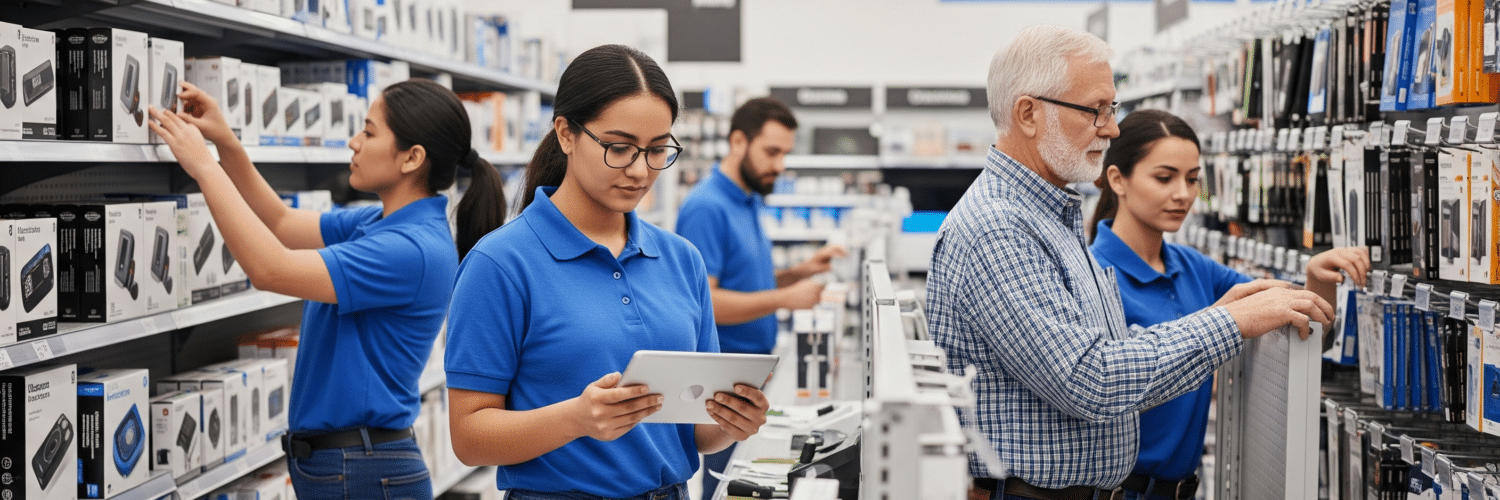
Caption: Technology and skilled execution are essential for accurate planogram implementation and a successful reset.
When Should You Schedule a Store Reset?
Timing is everything. While there’s no single answer for every retailer, here are the most common triggers for a product assortment refresh or full reset:
- Seasonality: Aligning your store for back-to-school, holidays, or summer.
- Major Product Launches: When a key supplier is launching a new, must-have product line.
- Declining Sales: If a category is consistently underperforming, it’s a clear sign that a change is needed.
- New Store Openings: Ensuring a brand-new location is perfectly merchandised from day one.
- Competitive Pressure: When a competitor revamps their space, you may need to respond to maintain your edge.
The Benefits of Partnering with a Retail Merchandising Expert
While some retailers handle resets internally, many partner with specialized companies. An expert partner brings experience, dedicated teams, and advanced technology to the table. This ensures the reset is done quickly, accurately, and efficiently, allowing your store staff to remain focused on what they do best: serving customers. An experienced partner can also provide valuable insights during the planning phase, helping you avoid common pitfalls and maximize your ROI.
Ready to unlock the full potential of your retail space? A well-planned and professionally executed store reset is one of the most powerful investments you can make in your brand’s future.
Frequently Asked Questions about Store Resets
How long does a store reset take?
The timeline varies based on scope. A single-aisle category reset might be done overnight in a few hours, while a full-store reset could take several days or even weeks of coordinated, phased work.
What is the difference between a reset and a remodel?
A reset focuses on the products and movable fixtures within the store. A remodel is more structural, often involving construction, new flooring, lighting, and significant changes to the store’s permanent layout.
How do you measure the ROI of a store reset?
ROI is measured by comparing sales data from before and after the reset. Key metrics include category sales lift, increase in gross margin, and changes in the movement of specific SKUs. Positive ROI confirms the investment was successful.
T-ROC Editorial Team
The T-ROC editorial team brings 20+ years of retail industry expertise across brand ambassador programs, mystery shopping, retail merchandising, and managed technology solutions. Learn more about T-ROC.