

What is Store Within a Store?
A store within a store is a dedicated, branded section of retail floor space operated by one brand inside another retailer’s location. Also called a shop-in-shop or concession retail model, it gives brands direct access to a host retailer’s foot traffic while maintaining a distinct identity, environment, and often a dedicated sales team.
Definition and Overview
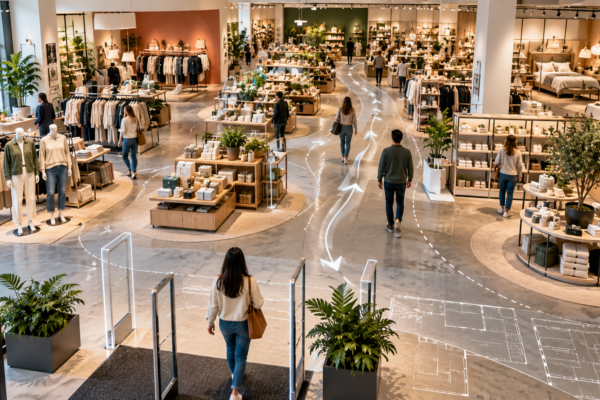
In the store-within-a-store retail model, a brand — often a manufacturer, specialty retailer, or premium label — leases a clearly delineated section of floor space inside a larger host store. That space is outfitted with the brand’s own fixtures, signage, visual merchandising standards, and product assortment. To shoppers, it looks and feels like a mini standalone store, even though it sits inside someone else’s building.
The concept is well established across retail categories: consumer electronics, beauty, apparel, sporting goods, and quick-service food all have mature shop-in-shop ecosystems. The branded shop-in-shop format has grown significantly as brands seek to control the customer experience at the point of sale without the capital commitment of opening freestanding locations.
“A store within a store is not just a display fixture — it is a fully negotiated retail partnership that assigns space, economics, staffing responsibilities, and brand standards to two distinct organizations sharing one physical address.”
The terms store within a store, shop in shop, shop-in-shop, and concession retail are used interchangeably across the industry. “Concession” is particularly common in UK and European markets, where the host retailer grants a concession — a license to sell — to the brand operator.
How Store-Within-a-Store Works
Physical Structure
The branded section is typically defined by flooring changes, low-profile walls or gondola systems, dedicated lighting, and overhead signage. High-end implementations — such as Apple’s shop-in-shop footprint inside Best Buy — use custom architectural elements, premium finishes, and interactive product displays that would be at home in a flagship store. Simpler concession setups may rely on branded endcaps, dedicated fixtures, and a clearly marked perimeter.
Size ranges considerably. A cosmetics brand may occupy 200 square feet at a department store counter, while a major electronics brand might control 2,000 or more square feet of Best Buy floor space. The physical design is almost always governed by the brand’s global or national visual merchandising guidelines.
Commercial Agreements
The commercial relationship between brand and host retailer can be structured in several ways. Under a lease model, the brand pays a fixed rent for the floor space, keeps its own inventory, and employs its own staff. Revenue flows directly to the brand, and the host retailer earns only the lease payment. Under a concession or commission model, the host retailer processes all transactions and remits a pre-agreed percentage of sales to the brand. A wholesale/buy-in model has the retailer purchasing inventory outright, though the brand retains control over fixturing and display standards.
Real-world agreements often blend these structures. The specific terms — revenue share percentages, minimum sales guarantees, refixturing schedules, staffing obligations, and exclusivity clauses — are negotiated at the brand and retail-chain level before any associate sets foot on the floor.
Operational Economics
For brands, the store-within-a-store model offers retail presence at a fraction of the cost of standalone stores. Occupancy cost per square foot is typically shared with the host, store buildout is amortized over the lease term, and access to an established customer flow reduces the marketing spend required to drive traffic. The trade-off is loss of autonomy: operating hours, store layout beyond the branded footprint, POS systems, and overall shopping environment are set by the host.
Benefits for Host Retailers and Brands
Brand: Lower Capital Requirement
Opening a shop-in-shop requires significantly less upfront investment than a freestanding store. Construction costs, lease deposits, and build-out expenses are reduced, freeing capital for product development or marketing.
Brand: Instant Audience Access
Brands immediately tap into the host retailer’s existing foot traffic and loyal customer base, bypassing the years of audience building required to make a standalone store profitable in a new market.
Brand: Controlled Experience
Unlike a standard shelf placement or wholesale relationship, the shop-in-shop format allows brands to control merchandising, demonstrations, and staff training — the full branded experience at point of sale.
Host Retailer: Revenue Diversification
Lease fees, commissions, or increased basket size from destination-brand traffic create new revenue streams without requiring the host to invest in new product categories or supply chain relationships.
Host Retailer: Traffic Generation
Anchor brands within a store — think Ulta in Target or Sephora in Kohl’s — draw customers who may not have entered the host store otherwise, raising total visit frequency and cross-category spend.
Host Retailer: Reduced Operational Burden
When the brand supplies its own staff and manages its own inventory replenishment, the host retailer gains productive floor space without proportionally increasing its own labor or merchandising overhead.
Notable Store-Within-a-Store Examples
The shop-in-shop concept has produced some of the most recognizable in-store experiences in modern retail. The following partnerships illustrate how diverse the model can be across retail categories.
| Brand (Tenant) | Host Retailer | Category | Key Feature |
|---|---|---|---|
| Apple | Best Buy | Consumer Electronics | Apple-trained “Connection” specialists; Apple-designed fixtures; branded demo units matching Apple Store standards |
| Ulta Beauty | Target | Beauty | 850+ sq ft Ulta shop-in-shop; Ulta’s loyalty program honored at Target POS; dedicated beauty advisor staffing |
| Sephora | Kohl’s | Beauty | 200+ Sephora concessions inside Kohl’s stores, complete with Sephora staff and Sephora’s Beauty Insider program |
| Disney | Target | Toys / Entertainment | Disney store shop-in-shop format bringing curated Disney merchandise and branded fixtures to Target floor plans |
| Toys”R”Us | Macy’s | Toy Retail | Post-bankruptcy relaunch via concession spaces inside Macy’s, demonstrating how distressed brands can re-enter retail via the model |
| Various QSR Chains | Walmart, airports, hospitals | Food Service | Fast-food concessions inside larger anchor venues; the host provides space, utilities, and foot traffic |
Each of these partnerships succeeded because both sides brought something the other could not easily replicate alone: the brand brought credibility, differentiated product, and loyal customers; the host brought real estate, operational infrastructure, and an existing shopper base.
Staffing and Brand Representation Challenges
Staffing is consistently the most operationally complex dimension of any store-within-a-store program. The people standing inside that branded footprint represent the brand, not the retailer — yet they operate within a physical and regulatory environment set by someone else. Misaligned incentives, dual reporting lines, and inconsistent training create real business risk.
The Dual-Employer Problem
In many shop-in-shop arrangements, brand representatives are employed either by the brand directly, by the host retailer under a secondment arrangement, or by a third-party field services firm. Each structure creates different accountability dynamics. Brand-employed staff often have deeper product knowledge but may feel isolated from the host store’s culture and support systems. Host-employed staff are operationally convenient but frequently lack the product expertise and brand enthusiasm necessary to drive premium sales.
Consistency Across Locations
A brand operating shop-in-shop concessions across hundreds of host-retailer locations faces an acute consistency challenge. Visual merchandising standards, product demonstration scripts, promotional compliance, and sales behaviors must be enforced at scale without the direct management infrastructure of a standalone store network. A single regional manager cannot physically audit every location on a meaningful cadence. Without a proactive field program, brand standards erode quickly.
Measuring Performance
Attributing sales lift, conversion improvement, and customer satisfaction metrics specifically to the shop-in-shop team — separate from the host store’s overall performance — requires deliberate measurement frameworks. Brands that do not establish clear KPIs from the outset of an agreement often find it difficult to justify continued investment in the concession format when renewal time arrives.
How Brand Ambassadors Power Shop-in-Shop Execution
The most effective store-within-a-store programs deploy dedicated brand ambassadors — sales and engagement specialists who are trained exclusively on the brand’s products, culture, and sales methodology. Unlike generalist retail associates who cover an entire store floor, brand ambassadors own the concession space, proactively engage shoppers entering the brand zone, conduct product demonstrations, and create the immersive brand experience that justifies the shop-in-shop investment.
Brand ambassadors in a shop-in-shop context must navigate a uniquely complex environment. They must build productive relationships with the host retailer’s store management and general staff, because cooperation on scheduling, stocking, and customer escalations directly affects their ability to execute. At the same time, their performance standards, training, and measurement are set by the brand. The best brand ambassadors act as diplomats as much as salespeople.
The staffing model also connects directly to visual merchandising execution. A brand ambassador who notices a planogram deviation, a product facing issue, or a broken fixture does not wait for a scheduled reset visit — they address it immediately and document it through the brand’s field reporting system. This real-time stewardship is a meaningful differentiator between concession programs that generate premium results and those that underperform against forecast.
For brands exploring or scaling shop-in-shop retail, the ambassador staffing model is increasingly being combined with experiential retail tactics — live demonstrations, product trials, and interactive education events staged within the concession footprint to drive traffic from elsewhere in the host store.
How T-ROC Manages In-Store Brand Presence
T-ROC Global — The Revenue Optimization Companies — provides the field infrastructure that brands need to operate store-within-a-store programs at scale. From recruiting and training brand ambassadors to executing visual resets, conducting compliance audits, and delivering performance analytics, T-ROC functions as the operational backbone of a brand’s retail field program.
T-ROC’s model is purpose-built for the shop-in-shop environment. Where a brand’s internal team may lack the geographic coverage, retail-channel relationships, or operational bandwidth to manage hundreds of concession locations, T-ROC provides a managed field force that operates to the brand’s standards while navigating the day-to-day realities of working inside host retailer environments. This includes coordination with store management, alignment with host-retailer labor compliance requirements, and rapid response deployment when stores need support for product launches or promotional events.
Key capabilities T-ROC brings to store-within-a-store programs include dedicated brand ambassador recruiting and onboarding, product knowledge certification programs, scheduled and unannounced visual merchandising audits, real-time field reporting and photo documentation, and performance reporting tied directly to brand-defined KPIs. The result is a concession program that maintains brand standards at the individual store level — not just at launch, but continuously across the full term of the retail partnership.
For retail brands seeking to expand their shop-in-shop footprint without proportionally expanding internal headcount, T-ROC offers a scalable alternative that combines the discipline of a managed services model with the brand fluency of a dedicated field organization.