


What is Retail Field Services?
Retail field services encompass every in-store activity a brand or retailer deploys to drive sales, protect brand equity, and ensure flawless execution at the point of purchase. From stocking shelves and training store associates to auditing displays and running live demo events, field service programs are the operational backbone that connects corporate strategy to the consumer shopping experience.
Retail Field Services: Definition and Overview
Retail field services are the organized, on-the-ground activities performed by a brand’s or retailer’s field force — including merchandising, product training, retail auditing, display installation, and experiential demo programs — to ensure consistent brand execution, product availability, and compliance at the point of sale across physical retail locations.
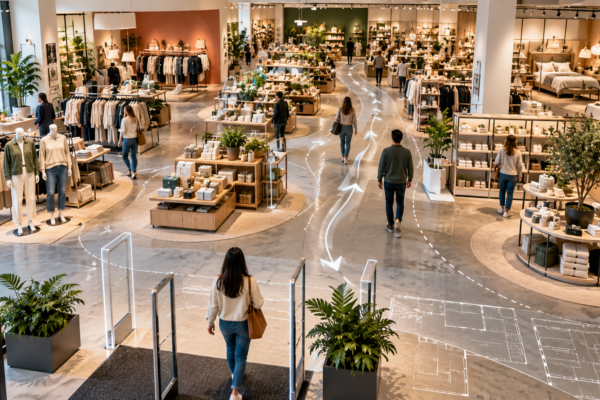
The term “field” reflects the fact that these activities happen outside of a corporate office or distribution center — inside actual stores, on selling floors, in front of real consumers. A robust retail field services program bridges the gap between what a brand plans in a boardroom and what a shopper actually sees when they walk down the aisle.
Field service management in retail has grown in strategic importance as brands compete for finite shelf space, associate mindshare, and shopper attention. Today, leading consumer goods companies, consumer electronics manufacturers, and specialty retailers invest heavily in structured field programs to protect their in-store presence and outperform competitors at the shelf.
Types of Retail Field Services
Retail field services span a wide range of disciplines. The right mix for any brand depends on its product category, channel strategy, and competitive environment. The five core service types are:
Field Merchandising
Ensuring products are properly placed, priced, stocked, and presented according to planograms and promotional guidelines across every account.
Retail Training & Sales Enablement
Educating store associates and retail staff on product features, benefits, and selling techniques to convert shopper interest into purchase decisions.
Retail Auditing & Compliance
Conducting structured in-store visits to verify display compliance, pricing accuracy, and promotional execution — then capturing photographic evidence and corrective actions.
Display & Fixture Installation
Managing the physical setup of point-of-purchase displays, endcaps, gondola builds, and technology fixtures during resets, new store openings, or promotional launches.
Experiential Demo Programs
Deploying trained brand ambassadors to deliver live product demonstrations, sampling events, and hands-on consumer education at high-traffic retail locations.
What Retail Field Service Teams Do Day-to-Day
A well-run in-store field services operation is built on structured daily workflows. While activities vary by program type, a typical day for a retail field representative includes:
- Pre-call planning: Reviewing store history, objectives, and priorities in a field service management app before arriving on site.
- Store check-in: Signing in, greeting store management, and establishing rapport to build long-term account relationships.
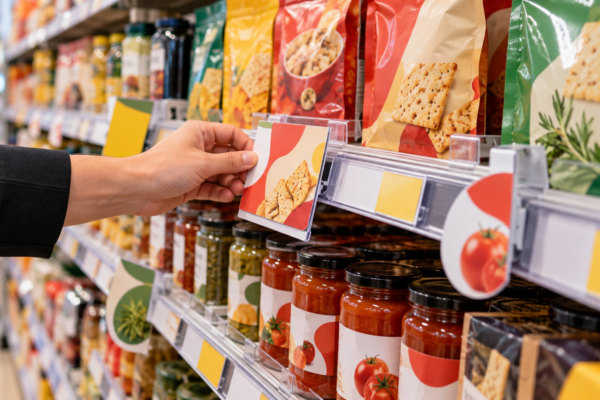
- Shelf and display audit: Walking the department to identify out-of-stocks, misplaced products, incorrect pricing, or non-compliant displays.
- Corrective merchandising: Restocking, facing, and resetting shelves to match approved planograms and promotional schematics.
- Associate engagement: Conducting brief product knowledge sessions, handling objections, and leaving behind sales aids or collateral.
- Data capture: Photographing displays, logging compliance scores, and recording issue resolutions in real time via mobile reporting tools.
- Post-call reporting: Submitting visit summaries, flagging escalations, and syncing data to the brand’s field service management platform.
At the management layer, retail field force leaders analyze aggregated visit data to identify execution gaps, prioritize high-risk accounts, allocate rep coverage, and generate compliance reports for retail buyers and internal stakeholders.
Benefits of Outsourcing Retail Field Services
Many brands and retailers choose to partner with a specialized retail field services provider rather than build an in-house team. The strategic rationale is compelling across several dimensions:
- Immediate scale: An outsourced provider can deploy hundreds or thousands of trained representatives nationwide within weeks — a headcount build that would take an in-house team years.
- Variable cost structure: Brands pay for coverage when and where they need it, eliminating the fixed overhead of a permanent field headcount during off-peak periods or between product launches.
- Specialized expertise: Established field service providers bring deep retail relationships, proprietary technology platforms, and category-specific training capabilities that are difficult to replicate internally.
- Faster time-to-execution: Outsourced teams have existing onboarding infrastructure, trained labor pools, and established store-access protocols — translating strategy into in-store action faster than a standing up a new internal function.
- Data and analytics: Leading providers deliver real-time dashboards, compliance scoring, and geographic performance heat maps that give brand managers visibility they rarely achieve with in-house teams.
- Reduced administrative burden: Recruiting, scheduling, payroll, benefits, and performance management are handled by the provider, freeing brand leadership to focus on strategy and growth.
Key KPIs for Retail Field Service Programs
Measuring the effectiveness of a retail field services program requires a disciplined KPI framework. The most important metrics fall into three categories: execution quality, operational efficiency, and business impact.
| KPI | What It Measures | Target Benchmark |
|---|---|---|
| Planogram Compliance Rate | % of stores where products are placed per approved schematic | 90%+ |
| On-Shelf Availability (OSA) | % of SKUs in-stock and on-shelf during store visits | 95%+ |
| Display Compliance Rate | % of promotional displays correctly executed at audit | 85%+ |
| Stores Covered per Rep per Day | Operational efficiency of field coverage routing | Varies by territory |
| Issue Resolution Time | Average hours from issue flagged to corrective action completed | < 24 hours |
| Associate Training Completion | % of store staff who have received product knowledge sessions | 80%+ per quarter |
| Sales Lift Attributable to Field Activity | Revenue delta in stores with active field coverage vs. control group | Program-specific |
Technology That Powers Field Service Management in Retail
Modern retail field services programs are technology-enabled at every layer. Field service management (FSM) platforms have transformed what was once a clipboard-and-spreadsheet operation into a data-driven, real-time discipline. Key technology components include:
- Mobile field execution apps: Reps use smartphone or tablet applications to receive daily task lists, capture shelf photos, log compliance data, and submit visit reports — all from the store floor.
- Image recognition (IR) and AI shelf auditing: Emerging platforms use computer vision to automatically score shelf compliance from photos, identifying out-of-stocks and planogram deviations faster and more consistently than manual review.
- Territory and route optimization: Scheduling algorithms maximize rep productivity by clustering store visits geographically and prioritizing accounts based on sales volume, compliance history, or promotional importance.
- Real-time dashboards and reporting: Brand managers can view live compliance scores, visit completion rates, and geo-tagged issue logs through web-based dashboards — enabling faster decision-making and retailer reporting.
- Learning management systems (LMS): Digital training platforms deliver product knowledge modules, compliance certifications, and sales enablement content to field reps and store associates at scale.
- CRM and account management integration: High-maturity programs connect field data to CRM systems, linking store-level execution data to buyer conversations and category reviews.
How T-ROC Delivers Retail Field Services at Scale
T-ROC Global — The Revenue Optimization Companies — is a leading retail field services provider with a national footprint across thousands of retail locations in the United States. T-ROC’s integrated service model combines field merchandising, brand ambassador programs, retail auditing, technology-assisted training, and managed services into a single, accountable partner relationship.
What sets T-ROC apart is the combination of retail-specialized talent, proprietary technology, and a performance culture built around measurable outcomes. T-ROC field teams don’t just execute tasks — they operate as brand representatives who understand the retail environment, build relationships with store management, and generate the data brands need to make smarter decisions.
T-ROC’s field service management infrastructure includes:
- A national workforce of trained retail field representatives covering major mass, electronics, home improvement, and specialty channels
- Proprietary scheduling and dispatch technology that optimizes territory coverage and prioritizes high-value accounts
- Real-time compliance reporting with photographic evidence, issue tracking, and executive-level dashboards
- Integrated training programs that upskill both T-ROC field reps and in-store retail associates on behalf of brand partners
- A seasoned retail leadership team with decades of experience managing field programs for Fortune 500 consumer goods and technology brands
Whether a brand needs to launch a new product across 2,000 doors in 30 days, maintain year-round planogram compliance in a competitive category, or deploy a live demo program to drive trial at the shelf — T-ROC provides the workforce, the technology, and the expertise to execute at scale.
Ready to Elevate Your In-Store Execution?
T-ROC designs and deploys retail field services programs that drive measurable results across thousands of retail locations nationwide. Tell us about your program goals and we’ll build a solution around them.