

Retail Conversion Rate Definition
The retail conversion rate — sometimes called the store conversion rate or foot traffic conversion rate — is the percentage of people who enter a retail location and complete a transaction during that visit. It quantifies the relationship between physical store traffic and actual purchasing behavior, giving retail operators an objective measure of how well their floor environment, staff, and product presentation are working together.
Unlike e-commerce, where every click can be tracked with precision, the in-store retail conversion rate depends on accurate people-counting technology at store entrances combined with point-of-sale transaction data. When measured consistently, it becomes one of the most actionable KPIs in a retail performance dashboard.
Key distinction: High foot traffic with a low store conversion rate signals that something inside the store is failing — whether that is staffing levels, product placement, pricing clarity, or the customer experience. Improving conversion on existing traffic is almost always more cost-efficient than acquiring new traffic.
How to Calculate Retail Conversion Rate
The formula for how to calculate retail conversion rate is straightforward:
For multi-location retailers, this calculation should be run at the individual store level before being aggregated, since high-performing and underperforming locations will mask each other in blended averages. Segment by day of week, time of day, and season to expose the patterns that matter most to staffing and merchandising decisions.
Why Conversion Rate Matters More Than Traffic
Driving foot traffic — through advertising, promotions, and location — is expensive. Converting that traffic costs comparatively little, which is why a fractional improvement in store conversion rate typically delivers disproportionate revenue gains. Consider the math: a store receiving 10,000 visitors per month with a 15% conversion rate produces 1,500 transactions. Moving that rate to 18% — a realistic outcome of a structured improvement program — generates 1,800 transactions, a 20% revenue increase with zero additional marketing spend.
Beyond pure revenue, foot traffic conversion is a leading indicator of customer experience quality. Shoppers who enter a store and leave without buying are a direct signal of a gap between brand promise and floor-level delivery. Retailers who track conversion rate alongside Net Promoter Score and associate productivity metrics gain a complete picture of where value is being lost.
Industry Benchmark Ranges by Retail Format
Conversion benchmarks vary significantly by category, price point, and store format. The following ranges reflect typical performance across common retail segments. Benchmarks should be used as directional targets, not universal standards — your baseline is the benchmark that matters most.
| Retail Format | Typical Conversion Range | Key Driver |
|---|---|---|
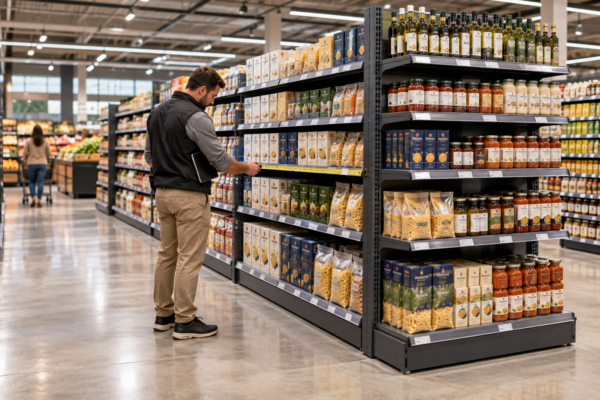
| Grocery / Supermarket | 55% – 75% | Mission-driven shopping |
| Consumer Electronics | 10% – 20% | Assisted selling, product demos |
| Apparel / Fashion | 20% – 35% | Dressing rooms, staff engagement |
| Home Improvement / DIY | 40% – 55% | Project-based purchase intent |
| Specialty / Boutique | 25% – 45% | Personalized service, curation |
| Mobile / Wireless Carriers | 8% – 18% | Contract complexity, staff expertise |
| Sporting Goods | 25% – 40% | Fit testing, knowledgeable associates |
Top Factors That Impact In-Store Conversion Rate
Multiple variables influence whether a browser becomes a buyer. Understanding each one allows retail operators to prioritize the highest-impact interventions.
Staff Availability and Engagement
Understaffing is the leading cause of preventable conversion loss in physical retail. When customers cannot find an associate to answer questions — particularly in considered-purchase categories like consumer electronics, appliances, or sporting goods — the default outcome is departure without purchase. Research consistently shows that customers who receive proactive associate assistance convert at rates two to four times higher than those who browse unassisted.
Visual Merchandising and Product Placement
Shoppers make purchase decisions within seconds of engaging with a display. Poor planogram execution, out-of-stock positions, and cluttered fixtures all suppress conversion. Strategic merchandising that places high-margin and complementary products in natural browse paths increases both conversion rate and average transaction value simultaneously.
Pricing Clarity and Signage
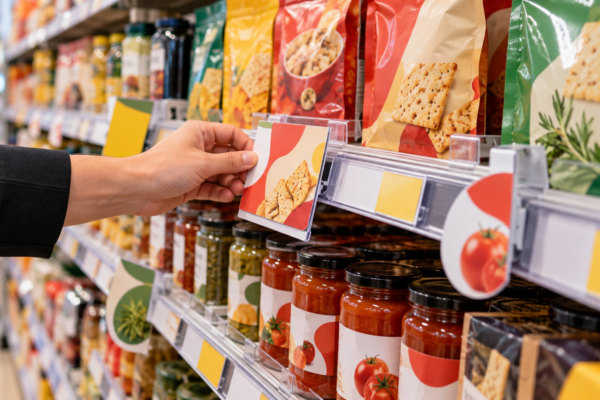
Uncertainty about price is a silent conversion killer. When customers cannot quickly verify a price or understand a promotional offer, friction increases and purchase decisions are deferred. Clear shelf-edge labels, consistent promotional signage, and visible pricing for demo and display units reduce that friction directly.
Store Layout and Navigation
A floor plan that creates logical, intuitive pathways keeps customers engaged with product longer. Conversely, a confusing layout or difficult-to-navigate floor increases the likelihood that a customer will leave before finding what they need. Category adjacencies, clear department signage, and well-designed traffic flow all contribute to higher dwell time and conversion probability.
In-Store Experience Quality
The aggregate retail customer experience — encompassing atmosphere, associate behavior, wait times, and checkout efficiency — shapes purchase decisions at every step. A single friction point, such as a long queue or a dismissive associate interaction, can reverse positive intent that had been building throughout the visit.
How to Improve Retail Conversion Rate
Sustainable conversion improvement requires a structured, multi-channel approach rather than isolated tactical fixes. The following steps reflect how leading retailers build conversion rate gains that hold over time.
-
1
Establish a Measurement Baseline
Deploy people-counting technology at all store entrances and reconcile traffic data with POS transaction records daily. Without a reliable baseline, improvement efforts cannot be accurately measured or credited.
-
2
Invest in Structured Associate Training
Train floor staff on proactive customer engagement, product knowledge, and objection handling. Role-play scenarios tied to your highest-margin and most complex product categories yield the fastest conversion gains. Ongoing coaching — not one-time onboarding — is what sustains improvement.
-
3
Optimize Staffing to Traffic Patterns
Match associate coverage to peak traffic windows by analyzing conversion data by hour and day. Staffing misalignment — too few associates during high-traffic periods — is a structural conversion drag that no amount of training can overcome on its own.
-
4
Audit and Refresh Merchandising Execution
Conduct regular planogram compliance audits and address out-of-stock positions with urgency. In high-SKU environments, assign dedicated merchandising resources to maintain display integrity and promotional compliance.
-
5
Use Mystery Shopping to Identify Hidden Friction
Structured mystery shopping programs reveal the specific moments in the customer journey where conversion breaks down — from initial greeting to product demonstration to close. Objective, consistent observational data surfaces problems that self-reported associate feedback cannot.
-
6
Test, Measure, and Iterate
Run controlled A/B tests on layout changes, signage updates, and staffing models. Use store-level conversion data to validate what is working before scaling across the fleet. Conversion improvement is an ongoing discipline, not a one-time project.
How T-ROC Improves Retail Conversion Rate
T-ROC Global — The Revenue Optimization Companies — is purpose-built to help retailers close the gap between foot traffic and revenue. Our programs address the human and operational factors that determine in-store conversion, across every format and channel.
Brand Ambassador Programs
T-ROC deploys trained, brand-dedicated sales specialists at the floor level inside retail partner locations. These associates are product experts and active salespeople — not passive product demonstrators. By engaging customers proactively, answering questions with authority, and guiding purchase decisions, T-ROC brand ambassadors consistently lift store conversion rates by double digits in consumer electronics, wireless, and other considered-purchase categories. Our ambassadors are embedded in the store environment full-time, creating measurable, sustained conversion improvement that temporary promotional events cannot replicate.
Mystery Shopping and Operational Audits
T-ROC’s mystery shopping programs give retail operators a ground-truth view of the customer journey at the point of sale. Trained evaluators visit stores anonymously, assess associate engagement quality, planogram compliance, pricing accuracy, and checkout experience — then deliver structured, quantitative reports that reveal exactly where conversion is being lost. These insights feed directly into coaching programs, operational corrections, and staffing decisions, creating a continuous improvement loop anchored in objective data rather than assumption.
Retail Merchandising Services
T-ROC merchandising teams maintain the physical conditions that support high conversion rates — ensuring product is in stock, displays are executed to planogram, and promotional materials are current. Clean, well-executed retail environments create the conditions that trained associates and strong products need to close sales. Our field teams operate at scale across thousands of retail locations, bringing consistency that in-house teams rarely achieve alone.
T-ROC by the numbers: Our brand ambassador and retail performance programs serve some of the world’s largest consumer electronics, wireless, and specialty retailers — helping partners measure, manage, and materially improve conversion rate across every store in their network.