

What is In-Store Marketing?
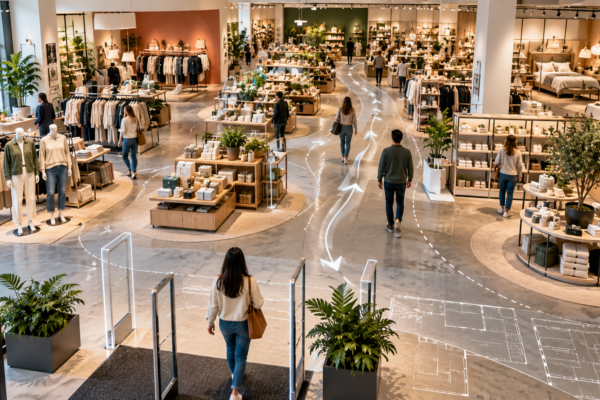
In-store marketing is the practice of promoting products and influencing purchase decisions inside a physical retail environment. It encompasses every tactic—displays, signage, demonstrations, sampling, and trained brand representatives—deployed between the store entrance and the checkout to move a shopper from browsing to buying.
Seventy-six percent of purchase decisions are made at the point of sale. That single statistic explains why brands invest heavily in what happens inside the store, not just in the ads that drove a shopper there in the first place. In-store marketing is the discipline that captures those final moments—turning foot traffic into revenue.
For brands competing on crowded shelves, in-store marketing is not a nice-to-have. It is the last mile of the customer journey, and it is often the most decisive.
The Five Core Types of In-Store Marketing
In-store marketing is not a single tactic. It is a toolkit. Each element targets a different stage of the shopper’s path through the store.
Point-of-Sale (POS) Displays
Freestanding units, counter displays, and floor stands positioned near the register or at high-traffic intersections. POS displays interrupt the shopper’s routine and prompt unplanned purchases by putting the product directly in the path of travel.
Endcap Displays
The shelving units at the end of each aisle command the highest visibility in most grocery, mass, and home improvement stores. Brands pay a premium for endcap placement because shoppers encounter them whether or not they walk down the corresponding aisle.
In-Store Signage
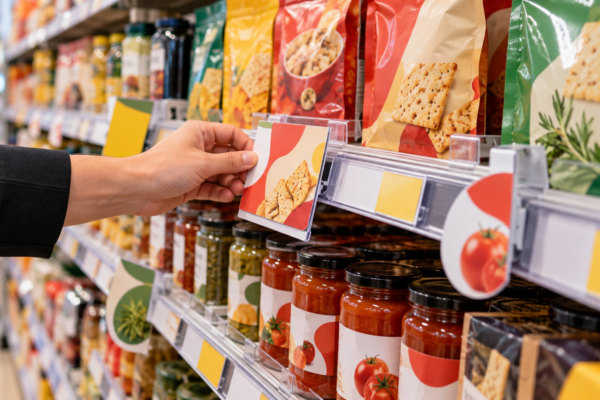
Shelf talkers, ceiling banners, window clings, floor graphics, and digital screens that communicate price, features, and brand story. Good signage answers the shopper’s implicit question—”why this one?”—in two seconds or less.
Product Demonstrations
Live or interactive demonstrations let shoppers experience a product before committing. A trained rep showing how a blender works or how a skincare serum feels builds conviction that a shelf tag cannot replicate.
Sampling Programs
Sampling removes the perceived risk of trying something new. Whether it is a food sample, a fragrance strip, or a trial-size takeaway, getting the product into a shopper’s hands—or mouth—consistently lifts purchase rates on the same visit.
These five tactics rarely operate in isolation. The highest-performing in-store programs layer them: an endcap display draws the shopper in, a shelf talker communicates the offer, a trained ambassador answers questions, and a sample closes the deal.
In-Store Marketing vs. Digital Marketing
Digital and in-store marketing are not competing strategies—they operate at different points in the same funnel. Understanding where each is strongest prevents brands from over-investing in one at the expense of the other.
| Dimension | In-Store Marketing | Digital Marketing |
|---|---|---|
| Primary goal | Convert at point of purchase | Build awareness and drive traffic |
| Timing | Bottom of funnel — decision moment | Top and middle of funnel — consideration |
| Shopper touchpoint | Physical, sensory, real-time | Screen-based, asynchronous |
| Measurement cycle | Sell-through data, direct observation | Clicks, impressions, ROAS |
| Brand differentiation lever | Human interaction, product experience | Creative content, targeting precision |
| Competitive exposure | High — competitor products are nearby | Medium — ads can be targeted to owned audiences |
A shopper who saw your digital ad and walked into the store is already warm. In-store marketing is what converts that warmth into a sale. Neither channel is sufficient alone; together they form a closed loop.
The Role of Field Merchandising in In-Store Marketing
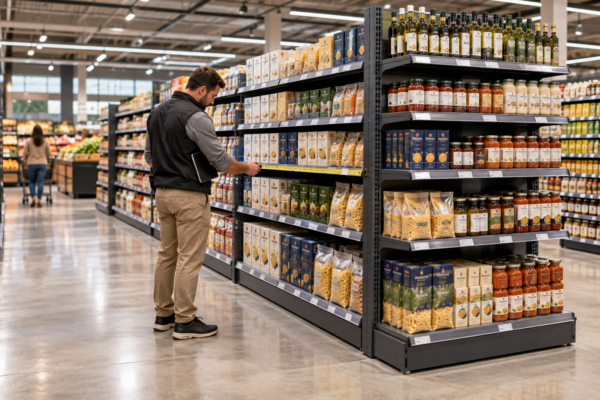
Displays do not build themselves. Signage does not stay compliant between retailer resets. Field merchandising is the operational layer that makes in-store marketing programs work at scale across hundreds or thousands of doors.
A field merchandising team handles:
- Display installation and placement verification at store opening
- Shelf resets to ensure planogram compliance after retailer changes
- Stock rotation and facing correction to prevent out-of-stocks
- Competitive auditing to track how rivals are using floor and endcap space
- Reporting back to brand and sales teams with store-level intelligence
Without consistent field execution, even the best-designed in-store marketing program underperforms. A display that is damaged, misplaced, or never stocked defeats the investment made in design and logistics. Field merchandisers close that gap between intent and reality.
The Role of Brand Ambassadors
Signage tells. Ambassadors sell. Brand ambassador programs place trained, brand-aligned representatives inside retail locations to demonstrate products, answer questions, and guide shoppers toward a purchase decision.
Ambassadors are most effective in categories where the product requires explanation—consumer electronics, health and wellness, premium food and beverage, skincare, and home appliances. In these categories, a five-minute conversation with a knowledgeable rep converts at a rate no display alone can match.
The measurable lift from ambassador programs is not trivial. Brands using dedicated in-store reps consistently report higher units per transaction, stronger attachment rate on accessories, and improved Net Promoter Scores compared to stores without coverage. The rep is not just a sales asset—they are a real-time feedback channel, surfacing objections, competitive moves, and inventory issues that brand headquarters would otherwise miss.
In-store marketing strategy, field merchandising execution, and brand ambassador coverage together form a complete shopper marketing system—each layer reinforcing the other.
Measuring In-Store Marketing Effectiveness
In-store marketing has historically been harder to measure than digital. That gap has narrowed significantly as point-of-sale data, field reporting technology, and loyalty card analytics have matured.
The metrics that matter most:
- Sell-through rate: Units sold as a percentage of units stocked during the program period. The most direct measure of conversion.
- Sales lift vs. control stores: Compare stores running the in-store program against matched stores without it. Isolates the program’s contribution from baseline demand.
- Display compliance rate: The percentage of stores where the display was installed correctly and on time. Low compliance explains poor sell-through before blaming the creative.
- Basket size and attachment rate: Did ambassador or demo coverage increase the average transaction value or attach complementary products?
- Return on program investment (ROPI): Total incremental revenue generated divided by total program cost—including labor, materials, and logistics.
- Shopper dwell time: Time spent in the display area. Higher dwell time correlates with higher engagement and, typically, higher conversion.
The most rigorous programs combine sell-through data from the retailer’s POS system with field observation reports submitted by merchandising reps. That pairing answers two distinct questions: what sold, and why it sold (or did not).
Building an In-Store Marketing Program That Executes
Strategy without execution is a planning document. In-store marketing programs fail most often not because the creative was wrong but because the field operation behind it was under-resourced or poorly coordinated.
The brands that consistently win at retail treat in-store marketing as a discipline with its own infrastructure: trained field teams, clear compliance standards, real-time reporting, and a feedback loop that connects store-level data back to brand and sales leadership.
That infrastructure is exactly what T-ROC Global builds for retail brands across North America—from single-door pilots to national rollouts covering thousands of retail locations.
Ready to Activate Your In-Store Marketing Program?
T-ROC Global deploys field merchandising teams and brand ambassador programs at scale. See how we do it—or talk to our team directly.