




Definition & Guide
What Is Field Sales Outsourcing? Definition, Benefits & ROI
Field Sales Outsourcing Definition
Field sales outsourcing is the practice of partnering with a third-party provider to recruit, train, deploy, and manage in-store sales representatives who sell products, deliver brand experiences, and execute merchandising strategies on behalf of a brand at retail locations — replacing or supplementing an internal field sales team.
What Is Field Sales Outsourcing?
Field sales outsourcing is a B2B service model in which a brand, manufacturer, or retailer contracts a specialized provider to build and manage a dedicated sales team that operates at retail locations on the brand’s behalf. The outsourcing partner handles the entire workforce lifecycle — recruiting, hiring, training, scheduling, performance management, and reporting — while the brand retains strategic control over messaging, sales priorities, and program goals.
This model exists because selling through third-party retail channels creates a fundamental challenge: when your products sit on someone else’s shelf, staffed by someone else’s employees, you lose control over the customer experience. Retail store associates manage dozens of brands simultaneously and cannot give any single brand the focused attention it needs to maximize sell-through.
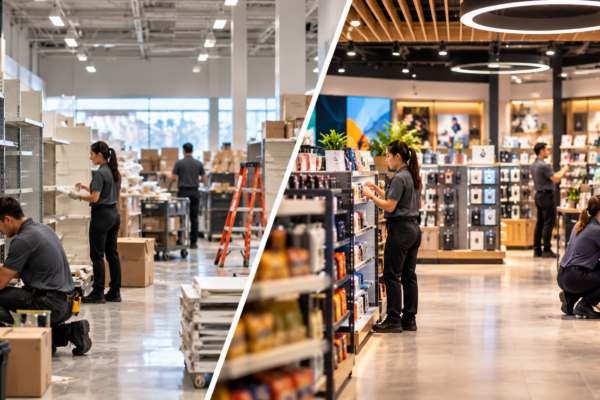
Field sales outsourcing solves this by placing trained, dedicated brand representatives directly on the retail sales floor. These representatives become product experts who engage customers, demonstrate products, overcome objections, and close sales — serving as an extension of the brand inside the retail environment.
T-ROC’s brand ambassador services are a leading example of field sales outsourcing, deploying thousands of trained sales representatives across major retail chains nationwide. For a broader perspective on retail outsourcing models, see the retail outsourcing definition page.
Types of Field Sales Outsourcing Models
Field sales outsourcing takes several forms depending on coverage needs, budget, and strategic objectives:
- Dedicated Brand Representatives: Full-time or part-time sales representatives assigned exclusively to one brand. They work consistent schedules at specific retail locations, developing deep product expertise and building relationships with store staff and customers. This model delivers the strongest brand representation and is ideal for premium products with complex selling processes.
- Shared Sales Teams: Representatives cover multiple non-competing brands across a set of retail locations. This model reduces cost per brand by sharing labor across multiple clients while still providing trained, in-store representation. Best suited for brands with lower foot traffic or seasonal demand patterns.
- Event & Launch Teams: Short-term, high-intensity sales teams deployed for product launches, seasonal campaigns, or promotional events. These teams are recruited and trained specifically for the event period — typically 2-12 weeks — and scaled down after the campaign ends.
- Merchandising + Sales Hybrid: Representatives handle both selling and merchandising responsibilities — setting displays, stocking shelves, auditing compliance, and engaging customers. This model maximizes the value of each store visit by combining execution and sales in one role.
- Performance-Based Programs: The outsourcing partner’s compensation is tied directly to sales results — units sold, revenue generated, or conversion rate improvement. This model aligns incentives between brand and provider but requires robust tracking and attribution systems.
The right model depends on product complexity, sales volume, geographic footprint, competitive landscape, and budget. Many brands start with a focused pilot and expand based on demonstrated ROI.
Benefits of Field Sales Outsourcing
Brands that outsource field sales to specialized providers gain significant advantages over building and managing internal teams:
- Speed to Market: An experienced outsourcing partner can recruit, train, and deploy a field team in 4-8 weeks. Building an equivalent internal team from scratch typically takes 3-6 months and requires building recruitment, training, and management infrastructure that the brand may not have.
- Scalability & Flexibility: Outsourced programs can scale up for holiday seasons, product launches, and promotional campaigns, then scale down during slower periods. This elasticity is nearly impossible with internal payroll-based teams.
- Reduced Fixed Costs: Outsourcing converts fixed labor costs (salaries, benefits, HR overhead, workers’ compensation) into variable program costs that flex with business needs. Brands avoid the carrying cost of maintaining a large internal field force during low-volume periods.
- Access to Retail Expertise: Specialized outsourcing providers have deep relationships with retail chains, established recruiting pipelines in local markets, proven training methodologies, and operational infrastructure purpose-built for field team management.
- Performance Accountability: Outsourcing partners are contractually accountable for results. KPIs, SLAs, and regular business reviews create a level of performance discipline that internal teams — without the same external accountability pressure — often lack.
- Data & Reporting: Leading outsourcing partners provide real-time dashboards, sales tracking, compliance reporting, and competitive intelligence from the field — data that brands would need to build significant infrastructure to capture internally.
The combined effect of these benefits is that outsourced field sales programs typically deliver higher per-dollar returns than internal teams, particularly for brands entering new retail channels or geographic markets.
How Field Sales Outsourcing Works
A well-structured field sales outsourcing engagement follows a disciplined lifecycle from program design through continuous optimization:
- Discovery & Program Design: The brand and outsourcing partner jointly define program objectives, target retailers and locations, ideal rep profiles, coverage schedules, training requirements, KPIs, and reporting cadence. Clear expectations at this stage prevent misalignment later.
- Recruitment & Hiring: The provider recruits from its existing talent network and local markets, screening for retail experience, product aptitude, communication skills, and cultural fit. Top providers maintain standing talent pools that accelerate hiring timelines.
- Training & Certification: Representatives complete brand-specific training covering product knowledge, selling techniques, competitive positioning, merchandising standards, and reporting procedures. Certification testing ensures readiness before field deployment.
- Field Deployment: Trained representatives are placed at assigned retail locations according to the coverage plan. Initial weeks focus on relationship building with store management and establishing presence on the sales floor.
- Performance Management: Field managers conduct regular store visits, review sales data, provide coaching, and address performance gaps. The provider manages scheduling, attendance tracking, and day-to-day operational issues.
- Reporting & Optimization: Weekly and monthly reports track sales metrics, compliance scores, market intelligence, and program ROI. Regular business reviews identify optimization opportunities — adjusting schedules, reallocating coverage, refining training, or testing new sales approaches. T-ROC’s retail staffing solutions follow this proven lifecycle to deliver measurable results for brands across every major retail channel.
The ongoing optimization phase is where the real value compounds. Static programs plateau. Programs that continuously analyze data, test hypotheses, and refine execution deliver increasing returns over time.
Measuring Field Sales Outsourcing ROI
Proving ROI is critical for sustaining and expanding field sales outsourcing investments. The following metrics form the foundation of a robust ROI framework:
- Sales Lift: Compare sales at stores with outsourced representatives versus matched control stores without representation. This A/B comparison isolates the incremental revenue directly attributable to the outsourced team. Well-run programs typically show 15-40% sales lift in covered stores.
- Revenue Per Rep Hour: Total incremental revenue divided by total rep hours deployed. This efficiency metric enables apples-to-apples comparison across locations, regions, and time periods.
- Conversion Rate Impact: Measure conversion rate (visitors to buyers) in covered versus non-covered stores. Trained representatives who actively engage shoppers can improve conversion rates by 20-50%.
- Average Transaction Value: Track whether outsourced reps drive higher-value transactions through upselling, bundling, and premium product positioning compared to stores without dedicated representation.
- Brand Compliance Scores: Measure display compliance, planogram adherence, and promotional execution rates in covered stores. Merchandising compliance directly correlates with sell-through performance.
- Total Program ROI: Calculate (Incremental Revenue – Program Cost) / Program Cost. A well-optimized field sales outsourcing program typically delivers 3-5x ROI, meaning every dollar invested generates $3-$5 in incremental revenue.
The most important ROI discipline is establishing baselines before program launch. Without clean pre-program data, it is impossible to attribute results accurately. Build measurement into the program design from day one.
Frequently Asked Questions About Field Sales Outsourcing
What is the difference between field sales outsourcing and a staffing agency?
A staffing agency provides temporary workers to fill positions but typically does not manage training, performance, or program outcomes. A field sales outsourcing partner takes end-to-end responsibility for recruiting, training, deploying, managing, and optimizing a sales team against defined KPIs. The outsourcing partner owns the outcome — not just the headcount.
How much does field sales outsourcing cost?
Field sales outsourcing costs vary based on team size, geographic coverage, skill requirements, and program complexity. Pricing models include cost-per-rep, cost-per-hour, or performance-based structures. Most programs range from $25-$65 per hour per representative including all management overhead, training, and reporting. Performance-based components can adjust costs based on sales results.
How long does it take to launch a field sales outsourcing program?
A typical field sales outsourcing program can launch in 4-8 weeks from contract signing. This includes program design (week 1-2), recruitment and hiring (weeks 2-4), training and certification (weeks 3-5), and field deployment (weeks 5-8). Experienced outsourcing partners with existing talent pools and established retail relationships can accelerate this timeline significantly.
What industries use field sales outsourcing?
Field sales outsourcing is most common in consumer electronics, telecommunications, consumer packaged goods, automotive aftermarket, health and beauty, home improvement, and sporting goods. Any brand that sells through third-party retail channels and needs dedicated representation at the store level is a candidate for field sales outsourcing.
How do you measure the ROI of field sales outsourcing?
ROI is measured by comparing incremental revenue generated by the outsourced team against the total program cost. Key metrics include sales lift per location (comparing stores with outsourced reps versus control stores), revenue per rep per hour, customer conversion rate improvement, average transaction value increase, and brand compliance scores. A well-run program typically delivers 3-5x return on investment.
Outsource Your Field Sales With Confidence
T-ROC deploys trained, dedicated sales teams across major retail channels nationwide. From consumer electronics to CPG, we help brands increase sell-through and protect their brand at the shelf.