


\n\n
Mystery Shopping Services: The Complete Guide for Retail Brands (2026)
\n\n
Your stores are staffed. Your training programs are funded. Your brand standards are documented. And yet, somewhere between the corporate policy manual and the moment a shopper walks through the door, things break down. A product demo never happens. A greeting goes undelivered. A compliance display sits unstocked for three weeks.
\n\n
This is the problem a professional mystery shopping service is designed to solve. Not by watching from a distance, but by experiencing your retail environment exactly the way a real customer does — then converting those observations into structured, actionable data.
\n\n
This guide covers everything retail brands need to know in 2026: what mystery shopping is, why it remains essential alongside modern tech, how programs are structured, which industries benefit most, and how to evaluate providers. Whether you are building a program from scratch or auditing an existing one, use this as your reference.
\n\n
\n\n
1. What Is Mystery Shopping?
\n\n
The Core Definition
\n\n
Mystery shopping is a structured market research method in which trained evaluators pose as ordinary customers, interact with a retail environment — physical or digital — and document their experience against a defined scorecard. Unlike a customer satisfaction survey, which captures sentiment after the fact, mystery shopping captures behavior in the moment: what the associate said, whether the display was compliant, how long the wait was, whether the right question was asked.
\n\n
The evaluator’s identity is concealed throughout the visit. That concealment is the mechanism. When staff do not know they are being observed, you get a true read on what actually happens — not a performance staged for an audit.
\n\n
A Brief History
\n\n
Mystery shopping traces its commercial origins to the 1940s, when financial institutions in the United States began using undercover evaluators to test teller honesty. By the 1970s and 1980s, the practice spread into retail and foodservice as brand consistency became a competitive differentiator. Franchise models especially relied on mystery shopping to enforce standards across geographically dispersed locations without a corporate manager at every counter.
\n\n
The internet era transformed the methodology. Digital mystery shops — evaluating e-commerce checkout flows, live chat support, and online customer service — became standard by the 2010s. Today, programs run across in-store, online, phone, and omnichannel environments simultaneously.
\n\n
Modern Relevance
\n\n
Retail in 2026 is more complex than it has ever been. Associates handle BOPIS pickups, mobile POS, subscription enrollments, and live product demonstrations — often in a single shift. The scope of what can go wrong is wide. Mystery shopping remains the only method that observes the full, unscripted customer interaction in real time, from entry to exit, and scores it against the brand standard you actually wrote.
\n\n
For a deeper orientation, see our ultimate guide to mystery shopping.
\n\n
\n\n
2. Why Mystery Shopping Still Matters in 2026
\n\n
Cameras See Behavior. They Do Not Capture Conversation.
\n\n
Security and operations cameras have become dense in retail. Many store operators assume that surveillance coverage reduces the need for mystery shopping. It does not. Cameras capture body language and foot traffic. They do not capture whether your associate recommended the right protection plan, whether they asked a needs-based question before pitching an upsell, or whether they accurately represented your product’s compatibility with a competitor’s ecosystem.
\n\n
Those conversational moments — the ones invisible to cameras — are often the highest-value touchpoints in the purchase journey. They are what drives attach rate in consumer electronics, contract conversion in telecom, and repeat visits in QSR.
\n\n
Surveys Measure Sentiment. Mystery Shopping Measures Execution.
\n\n
Post-transaction surveys are valuable. But a customer who rates a visit four out of five stars and writes “great experience” cannot tell you whether the associate missed an upsell, skipped a compliance disclosure, or gave inaccurate product information. The customer did not know what should have happened. A trained mystery shopper does.
\n\n
The Observation Effect Does Not Last
\n\n
When staff are told they are being evaluated, behavior changes temporarily. That effect fades within days. Mystery shopping applies continuous, randomized observation pressure that keeps standards top of mind without requiring a manager to be present in every location.
\n\n
T-ROC’s evaluators operate across a national network, visiting stores with the same frequency and randomization that produces statistically valid, location-level data — not anecdotes. Read more about mystery shoppers in the age of tech.
\n\n
\n\n
3. The 7 Business Benefits of a Mystery Shopping Program
\n\n
1. Objective Baseline for Training ROI
\n\n
Before investing in a new training initiative, you need a baseline. Mystery shopping scores at the associate and location level give L&D teams a factual starting point. Post-training re-evaluations measure whether the investment changed behavior.
\n\n
2. Brand Standard Enforcement at Scale
\n\n
A brand operating in 2,000 retail doors — many of them third-party dealer or big-box locations — cannot rely on periodic district manager visits to enforce standards. Mystery shopping extends your oversight to every door, every week, at a fraction of the cost of additional field staff.
\n\n
3. Competitive Intelligence
\n\n
Mystery shopping programs routinely include competitor visits using identical scorecards. The output is a direct, apples-to-apples comparison of your customer experience versus a named competitor across price presentation, associate knowledge, promotional compliance, and conversion technique.
\n\n
4. Associate Performance Data for Coaching
\n\n
Aggregate mystery shopping data identifies which behaviors are consistently underperforming across your network — and which locations are outliers in either direction. High-scoring locations become models for coaching; low-scoring ones receive targeted intervention before the problem compounds into churn.
\n\n
5. Compliance Verification
\n\n
Regulatory disclosures, promotional pricing, and visual merchandising standards each carry operational and legal consequences when missed. Mystery shopping creates a documented record of compliance status at a specific location on a specific date — a record that matters in disputes, audits, and franchise enforcement.
\n\n
6. Customer Experience Consistency
\n\n
Consumers in 2026 expect the same experience whether they walk into a flagship store in Chicago or a dealer location in a mid-market suburb. Mystery shopping quantifies the gap between those experiences and provides the data required to close it systematically.
\n\n
7. Revenue and Conversion Lift
\n\n
This is the metric that justifies program investment at the executive level. Brands that correlate mystery shopping scores with conversion rate and average transaction value consistently find that high-scoring stores outperform low-scoring stores. T-ROC’s Retail360 platform makes that correlation explicit, connecting behavioral data from mystery shopping to POS outcomes so clients can see the revenue impact directly. Learn how mystery shoppers improve customer experience and the bottom line.
\n\n
\n\n
4. Mystery Shopping vs. Customer Surveys: Why You Need Both
\n\n
The debate between mystery shopping and customer surveys misframes the question. They are not substitutes. They are complementary instruments measuring different things.
\n\n
What Surveys Do Well
\n\n
Customer satisfaction surveys capture the subjective experience of real buyers at scale. They surface sentiment trends — whether your NPS is declining across a region, whether a new store format is resonating with your demographic, whether a specific product category is generating frustration. Survey data aggregates naturally and is inexpensive per data point.
\n\n
What Surveys Cannot Do
\n\n
Surveys cannot tell you why the experience was positive or negative. A customer who rates a visit poorly does not know whether the associate skipped a step in the selling process, presented an incorrect promotion, or failed to mention a product feature that would have changed the outcome. They experienced a result. They did not observe a process.
\n\n
What Mystery Shopping Adds
\n\n
Mystery shopping answers the process question. When a region’s NPS drops, mystery shopping data tells you whether the decline correlates with a specific behavioral failure — greeting rate dropping, product knowledge scores declining after a new SKU launch, upsell attempts disappearing after a staffing change. That diagnosis is what makes corrective action possible.
\n\n
Combined, the two data sources create a complete picture: survey data tells you the customer felt something; mystery shopping data tells you what caused it.
\n\n
\n\n
5. How a Professional Mystery Shopping Service Works
\n\n
Understanding the process end to end helps brands set realistic expectations and get more value from their program. Here is how T-ROC structures a typical engagement.
\n\n
Phase 1: Program Briefing and Scorecard Design
\n\n
Every program begins with a scoping conversation. What are the specific behaviors, compliance requirements, or customer experience moments that matter most to your brand right now? Those priorities translate directly into scorecard design. A telecom client focused on plan upsell will have a different scorecard than a grocery client focused on deli service speed and produce presentation.
\n\n
T-ROC’s team works with brand managers, field operations leads, and training directors to ensure the scorecard captures what is actually tied to revenue and compliance — not a generic checklist. Demographic and visit-type parameters (time of day, day of week, transaction scenario) are defined at this stage.
\n\n
Phase 2: Evaluator Selection and Briefing
\n\n
Evaluator matching is a function of the visit scenario. A mystery shop designed to evaluate a high-end electronics purchase requires an evaluator who can credibly portray a researched buyer considering a $1,200 laptop. A QSR drive-through audit requires speed, accuracy, and the ability to document under time pressure.
\n\n
T-ROC maintains a national evaluator network. Evaluators are recruited for specific program profiles, trained on the brand standards being evaluated, and briefed on scenario details before each wave of visits. They do not freelance the interaction — they execute a defined scenario that produces comparable data across every location in the program.
\n\n
Phase 3: Field Execution
\n\n
Visits are conducted according to the wave schedule — often monthly or quarterly per location, with some programs running weekly for high-priority doors. During the visit, the evaluator observes and participates in the customer experience as defined by the scenario. Immediately after the visit, they complete the digital scorecard while the interaction is fresh.
\n\n
For in-store programs, evaluators may capture photo evidence of display compliance, promotional material placement, or product availability. For digital programs, screen recording and chat transcript capture provide the equivalent documentation.
\n\n
Phase 4: Reporting and Analytics
\n\n
Raw evaluation data flows into the reporting platform. T-ROC’s Retail360 analytics layer aggregates scores by location, district, region, and national benchmark. Trend lines show whether a specific behavior is improving or declining over time. Heatmaps identify geographic clusters of underperformance.
\n\n
Reports are designed for multiple audiences: field managers need location-level scorecards; regional directors need ranking and trend data; brand executives need program-level benchmarks and ROI indicators. T-ROC delivers all three without requiring the client to rebuild the data themselves.
\n\n
Phase 5: Action Planning
\n\n
Data without action is cost without return. T-ROC’s program managers work with brand clients to translate report findings into specific field interventions: retraining on a specific behavior, a coaching cadence for a struggling district, recognition for a high-performing location. The action planning step closes the loop between insight and outcome — the gap that causes most mystery shopping programs to underdeliver.
\n\n
See our retail mystery shopping guide for a more detailed look at program structure and best practices.
\n\n
\n\n
6. Mystery Shopping by Industry
\n\n
Consumer Electronics
\n\n
Electronics retail is one of the highest-stakes environments for mystery shopping. Associates are expected to demonstrate products, recommend accessories, present protection plans, and navigate complex trade-in and financing options — all in a single interaction. The margin for failure at any step is significant.
\n\n
Mystery shopping in consumer electronics typically evaluates product knowledge accuracy, demonstration rate, accessory attachment, and protection plan presentation. Brands selling through third-party retail — a major-chain electronics department or a carrier store — rely especially heavily on mystery shopping because they cannot directly manage the associates representing their product.
\n\n
T-ROC’s work in this category is detailed in our resource on mystery shopping in consumer electronics.
\n\n
Telecom
\n\n
Wireless retail is built on conversion: converting walk-ins to plan sales, existing customers to upgrades, and device buyers to add-on services. Mystery shopping evaluates whether associates are executing the needs-based discovery process that drives those conversions — asking the right questions, presenting the right options, handling objections with product knowledge rather than price concession.
\n\n
Telecom brands also use mystery shopping to evaluate in-store compliance with carrier-branded display requirements and promotional pricing accuracy. See our resource on mystery shopping for Best Buy brands for a case study in third-party retail compliance.
\n\n
Grocery and Specialty Food
\n\n
Grocery mystery shopping spans customer service in high-touch departments — deli, bakery, prepared foods, wine — through to stock availability, cleanliness standards, and self-checkout experience. For specialty and premium grocery brands, the evaluation often extends to whether departmental staff can answer product provenance questions or make pairing recommendations.
\n\n
Store brand compliance — ensuring that private-label products are correctly positioned and promoted relative to national brands — is another common grocery application.
\n\n
Quick Service Restaurants (QSR)
\n\n
QSR mystery shopping prioritizes speed, order accuracy, food quality presentation, and upsell execution. In a drive-through environment, the time from order to delivery is a scored metric. In a dining room, cleanliness cadence and staff greeting behavior are standard evaluation points.
\n\n
For franchise systems, mystery shopping also enforces health and safety compliance documentation — a category with direct regulatory consequence and significant liability exposure if gaps go undocumented.
\n\n
Automotive
\n\n
Automotive dealership mystery shopping evaluates the full sales process: initial greeting, needs discovery, vehicle presentation, test drive offer, financing introduction, and follow-up cadence. OEM brands use mystery shopping to ensure that dealerships are representing their product line accurately and maintaining the brand experience standards required by dealer agreements.
\n\n
Service department evaluations — scheduling responsiveness, wait time accuracy, explanation of work performed — are increasingly common as OEMs recognize that service retention is as important as new-vehicle sales to long-term brand loyalty.
\n\n
\n\n
7. Retail Compliance Audits: Mystery Shopping’s Tactical Cousin
\n\n
Mystery shopping evaluates the customer experience. Retail compliance audits evaluate the physical and operational environment. The two are closely related and often run in parallel, but they serve different primary functions.
\n\n
What a Retail Compliance Audit Covers
\n\n
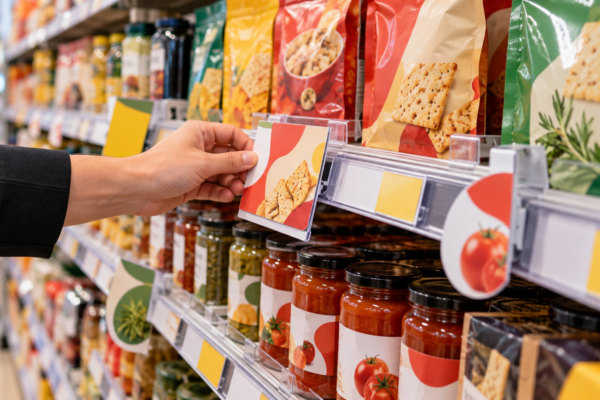
A compliance audit evaluates whether a store or department meets defined standards in categories that do not require a customer interaction to assess: planogram execution, promotional display placement and accuracy, product availability on shelf, signage correctness, pricing accuracy, and sometimes inventory count verification.
\n\n
Compliance audits are conducted by trained field representatives — not mystery shoppers — who identify themselves to store management and conduct a systematic walkthrough against a defined checklist. The output is a photographic and scored record of compliance status at the visit date.
\n\n
Why Brands Need Both
\n\n
A store can have perfect planogram compliance and deliver a poor customer experience. A store can score high on associate behavior and have chronic out-of-stock conditions. Neither program alone gives you the full picture. Combined, mystery shopping and compliance auditing tell you whether your product is correctly placed and available, and whether the people selling it are equipped to do so effectively.
\n\n
T-ROC delivers both capabilities under a unified analytics framework, meaning clients see compliance audit results and mystery shopping scores in the same platform — correlated against sales performance. Learn more about our approach to retail compliance.
\n\n
\n\n
8. How to Choose a Mystery Shopping Company: 5 Critical Questions
\n\n
1. Do They Have Evaluators Who Match Your Customer Profile?
\n\n
The demographic match between your evaluator pool and your actual customer base matters. A mystery shopping company with a thin evaluator network will send whoever is available. A company with a national, deep network can recruit evaluators who match the age range, household income, and shopping behavior of your real customer. The credibility of the visit scenario depends on that match.
\n\n
2. How Do They Handle Data Quality and Evaluator Validation?
\n\n
Ask specifically: what is their process for catching fabricated or low-quality evaluations? Strong programs include visit validation through receipt documentation, geo-stamped submission timestamps, photo evidence requirements, and narrative response screening. Without those controls, your data is only as reliable as the honor system.
\n\n
3. What Does the Reporting Platform Look Like?
\n\n
A program that generates PDF reports mailed to a single contact is not a program designed for action. The reporting platform should deliver role-specific views — location manager, district manager, regional VP, brand executive — with trend data, location rankings, and drill-down capability on individual visits. It should connect to your existing data sources, not create another data silo.
\n\n
4. Can They Integrate Behavioral Data with Sales Outcomes?
\n\n
This is the question that separates a reporting vendor from a strategic partner. If your mystery shopping provider can correlate evaluation scores with POS data and show you that locations scoring above a threshold on product demonstration outperform lower-scoring locations by a measurable revenue margin, you have a business case for every future program investment. If they cannot make that connection, you are buying observations without outcomes.
\n\n
T-ROC’s Retail360 platform is specifically built to make this connection. Mystery shopping data, compliance audit data, sell-through data, and training completion data are all visible in a unified view — because the gap between insight and action is where most programs lose their value.
\n\n
5. What Is Their Industry Experience?
\n\n
Evaluating a wireless carrier store and evaluating a QSR drive-through require fundamentally different evaluator preparation, scenario design, and scorecard logic. A provider with deep experience in your vertical will have standard scorecard elements, benchmarking data from comparable programs, and calibrated evaluators — advantages a generalist provider cannot match.
\n\n
T-ROC serves Fortune 100 brands in consumer electronics, telecom, grocery, and QSR. Our evaluator network, program design methodology, and analytics infrastructure are built around the specific complexity of those retail environments.
\n\n
\n\n
9. Measuring the ROI of Mystery Shopping Programs
\n\n
The Standard ROI Framework
\n\n
ROI measurement for mystery shopping programs follows the same logic as any field investment: what did it cost, what changed as a result, and what is that change worth in revenue or cost avoidance?
\n\n
The inputs are straightforward: program fee, internal time for program management, and action costs (retraining, field coaching, display remediation). The output calculation requires connecting mystery shopping scores to business metrics — and that connection is what most programs fail to make explicit.
\n\n
The Metrics That Matter
\n\n
T-ROC recommends that clients track the following mystery shopping metrics as the foundation of any ROI model:
\n\n
Overall score trend: Is performance improving over time? A program that drives a consistent quarterly score increase indicates that the behavioral feedback loop is working.
\n\n
Behavior-specific scores tied to revenue drivers: If protection plan attachment is a revenue priority, track protection plan offer rate as a standalone metric and correlate it with protection plan sales data from POS.
\n\n
Location-level score variance: The gap between your top-quartile and bottom-quartile locations represents an opportunity. What would happen to your total network revenue if the bottom quartile performed at the median? That number is one version of your program’s upside.
\n\n
Score-to-conversion correlation: With POS access, calculate the conversion rate and average transaction value at locations in each score quartile. This is the most direct ROI proof point available.
\n\n
Realistic Program Timelines
\n\n
A new mystery shopping program typically requires one full wave — usually 60 to 90 days — before baseline data is reliable enough to drive action. Trend data becomes meaningful at wave three or four. Programs that are cancelled after a single wave rarely produce ROI because the behavioral improvement cycle has not had time to operate.
\n\n
The brands that extract the most value from mystery shopping treat it as a continuous operational tool, not a periodic diagnostic. Continuous programs create the accountability structure that makes behavioral standards self-reinforcing over time.
\n\n
\n\n
10. Frequently Asked Questions
\n\n
How is a mystery shopper different from a regular customer?
\n\n
A mystery shopper is a trained evaluator who conducts a visit according to a defined scenario and completes a structured scorecard immediately after. A regular customer has no scenario, no scorecard, and typically no systematic feedback mechanism. The trained evaluator notices and records specific behaviors that most customers would not consciously track.
\n\n
How often should locations be evaluated?
\n\n
Frequency depends on program objectives and location priority. High-volume or high-risk locations — flagship stores, locations with historically low compliance scores, locations near a competitor opening — typically warrant monthly visits. A broader network maintenance program may run quarterly per location. T-ROC designs visit frequency based on statistical requirements: enough data points per location per quarter to produce reliable trend data.
\n\n
Can mystery shopping be used to evaluate digital and phone channels?
\n\n
Yes. Digital mystery shopping evaluates e-commerce UX, live chat responsiveness, email inquiry handling, and online customer service quality. Phone mystery shopping evaluates call center scripts, hold time, issue resolution, and upsell execution. Omnichannel programs run all three — in-store, digital, and phone — using a unified scorecard so brands can compare experience quality across touchpoints.
\n\n
What industries use mystery shopping most heavily?
\n\n
Consumer electronics, telecom, QSR, financial services, automotive, hospitality, and grocery are the highest-volume categories. Any industry where the quality of a human interaction drives purchase outcome or compliance risk is a natural fit for mystery shopping.
\n\n
Is mystery shopping legal?
\n\n
Yes. Mystery shopping is legal in all U.S. states and in most international markets. Evaluators are not permitted to make purchases they do not intend to keep in certain regulated categories — financial services, for example, has specific requirements around disclosure. Professional mystery shopping providers operate within applicable legal frameworks and advise clients on jurisdiction-specific requirements.
\n\n
How does T-ROC differ from other mystery shopping companies?
\n\n
T-ROC combines mystery shopping execution with Retail360, a proprietary analytics platform that integrates behavioral evaluation data with POS, compliance audit, and training data. The result is a closed-loop system: observations generate insights, insights drive actions, actions are tracked against sales outcomes. Most mystery shopping vendors stop at the observation and report stage. T-ROC’s value proposition is closing the gap between what you learn and what you do with it.
\n\n
What does a mystery shopping program cost?
\n\n
Program cost is a function of visit volume, location count, scenario complexity, evaluator qualification requirements, and reporting needs. A single-channel, single-scenario national program for a 500-location retail network will be priced differently than a multichannel omnichannel program covering 2,000 doors. T-ROC scopes programs to client objectives and provides pricing based on a defined statement of work — not a per-visit commodity rate that strips out the program design and analytics work that drives results.
\n\n
How quickly can a program launch?
\n\n
A standard program with an existing scorecard template can launch within two to three weeks of contract execution. A custom program with new scorecard development, evaluator recruiting for a specialized profile, and platform configuration typically requires four to six weeks. T-ROC has a rapid-deployment option for clients with urgent compliance or training needs.
\n\n
\n\n
Ready to Build a Mystery Shopping Program That Drives Results?
\n\n
Most brands that invest in mystery shopping are getting observations. T-ROC clients are getting outcomes — because the data connects directly to the actions that move revenue.
\n\n
If your current program is producing reports that sit unread in inboxes, or if you have never run a program and want to understand what your customer experience actually looks like at scale, T-ROC is the right conversation to have.
\n\n
Our team works with Fortune 100 brands in consumer electronics, telecom, grocery, and QSR to design programs that are scoped to business objectives, executed with validated evaluators, and analyzed through Retail360 so that every insight has a clear path to action.
\n\n
Contact T-ROC today to schedule a program consultation. Bring your biggest retail execution challenge — we will show you exactly how a well-designed mystery shopping program addresses it.
\n\n