






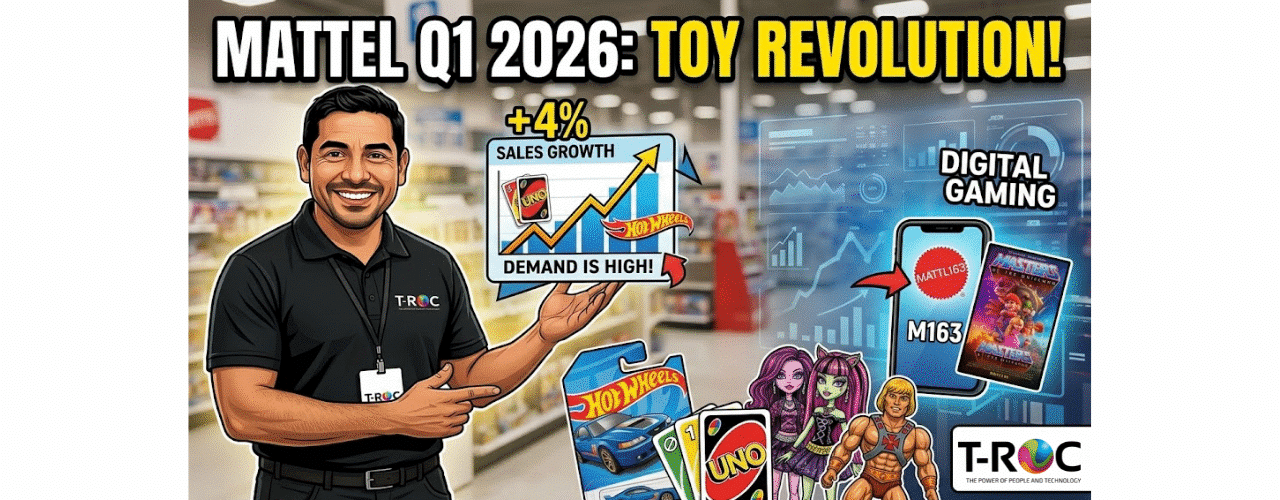
The toy industry is proving its resilience in 2026. While macroeconomic concerns like tariffs and inflation persist, Mattel’s latest quarterly performance offers a masterclass in how legacy brands can pivot toward a “digital-first” future while maintaining dominance on physical retail shelves.
Healthy Demand in a Shifting Market
In their Q1 2026 report, Mattel announced a 4% increase in net sales year-over-year, reaching $862 million. CEO Ynon Kreiz remained bullish on the earnings call, stating, “Consumers are buying toys. The toy industry is in a healthy position.”This growth wasn’t just a general lift; it was fueled by “super-brands” that continue to capture cultural zeitgeists. Specifically, Hot Wheels, Uno, and Monster High all reported double-digit growth. For retailers, this highlights a critical trend: consumers are gravitating toward established, high-trust IP during periods of economic uncertainty.
The Digital Pivot: The Mattel163 Acquisition
Perhaps the most significant takeaway from this Mattel Q1 2026 analysis is the company’s aggressive expansion into the digital space. By closing the acquisition of Mattel163 Mobile Game Studio, Mattel has moved from being a toy manufacturer that licenses IP to a self-publishing digital powerhouse.
“The deal meaningfully strengthens our digital games business and adds significant development, publishing, and digital customer acquisition expertise,” – Ynon Kreiz, Mattel CEO.
This move is strategically timed. Mattel is preparing to launch two self-published mobile games later this year, including a title tied to the highly anticipated Masters of the Universe live-action movie, set for theatrical release on June 5, 2026.
Key Financial Highlights:
-
Net Income: $61 million (up from a $40 million loss in Q1 2025).
-
Share Repurchases: $200 million, signaling confidence in the brand’s valuation.
-
Operating Loss: Widened to $102.7 million, largely due to restructuring and the costs of digital integration.
Strategic Leadership and Future Outlook
Mattel’s leadership bench has seen a massive overhaul to support this multi-channel strategy. With the recent appointment of Natalia Premovic (formerly of Netflix) as Chief Consumer Products and Experiences Officer, it is clear that Mattel views its products not just as toys, but as “experiences” spanning digital and physical realms.
However, the road ahead isn’t without hurdles. The company is actively monitoring:
-
Tariff Changes: Potential shifts in trade policy could impact manufacturing costs.
-
Middle East Stability: Geopolitical factors affecting global shipping lanes.
-
The “Kidult” Segment: Leveraging brands like Masters of the Universe to capture the growing 18+ collector market.
What Retailers Need to Know
For e-commerce and brick-and-mortar retailers, Mattel’s performance indicates that cross-platform synergy is the new gold standard. When a brand launches a movie, a mobile game, and a new toy line simultaneously, the demand spikes are sharper and more sustained. To capitalize on this, retailers must ensure their inventory systems are agile enough to handle “theatrical-driven” demand surges. Relying on real-time data will be the difference between a sold-out success and a missed opportunity during the June movie window.
Frequently Asked Questions
How did Mattel perform financially in Q1 2026?
In Q1 2026 Mattel reported a 4% year-over-year net sales increase to $862 million and net income of $61 million, a recovery from a $40 million loss the prior year. The company also recorded a widened operating loss of $102.7 million, partly attributed to the costs of digital integration.
What does Mattel’s 'digital-first' franchise model mean and how does Mattel163 fit in?
The 'digital-first' franchise model emphasizes self-published digital experiences alongside physical products. Acquiring Mattel163 Mobile Game Studio shifts Mattel toward being a self-publishing digital powerhouse, enabling cross-platform synergy like coordinated mobile games and toy lines around major releases such as the Masters of the Universe film.
Which brands drove Mattel’s growth in this period?
Super-brands including Hot Wheels, Uno, and Monster High drove growth, achieving double-digit increases. These brands captured the cultural zeitgeist and appealed to a high-trust collector market, which helped sustain resilience amid broader macroeconomic headwinds.
What is the 'kidult' segment and why does it matter for Mattel?
The 'kidult' segment refers to the lucrative 18+ collector market. Legacy intellectual property like Masters of the Universe is well positioned to capture this audience through nostalgia-driven products, premium collectibles, and coordinated media releases that engage adult collectors across multiple channels.
How should retailers prepare for Mattel’s theatrical-driven demand surges?
Retailers are advised to modernize inventory systems for greater agility during theatrical-driven demand surges and to use real-time data to avoid missed opportunities during major media windows. These operational steps help respond quickly when self-published digital releases and new toy lines generate spikes in consumer interest.